A CEO said "next month" from the I/O stage. Two months later, the model still doesn't exist.
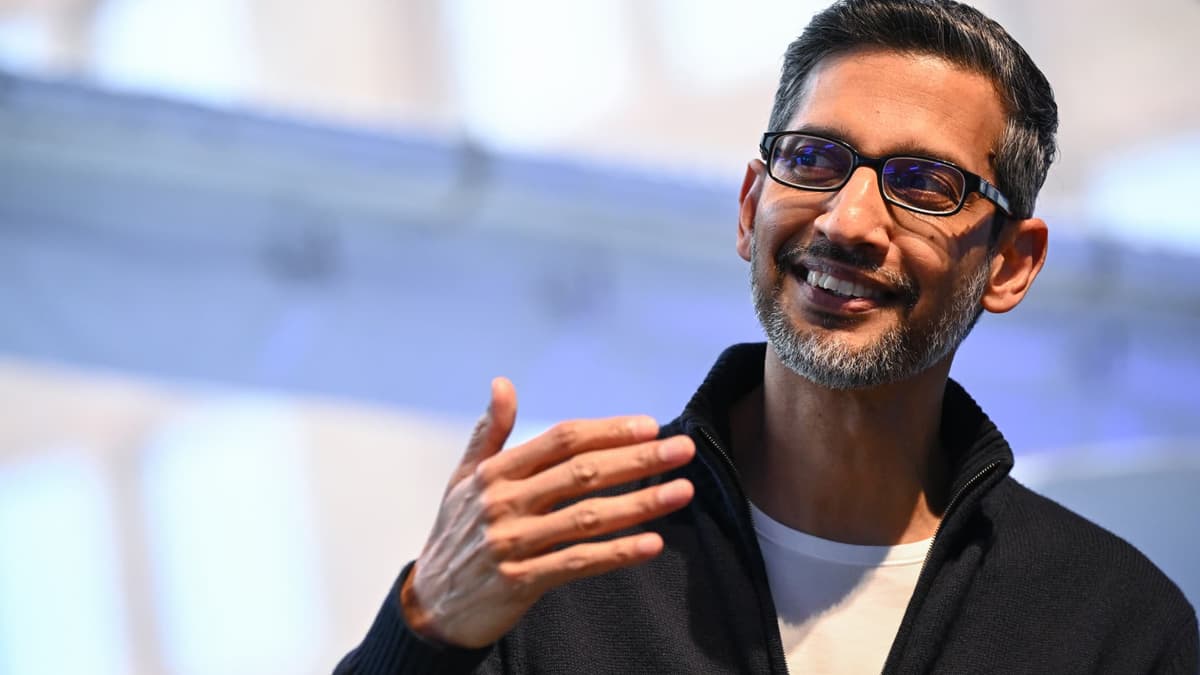
May 19, 2026. Sundar Pichai is on the Google I/O keynote stage. He launches Gemini 3.5 Flash, then teases the big one — Gemini 3.5 Pro — and says the sentence that is now being replayed with a much less flattering soundtrack: "We are using it internally, it's showing great improvements, and it will be coming next month." Next month meant June.
June came. June went. No Pro. July arrived, and on Thursday, July 16, Bloomberg dropped the explanation: Google is months behind schedule on Gemini 3.5 Pro because it has been taking extra time to improve the model's capabilities — "particularly in coding." The reporting is sourced to ten current and former Google employees. Alphabet closed the day down 4.4%, wiping out roughly $200 billion in market capitalization. It kept sliding into Friday.
Here's the deal: a delayed model is not, by itself, a $200 billion event. Model schedules slip constantly across the industry and nobody blinks. What makes this one bite is what slipped and when it slipped. The weak spot Bloomberg identified is coding — the single capability that has become the commercial center of gravity for frontier models, the thing enterprises actually pay for. And it slipped in the same three-week window that OpenAI shipped GPT-5.6 and posted state-of-the-art coding scores, while four senior researchers walked out of Google DeepMind's front door into OpenAI's and Anthropic's.
One more thing before we go deeper, because a lot of coverage got this backwards. The stock did not fall because a July 17 launch date came and went — the drop happened on July 16, the day before, and the trigger was the Bloomberg scoop itself. The widely circulated framing of a "third missed deadline" and a specific "July 17 target" traces to aggregators like Tech Times and HackerNoon, not to Bloomberg or any tier-1 outlet. Bloomberg established two things only: a June promise, and a months-long slip. Everything past that is reported-but-unconfirmed, and we'll flag it as such throughout.
The players — a lab that invented the transformer, and the rivals now hiring its authors
Google DeepMind is the protagonist, and its résumé is not in question. This is the lab that produced AlphaGo, AlphaFold, and — through Google Brain, which merged into DeepMind in 2023 — the transformer architecture that every frontier model on earth is built on. Gemini is its flagship line, and the "Pro" tier is the one that carries the fight against OpenAI's and Anthropic's top models.
Sundar Pichai, Alphabet and Google CEO, is the one whose words are now load-bearing. He's the person who said "next month" on stage, and he's also the person who has already publicly conceded that Google was "a bit behind" on agentic coding — the class of task where a model doesn't just write a snippet but plans, executes, calls tools, reads the errors, and iterates. That admission looks much heavier in hindsight than it did when he made it.
OpenAI is the pace-setter this quarter. It released GPT-5.6 on July 9, 2026 (a limited preview had been running since June 26), in three tiers — Luna, Terra, Sol. This is the model that turned Gemini's absence from an internal scheduling problem into a competitive one, because it landed squarely on coding, the exact axis where Google says it isn't satisfied yet.
Anthropic is playing a quieter but arguably more corrosive game. It isn't just shipping competitive models — it's hiring the people who built Gemini. In a single week in June, three senior DeepMind figures left for rivals, two of them to Anthropic. With IPOs pending at both OpenAI and Anthropic, pre-listing equity is a recruiting instrument Google structurally cannot match.
And then there's the market, which on July 16-17 was not reacting to one story but three at once. Alongside the Gemini report, the European Union ordered Google to open Search and Android data to rivals, with reports that an additional Digital Markets Act fine could land within days. Pulling the other direction: Warren Buffett confirmed he personally initiated Berkshire Hathaway's roughly $31 billion Alphabet stake. Any account of the move that mentions only the Gemini delay is telling you about one of three forces.
What actually happened — they retrained for coding in late June, and the results came back disappointing
The most specific and most damaging detail in Bloomberg's report is this: Google updated the data used to train Gemini in late June, specifically to lift coding performance — and "the results were disappointing." That's the whole story in one line. This wasn't a safety hold, a legal review, or a capacity shortage. Google took a deliberate swing at the exact weakness it knew about, and the swing missed its own internal bar.
Note the precision there, because it matters and most secondhand coverage got it wrong. Bloomberg's claim is that coding fell short of Google's internal expectations, and separately that rivals are shipping models that exceed Gemini's current capabilities. That is not the same as "Gemini 3.5 Pro lost to GPT-5.6 on benchmark X." No public head-to-head benchmark of an unreleased Gemini 3.5 Pro exists, because the model has not shipped. Anyone showing you a comparison table with 3.5 Pro numbers in it is showing you a fabrication.
Bloomberg's second cause is organizational, and it's the one Google can't fix with a training run. Separate teams inside DeepMind, Google Cloud, Android, and Search are each building overlapping AI coding tooling, competing for the same compute and stacking up stakeholder layers that every release has to clear. Bloomberg reports the delay has become a genuine source of frustration among Google engineers, researchers, and managers, many of whom worry the company is losing ground while Anthropic and OpenAI ship.
Google's on-record response is worth reading closely because of what it concedes. A spokesperson pushed back on the "too slow" framing, saying Google is "currently testing 3.5 Pro, an upgraded Flash model, and other models with partners," and that "we're shipping quickly across a wide range of models while keeping them highly cost-effective for customers." Google also noted it's coordinating safety standards with US government officials. The tell is the middle clause: an upgraded Flash is already in partner testing — exactly the stopgap you'd prepare if you thought Pro might slip again.
| Item | Detail |
|---|---|
| Bloomberg report | July 16, 2026 — Gemini 3.5 Pro "months behind schedule" |
| Sourcing | 10 current and former Google employees |
| Stated cause | Extra time to improve capabilities, "particularly in coding" |
| Trigger detail | Training data updated late June to lift coding; "results were disappointing" |
| Structural cause | Overlapping AI coding teams across DeepMind, Cloud, Android, Search |
| Original promise | Pichai at I/O, May 19, 2026: "it will be coming next month" (= June) |
| Shipped so far | Gemini 3.5 Flash only; no gemini-3.5-pro model card or pricing page in the API docs |
| New date | None announced |
| Alphabet close, Jul 16 | −4.4%, ≈$200B market cap erased (most wires rounded to "about 4%") |
| Jul 17 | Continued sliding (Benzinga) |
| Compounding headline | EU ordered Google to open Search and Android data to rivals |
| Offsetting headline | Buffett confirmed he personally initiated Berkshire's ≈$31B Alphabet stake |
For scale on what's at stake, look at what Flash already does. Gemini 3.5 Flash, shipped at I/O, beats the older Gemini 3.1 Pro (February 2026) on Terminal-Bench 2.1 (76.2%), GDPval-AA (1656 Elo), and MCP Atlas (83.6%). Pichai claimed Flash is roughly 4x faster than other frontier models on output tokens (12x in an Antigravity-optimized configuration) at less than half the price of comparable frontier models, and said Google internally processes more than three trillion tokens a day with 3.5 Flash plus its dev tools. Google also said in April 2026 that 75% of all new code at Google is AI-generated and engineer-approved, up from 50% the previous autumn. That last number is why a coding shortfall is existential rather than cosmetic — Google's own engineering velocity now depends on it.
Now the rival's numbers, which are public and verifiable. On the Artificial Analysis Coding Agent Index, GPT-5.6 Sol at max reasoning set a new state of the art at 80 — 2.8 points above Anthropic's Fable 5 — while using less than half the output tokens, taking less than half the time, and costing about one-third less. On Terminal-Bench 2.1, Sol Ultra scored 91.9% and base Sol 88.8%, against Claude Mythos 5 at 88.0% and GPT-5.5 at 88.0%. API pricing: Sol $5 in / $30 out per million tokens, Terra $2.50/$15, Luna $1/$6.
| Model | Terminal-Bench 2.1 | Note |
|---|---|---|
| GPT-5.6 Sol Ultra | 91.9% | Released Jul 9, 2026 |
| GPT-5.6 Sol (base) | 88.8% | $5 in / $30 out per 1M tokens |
| Claude Mythos 5 | 88.0% | Anthropic |
| GPT-5.5 | 88.0% | Previous OpenAI flagship |
| Gemini 3.5 Flash | 76.2% | Shipped May 19; beats Gemini 3.1 Pro |
| Gemini 3.5 Pro | — | Not shipped. No public benchmark exists. |
A hard hedging note, because the rumor mill on this story is unusually loud. The following are all circulating and none are confirmed: a 2M-token context window (never confirmed by Google, appears only in third-party rumor roundups); a "Deep Think" reasoning layer in 3.5 Pro; any pricing for 3.5 Pro (no pricing page exists — every figure you've seen is speculation); the "July 17 target" and the "third missed deadline" count (aggregator-sourced); the claim that DeepMind scrapped a near-ready model and ordered a ground-up pre-training restart on a native Gemini 3 foundation, with engineers finding structural failures in recursive tool-calling and SVG generation (aggregator-only, absent from Bloomberg and every tier-1 outlet); frequent hallucinations or inconsistent real-world outputs in a rebuilt model (aggregator-only — Bloomberg specified coding shortfalls versus internal expectations, not hallucination rates); and an August release (sourced to an X leak plus prediction markets showing roughly 81% for a July 31 outcome and 73% for August 7 on separate markets — that's market sentiment, not reporting). You'll also see "$225 billion wiped off Alphabet" in some write-ups; the tier-1 figure is about $200 billion on a 4.4% close.
What each side gets — and what Google is actually buying with the delay
Google's position is not as catastrophic as a one-day chart implies, and it's worth saying so. Google is choosing to eat a schedule slip rather than ship a flagship that misses its own bar — which is, in isolation, the correct call. A flagship "Pro" model that gets publicly outscored on coding does more lasting brand damage than a delay, because benchmark tables get screenshotted and live forever. Google also has a real fallback in the upgraded Flash it admitted is in partner testing: a shipping event that keeps cadence visible without exposing Pro to a comparison it would currently lose.
What Google loses is subtler and more expensive: the enterprise wait. Every Vertex AI customer who was told in May to hold off on a migration decision because Pro was arriving in June has now been waiting two months with no new date. That's not a lost benchmark, it's a lost procurement cycle — and procurement cycles, once they close around a competitor, take a year or more to reopen. Meanwhile the internal cost compounds: Bloomberg describes engineers and managers who are genuinely frustrated, which is exactly the emotional precondition for the next round of departures.
OpenAI gets the cleanest gift in the story: an open field on coding, at the exact moment its own flagship posts the best public numbers in the category, at prices designed to be hard to walk away from. Terra at $2.50/$15 and Luna at $1/$6 aren't halo pricing — they're the tiers you deploy at volume. Every week Gemini 3.5 Pro doesn't exist is a week OpenAI gets to be the default answer to "what do we build our coding agent on."
Anthropic gets something more durable than a quarter of market share: people. Jonas Adler and Alexander Pritzel, both key Gemini developers, went to Anthropic. So did John Jumper. Hiring the researchers who built the competitor's flagship is a compounding advantage — it transfers institutional knowledge that doesn't appear in any paper, and it degrades the source lab's ability to run the next cycle at speed.
Investors got a genuinely muddled signal, which is why reading the day carefully matters. Three forces hit at once: a delay report (negative), an EU order to open Search and Android data with a possible DMA fine pending (negative, and structurally more serious than a model slip because it touches the cash-generating business), and Buffett's confirmed ~$31 billion stake (positive, and a strong signal about valuation rather than product). A 4.4% close is the net of those, not a pure verdict on Gemini.
Precedents — the delay that worked, the launch that didn't, and the ship-anyway option
The precedent that worked: Gemini 1.0 Ultra. Google pushed it out of late 2023 into February 2024 for red-teaming and tuning, took real criticism for being slow, and then shipped Gemini 1.5 Pro with a 1M-token context window that no rival could match for months. Long context turned into a genuine, defensible differentiator. That delay bought something. Which is the honest bull case here: if 3.5 Pro eventually arrives with a coding capability that clears the bar rather than scrapes it, nobody will remember July 2026. Anthropic's slower, safety-gated cadence has paid off the same way — Claude 3 Opus (March 2024) took the top of the public leaderboards from GPT-4, the first time OpenAI had been dethroned.
The precedent that failed: Bard, February 2023. Google rushed a launch to answer ChatGPT, the demo contained a factual error about the James Webb Space Telescope, and Alphabet lost roughly $100 billion of market value in a day. The lesson everyone drew was "don't rush." The current episode is the mirror image of that lesson — caution cost about twice as much, roughly $200 billion. Put the two together and the uncomfortable conclusion is that the market is not punishing speed or caution per se. It's punishing the gap between what Google says and what Google ships. Bard broke the promise on quality; 3.5 Pro broke it on time.
The ship-anyway counterfactual: Meta's Llama 4, April 2025. Meta shipped early into a benchmark-integrity controversy over an unreleased leaderboard variant, its Behemoth tier slipped indefinitely, and the AI org got reshuffled. That's the strongest available evidence that shipping a model which misses your internal bar is not obviously the safer branch. Google's engineers have almost certainly run this exact comparison internally, and it's a reasonable read of why Pro is still sitting in testing.
The genuinely new variable is talent, and it's confirmed rather than rumored. Four senior DeepMind figures left inside about a week in June 2026. Noam Shazeer — co-author of "Attention Is All You Need" and a Gemini co-lead — announced his move to OpenAI on June 18. John Jumper, DeepMind director and co-winner of the 2024 Nobel Prize in Chemistry for AlphaFold (shared with Demis Hassabis), announced his move to Anthropic on June 20. Jonas Adler and Alexander Pritzel, both key Gemini developers, also went to Anthropic, reported June 24. Fortune's Jeremy Kahn wrote: "That giant sucking sound you hear? That's the woosh of talent streaming out of Google DeepMind and flowing to OpenAI and Anthropic," and reported that current and former staff describe Google as too bureaucratic, slow-moving and risk-averse to beat nimbler rivals. Note how precisely that diagnosis rhymes with Bloomberg's organizational-sprawl finding. Two independent reports, same underlying disease.
How rivals counter — the playbook while the flagship is missing
OpenAI will press the coding-agent advantage while the field is empty. Expect enterprise and Codex-style pushes aimed directly at teams that were waiting on 3.5 Pro, plus price pressure at the Terra and Luna tiers, where the goal isn't to win a benchmark but to make "just use us" the path of least resistance for volume workloads. The pitch writes itself: state-of-the-art coding numbers, available today, at a third less cost than the nearest rival.
Anthropic will keep doing the two things it's already doing. First, recruiting DeepMind researchers — with a pending IPO, pre-listing equity is a lever Google structurally cannot match, and each hire simultaneously adds capability on one side and removes it from the other. Second, leaning on enterprise coding trust, the reputational position it has spent years building, which is worth more in procurement conversations than any single leaderboard row.
Microsoft and AWS will do the unglamorous, effective thing: walk into every account where a Vertex AI rep said "wait for 3.5 Pro" and offer an OpenAI or Anthropic model that exists right now. Cloud AI competition is won at the migration-decision moment, and Google has handed rivals a two-month window in which its best answer is a model nobody outside partner testing can evaluate.
Google's most probable near-term move is the one it already telegraphed: ship the upgraded Flash. It keeps the release cadence visible, gives the sales org something concrete to sell, and — critically — avoids putting Pro into a head-to-head coding comparison it would currently lose. Flash is also genuinely strong: it already beats the previous-generation Pro on Terminal-Bench 2.1, GDPval-AA and MCP Atlas, and Google's price-performance argument (roughly 4x faster on output tokens at under half the price) is a real one. It just isn't a flagship answer to a flagship question.
The structural counter Google needs is harder than any of that. If Bloomberg's organizational read is right — four groups building overlapping coding tooling, competing for compute, stacking stakeholders — then no single training run fixes it. That's a reorganization problem, and reorganizations at Google's scale take quarters, not weeks. Which is precisely the timeframe in which OpenAI and Anthropic get to keep shipping.
So what actually changes
If you're a developer — nothing changes today, and that's the point. There is no gemini-3.5-pro model card, no pricing page, and no API entry in Google's public docs. If your roadmap has a "migrate when 3.5 Pro lands" milestone on it, that milestone currently has no date attached, and Google has not given one. Plan around Flash or a rival for anything shipping this quarter. Also, ignore every 3.5 Pro spec table you see online — the 2M context window, the "Deep Think" layer, and all the pricing figures are unconfirmed rumor. The one signal actually worth tracking is the upgraded Flash in partner testing, since that's the thing Google itself confirmed is close.
If you're an investor — the mistake is reading July 16 as a single-cause day. Three forces moved the stock: the Gemini delay, the EU order to open Search and Android data (with a possible DMA fine pending), and Buffett's confirmed ~$31 billion stake pulling the other way. Of those, the regulatory one arguably deserves more of your attention than the model one, because it touches the business that actually generates the cash. On the model side, the question that matters isn't "will Pro ship" — it will — but whether it clears the bar when it does. A Pro that lands and beats GPT-5.6 Sol on coding makes this month a footnote. A Pro that lands and merely matches it makes this month the start of a narrative. And watch the departures: talent outflow is a leading indicator of the next delay, not this one.
If you're a general user — you won't notice a thing. Gemini in the app, in Search, and in Workspace keeps running on the models already shipped, and Gemini 3.5 Flash is a genuinely capable model — Google says its internal systems push more than three trillion tokens a day through it. What you're watching is a fight over the top tier, where the frontier gets set. The one downstream effect worth knowing: 75% of new code at Google is now AI-generated and engineer-approved, so a coding-capability stall at Google isn't just a product problem — it slows the company that builds the products you use. That's the real reason a delayed model cost $200 billion.
🥄 Three Things You're Probably Wondering
— So what does this mean for me? Practically nothing today — the Gemini you use runs on models that already shipped. What it changes is the competitive picture behind the scenes: while Google's flagship is missing, OpenAI's is setting coding records at aggressive prices, and the tools built on top of these models will drift accordingly over the next few quarters.
— Is Google actually losing the AI race now? Too early, and the evidence cuts both ways. Gemini 3.5 Flash beats the previous-generation Pro on multiple benchmarks and runs cheap and fast, and Google delayed Gemini 1.0 Ultra once before and came back with a 1M-token context window nobody could match. What's genuinely new and worrying is people: four senior DeepMind figures left for OpenAI and Anthropic inside about a week in June, and Fortune reports staff describing Google as too bureaucratic to move fast. Models can be retrained. Cultures take a lot longer.
— When is Gemini 3.5 Pro actually coming out? Nobody knows, including — apparently — Google, which has announced no new date. The August predictions floating around come from an X leak and prediction markets (roughly 81% for a July 31 outcome, 73% for August 7 on separate markets), which is sentiment, not reporting. The only confirmed signal is Google's own statement that 3.5 Pro and an upgraded Flash are in testing with partners.
Sources
- Google Gemini Launch Delayed as Tech Falls Short of Internal Goals — Bloomberg (Jul 16, 2026)
- Alphabet shares fall on report its most powerful AI model Gemini 3.5 Pro is delayed — CNBC
- Gemini 3.5 Pro delays due to coding performance, upgraded Flash model in testing — 9to5Google
- Google's next flagship Gemini model reportedly stuck months behind schedule — Android Authority
- Google Delays Gemini 3.5 Pro Over Coding Issues: Report — Search Engine Journal
- Google I/O 2026: Sundar Pichai's opening keynote — blog.google
- AI researchers continue to leave Google for its rivals — TechCrunch (Jun 24, 2026)
- GPT-5.6: Frontier intelligence that scales with your ambition — OpenAI
- As top talent leaves Google DeepMind, some question if the lab can remain at the forefront — Fortune
Numbers and criteria are as of announcement and may change. Investment calls are yours to make!