Two price tags on the same company, three weeks after it told the world what it was worth
On Friday, July 17, 2026, the Wall Street Journal published an exclusive under three bylines — Kate Clark, Anissa Gardizy and Robbie Whelan — reporting that Etched, a San Jose startup building inference silicon, is in talks to raise at a valuation of roughly $20 billion, led by existing investor Jane Street.
Here's the part that makes it a genuinely strange story rather than another AI markup headline. At the same time, and separately, Etched is raising a round led by Sequoia Capital at a $10 billion valuation. Same company. Same weeks. Same underlying asset. Two prices, exactly 2x apart.
And the caveat that has to travel with every number in this piece: neither transaction had closed as of July 17, and terms could still change. This is not a company announcement. It's reporting based on people familiar with the matter, carried the same day on the Reuters wire. Nobody at Etched has confirmed a dollar figure. Treat $20 billion as under negotiation, not achieved.
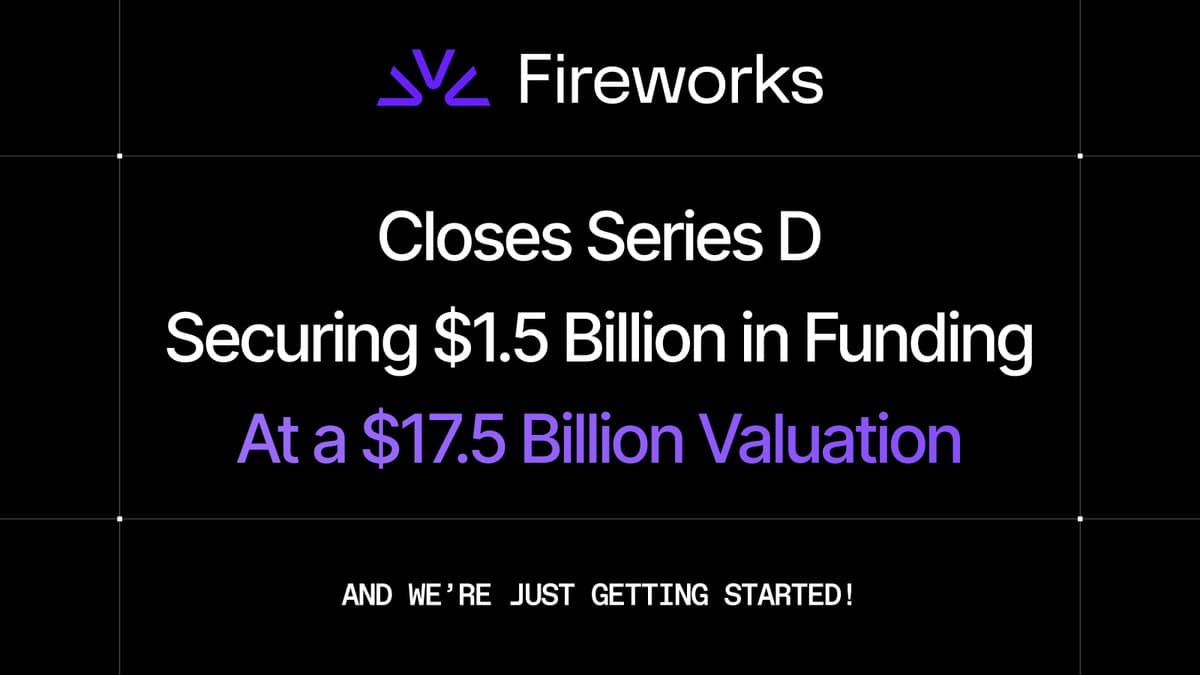
The trajectory is what makes it news. Etched's prior mark was $5 billion post-money, set in December 2025 on a $500 million round led by Stripes. The company only disclosed that number publicly on June 30, 2026, when it came out of stealth. So less than a month after Etched told the world what it was worth for the first time, talks at four times that number leaked to the Journal.
The WSJ itself framed this as symptomatic rather than triumphant, writing that "companies are frequently selling stakes at one valuation and then quickly raising more money at much higher prices." That is the reporting outlet putting a footnote on its own scoop. The motive underneath it all is simple and singular: investors are hunting for something that isn't Nvidia to run inference on.
Three Harvard dropouts, and a cap table full of prop traders
Etched, Inc. is headquartered at 3155 Olsen Dr, San Jose, California. It was founded in 2022 by three Harvard dropouts: Gavin Uberti (CEO), Chris Zhu, and Robert "Rob" Wachen (President). Uberti and Wachen are Thiel Fellows — the program that pays you to leave college and build something.
It is no longer a dorm-room outfit. The company now has 400+ engineers, and the recruiting list tells you exactly what it's trying to be: people out of Nvidia, Google's TPU program, Broadcom, SK Hynix, TSMC — and quant trading firms. The first five are people who have taken silicon all the way to volume. The last one is the cultural tell: an organization built by people who treat latency as a religion.
The funding history runs in three acts. June 2024: a $120 million Series A led by Primary Venture Partners and Positive Sum Ventures, spent taping out its first ASIC at TSMC. December 2025: $500 million at a $5 billion post-money, led by Stripes, first reported by Bloomberg on January 13, 2026. June 30, 2026: exit from stealth, disclosing $800 million raised across four previously unannounced financings and over $1 billion in signed customer contracts.
The shareholder register is where this company's character shows. VentureTech Alliance (the TSMC-linked venture fund), Jane Street, Hudson River Trading, Jump Trading, Two Sigma, Stripes, Ribbit Capital, Radical Ventures, Primary and Positive Sum. Individually: Peter Thiel and Stanley Druckenmiller, plus an AI-celebrity block of Andrej Karpathy, Geoffrey Hinton, Fei-Fei Li, Arthur Mensch (Mistral CEO) and Scott Wu (Cognition CEO).
Pause on that list. Jane Street, HRT, Jump and Two Sigma are all proprietary trading firms — not semiconductor operators, not strategic buyers. Jane Street is also the party leading the $20 billion round. The charitable read is that nobody on earth understands the economics of latency and throughput better than these firms, and they're voting with capital. The skeptical read is that this is a cap table weighted toward financial rather than strategic capital — money that can price an asset but can't help you land a foundry allocation or an enterprise deployment. The TSMC-linked fund matters for foundry proximity, but an equity stake is not a wafer commitment.
What actually happened — from Sohu to racks, and where the $20 billion number came from
Etched's original 2024 pitch was "Sohu," billed as the world's first transformer-only ASIC, built on TSMC 4nm. The claims were loud and specific: roughly 500,000 tokens per second on Llama 70B, and one 8-Sohu server replacing 160 Nvidia H100s — about 20x the throughput. The tradeoff was equally explicit: the chip could not run CNNs, state-space models, or anything that wasn't a transformer. The company said so itself.
The 2026 version of Etched describes itself differently. What it sells now isn't a chip — it's a "frontier inference cluster." Rack-scale appliances that bundle the silicon, custom boards, custom cold plates for liquid cooling, hybrid SRAM + HBM memory, and a custom interconnect that turns the whole system into one shared memory pool. And critically, the June 30 press release lists the models these systems run: DeepSeek, Qwen, Llama — and Mamba. Mamba is a state-space model. That quietly retires the "transformers only" framing from 2024. The accurate 2026 description is transformer-optimized inference clusters, not transformer-exclusive ones.
The technical claims, stated fairly. A0 silicon came back working on the first pass from TSMC's N4P node earlier this year — first-pass silicon success is genuinely hard and deserves credit. On top of that the company claims fixed-function attention circuits, a low-voltage (LVI) design that reduces thermal throttling, sustained "80%+ of peak FLOPs" on trillion-parameter models, and FLOP density several times higher than rival AI processors. Every one of those numbers is company-disclosed and not independently benchmarked. Until something like an MLPerf submission exists, treat them as marketing figures with an engineering pedigree behind them.
| Item | Detail |
|---|---|
| Reported | July 17, 2026 (WSJ exclusive — Clark, Gardizy, Whelan) |
| Valuation A | ~$20 billion — led by Jane Street, not closed |
| Valuation B | ~$10 billion — led by Sequoia, separate round, not closed |
| Prior mark | $5 billion post-money (Dec 2025, $500M led by Stripes) |
| Step-up | Roughly 4x at the $20 billion figure |
| Status | Both deals open; terms could still change |
| Founded | 2022, by three Harvard dropouts (Uberti, Zhu, Wachen) |
| HQ | San Jose, California |
| Raised to date | $800 million across four unannounced financings (disclosed Jun 30, 2026) |
| Contract book | Over $1 billion — company-disclosed, no named customers |
| Headcount | 400+ engineers |
| Product | Rack-scale frontier inference clusters; A0 silicon on TSMC N4P |
| Roadmap | First rack shipments summer 2026; gigawatt-scale capacity targeted by 2027 |
| Notable backers | Jane Street · HRT · Jump · Two Sigma · Stripes · Ribbit · Radical · VentureTech Alliance |
The production plan is unusually concrete for a company this young. Etched says it has "kicked off production to fulfill over $1B in customer contracts," is validating its first rack-scale product with customers, and plans first rack shipments in summer 2026. Production runs through Taiwan; design, validation and manufacturing integration sit in San Jose; the stated target is gigawatt-scale capacity by 2027. Uberti's framing of why any of this matters: frontier AI "will never realize its full economic and societal potential until inference becomes orders of magnitude faster, cheaper, and more abundant." Wachen put the operational version more bluntly: "Production is the product."
So why $20 billion, and why now? There's an anchor, and it's precise. On Christmas Eve 2025, Nvidia announced a roughly $20 billion deal to license Groq's technology and hire most of its team, including Groq co-founder and CEO Jonathan Ross. Nvidia effectively stamped a price on specialized inference silicon, and that stamp is the number investors are now applying to Etched. The second catalyst is Cerebras' IPO on May 14, 2026 — priced at $185 a share, above a raised $150–160 range, raising $5.55 billion and closing day one near a ~$56 billion fully diluted valuation, the largest U.S. tech IPO since Snowflake in 2020. The third is Etched's own stealth exit three weeks earlier, which handed it a $1 billion contract book to market against.
What each side actually gets — and what a 2x price gap really means
Etched gets volume, not runway. Semiconductors consume capital differently than software. You don't spin up another instance — you pre-commit wafers at TSMC, secure HBM allocation, tool cold plates, and lease space to integrate racks. The moment a company says "gigawatt-scale by 2027," the working capital requirement moves into the billions. $800 million does not get you there. This round is less a valuation trophy than collateral to post against a supply chain.
Jane Street gets a markup on a position it already holds. It's an existing investor leading the $20 billion round. That structure reads two ways and you cannot adjudicate between them from outside: either the insiders with the best information are doubling down at conviction, or the insiders are printing a mark on their own book. Private valuations are negotiated, not discovered.
Sequoia's position is the more interesting one. Coming in at $10 billion means signing at half the number being discussed elsewhere for the same equity, in the same window. The structures haven't been disclosed, so anything here is inference rather than fact, but the plausible explanations are limited: the two rounds may involve different security classes (different preferences, liquidation stacks, ratchets), the timing may be staggered (a Sequoia term sheet locked before the price ran), or one may be secondary while the other is primary. Whichever it is, you cannot read the $20 billion headline as "the company is worth $20 billion."
And that gap is the actual story here. When the WSJ writes that companies are "selling stakes at one valuation and then quickly raising more money at much higher prices," that's not color — it's a warning. Two prices 2x apart on the same asset within weeks means the price is being set by capital supply, not by the asset's fundamentals. Etched's A0 silicon did not get twice as good between June and July.
Customers get leverage, which is underrated. For anyone buying inference capacity right now — frontier labs, neoclouds, large enterprises — Etched existing is itself a bargaining chip against Nvidia. The mere availability of an alternative moves price, whether or not you ever deploy it. It's plausible that some meaningful share of that $1 billion contract book is customers buying optionality rather than committing to displacement. That's speculation on my part; the company has named zero customers.
And nobody in this deal gets commercial validation. Etched's own site still says it is validating its first rack-scale product with customers. A $20 billion mark would make a four-year-old company one of the most valuable private semiconductor startups on earth before its first chip has been commercially proven in someone else's production environment.
Precedents — Annapurna paid off, Graphcore did not
The success case is Annapurna Labs. Amazon acquired it in 2015 for roughly $350 million, and that team became the engine behind Graviton, Inferentia and Trainium. Every argument AWS makes today about reducing Nvidia dependency and protecting datacenter margin traces back to that purchase. It is the template for what specialized silicon looks like when it works. A partial success is Habana Labs, bought by Intel for $2 billion in 2019 — real products shipped, but Nvidia's share never meaningfully moved.
The failure case is uncomfortably specific. Graphcore raised $222 million at a $2.77 billion valuation in 2020 and was described everywhere as the Nvidia challenger. The IPU architecture was genuinely novel and the benchmark slides looked great. In 2023 it generated roughly $4 million of revenue. Million, not billion. It sold to SoftBank in 2024 for about $600 million — roughly a fifth of its peak mark. It did not fail because the chip was bad. It failed on software ecosystem and real-workload utilization.
The second cautionary case is SambaNova, valued at $5 billion in 2021, with Intel now reportedly in advanced talks to acquire it for around $1.6 billion including debt. Again, not a silicon failure. A failure to get through Nvidia's software moat and into customers' production workloads.
There is one thing that genuinely distinguishes Etched from both: a $1 billion contract book. The precise place Graphcore and SambaNova collapsed was "great valuation, no revenue," and Etched at least has a number in that column. But the number carries conditions that matter. It is company-disclosed, has no named customers, has not been recognized as revenue, and has not been audited. And there's a wording discrepancy worth flagging: Etched describes it as "signed customer contracts," while the WSJ frames the same figure as "customer demand." Contracts and demand are not the same thing in accounting, and the load-bearing evidence for a $20 billion mark sits precisely on which one it is.
How the rest of the field counters
The first competitor to disappear was Groq, which had raised $2.4 billion at roughly $6 billion before Nvidia absorbed it. The effect on the market was double-edged: one fewer rival, but also Nvidia publicly conceding that specialized inference silicon is necessary. d-Matrix CEO Sid Sheth captured the mood to Fortune: "When it happened, we said, 'Finally, the market recognizes it.'" d-Matrix is Microsoft-backed and raised $275 million at a $2 billion valuation in December 2025.
Cerebras is now the public comparable (ticker CBRS), which makes it the liquid benchmark for the whole category. Anyone pricing a private inference-chip company ends up looking at Cerebras' tape. That cuts both ways: if Cerebras performs, Etched's mark gets easier to justify; if Cerebras disappoints on earnings, the entire evidentiary basis for $20 billion evaporates. A single listed company now anchors an entire sector's private marks. Around them sit SambaNova in acquisition talks with Intel and newcomers like the UK's Fractile.
But the structural competitor isn't a startup at all — it's hyperscaler in-house silicon. Google TPU, AWS Trainium and Inferentia, Microsoft Maia. What makes them dangerous isn't performance; it's that they own their own demand. They never have to sell a chip to anyone. Etched has to win a procurement argument, prove total cost of ownership against Nvidia, and survive a bake-off, every single time.
Then there's Nvidia itself. The way Nvidia has killed faster-on-paper accelerators for a decade has never been FLOPs. It's been software — CUDA, TensorRT-LLM, the kernel ecosystem, and the fact that when a new model architecture drops, optimized kernels appear within days. Raw compute was never the binding constraint; "can my team run this in production this quarter" always was. There is no public, specific answer yet for how Etched intends to solve that.
Finally, the architectural exposure baked into the design. Fixed-function attention circuits are the source of Etched's efficiency claim and simultaneously its largest structural risk. If frontier architectures drift away from dense attention — and state-space models, linear-attention variants and sparse attention schemes keep arriving — assumptions etched into silicon become liabilities. The company naming Mamba support reads as a deliberate answer to exactly this critique. But "it runs" and "it runs at 20x" are different claims, and no verified data exists yet for the second one.
So what actually changes
If you're a developer — nothing in your codebase changes this quarter. But the shape of the thing is worth noting: Etched is selling a rack-scale appliance, not a chip. Hybrid SRAM+HBM with a system-wide shared memory pool is a bet that the next frontier of inference optimization moves from per-GPU kernel tuning to system-level memory locality. Where the KV cache lives, how batches are formed, how long contexts get partitioned — those questions start getting answered in hardware rather than in your serving framework. Second-order takeaway: as more purpose-built inference hardware ships, hard-wiring your inference path to one vendor's API gets more expensive. Keeping an abstraction layer between your application and your accelerator may pay for itself within a few quarters.
If you're an investor — the entire discipline here is separating confirmed from reported. Nothing about this round is confirmed. Both the $20 billion and $10 billion figures are in negotiation, terms may change, and the company has not commented. What Etched itself has disclosed, as of June 30, is $800 million raised, a $5 billion post-money, and a $1 billion contract book. Four things to check. One: is the $1 billion contracts or demand? The company and the WSJ use different words, and there are no named customers. Two: all performance figures are self-reported with no independent benchmark. Three: two prices 2x apart on the same asset — with security classes and downside protections undisclosed, the headline number cannot be taken at face value. Four: the $20 billion anchor is Nvidia's Groq deal, which was a talent-and-license transaction, not a standalone company valuation. The Graphcore and SambaNova lesson is consistent and worth repeating: in semiconductors, failure rarely comes from not shipping a chip. It comes from shipping one that never makes it into customer production.
If you're a regular user — you will probably never see Etched's name on anything you use. But the speed and price of every AI product you touch is decided by inference hardware. A large part of why AI services are expensive and rate-limited today is simply that throughput per accelerator isn't high enough. If companies like Etched actually ship and get validated, the downstream effect a few years out is longer contexts, faster responses and looser usage caps for the same money. That is contingent on shipping, on independent validation, and on volume manufacturing — and as of today, Etched has not shipped its first rack.
🥄 Three Things You're Probably Wondering
— So what does this mean for me? Nothing direct. Indirectly, real competition in inference silicon lowers the cost of running AI, and that eventually shows up as faster responses and looser limits in the products you already use. It's still at the "could happen" stage — Etched hasn't shipped a single rack yet.
— Why $20 billion, and why now? Because Nvidia effectively absorbed Groq for around $20 billion on Christmas Eve 2025, and investors are applying that same number to the next specialized-inference asset they can buy. Worth noting the two aren't equivalent: the Groq deal bought talent and a license, not a standalone company. Same figure, different thing being priced.
— Can Etched actually beat Nvidia? Too early to call. First-pass working silicon on TSMC N4P is genuinely hard, and a $1 billion contract book is something Graphcore never had at this stage. But the companies that lost to Nvidia didn't lose on chip performance — they lost to CUDA and the software ecosystem around it. There's no public answer yet for how Etched plans to solve that part.
Sources
- AI Chip Startup Etched Eyes $20 Billion Valuation — PYMNTS, reporting the WSJ exclusive (Jul 19, 2026)
- Etched Emerges From Stealth With Working Chip, $800M Raised, and Over $1B in Customer Contracts — official press release (GlobeNewswire, Jun 30, 2026)
- Nvidia competitor Etched hits $5B valuation, $1B in sales for AI chip — TechCrunch (Jun 30, 2026)
- Inference chip startup Etched launches with $800M in funding — SiliconANGLE (Jun 30, 2026)
- Nvidia rival Etched raises $800M with backing from Jane Street and a TSMC-linked fund — The Next Web (Jun 30, 2026)
- After Nvidia's Groq deal, these are the AI chip startups sitting pretty — and one aiming to disrupt — Fortune (Jan 5, 2026)
- Etched raises $120 million to build chip to take on Nvidia in AI — CNBC (Jun 25, 2024)
- Etched is building an AI chip that only runs transformer models — TechCrunch (Jun 25, 2024)
- Etched scores $120M for an ASIC built for transformer models — The Register (Jun 26, 2024)
- Nvidia's New AI Rival Could Reportedly Be Worth $20 Billion — Benzinga (Jul 17, 2026)
Numbers and criteria are as of announcement and may change. Investment calls are yours to make!