The world will spend $2.59 trillion on AI this year, and almost none of it goes to running the hardware it just bought
On July 15, 2026, San Jose–based Spectro Cloud announced it had closed an oversubscribed Series D of over $100 million. The lead is Growth Equity at Goldman Sachs Alternatives. Four strategic investors joined: AMD Ventures, Ericsson, LG Technology Ventures, and Maximus. Total capital raised now sits at $260 million.
Here's the deal — start with what the announcement doesn't say. There is no valuation. Not in the company newsroom post, not in the Goldman Sachs press release, not in any primary source. There are also no performance metrics: no ARR, no customer count, no number of GPUs under management, no growth rate. This is a funding announcement that discloses the size of the round and closes every other door. That's a common pattern in the 2026 AI infrastructure market, but common isn't the same as informative.
What makes the deal worth reading anyway is that the timing rests on an unusually legible thesis. SiliconANGLE cites global AI spending of $2.59 trillion in 2026, up 47% year over year, and points out that the money is overwhelmingly concentrated in hardware, while the software layer that actually moves that hardware into production remains comparatively under-invested. If 2024 and 2025 were about getting GPUs, 2026 is about not letting the GPUs you already bought sit idle. Spectro Cloud sells the answer to that second question, and this round is the market beginning to price it.
CEO Tenry Fu compressed the whole argument into one line in the release: "Silicon is the starting point for AI infrastructure, but software is what turns that infrastructure into business outcomes." Read that again with the cap table in mind. The CEO says silicon is merely a starting point — in a round where AMD is one of the new investors. That tension isn't accidental. It's the entire product positioning.
The players — a 2019 Kubernetes company and an investor who already led the last round
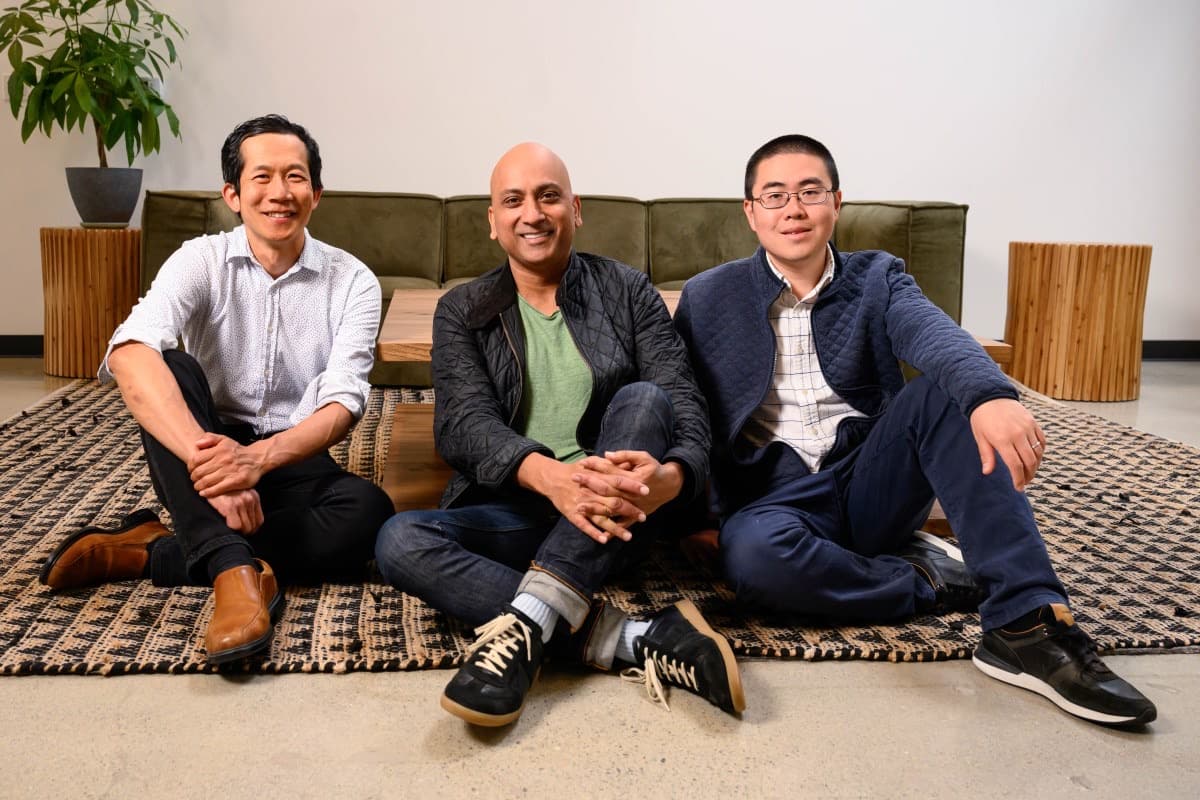
Spectro Cloud was founded in 2019 by CEO Tenry Fu and CTO Saad Malik, both of whom are still running it. The core product is Palette, a Kubernetes control plane that spans public cloud, bare metal, private data centers, and the edge. Its technical identity is the declarative cluster profile — a "blueprint" that versions the entire stack, from OS and kernel through CNI, CSI, and the applications on top, as a single managed spec. You don't touch clusters. You change the spec, and thousands of clusters converge on it.
Now the footnote that most coverage skipped. Goldman Sachs is not a new investor here, and this is not its first lead. Growth Equity at Goldman Sachs Alternatives also led the $75 million Series C that closed November 19, 2024. Same firm, same strategy, and the same dealmaker — Managing Director Mike Reilly. So this Series D is not an outside party arriving to set a fresh price. It's the existing lead doubling down for a second consecutive round. The bull reading is conviction: the investor with the most information, and a board seat's worth of it, wants more. The bear reading is that there was no new external price discovery, and that's a real weakness however you frame it.
Reilly's quote sets out the investment logic plainly: "Infrastructure is becoming one of the largest bottlenecks to production AI adoption." GovCon Wire reports the same theme from a different angle, that consistent management platforms will be essential as workloads scale. Translated: the GPUs have been sold. The layer above them is the next thing to get bought.
The four strategic investors are the actual story of this round. AMD Ventures is silicon. Ericsson is telco RAN and edge. LG Technology Ventures is manufacturing and devices. Maximus is a publicly traded US federal government services contractor. There is not a single conventional financial investor in that list. Add existing shareholder T-Mobile Ventures — which is simultaneously an investor and a named customer — and the picture is clear. This looks less like a financing and more like a set of distribution agreements denominated in equity. AMD Ventures' Patrick Rundell put it directly: "Spectro Cloud's platform approach addresses a critical challenge for enterprises deploying production inference workloads at scale," adding that "inference is becoming one of the most important drivers of infrastructure demand."
Go back further and the pattern isn't new. Prior investors include Alter Venture Partners, Boldstart Ventures, Firebolt Ventures, NEC, Qualcomm Ventures, Sierra Ventures, Stripes, T-Mobile Ventures, TSG, WestWave Capital and Translink. Telcos and chipmakers were already heavily represented before the Series C. Spectro Cloud has been built on strategic money more than on conventional venture money from very early on. One more data point worth flagging: at the Series C the company publicly claimed three consecutive years of triple-digit ARR growth. This announcement contains no follow-up number, so whether that growth continued through 2025 and 2026 is currently unverifiable from public sources.
What actually happened — what PaletteAI is really selling
The product axis of this round is PaletteAI, announced in San Jose on October 28, 2025. The pitch is one-click deployment of an AI stack, with the entire lifecycle afterward managed by blueprint. The feature set: (a) one-click AI stack deployment, (b) separation of duties between platform teams (governance) and practitioners (self-service), (c) blueprint-based lifecycle management from data center to edge, (d) cost optimization via automated provisioning and resource policy, (e) SaaS, self-hosted, and air-gapped deployment, and (f) FIPS support for regulated environments via PaletteAI Secure.
Items (b) and (f) matter more than they sound. (b) correctly diagnoses that AI infrastructure in large enterprises usually stalls on organizational problems, not technical ones — the platform team wants control, the data scientists want velocity, and if you don't split those with policy you get either shadow IT or projects dying in an approval queue. (f) explains the customer-and-investor pairing of U.S. Air Force and Maximus: in federal procurement, FIPS and air-gap support are not negotiating points, they're eligibility to bid.
The NVIDIA integration runs deep. PaletteAI is built on NVIDIA AI Enterprise and integrates NeMo, NIM and DOCA, the GPU Operator, BlueField-3/4 DPU zero-trust, Blackwell GPU and Grace CPU optimizations, and Spectrum-X Ethernet compatibility. GovCon Wire notes the architecture is designated NVIDIA-validated for AI factory deployments. At launch, NVIDIA's Senior Director of Enterprise AI Anne Hecht said Spectro Cloud's "integration of full-stack NVIDIA AI empowers enterprises to build and operate AI factories with performance, efficiency and trust." CTO Saad Malik framed the customer need the same day: "Enterprises need a comprehensive platform that opens access to latest AI solutions, while providing management for compliance, cost efficiency and security."
The product kept widening after launch. On March 16, 2026, the company announced an expanded PaletteAI ecosystem, and it maintains a separate PaletteAI VerteX line for government and regulated industries. PaletteAI Launchpads is the onboarding motion — start with one immediate, painful problem such as VMware migration, token cost control, or edge modernization, then expand into full-fleet lifecycle management. That's a smart sales design. Nobody signs off on "a platform." Plenty of people will take a meeting that starts with "have you seen your VMware renewal quote?"
| Item | Detail |
|---|---|
| Announced | July 15, 2026 |
| Round | Series D, over $100 million, oversubscribed |
| Lead | Growth Equity at Goldman Sachs Alternatives (second consecutive lead) |
| Dealmaker | Mike Reilly, Managing Director — same as the Series C |
| Participating | AMD Ventures · Ericsson · LG Technology Ventures · Maximus |
| Total raised | $260 million |
| Valuation | Undisclosed — absent from every primary source |
| ARR / customer count | Undisclosed — no performance metrics in the release |
| Prior round | $75M Series C, Nov 19, 2024, also led by Goldman Sachs |
| Founded | 2019, San Jose, California |
| Founders | Tenry Fu (CEO) · Saad Malik (CTO) |
| Products | Palette (Kubernetes control plane) · PaletteAI (launched Oct 2025) |
| Named customers | T-Mobile · Airbus · U.S. Air Force · Yum! Brands |
| Use of proceeds | ① PaletteAI utilization, token cost, governance ② Europe/Middle East/APAC, neocloud + sovereign cloud ③ chip, server and SI ecosystem integrations |
Use of proceeds breaks into three explicit buckets. Product: improving PaletteAI utilization, token cost control, governance features, and GPU cost optimization. Geographic and market expansion: Europe, the Middle East and APAC, specifically targeting neocloud (emerging GPU cloud) and sovereign cloud operators. Ecosystem: deeper hardware integration with chipmakers, server OEMs, and systems integrators.
The sovereign cloud line is the one to watch. Through 2025 and 2026, governments have been commissioning AI infrastructure that sits inside their own borders under their own law. That's a market hyperscalers are structurally poor at serving — the whole point of sovereign infrastructure is not being on a hyperscaler — which makes it one of the rare terrains that genuinely favors a vendor-neutral management layer.
What each side actually gets
Spectro Cloud gets doors, not dollars. With AMD on the cap table, Spectro Cloud's name lands on the shortlist every time AMD Instinct–based AI infrastructure is sold. With Ericsson, the odds of appearing in telco RAN and edge reference architectures go up. LG Technology Ventures is a route into manufacturing-floor edge inference — a market with enormous talk and scarce reference deployments. And Maximus is the unusual one: a publicly traded federal services contractor taking a venture position is most naturally read as intent to bid together on federal work. The U.S. Air Force already being a named customer gives that reading a foundation.
Goldman Sachs gets ownership and terms, at the cost of being its own price-setter. Leading two consecutive rounds means the party that has watched this company from inside the board room for twenty months wants more of it. But the mirror-image question is unavoidable: if the round was oversubscribed, why was there no new lead? Oversubscription means demand for allocation exceeded supply. It does not mean an independent party tested the price. Combined with the withheld valuation, you cannot rule out a flat round or structured terms — and you can't rule them in either. The honest position is that nobody outside the deal knows.
AMD gets a software hedge. AMD's weakness has never really been the chip; it's the software ecosystem, and CUDA is why. Every vendor-neutral management layer that gets widely deployed lowers the switching cost of changing GPU vendors, because infrastructure teams don't have to rewrite their operational tooling. For AMD, loosening NVIDIA's lock-in is worth more than any amount of direct promotion of its own silicon. Which creates a subtle tension worth naming: Spectro Cloud markets itself on multi-silicon, no-vendor-lock-in neutrality, while its deepest technical partner is NVIDIA and its newest shareholder is AMD. Staying credible to both is not automatic.
Customers get procurement comfort. A company with $260 million raised and a lead investor that has now backed it twice is easier to defend in a vendor review, where the question CIOs actually fear is "will this company exist in three years?" In infrastructure software, the balance sheet is itself a sales asset.
Precedents — Rancher got acquired, D2iQ got liquidated
The success case in this category is Rancher Labs. It led Kubernetes multi-cluster management, and SUSE acquired it in 2020 (closing December 2020), folding it into SUSE Rancher. Reported prices sat in the $600–800 million range, but SUSE's official announcement never disclosed a figure — so treat that number as reported, not confirmed. The dollar amount isn't the lesson anyway. The shape of the exit is: infrastructure management layers tend not to reach independent public listings. They get absorbed by larger platform companies.
The failure case is sharper. D2iQ, formerly Mesosphere, once contended for leadership in container orchestration with Mesos and DC/OS and raised over $200 million. When the industry standardized on Kubernetes, its entire differentiation surface evaporated, and in 2023 it wound down through an assignment for the benefit of creditors (ABC) — effectively a liquidation. Its remaining asset, the D2iQ Kubernetes Platform, was acquired by Nutanix in December 2023 and absorbed as NKP (Axios, Dec 9, 2023). That's the structural risk of this whole category stated as cleanly as it can be: management layers commoditize. When the layer below (hardware) or the layer above (platform) absorbs your feature set for free, the company in the middle has nothing left to sell.
A third reference point is Platform9, a long-lived startup in the same category that struggled to scale and eventually repositioned around the VMware migration niche. Note that the first item on PaletteAI Launchpads is also VMware migration. Right now the entire category is dividing up displacement demand created by Broadcom's VMware pricing — and that is a one-time event, not a permanent growth engine.
Two things could make Spectro Cloud's outcome differ from those three. First, it planted itself in the annoying places first — edge, air-gapped, FIPS — terrain hyperscalers structurally struggle to reach. Second, the four strategic shareholders constitute a distribution channel that neither Rancher nor D2iQ ever had. Both are plausible. Neither is proven, and with no public metrics in this announcement, there's currently nothing to prove them with.
How the competition counters
The most direct rival is Rafay Systems. Its total raised is roughly $33 million (per Tracxn) — a fraction of Spectro Cloud's — but its recent moves have been aggressive. On June 2, 2026, at Cisco Live US 2026, Rafay became a Cisco Solutions Plus partner, meaning it can be sold on the same purchase order as Cisco AI infrastructure. That is the classic play for beating a better-capitalized rival: skip the funding race, win the distribution race. Rafay also announced general availability of Token Factory (token-metered model access), partnerships with Dell, Unisys, NVIDIA and DDN, and a sovereign AI win in Latin America with AI Green Data Centers. Note the collision: Spectro Cloud listed token cost control as something it will build with this round. Rafay is already selling it at GA.
Nutanix is pushing enterprise Kubernetes plus AI through NKP, built on the D2iQ assets, and it is chasing VMware displacement from exactly the same angle as Spectro Cloud. Then there's Red Hat (IBM) OpenShift AI, SUSE Rancher, and VMware/Broadcom itself. And the hyperscalers — AWS EKS, Google GKE/Anthos, Azure Arc — offer functionally equivalent capability essentially free inside their own clouds. Spectro Cloud's counter is "we cross cloud boundaries," which lands hard with genuinely hybrid and multi-cloud customers and lands as pure added cost with anyone who settled on one cloud.
But the biggest threat isn't a competitor. It's NVIDIA. NVIDIA is simultaneously Spectro Cloud's most important technology partner and its largest structural risk. NVIDIA acquired Run:ai and open-sourced it, and it keeps pushing NIM and NeMo further up the inference stack. Every increment of GPU scheduling and multi-tenancy that NVIDIA pushes down into a free layer thins the differentiation Spectro Cloud has left to sell. That is structurally the same thing that killed D2iQ when Kubernetes standardization arrived. The deeper the partnership, the larger the substitution risk — an uncomfortable paradox to build a business on.
Expect two near-term responses across the field. First, token-cost dashboards become table stakes — this is not a defensible technical monopoly, and every vendor will ship something similar within a couple of quarters. Second, the sovereign and neocloud land grab accelerates early, because government awards lock in for years and the current window is when positions get set.
So what actually changes
If you're a platform engineer — the useful signal isn't the round size, it's where the money points: utilization, token cost, governance. Those three landing together as stated priorities means the KPI for AI infrastructure teams in 2026 has shifted from "did we deploy it" to "how much are we running, at what unit cost." If you operate GPU clusters today, instrumenting idle rate, cost-per-token, and per-tenant quota is prerequisite work regardless of which vendor you eventually choose. One honest caveat, though: there is no published, verified benchmark showing how much PaletteAI actually reduces GPU idle time or token spend. Vendor claims and measured outcomes are different categories of evidence, and this announcement supplies only the first.
If you're an investor — four things deserve caution. One, no valuation. A release that discloses round size and withholds enterprise value isn't a bad release, but it means a flat round or structured terms can't be ruled out. Two, no operating metrics. The "three consecutive years of triple-digit ARR growth" claim from 2024 has no public successor number. Three, the lead is the incumbent. No new external lead means no new price discovery, which is a genuine weakness however positive the underlying business may be. Four, commoditization risk is live. D2iQ died of exactly this, and here the pressure arrives from two directions at once — NVIDIA from below, hyperscalers from the side. Add public-sector concentration: the Air Force and Maximus axis carries long procurement cycles and exposure to budget politics.
If you're a regular user — you will never touch this product. The direction still reaches you. Most of what the world spends on AI right now goes into buying GPUs, and a meaningful share of those GPUs sit idle. That inefficiency gets priced into the AI features in the services you use. If the trend this round represents works — squeezing more inference out of the same hardware — the unit cost of AI features falls and AI shows up as a default in more places. If it doesn't, the expensive features stay behind paid tiers, rationed the way they are now.
If you work in public sector or regulated industry — the combination of Maximus as an investor, PaletteAI VerteX, and FIPS plus air-gap support is a specific signal. A category is forming in federal and public AI procurement for management layers that have already cleared the regulatory bar, and Spectro Cloud is positioning to occupy it. Just hold the timeline realistically: procurement cycles are long, and a signed contract takes several quarters to show up as revenue.
🥄 Three Things You're Probably Wondering
— So what does this mean for me? Nothing directly. Indirectly, the cost of enterprises leaving expensive GPUs idle gets passed into the price of the AI features in the products you use. If management layers like this work, those features get cheaper and show up in more places.
— $100 million sounds like a big win. Is it? It's a real signal, but the release contains no valuation, no ARR, and no customer count — round size is the only number disclosed. And the lead investor is the same firm that led the 2024 Series C, so no new outside party set the price. How well the company is actually doing is genuinely too early to call from public information.
— Are they ahead of the competition? On capital, clearly. Rafay Systems has raised roughly $33 million total, so it's not close. But Rafay became a Cisco Solutions Plus partner in June, which buys distribution that money alone doesn't, and its token-metering product is already generally available while Spectro Cloud says it will build that capability with this round. Ahead on funding, yes. Ahead on product timing, harder to argue.
Sources
- Spectro Cloud raises $100 million Series D to accelerate production AI adoption — Spectro Cloud Newsroom (Jul 15, 2026)
- Spectro Cloud Raises $100M Series D to Scale AI Infrastructure — Growth Equity at Goldman Sachs Alternatives (Jul 15, 2026)
- Spectro Cloud wants to ease AI infrastructure management, raising $100M in funding — SiliconANGLE (Jul 15, 2026)
- Spectro Cloud Launches PaletteAI, Simplifying Secure AI Deployment from Data Center to Edge with NVIDIA (Oct 28, 2025)
- Spectro Cloud Closes $75M Series C — 'The Next Chapter' (Nov 19, 2024)
- Goldman Sachs Leads $100M Round for AI Infrastructure Firm Spectro Cloud — GovCon Wire
- Spectro Cloud Raises Over $100 Million Series D To Scale Production AI Infrastructure — Pulse 2.0
- Growth Equity at Goldman Sachs Asset Management leads $75M Series C in Spectro Cloud (2024)
Numbers and criteria are as of announcement and may change. Investment calls are yours to make!