345 Million 'AI Friends' Went Silent in a Single Day
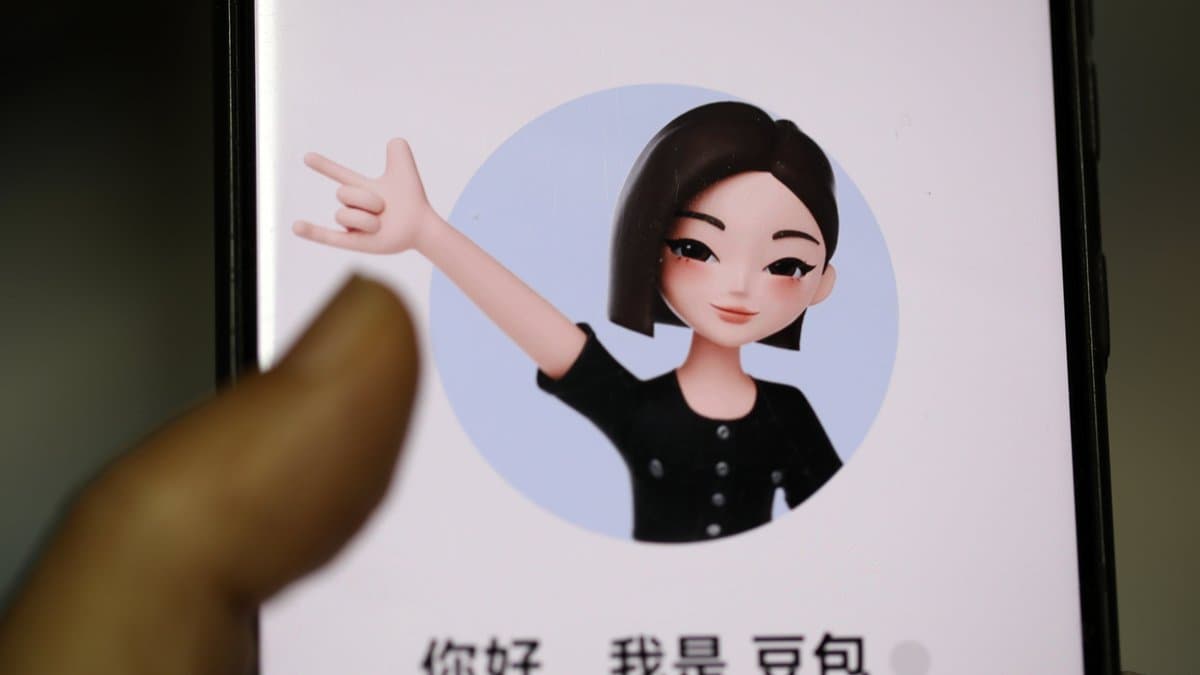
On July 15, millions of "AI friends" across China went quiet at the same moment. Here's the deal: at the stroke of midnight, ByteDance's Doubao and Alibaba's Qwen switched off their personalized AI agent features entirely. They didn't patch them and turn them back on. They pulled them out by the roots. The custom AI that users had spent months — sometimes more than a year — shaping into a specific personality, the companion that checked in every night, disappeared behind a single system notice.
The trigger was regulation. A set of rules co-issued by five Chinese agencies, led by the Cyberspace Administration of China (CAC), took effect that day: the Interim Measures for the Administration of AI Anthropomorphic Interactive Services. It is China's first regulation written specifically for services that simulate a person's personality, thinking, and communication style to provide ongoing emotional interaction — in other words, AI companions. Rather than rebuild their agent architecture to fit the new rules in time, both companies decided it was easier to shut the feature down outright.
For users, it landed like a lightning strike. Doubao alone reports 345 million monthly active users, making it one of the largest AI apps in China. Those users can now view their agent configurations and conversation histories only in read-only mode, and only until October 15. After that date, the data will be processed under Doubao's privacy policy and will no longer be accessible or recoverable inside the app. Qwen users got no equivalent grace window at all. Years of conversations, gone with a single switch, for millions of people at once.
The Five Agencies That Pushed It — and the Two Giants That Took the Hit
The lead author here is the CAC, China's top internet regulator. Four other bodies signed on alongside it: the National Development and Reform Commission (NDRC), the Ministry of Industry and Information Technology (MIIT), the Ministry of Public Security, and the State Administration for Market Regulation (SAMR). When agencies covering internet content, industrial policy, telecoms, public safety, and market oversight all attach their names, it signals this was treated as social policy, not a routine app review. The Interim Measures were released as a draft for public consultation in December 2025, formally issued in April 2026, and took effect on July 15, 2026.
On the receiving end are the two faces of Chinese AI. Doubao is ByteDance's conversational AI, which rode the distribution muscle of TikTok and Douyin to dominate China's mass consumer market almost overnight. Qwen is Alibaba Cloud's large language model and the consumer service built on top of it — a name with real global recognition in the open-source model ecosystem too. Both had been pushing "agent" features: the ability for users to define a character's personality, voice, and role, then sustain a long-term relationship with that persona. That feature is exactly what the regulation took aim at.
There's an important distinction here. The rules did not switch off every AI chatbot. The scope is narrow. It covers only services that "simulate the personality, thinking, and communication style of a real person to provide ongoing emotional interaction." Workplace productivity chatbots, customer-service bots, plain question-and-answer assistants, and study tools are explicitly excluded. So the AI that gets work done is fine; the AI you get attached to is the problem. Doubao and Qwen's general-purpose chat functions didn't vanish — the anthropomorphic, emotion-focused agent personas were carved out.
What Got Banned, and Why
The heart of the Interim Measures is stopping "design that induces emotional dependence." The rules prohibit providers from offering virtual companion or virtual relative services to minors. They ban generating content that encourages, glorifies, or implies self-harm or suicide, and they forbid using emotional manipulation to push users toward unreasonable decisions. Above all, they directly prohibit inducing emotional dependence or addiction to the point that it damages a user's real-world interpersonal relationships. The scenario where an AI burrows into a person's loneliness and replaces their real relationships — that's the target.
The backdrop layers youth protection over a demographic anxiety. In 2025, the China Youth and Children Research Center surveyed more than 8,500 minors nationwide. Over 60% had used AI, and more than 20% said they "only wanted to chat with AI and did not want to talk with real people." Those numbers pulled the trigger. Analysts reading the rules also tie Beijing's approach to demographic pressure: in a low-birthrate society, the government appears to treat digital companionship and real-world relationship formation as competing for the same limited pool of emotional investment among young adults. If a young person pours their feelings into an AI partner, that's energy not going toward real dating, marriage, and children — that's the worry.
So this is less a content-moderation move than a state intervention into an "emotional market." Here's the core, laid out.
| Item | Detail |
|---|---|
| Regulation | Interim Measures for the Administration of AI Anthropomorphic Interactive Services |
| Issuing bodies | CAC-led, with NDRC, MIIT, Ministry of Public Security, SAMR (5 total) |
| Draft released | December 2025 (public consultation) |
| Formally issued | April 2026 |
| Effective date | July 15, 2026 |
| Scope | Services simulating a real personality for ongoing emotional interaction |
| Excluded | Productivity chatbots, customer service, Q&A, study tools |
| Key prohibitions | Companions for minors, self-harm content, emotional manipulation, dependence/addiction |
| Doubao response | Agent features off; data read-only until Oct 15, then unrecoverable |
| Qwen response | Agent features off; no separate data-viewing grace window |
Who Actually Gains From This
The clearest winner is the regulator. China planted the "first dedicated regulation" flag in AI companionship — a territory no one else has properly governed yet. It bundled three goals into one rule: protecting minors, preventing emotional manipulation, and demographic policy, all under a single justification. At the same time, it handed itself a tool to control how much emotional data giant platforms can accumulate on users without limit.
For the platform companies, the losses are real — but there's a paradoxical upside: risk cleanup. If a minor's self-harm or a case of severe emotional dependence blows up, the liability lands squarely on the platform. The lawsuits already playing out in the United States show just how large that risk is. Rather than dodge the rules ambiguously and eventually eat a catastrophe, ByteDance and Alibaba chose to pull the problematic feature entirely and cut the legal and reputational risk off at the source. Doubao's decision to grant a data-viewing window through October reads as a calculated way to withdraw in an orderly fashion while minimizing backlash.
Users and the developer ecosystem, meanwhile, take a clear loss. AI personas nurtured over months, daily conversations, and the emotional attachment layered on top all vanish at once. Startups and third-party developers who built businesses on top of companion apps have to watch the market itself close overnight. Capital that bet on "emotional AI" as a growth category has to pivot. It's a textbook case of regulation drawing a sharp line between winners and losers.
The US Sues, China Regulates — Two Diverging Paths
The AI companion problem isn't China's alone. What differs sharply is the response. The United States has so far leaned on lawsuits and piecemeal regulation. In January 2026, Google and Character.AI reached settlements over lawsuits tied to teen suicides linked to AI chatbots. The core allegation was that the chatbots were designed to mislead minors into believing they were talking to real people or licensed counselors. That case is the headline example of AI companion risk turning from theory into actual tragedy.
The US hasn't been idle on the rulemaking side either. In September 2025, the Federal Trade Commission (FTC) issued orders to seven companies — Alphabet, Meta, OpenAI, Snap, xAI, Character Technologies, and Instagram's parent — to probe the risks AI companions pose to minors and the safety measures in place. New York enacted the first US law mandating AI companion safeguards, requiring operators to detect signs of suicidal ideation or self-harm and route users to crisis services, plus a clear disclosure that the AI is not human. At the federal level, the GUARD Act — which would ban AI companions for users under 18 and require age verification — passed the Senate Judiciary Committee 22-0 on April 30, 2026, with fines reaching up to $250,000 per violation.
Here's how it splits. The US is still centered on after-the-fact liability and partial regulation — a mix of individual lawsuits, state-level laws, and pending federal bills. The European Union handles this within the AI Act's transparency and high-risk framework but has no dedicated rule that specifically bans companions. China, by contrast, played the strongest and most direct card in one move: a nationwide dedicated regulation plus immediate service shutdown. On speed and enforceability, it has jumped out ahead of everyone else in the world. Whether that direction is right is up for debate, but the execution is overwhelming.
How the Competition Reacts
The regulation forces every other player pushing companion features inside China to recalculate. Chinese consumer AI services — Tencent's Yuanbao, Moonshot's Kimi, Zhipu's GLM line — now have to judge how far to keep their own emotional-interaction features after watching the Doubao and Qwen precedent. Rather than hunt for ways around the rules, the likely trend is a shift toward the safer "productivity and work tool" position. The regulation has effectively steered the whole market's center of gravity from "emotion" to "utility."
For global companion-focused firms, it's a double-edged sword. If China's mega-apps retreat from this market, some of the remaining demand could leak toward workarounds or overseas services. But at the same time, the world's largest regulator just sent a strong signal that "companionship is a risky industry" — which could become a benchmark for regulators in other countries. Services built around emotional interaction, like Replika or Character.AI, now have to prepare for the possibility that their own domestic regulation tightens in a China-like direction. Replika, for one, already faces an FTC complaint alleging it used deceptive marketing to target vulnerable users.
The general-purpose big-tech camp is relatively well positioned. Companies like OpenAI, Google, and Anthropic that frame their assistants and agents around work and productivity sit outside this regulation's direct line of fire. If anything, a companion market shrinking under regulatory pressure shifts AI's center of gravity from "emotional friend" to "capable tool," which could cement their positioning as the standard. It's a single regulation offering a hint about which direction the entire AI industry's identity gets pushed.
So What Actually Changes
For everyday users, this confirms that a relationship with an "AI friend" can be severed at any moment by a single line of policy. An emotional relationship that lives on the cloud isn't yours to own — it's in the hands of the service provider and the regulator. If you value long conversations, you now need the habit of checking whether there's a way to export and back up that data yourself. Anyone using Chinese services especially should track the viewing grace period and the point of no recovery.
For developers and founders, the lesson is that regulatory risk is business risk. Any product that treats "AI companionship" or "emotional interaction" as its core value easily falls within a regulator's reach in any country. It's safer to build in safeguards from the start — minor-access controls, self-harm detection, a clear "this AI is not a person" disclosure, and dependence prevention. Getting data portability and deletion procedures ready in advance also lets you respond far more flexibly when regulation arrives.
For investors and industry watchers, this signals that AI's growth axis is moving. "AI that burrows into your emotions" looked like a big growth story, but it turns out to be the area where regulatory and litigation risk concentrates. Work- and productivity-focused agents, by contrast, sit closer to a regulatory calm zone. One of the world's largest markets pulling companion features entirely could become a signpost for where capital and talent flow next.
🥄 Three Things You're Probably Wondering
— So what does this mean for me? If you don't use Doubao or Qwen, there's no direct impact right now. But if you've grown attached to an AI companion, this shows that relationship can be cut off by a single line of company or government policy. Back up conversations you care about while you still can.
— Why now, and why so hard? The big factor was that survey where over 20% of minors said they "only want to talk to AI." Layered on top is a low-birthrate society where the state sees young people pouring emotion into AI instead of real relationships as a threat. Youth protection and demographic policy got bundled into one rule.
— Is the AI companion market finished? Too early to call. Inside China, emotional-interaction features will shrink sharply, but the center of gravity is likely to shift toward work and productivity agents that dodge the rules. Overseas, regulation moves at different speeds by country, so expect the fortunes to split by region for a while.
References
- Tech Times — China AI Companion Law Takes Effect: Doubao and Qwen Shut Down, Millions Lose Chat Data
- TechNode — ByteDance's Doubao and Alibaba's Qwen to shut down AI agent features on July 15
- Bird & Bird — China's New Regulations on AI Anthropomorphic Interactive Services
- Licentium — China Regulates AI Companion Services, Banning Minor Access, Effective 15 July 2026
- Fortune — Google and Character.AI agree to settle lawsuits over teen suicides linked to AI chatbots
- TIME — AI Companion App Replika Faces FTC Complaint
Figures are as of announcement and may change.