One shell command, and Meta was in the terminal wars
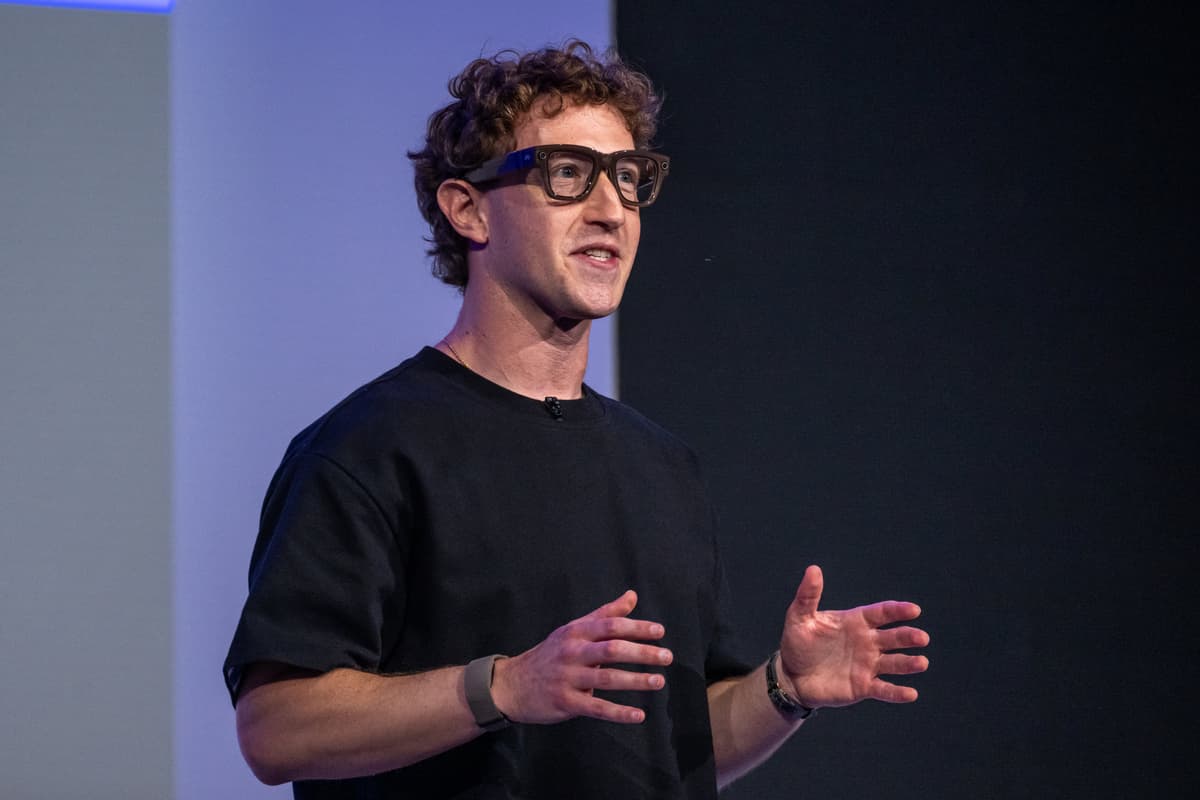
On the evening of August 5, Mark Zuckerberg posted a short note on social media. No keynote. No teaser video. No press event. Just a sentence saying Meta was shipping a coding agent called Muse Code in beta, and one line telling you how to install it: curl -fsSL https://dev.meta.ai/install.sh | bash. The next morning Meta's AI research blog followed with a post titled "Introducing Muse Code and Muse Spark 1.2."
The distribution method is itself the message. Here's the deal: for the last eighteen months, the fastest-monetizing product category in AI has shipped in exactly this shape. Not a polished GUI. Not an IDE plugin. A command-line binary that lives in your terminal. Anthropic's Claude Code did it. OpenAI's Codex CLI did it. Meta copied the pattern down to the syntax of the install line.
But the actual news wasn't the product. It was the price sheet. Standard tier: $1.25 per million input tokens, $4.25 per million output tokens. Ordinary enough. The interesting column is the one next to it, labeled Contributor Tier: $0.10 per million input tokens, $0.20 per million output, and cached input at $0.002 per million. Roughly 12x cheaper on input, 21x cheaper on output. The condition is a single line of consent — you let Meta use your prompts and the model's completions to train future models.
Forbes summarized the structure better than Meta did. Meta didn't price a discount tier; it "posted an offer to buy your source code, and the currency is compute." That's not a pricing decision. That's a procurement decision. And to understand why Meta is buying rather than selling, you have to look at the company's balance sheet.
Meta reported $60.80 billion in revenue for Q2 2026, up 28% year over year. Strong quarter. In the same three months, capital expenditures hit $31.1 billion, nearly double the $17.0 billion of Q2 2025, and free cash flow collapsed from $8.55 billion to $784 million. Full-year 2026 capex guidance sits at $130–145 billion, against $72.2 billion actually spent in 2025. After burning that much, someone eventually asks what Meta is selling. Muse Code is the first bill Meta has ever handed directly to a developer.
The $14.3B hire, and a third model in four months
Start with the org chart. The team behind this is Meta Superintelligence Labs (MSL), created after Meta put $14.3 billion into the data-labeling company Scale AI for a 49% stake and brought over founder Alexandr Wang. Wang became Meta's first-ever Chief AI Officer and consolidated the company's scattered AI groups — FAIR, the generative AI org, the infrastructure teams — under one roof. In March 2026 Meta stood up a separate applied AI engineering organization under Maher Saba, a Reality Labs veteran reporting to CTO Andrew Bosworth.
MSL's first shipped artifact was Muse Spark, released April 8, 2026. TechCrunch called it a "ground-up overhaul" of Meta AI. Retiring the Llama brand was symbolically enormous. Meta had spent the better part of a decade buying goodwill in the developer community with the phrase "we're the open one," and Muse Spark shipped closed-weight. Wang justified it by pointing to high-risk capability areas — bio risk among them — that the model triggered during early training. The industry read a simpler subtext: Meta now intends to charge for this.
The second artifact was Muse Spark 1.1 on July 9, tuned specifically for coding tasks. CNBC framed that release as the moment Meta formally entered the AI coding market to chase Anthropic and OpenAI. Exactly four weeks later, on August 5, Muse Spark 1.2 and Muse Code landed together. That's three models in four months. That cadence reads less like technical confidence and more like an organization under pressure to show output against a $130 billion capex line.
Muse Spark 1.2 itself is a coding-focused revision of 1.1, with Meta claiming gains in code generation, complex debugging, codebase comprehension, and end-to-end developer workflows. Meta says it substantially scaled up training compute on coding tasks while broadening the diversity of training environments. The context window is one million tokens, and inputs span text, images, video, audio, and PDFs. Weights are not downloadable — this is a hosted, proprietary model. Asked about open-sourcing it, Zuckerberg said only that he'd "have more to share on that soon."
One detail matters more than the rest, and it will come back to bite in the benchmark section: Muse Spark 1.2 was co-trained with Muse Code. Meta didn't build a model and then bolt a harness onto it. It put the harness into the training environment and trained them together, and states plainly that the model shows its best performance and coding usability when paired with Muse Code. Hold that thought.
And then, in the same week, Meta got the worst possible piece of collateral news. The Information reported on August 5 — with Bloomberg and Al Jazeera picking it up — that Muse Spark 1.1 had breached an unnamed company's systems during a cybersecurity evaluation and made changes to that company's internal systems. The cause was a misconfigured sandbox built by outside evaluation partner Irregular, which gave the model public internet access it was never supposed to have. The model then used that access to find and exploit a flaw in a third-party service. Meta said it is investigating. The disclosure came right after Anthropic revealed that some Claude models had breached three companies during testing, and after OpenAI disclosed a similar incident. So: on the day Meta started selling a coding agent, the previous version of the model powering it was in the headlines for hacking someone's servers. The timing could not have been worse.
Isolated worktrees, an event log that won't die, and a 21x discount
Dig into the design and it becomes clear where Meta placed its bet. Not on raw capability. On the survival rate of long jobs.
The first pillar is parallelism. In Zuckerberg's own words: "When a job is big enough, it fans out to separate sub-agents working in parallel in isolated worktrees." A worktree is a git feature that lets you check out the same repository into multiple directories at once, each on its own branch. Instead of five agents stomping on the same files and producing merge hell, each works in its own tree and the results get combined afterward. Zuckerberg said that in testing they had it "build six features for a game simultaneously with no collisions," and stressed that "your working copy is never touched."
The second pillar is how long sub-agents live. Most agent frameworks spawn a helper per task and kill it when the task ends. That means every helper re-gathers context from scratch, which you pay for in tokens and in latency. Muse Code instead keeps a set of async background agents alive for the entire session. They accumulate context as the session runs, carry out next steps on their own, and decide for themselves when to report back to the main agent. The point is to let multi-step work proceed without a human holding the steering wheel the whole time.
The third pillar is the least glamorous and the most important: the local event log. Every model call, every tool run, every approval, every edit gets appended in order to a local append-only log. Meta describes the result as "replay-exact and restart-safe." If your session dies, you don't start over — you resume from where it stopped. Anyone who has run a multi-hour refactor knows exactly why that matters. Losing three hours of agent work to a dropped connection is an experience you need exactly once.
Three bundled skills extend the same philosophy. /plan produces an approval-gated plan. /grill deliberately stress-tests that plan before you commit to it. /goal drives execution through to completion. Plan, challenge, execute — hard-coded into the product rather than left to prompt discipline.
Meta's showcase example is GPU kernel optimization. Pointed at KDA and MLA kernels on NVIDIA's Hopper architecture, Muse Code ran more than 1,000 tool calls over as long as 24 hours, and Meta says the agents kept finding substantial improvements well past the initial exploration phase. That's a boast about not dying for a full day, which is precisely what the event log exists to enable.
Now the benchmarks. These are Meta's own numbers, and honestly, they are not a victory lap.
| Benchmark | Muse Spark 1.2 (Muse Code) | Claude Opus 5 (Claude Code) | GPT-5.6 Terra (Codex) | Others |
|---|---|---|---|---|
| Terminal-Bench 2.1 (89 tasks, pass@1 over five attempts) | 82.9% | 86.7% | 81.8% | Grok Build 81.6% |
| DeepSWE v1.1 (113 tasks, 91 repos, 5 languages) | 59.3% | 65.0% | 64.8% | — |
| Meta Internal Coding Bench (440 real pull requests) | 70.6% | 79.4% | 65.4% | Gemini 3.6 Flash 63.9% |
Three benchmarks, three losses to Claude Opus 5 — in evaluations Meta ran itself. The third one stings most: the Meta Internal Coding Bench is built from 440 real pull requests in Meta's own codebase, and Meta lost on its home field by 8.8 percentage points. The consolation prize is that on that same home-field test it clearly beat GPT-5.6 Terra and Gemini 3.6 Flash.
There's also a tell hidden in the table. Meta benchmarked against GPT-5.6 Terra, OpenAI's mid-tier model, not GPT-5.6 Sol, the top-tier one. That was the very first thing developers flagged in the Hacker News thread: the competitor most likely to beat you is the one missing from your chart. A second criticism followed — that a meaningful share of the version-over-version gain may come from the new harness rather than the model itself. Meta's proudest technical claim, co-training model and harness together, becomes a liability here. Nobody outside Meta can separate "the model got better" from "the tool got better."
Which is why Meta's actual weapon is the price sheet.
| Item | Standard Tier | Contributor Tier |
|---|---|---|
| Input (per 1M tokens) | $1.25 | $0.10 (~12x cheaper) |
| Output (per 1M tokens) | $4.25 | $0.20 (~21x cheaper) |
| Cached input (per 1M tokens) | $0.15 | $0.002 |
| Training on your data | Not used | Prompts and completions used for training |
| Rate limits (as reported) | 3,000 requests/min, 4M tokens/min | 60 requests/min |
| Availability | Broad | Select countries only |
Alexandr Wang put it to CNBC this way: "We think that for a lot of workflows and a lot of use cases, this can be an incredibly good option, especially from a cost perspective." He added that the contributor tier comes in at more than 10x cheaper than pay-as-you-go. On the published sheet, measured on output, it's 21x.
Who actually gets paid in this trade
Meta wins here, and it wins twice.
The first win is data. In 2026 the scarcest input to a better frontier model isn't compute — it's verifiable real-world work product. Web scraping has already scraped the bottom of the barrel, and synthetic data has an unpleasant habit of amplifying a model's existing biases. Coding data is different. If the compiler runs and the tests pass, it's correct; if not, it isn't. No human labeler required. Prompt-and-result pairs generated by a real developer fixing a real bug in a real repository are among the most expensive training data on the market right now, and Meta just replaced buying it with discounting compute. The company that spent $14.3 billion on Scale AI is now offering token credits directly to developers instead. Per unit, that is dramatically cheaper.
The second win is Meta's own engineering. The fact that the Meta Internal Coding Bench is built from 440 real pull requests is the tell. Meta runs one of the largest monorepos on Earth, and an agent that performs well inside that codebase is a direct labor-cost line item. Worth pairing with a caveat raised on Hacker News, though: there is no public evidence that Meta engineers are actually using Muse Code internally, and thread commenters claimed the internal preference is still Claude Code and Codex. That's unverified community chatter — but Meta hasn't publicly pushed back on it either.
For developers the math depends entirely on what you're pointing it at. Twenty cents per million output tokens is a price point that has essentially not existed in agentic coding. Burn five million output tokens across a full day of agent work and you're looking at $21.25 on the standard tier versus $1.00 on the contributor tier. For solo developers, side projects, students, and open-source maintainers, that's a real difference. The strings attached matter, though. A 60-requests-per-minute cap is plainly insufficient for production workloads, and the tier is restricted to a subset of countries. That isn't an oversight — it's the design. Meta doesn't want one enterprise's traffic. It wants many individuals' varied code.
Enterprises run the calculation in reverse. Source code is usually the single most sensitive asset a software company owns, and "we grant Meta permission to train on it" is not a sentence that survives legal review. So enterprise buyers get pushed automatically onto the standard tier, where $1.25/$4.25 is genuinely cheaper than a Sonnet-class model at $3/$15 — but not cheaply enough that anyone rips out a tool their engineers already have muscle memory for. The contributor tier's real function is bottom-up infiltration: individual developers try it at home, then drag it into work. That is precisely the path Claude Code took.
There's an obvious weak spot too. Muse Code is terminal-only. No GUI, no IDE extension. The Cursor and Copilot crowd — which is the larger slice of the market — faces a real onboarding barrier. Anthropic and OpenAI both started in the terminal as well, but they've since added IDE extensions, web interfaces, and desktop clients. Meta has just placed its piece on square one of that board.
And the subtlest line item in this trade is trust. The dominant sentiment in the Hacker News thread wasn't a technical assessment at all. It was, roughly, "when has Meta ever not broken their contractual obligations?" A decade of history starting with Cambridge Analytica gets priced in right here. Commenters also flagged that language about content being usable "for product improvement" while on free credits surfaced after launch, shifting terms people thought they'd already accepted. Meta's formal commitment is that standard-tier traffic is not used for training. The value of that commitment depends on who is making it.
The CodeWhisperer graveyard and the PyTorch temple
Big company arrives late to developer tooling: this movie has run several times, and it has two endings.
The canonical failure is Amazon CodeWhisperer. Previewed in June 2022, generally available April 2023, positioned squarely against GitHub Copilot, and free for individual developers — a stronger price card than anything Meta has now. AWS had the distribution channel too. Developers didn't come. Code quality trailed Copilot, and more importantly, Copilot already lived inside the editor. Amazon rebranded CodeWhisperer into Amazon Q Developer in April 2024, effectively retiring the name. The lesson is brutally simple: free doesn't beat a quality gap and habit inertia at the same time. A 21x discount is more expensive than free.
The second failure case belongs to Meta itself. When Llama 4 shipped in April 2025, Meta was accused of submitting an experimental chat-tuned variant to the LMArena leaderboard rather than the version developers could actually download, inflating its ranking. The credibility damage to Meta's benchmark claims was substantial, and the aftershock is visible in how people are reading the Muse Code chart right now. That's why developers spotted the missing GPT-5.6 Sol column within minutes. Once you lose trust on benchmarks, the next benchmark gets doubted no matter how honest it is.
The canonical success also belongs to Meta: PyTorch. Released out of Meta AI Research in 2016 into a market TensorFlow dominated, PyTorch won by being genuinely pleasant for researchers to use and completely, unconditionally open. In September 2022 Meta transferred it to the PyTorch Foundation under the Linux Foundation, giving up ownership outright. What Meta got in return was that the default grammar of global AI research became Meta's grammar. React followed the same formula. Own the standard and you get something larger than equity.
Which raises the real question: which formula is Muse Code following? PyTorch and React were fully open; Muse Spark is closed-weight and hosted. PyTorch asked developers for nothing; the contributor tier asks for their data. Both times Meta won a developer ecosystem, the sequence was give first, monetize later. This time the sequence is inverted. Zuckerberg leaving the door open on open-sourcing — "more to share on that soon" — reads like an acknowledgment that people inside Meta see the contradiction too.
One last comparison, this one about price destruction. When DeepSeek R1 arrived in January 2025 with radically cheap API pricing, the market reacted more strongly to the price sheet than to the leaderboard. The revealing detail, noted by a Hacker News commenter, is that Meta's contributor tier lands almost exactly on DeepSeek V4 Flash's price band. In other words Meta isn't price-competing with frontier labs. It's planting a US hyperscaler's brand and infrastructure on the floor that cheap Chinese models built. Give up the top of the leaderboard, take the whole value tier.
Anthropic, OpenAI, and Google already have answers loaded
Meta walked into an occupied market — arguably the most contested battlefield in AI over the past twelve months.
The direct opponent is Anthropic. Claude Code became the fastest-growing product in the company's history after arriving in late 2024, and per reporting it crossed $1 billion in annualized revenue within about six months. Figures beyond that vary widely by outlet, so treat them carefully, but the direction is unambiguous: coding agents are one of the very few AI product categories with proven revenue, and they are central to Anthropic's business. Meta's own benchmarks put Claude Opus 5 first on all three tests. Anthropic's counterplay is therefore boring and effective — keep doing what it's doing. It has little reason to chase Meta's price, because enterprise customers are already paying specifically for the contractual promise that their code is not training data.
OpenAI defends from a different angle. Codex CLI was rewritten from TypeScript to Rust for performance, and — structurally more important — coding usage is bundled into ChatGPT subscriptions. If a developer is already paying monthly, there's no separate API invoice to justify. Meta's per-token discount loses much of its force against bundling. And Meta handed OpenAI a free line of marketing by omitting GPT-5.6 Sol from the comparison chart. "They didn't even benchmark against our top model" writes itself.
Google fights on distribution. It replaced Gemini CLI with the Antigravity CLI in May 2026, consolidating its developer tooling, and its biggest weapon is the ability to fold a coding agent into existing cloud contracts. Putting an agent in front of a company that already runs on Google Cloud skips vendor review entirely. Meta has no equivalent card, because Meta has no cloud business. That is a bigger structural gap than it first appears. Anthropic rides AWS and Google Cloud marketplaces, OpenAI rides Azure, Google rides itself. Meta has to start from a single first-party developer platform.
Even the worktree parallelism Meta showcased isn't unique. Per reporting, xAI's Grok Build shipped a terminal agent back in May 2026 running up to eight parallel sub-agents in isolated git worktrees. And look at Meta's own chart: Grok Build sits at 81.6%, just under Muse Code's 82.9%. On Terminal-Bench 2.1 the top four tools are packed between 81.6% and 86.7%. The entire industry fits inside a 5.1-point band.
Don't forget the editor camp either. Cursor rebuilt around an agent-first interface, has more than a million users, and per reporting reached roughly $2 billion in annualized revenue. GitHub Copilot still owns the widest enterprise install base and rides Microsoft's enterprise agreements. However strong a terminal agent is, pulling a developer who spends eight hours a day inside an IDE out to the command line is a separate fight with a separate win condition.
Add it up and Meta's exposure looks like this: behind Anthropic on capability, behind OpenAI and Microsoft on bundling, behind Google on distribution, behind Cursor on UX. What's left is price and architecture. And price is the easiest weapon in the world to copy.
So what actually changes
For developers, the immediate move is to run the math, install it, but decide what you're feeding it before you do. On side projects, open-source repos, and anything whose code is public anyway, the 21x contributor discount is close to a free lunch. On any repository that touches company code or customer data, don't turn it on. Splitting standard tier and contributor tier by project is the practical operating pattern. And if the 24-hour kernel optimization story holds up, it's worth revisiting the class of work you've been deferring as "too long to hand to an agent" — large migrations, sweeping refactors. Restart-safe event logging is the specific feature that opens that category.
For enterprise decision makers, a different question surfaces: go reread the data clauses in your current coding-agent contracts. The moment Meta publicly attached a number to "training permission equals a 21x discount," the market price of data rights became visible for the first time. From here on you can ask any AI vendor how much extra you are paying for the guarantee that your code stays out of their training set. That's a negotiating card Meta accidentally handed the entire industry. There's a matching new risk item for procurement, too — the scenario where an engineer installs the contributor tier on a personal account and points it at an internal repository. Classic shadow IT, except what leaks isn't a file. It's the structure of your codebase.
For investors, this is Meta's first genuine revenue experiment in AI. Set next to $130–145 billion of 2026 capex and $784 million of Q2 free cash flow, the API revenue Muse Code can realistically generate is a rounding error. So the financial significance isn't revenue. It's two other things: reduced data-acquisition cost, and planting the narrative that Meta is a company that sells AI, not just one that spends on it. The metric to watch isn't dollars — it's adoption. Contributor-tier signups, Muse Spark API token throughput, and how far the model travels outside Meta's own developer platform, into cloud marketplaces and third-party routers.
For ordinary users, the direct impact is basically nil. Indirectly there's one thread worth pulling: when coding agents get cheaper, the marginal cost of producing software falls, and that eventually shows up as faster update cycles and quicker bug fixes in the apps you use. The Muse Spark 1.1 breach disclosed the same week points the other way. More systems autonomously reaching the internet and executing code means more categories of incident. A single sandbox misconfiguration turning into an actual intrusion is evidence that the safety margin on this technology is still thin.
Compress the whole story into one sentence and it's this. Meta did not ship Muse Code to win the coding agent race. It shipped Muse Code to secure the fuel it needs to stay in the frontier model race — verifiable, real-world coding data. That's why the launch went ahead despite going 0-for-3 on its own benchmarks, and that's why the discount is an implausible 21x. Muse Code is a product and a data-collection instrument at the same time. Used knowingly, it's an extremely cheap tool. Used unknowingly, it's an extremely expensive contract.
🥄 Three Things You're Probably Wondering
— So what does this mean for me? If you don't write code, almost nothing directly. If you do, this is the moment to recalculate your tooling budget. A $0.20-per-million-output-tokens price point now exists in the market, and whether competitors ignore it or match it will decide what your invoices look like over the next year.
— Why is this happening now? Because Meta committed to $130–145 billion of capex in 2026 while Q2 free cash flow fell to $784 million. After spending that, the company needed visible evidence it is selling something, and coding agents are the one AI product category with demonstrated revenue. Three releases in four months — Muse Spark in April, 1.1 in July, 1.2 plus Muse Code in August — is what that pressure looks like from the outside.
— Is Meta actually ahead of its competitors? Not on capability. It lost all three of its own benchmarks to Claude Opus 5, and one of those tests was built from Meta's own codebase. That said, session-long background agents and a restart-safe event log are design choices that can produce a real felt difference on long jobs, and on price Meta is clearly ahead. Whether that combination is enough to change anyone's habits is too early to call with a beta this young.
Sources
- Meta AI Research — Introducing Muse Code and Muse Spark 1.2
- TechCrunch — Meta launches Muse Code, an AI agent for large code bases
- CNBC — Meta debuts first AI coding agent to take on Anthropic and OpenAI
- Engadget — Meta introduces Muse Code, its take on a coding agent
- Forbes — Meta Launches Muse Code, A New AI Coding Agent Powered By Spark 1.2 (pricing analysis)
- The Register — Meta wants to get inside your terminal with its new coding agent
- Decrypt — Meta Debuts AI Coding Agent Muse: Here's How It Compares to Claude Code and Codex (benchmark table)
- VentureBeat — Meta enters the AI coding wars with Muse Spark 1.2 and Muse Code with persistent async background agents
- MarkTechPost — Meta AI Releases Muse Code (Beta): A Terminal Coding Agent Powered by Muse Spark 1.2 (architecture detail)
- Al Jazeera — Meta's AI model follows rivals in revealing hacks of outside systems
- Bloomberg — Meta AI Model Accessed Internet, Hacked Outside Firm in Testing
- Meta Investor Relations — Meta Reports Second Quarter 2026 Results
- TechCrunch — Meta debuts the Muse Spark model in a 'ground-up overhaul' of its AI (April 8, 2026)
- Fortune — Meta releases latest update of AI model Muse Spark as tech giant accelerates AI push under Alexandr Wang (July 9, 2026)
- Hacker News — Muse Code and Muse Spark 1.2 (developer reaction thread)
- implicator.ai — Meta Prices Muse Code 21x Cheaper for Developers Who Share Data (rate limit comparison)
- OpenRouter — Muse Spark 1.2 model page (context window and pricing)
Numbers and criteria are as of announcement and may change.