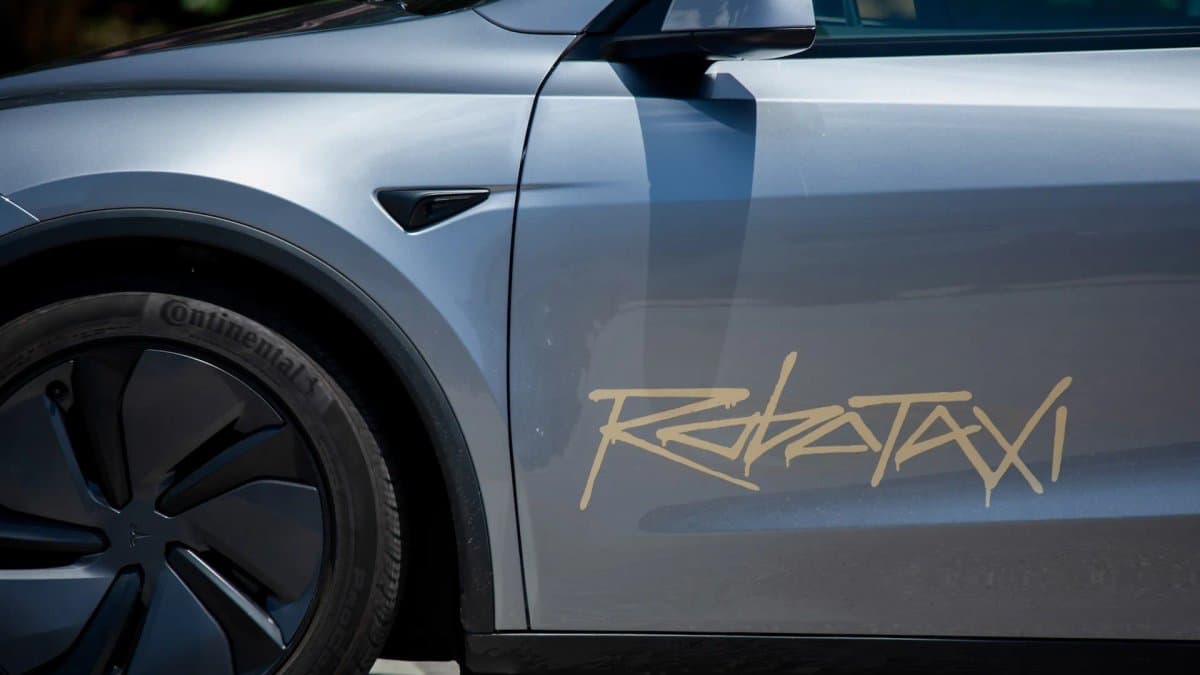
Ever wonder where a robotaxi goes when its shift ends?
Two in the morning, somewhere in Miami. A Waymo Jaguar I-Pace with nobody inside rolls into a warehouse lot. Battery at 11%. Someone's spilled coffee has dried onto the back seat. The front-left tire is a few PSI under spec. A day's worth of road grime has collected on the lidar dome, and if nobody wipes it, sensor confidence degrades right when the morning rush starts. Within the next five or six hours this vehicle has to be charged, cleaned, inspected, updated, and put back on the street. And none of that work is done by Google, or Alphabet, or Waymo.
The company that runs that garage raised $250 million on August 5, 2026, at a $2.1 billion valuation. It's called Moove. Six years ago it was 76 cars in Lagos, Nigeria, sold on installment plans to Uber drivers who couldn't get a bank loan. Today it operates the fleets that keep Waymo's robotaxis moving in the United States and, soon, the United Kingdom.
Here's the deal, in numbers. Moove runs roughly 42,000 vehicles across 29 cities in 13 countries, with $420 million in annual recurring revenue and 3,300 employees worldwide. Its autonomous vehicle unit is currently about 150 people, and the company plans to grow that by more than 220% to roughly 500 by the end of the year. The round was led by Abu Dhabi sovereign wealth fund Mubadala Investment Company, and co-led by Woven Capital — Toyota's growth fund — and Ion Pacific.
And here's the part the robotaxi conversation keeps skipping. We argue endlessly about who drives best: Waymo or Tesla or Zoox, lidar or cameras, miles per disengagement. But the moment the driving problem is solved well enough in a given city, the hard part migrates out of software and into real estate, electricity, and wrenches. Running ten thousand vehicles around the clock means industrial-scale buildings near downtown, hundreds of high-power chargers, a grid connection nobody promised you, and a night shift that knows how to calibrate a sensor stack. Moove co-founder Ladi Delano put it in one line in the announcement: "Every major technology revolution becomes an infrastructure race."
From 76 cars in Lagos to a headquarters in Dubai
Moove was founded in 2020 in Lagos by Ladi Delano and Jide Odunsi, both British-born Nigerian entrepreneurs. The original idea had nothing to do with autonomy. To drive for Uber in most African markets you need a car, and most drivers can't get financed for one — banks won't underwrite an individual with no formal credit file. So Moove decided to use the driver's own earnings data from the Uber platform as the credit signal instead. Pay a fixed share of your weekly revenue, and after a few years the car is yours. The company calls it Drive-to-Own.
That model is brutally capital-intensive. You buy the vehicle first and get repaid over years, so growth requires a permanent financing pipeline. Which is why Moove's cap table has always leaned less toward classic venture capital and more toward asset managers, banks, and sovereign funds. In August 2023 it raised $76 million in combined equity and debt with Mubadala and BlackRock participating, at a $550 million valuation. In March 2024, Uber led a $100 million round that valued the company at $750 million — Uber's first direct investment into a company on the African continent.
At the same time Moove kept pushing outside Africa, for a simple reason: margin. Rest of World reported in 2024 that the company had been loss-making for more than four years, and that while it was profitable in the UAE, India, the UK, and South Africa, the African business was the drag. Delano said then that Moove would reach full profitability in the following financial year. As of this round, he told TechCrunch that the traditional human-driven mobility division is targeting full profitability this year. The headquarters moved from Lagos to Dubai along the way, which is why you'll see the company described as an "African fintech" in one outlet and a "UAE mobility company" in the next on the same day.
Then came December 5, 2024, and the announcement that changed what kind of company Moove is. Waymo handed it fleet operations for its fully autonomous service in Phoenix and, later, Miami. The split was clean: Waymo keeps the Waymo Driver software and the rider-facing Waymo One app, and Moove takes vehicle management and dispatch, facilities, and charging infrastructure. Waymo VP of Operations Ryan McNamara framed it as bringing in Moove's "mobility-focused fleet management experience." At the time Moove was serving over 30,000 mobility entrepreneurs across 12 markets, and this was its entry into the US.
The scope has widened steadily since. In October 2025 Waymo picked London as its first market outside the United States and named Moove again as the operating partner, responsible for charging, maintenance, and fleet operations for an all-electric Jaguar I-Pace fleet. Per TechCrunch's reporting on this round, Moove now runs Waymo fleets in Phoenix, Miami, and Las Vegas, with London ahead; the company's own announcement lists Phoenix and Miami plus London as announced. And Delano's ambition, in his words to TechCrunch, goes well past operating someone else's cars: "Ultimately our vision is to own, you know, hundreds of thousands of vehicles."
What a $2.1 billion garage company actually contains
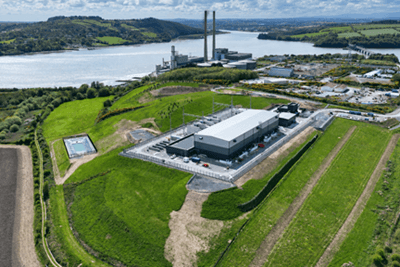
The key word in this round is "Nests." Moove defines them as "robotics-first depot infrastructure where autonomous fleets are charged, serviced, maintained and orchestrated for continuous operation." TechCrunch reports the company is developing 15 automated "lights-out" depots — borrowing the manufacturing term for a facility so automated you don't need to turn the lights on. Robots plugging in charge connectors, robots washing vehicles, robots running sensor calibration. The launch date for the first one has not been announced, which is the single biggest asterisk on this whole story.
Why is this worth money? Look at robotaxi unit economics. In a human-driven taxi, the dominant cost is the driver, and that cost only accrues while the car is earning. Strip the driver out and the cost structure inverts: vehicle capital becomes the dominant line, and a vehicle equipped with lidar, radar, and onboard compute costs far more than the base model of the same car. Every hour that expensive asset sits in a lot is pure loss. So the game becomes utilization — how many of the 24 hours does a vehicle spend on the road generating revenue? Cut charging from two hours to forty minutes, cut a maintenance queue from overnight to two hours, and the same fleet size produces materially more revenue. The depot isn't a cost center. It's the multiplier on the asset.
The investor list tells you who bought that argument. Mubadala led, with Woven Capital and Ion Pacific co-leading. New investors included BlueCrest Capital Management, Sona, and Raptor Group. Returning backers included BlackRock, MUFG, Franklin Templeton, Uber, Left Lane, Silverbacks Holdings, Square Associates, The Latest Ventures, Endeavor Catalyst, and the Ontario Power Generation Pension Plan. Read that list and the character is unmistakable: sovereign wealth, pensions, credit houses, a global bank. This is not money hunting a 10x. It's money that wants predictable cash flow and collateralizable assets — and both depots and vehicles can be pledged against debt.
The quotes point the same direction. Ali Eid AlMheiri, Executive Director of Diversified Assets on Mubadala's UAE Investments Platform, said that "as autonomous mobility moves from innovation to scaled deployment, the infrastructure supporting it becomes increasingly important." Woven Capital principal Betty Lee said "the next wave of mobility is an infrastructure problem as much as a software one." Ion Pacific co-CEO and co-founder Michael Joseph called Moove "a critical infrastructure layer for the sector — one that is complex, adaptive and essential to scaling AVs." Toyota's presence here deserves its own note. In a robotaxi world, cars are not sold to consumers; they're sold to fleet operators, and those operators pick models based on serviceability and parts supply. For an automaker, a fleet operator is a future dealership.
| Item | Detail | Source |
|---|---|---|
| Announced | August 5, 2026 | Mubadala, Moove |
| Raise | $250M Series C | Mubadala, Moove |
| Valuation | $2.1B (about 2.8x the $750M mark from March 2024) | Mubadala, Bloomberg |
| Lead | Mubadala (co-leads: Woven Capital, Ion Pacific) | Mubadala |
| New investors | BlueCrest Capital Management, Sona, Raptor Group | TechCrunch |
| Returning | BlackRock, MUFG, Franklin Templeton, Uber, Left Lane, Ontario Power Generation Pension Plan, others | Mubadala, TechCrunch |
| ARR | $420M | Moove announcement |
| Fleet | About 42,000 vehicles | Moove announcement |
| Footprint | 29 cities, 13 countries (TechCrunch says 14 countries) | Moove, TechCrunch |
| Headcount | 3,300 globally | Moove announcement |
| AV team plan | ~150 → ~500 by year-end (+220%) | Mubadala, Moove |
| Waymo cities | Phoenix, Miami, London announced (TechCrunch adds Las Vegas) | Moove, TechCrunch |
| Nests | 15 robotics-first "lights-out" depots in development, no launch date given | TechCrunch |
| Founded | 2020 in Lagos by Ladi Delano and Jide Odunsi; now headquartered in Dubai | TechCrunch, Rest of World |
The most important row in that table is the ARR line. At $420 million, a $2.1 billion valuation works out to roughly 5x revenue. For a software company that would be cheap. But Moove isn't a software company — it moves physical assets, and asset-heavy operators are usually valued off asset base or EBITDA, not revenue multiples. So the honest reading is that the 5x isn't a price on the existing financing-and-fleet business at all. It's a premium on the autonomy infrastructure business that hasn't been built yet. Whether that premium is deserved depends entirely on whether the Nests open and work.
One more structural point. Moove's growth has never run on equity alone; it has consistently mixed equity with debt, and Delano has said the eventual move into owning robotaxis outright will also be debt-financed. That's rational — vehicles are collateral — and it's also the single largest risk in the story. Vehicles depreciate, and autonomous hardware may turn over faster than conventional cars as sensor stacks generationally improve. Buy hundreds of thousands of units on leverage and then watch the platform skip a generation, and the debt is still there when the asset isn't worth what you paid.
Who actually wins here
Waymo, most obviously. Its stated 2026 goal is one million paid rides per week; as of mid-2026 it was running roughly 500,000, having doubled weekly volume in under a year. On July 8 it went fully driverless in Las Vegas and named Denver, San Diego, and Tampa as next up. Adding cities at that clip means building a depot and hiring a maintenance crew in every one of them, and doing all of that in-house would slowly turn Waymo from a software organization into a logistics organization. Outsourcing lets it buy expansion speed without changing what kind of company it is. That's the trade, and it's a good one — right up until the day the calculus flips.
Mubadala and the UAE win in a way that isn't purely financial. Abu Dhabi has been making state-scale bets on AI and mobility infrastructure for several years, and Mubadala has been inside Moove since 2023. A sovereign fund that has held a position for three years and then comes back as lead is signaling something closer to industrial policy than portfolio construction. If a Dubai-headquartered company becomes the global depot operator for the world's leading robotaxi service, the operational know-how for deploying robotaxis in the Gulf ends up domiciled locally.
Uber wins on both sides of the trade, which is exactly how Uber likes it. It's simultaneously a Moove shareholder and, historically, one of its biggest demand partners — Moove supplied cars to Uber drivers on the human side. On the autonomous side, Uber owns no vehicles at all and outsources fleet operations. In Austin and Atlanta the Waymo-on-Uber service is operated by Avomo; per reporting, Avomo is the AV division of Moove Cars, a Spanish fleet management company that despite the name is a different company from the Moove in this story. In June, Uber said it would spend more than $100 million building its own robotaxi charging hubs across key US markets. Holding equity in Moove is Uber hedging the whole ecosystem.
Toyota's win is strategic more than financial. If robotaxis scale, vehicle demand shifts from millions of individual buyers to a handful of enormous fleet operators, and those operators standardize on whatever is cheapest to service. Getting inside the operator early — through Woven Capital, and with Toyota's own software organization watching how the operational data accumulates — is channel positioning dressed up as a growth investment.
And then there's the group whose position quietly got worse: Moove's original African drivers. As the company's center of gravity moves from Lagos toward Dubai and Phoenix, and as hiring focuses on the AV unit going from 150 to 500 people, Drive-to-Own becomes the legacy business. That business already carries reputational baggage. In February 2023, Moove drivers in Lagos protested over repayment terms and vehicle impoundment. Rest of World reported that the company was repossessing drivers' cars over missed loan payments, with drivers describing twelve-hour days where a large share of earnings went straight to Moove installments and Uber's commission. Nigerian outlet Technext continued reporting on related disputes into 2025. None of that is settled, and a company now valued at $2.1 billion on a robotaxi narrative still owns it.
The industries that already ran this movie
Start with cloud. Before 2006, every software company bought servers and leased rack space, not because it wanted to but because there was no alternative. AWS peeled that layer off, and the company selling compute infrastructure ended up larger than most of the software companies running on top of it. That is precisely the picture Moove is painting: don't make every autonomy company build its own depot network city by city — let one operator build depots and resell capacity to several AV developers at once.
Then there are cell towers. In the 1990s, American carriers each erected their own steel. In the 2000s, companies like American Tower and Crown Castle bought the towers and leased them back to multiple carriers, and eventually those landlords were worth more than some of their tenants. The whole model hinged on one question: can a single physical asset be resold to more than one customer? Moove's Nests face exactly that question. A Phoenix depot used only by Waymo is a captive outsourced warehouse. A Phoenix depot used by Waymo plus two other AV operators is a tower company. Notably, Moove has said it already owns robotaxi vehicles from an undisclosed AV developer other than Waymo — the first hint that it's chasing the multi-tenant version.
Now the failure case: shared micromobility and car-sharing. During the 2018-2020 boom, several companies raised billions on the thesis that owning physical assets and saturating cities was the moat. Depreciation, vandalism, retrieval logistics, and maintenance costs all came in worse than modeled, unit economics never converged, and most of those companies were sold for parts or shut down. Asset-heavy businesses consume cash until scale arrives, and sometimes scale never does. When Delano says he wants to own hundreds of thousands of vehicles on debt, that history should be the first thing that comes to mind. The counterpoint is real too: a scooter generated a few dollars a day, and a robotaxi can generate hundreds. The payback math isn't the same math.
There's a second failure pattern worth naming: single-customer dependency. It's the classic trap in outsourced infrastructure. When most of your revenue comes from one client, you have no pricing power, and if that client decides to insource, the business evaporates overnight. Moove's autonomy business today is effectively a Waymo business, and Waymo is backed by one of the deepest balance sheets on earth. Waymo outsources today because it wants speed, not because it lacks capability. Once per-city depot operations become standardized and repeatable — which is precisely what Moove is trying to make them — the build-versus-buy math changes. How fast Moove diversifies across AV customers and continents is the survival variable, not how fast it grows revenue.
Moove is not the only company that wants the garage
Competitor one is Avis Budget Group. On July 29, 2025, it announced a multi-year strategic partnership with Waymo covering Dallas: fleet operations, infrastructure, vehicle readiness, maintenance, and depot operations, with testing already running and public launch targeted for 2026. Avis CEO Brian Choi framed it as "a pivotal milestone in our evolution, from a rental car company to a leading provider of fleet management." That sentence should worry Moove, because Avis already owns depots, service networks, and real estate across the United States. Moove has to build all of it from scratch, city by city, with permits and grid interconnects it doesn't yet hold.
Competitor two is Lyft. Through its Flexdrive subsidiary, Lyft directly operates the Waymo fleet in Nashville. Per Lyft's April 15, 2026 post, Flexdrive is building an 80,000-square-foot depot to service, charge, and maintain the AVs, opening this fall, plus secondary charging and cleaning sites across the service area to maximize utilization. It's hiring more than 70 full-time roles in Nashville this year, and roughly half of the depot roles filled so far went to current or former Lyft drivers. The more important number: Flexdrive already runs 24 sites managing about 15,000 vehicles across North America. Lyft is also the only player that is simultaneously the demand platform and the operations partner, which is a structurally strong position.
Competitor three is the Uber camp — which is less a competitor than a marketplace that can squeeze you. Uber owns no vehicles and distributes fleet operations across multiple partners, having also brought Hertz in to handle both robotaxi and driver-led fleet operations, while spending north of $100 million on its own charging hubs. For Moove this cuts both ways. More Uber-driven robotaxi demand means more operations contracts to bid on. But a buyer that deliberately maintains several interchangeable operators is a buyer that will grind margins. Moove's biggest potential customer is also its biggest potential price pressure.
Competitor four is insourcing by the AV developers themselves. Tesla has shown no appetite for handing fleet operations to anyone. Zoox sits inside Amazon, which has more logistics operations capability than any depot startup will assemble this decade. Most Chinese operators run their own networks end to end. Which means the underlying premise — that the depot layer separates into an independent industry — is not yet settled fact. It could unbundle like cloud did, or it could stay integrated the way airlines keep their own maintenance hangars.
Competitor five is the one that doesn't show up on any competitive map: real estate and electricity. Securing large parcels near dense urban cores and getting megawatt-scale power to them is a fight over land, permits, and utility interconnect queues, not over software velocity. Relationships with regional utilities, permitting experience, and cost of capital decide those fights. Seeing the Ontario Power Generation Pension Plan on Moove's cap table starts to look less like coincidence. And this is where a sovereign wealth lead investor becomes an operational weapon rather than just money — because land and power are ultimately negotiated with governments.
So what actually changes
For an ordinary rider, almost nothing changes today. The indirect effect is real, though: whether a robotaxi arrives in three minutes or twelve, and whether the interior is clean when it does, is determined by depot operations rather than by driving algorithms. The same goes for when service reaches your city at all. Software validation can be finished and the service still won't launch without a depot, chargers, and a crew. For the next several years, the honest answer to "when do we get robotaxis here?" is largely a construction schedule at companies like this one.
For business decision-makers — especially anyone in logistics, transportation, or rental — this is a category redefinition signal. For twenty years, fleet management was treated as low-margin back-office contracting. Autonomy erases the labor line, and what remains of the cost structure is assets, energy, and maintenance. That moves fleet operations from the periphery of the cost stack to its center. Avis recasting itself "from a rental car company to a leading provider of fleet management," Lyft putting Flexdrive front and center, Hertz partnering with Uber — these are all the same move. If your company currently owns service bays, trained technicians, or urban-adjacent industrial land, that may be the most valuable thing on your balance sheet five years from now, and you should be pricing it accordingly before someone else does.
For investors, split the read in two. The attractive half: roughly 5x revenue on $420 million of ARR is conservative pricing relative to most things wearing a robotaxi label right now, and the legacy human-driven fleet business is targeting full profitability this year, which puts a floor under the story if the autonomy bet slips. The cautious half: the AV division is still about 150 people and not one Nest has opened. A meaningful chunk of that $2.1 billion is a price on a plan, and the plan assumes large-scale debt. If rates move against them, or if robotaxi deployment runs slower than Waymo's public targets, Moove could end up carrying financed assets that haven't found revenue yet. Watch three things: the first Nest opening, the first non-Waymo AV customer announced by name, and the debt facility terms.
For engineers, the interesting signal is where the hiring actually goes. The fastest-growing job category in robotaxis over the next few years is probably not perception research — it's fleet orchestration. Matching thousands of vehicles' battery states, maintenance histories, demand forecasts, and depot bay slots in real time is a large-scale scheduling and optimization problem, wrapped in remote assistance tooling, automated sensor calibration, and depot robotics. When Moove says it's going from 150 to 500 people in its AV unit, a large share of those 500 are people who build operations systems, not people who train driving models.
Compress the whole story into one sentence and it reads like this. For a decade the robotaxi race was about who could drive safely without a human, and in at least a handful of cities that question has now been answered well enough to run a business on. The race that replaces it is about who puts those cars back on the road every single night. That a company which six years ago was selling used cars on installment to Uber drivers in Lagos is a credible contender for that job is the part nobody would have predicted.
🥄 Three Things You're Probably Wondering
— So what does this mean for me? Not much directly. But when robotaxis show up in your city has more to do with depot construction schedules than with autonomy breakthroughs, and jobs in fleet operations, maintenance, and charging infrastructure are one of the few categories in this industry that are unambiguously growing.
— Why is this happening now? Because Waymo crossed roughly 500,000 paid rides a week and is targeting a million by year-end, which moved the bottleneck out of software and into physical infrastructure. In July alone it went driverless in Las Vegas and named Denver, San Diego, and Tampa as next. Every new city needs a new depot, new chargers, and a new night crew — and who owns that layer is being decided right now.
— Is Moove ahead of its competitors? On Waymo contracts, it's in a strong spot: Phoenix, Miami, and Waymo's first market outside the US in London. But Avis already has service networks and property across the country, and Lyft's Flexdrive runs about 15,000 vehicles from 24 sites in North America. Moove's differentiator — the robotics-first Nest depots — is 15 facilities in development and zero open. Calling it ahead is premature.
Sources
- Mubadala — Moove Raises $250 Million at $2.1 Billion Valuation to Scale the Global Infrastructure Layer for Autonomous Mobility
- Moove — Moove Series C (company announcement)
- TechCrunch — Moove raises $250M to become the backbone of the robotaxi industry
- Bloomberg — Moove Raises $250 Million in Mubadala-Led Round, Valuation Reaches $2.1 Billion
- PR Newswire — Moove Partners with Waymo to Redefine the Future of Urban Mobility (December 5, 2024)
- Waymo — Hello London! Your Waymo ride is arriving
- Avis Budget Group — Announces Multi-Year Strategic Partnership with Waymo
- Lyft — Flexdrive by Lyft's Era of AV Fleet Management in Nashville
- Hertz — Hertz and Uber Partner to Power Autonomous Robotaxi and Driver-Led Fleet Operations
- Uber Investor Relations — Uber and Waymo Expand Partnership to Bring Autonomous Ride-Hailing to Austin and Atlanta
- TechCrunch — Uber leads $100M investment in African mobility fintech Moove as valuation hits $750M
- TechCrunch — Moove takes in $76M equity, debt from Mubadala and BlackRock at a $550M valuation
- Rest of World — Moove, Uber's Africa vehicle financing partner, seeks profitability outside Africa
- Rest of World — Uber's vehicle-financing partner is impounding drivers' cars in Nigeria
- Axios — Why Uber is spending big on robotaxi depots and charging infrastructure
- TechCrunch — Waymo plans to launch a robotaxi service in London in 2026
- The National — UAE mobility company Moove valued at $2.1bn after Mubadala-led fundraising
Numbers and criteria are as of announcement and may change. Investment calls are yours to make!