Same city, same rules, three companies — this comparison hasn't existed before
Here's the deal: on Thursday, August 20, the Nevada Transportation Authority unanimously approved three permits letting Tesla, Uber and Waymo run paid robotaxi service in Clark County — the county containing Las Vegas.
The allocations: Tesla up to 5,000 vehicles, Waymo up to 1,000, Uber up to 1,000. Uber operates through partnerships with Hyundai subsidiary Motional and with Zoox, and local outlets refer to Uber's driverless service as Aviari. The deployment window is the next 12 months.
Coverage differs on the total. Adding the per-company caps gives 7,000, which is what the Las Vegas Review-Journal reported, while TechCrunch and others described a combined ceiling of "up to 8,000." Whether the permits contain conditional expansion language or this is simply a tallying difference isn't resolvable from public documents.
All three still need separate approval from the Clark County Department of Aviation to serve Harry Reid International Airport. That condition matters more than it sounds — more on why below.
The significance isn't the vehicle count. It's that Tesla, Waymo and Uber will run paid service in the same city under the same regulatory conditions for the first time. Until now, comparing these three meant lining up data from different cities, different maturity stages and different rules, and squinting.
The cast — three genuinely different approaches
Waymo took the longest road. Born inside Google, more than a decade of accumulation, running multi-sensor perception with lidar, radar and cameras. It builds precise maps and operates only inside them, which caps expansion speed but produces a comparatively steady safety record. Phoenix first, then San Francisco, Los Angeles, Austin. Given Waymo's normal pace, a 1,000-vehicle ceiling is generous rather than constraining.
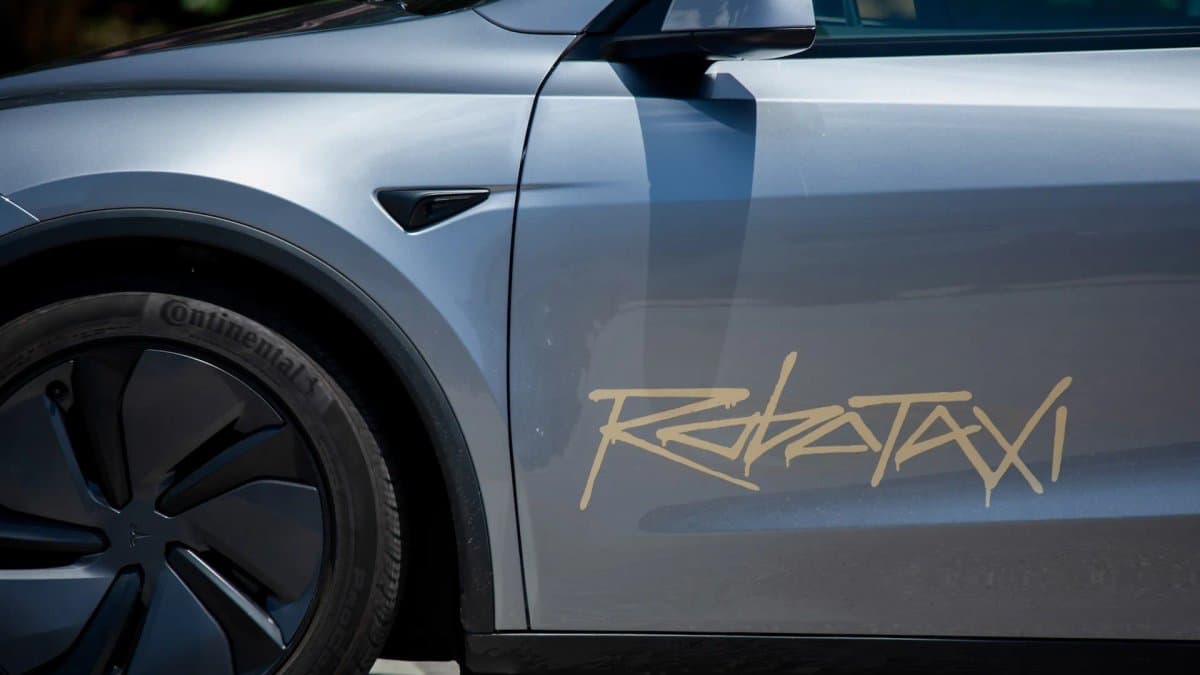
Tesla is the opposite. Camera-only vision, no dependence on high-definition maps. The theoretical advantage is scalability: skip map-building and the cost of entering a new city collapses. The cost is verification difficulty. Tesla launched robotaxis in Austin with safety monitors aboard and has been raising the driverless share since. The 5,000 ceiling reflects that scalability claim taken at face value.
Tesla itself isn't projecting it will fill that number. Eric Early, Tesla's Cybercab chief engineer, said he doesn't think they'll deploy 5,000 vehicles in a year and that reaching 2,500 would satisfy him. The company is acknowledging that a permit ceiling and a deployment plan are different objects.
Uber is a third type entirely. It shut down in-house autonomy development in 2020 and now plays platform. Partners like Motional and Zoox supply vehicles and the driving stack; Uber supplies demand, dispatch and payments. It competes on demand, not technology. The strength is obvious — the users are already in the app, and they just need to be seated in a driverless car.
Nevada as the venue isn't accidental either. It was the first US state to pass autonomous-vehicle legislation, back in 2011. The regulatory posture has been permissive for a long time, and a tourism-driven economy means comparatively little political resistance to new technology.
Las Vegas is also an easy city for autonomy. Grid streets, no snow, and most visitors moving without their own cars. Traffic patterns along the Strip repeat and are predictable. The conditions that break autonomous systems — heavy snow, tight alleys, complex unprotected left turns — are relatively scarce. This is starting on the lowest difficulty setting.
The cost structures differ completely too. Waymo's vehicles are expensive; the sensor stack is a large share of unit cost, and building and refreshing HD maps consumes people and equipment — offset by a verified safety record that lowers the cost of regulatory approval. Tesla inverts that: cheaper vehicles, no mapping cost, but far more real-world miles and time required to prove safety. Uber buys neither vehicles nor technology, so fixed costs are minimal, but it shares margin with partners. Three companies in one city finally shows which cost structure actually holds.
The numbers
| Company | Cap | Approach | Vehicle sourcing |
|---|---|---|---|
| Tesla | 5,000 | Camera-based vision | In-house (Cybercab et al.) |
| Waymo | 1,000 | Lidar + radar + camera | In-house fleet |
| Uber | 1,000 | Partner technology | Motional, Zoox |
| Window | 12 months | — | — |
| Extra condition | Airport service needs separate Clark County Aviation approval | — | — |
Don't treat the airport condition lightly. A huge share of Las Vegas taxi and rideshare demand is the airport-to-hotel trip — visitors landing and moving to the Strip. Locked out of that corridor, robotaxis handle only short intra-city hops. That's a fundamentally different business on unit economics.
The Aviation Department holding separate approval authority also means another negotiation is pending: access-road fees, staging area allocation, and coordination with the incumbent taxi and limousine trade all come back to the table. Timing and conditions haven't been published, and they may differ per company.
Opposition is on the record. The Livery Operators Association and local taxi operators objected, arguing the approvals go too far, too fast. Las Vegas employs a large taxi and limousine workforce, so this pushback is unlikely to end here.
What each side gets
Tesla gets a chance to validate scale. Its autonomy claim has long been "our approach scales easily," and proving that requires actually running many vehicles. A 5,000 ceiling is a testbed of the right size. The risk scales with it — a single serious crash can reverse the entire regulatory posture.
Waymo gets a stage for comparative advantage. It has accumulated driverless mileage and incident-rate data and treats that record as its edge. Operating beside Tesla in one city turns that difference into data. The 1,000 cap limits how fast it can press the advantage.
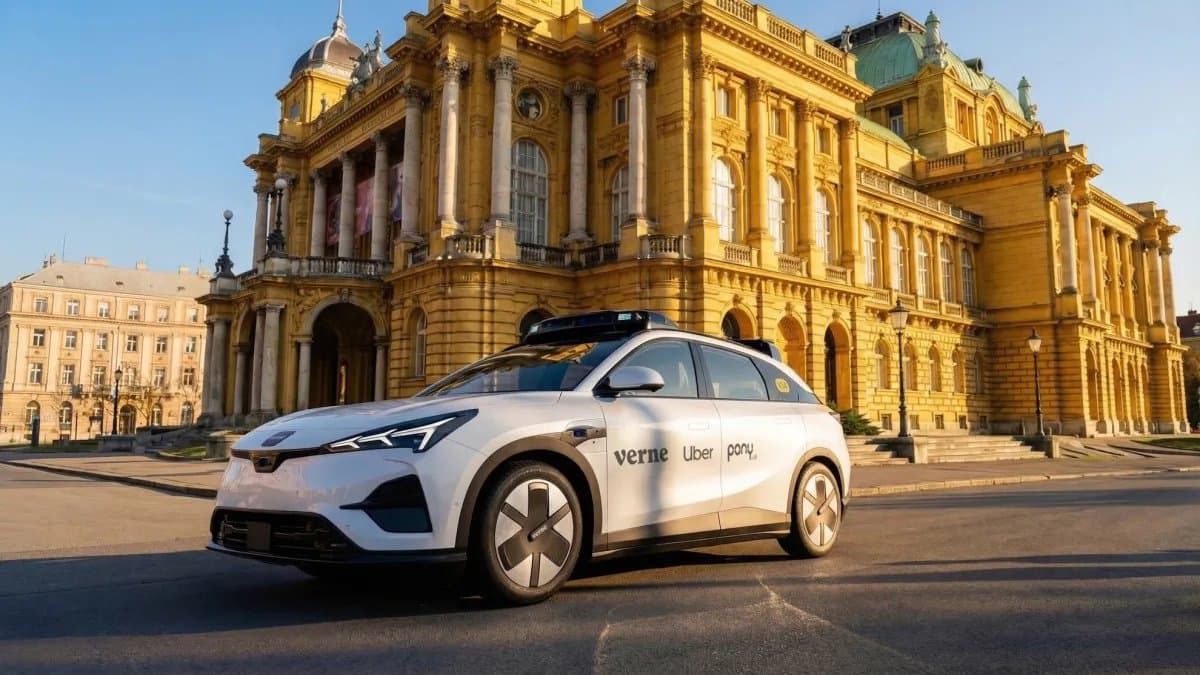
Uber gets asset-light growth — capturing driverless demand without buying vehicles or building autonomy. Partner dependence is the weakness; capital efficiency is dramatically the best of the three. Uber has also been widening its partner portfolio, including a robotaxi deployment with Pony.ai in Europe.
Hyundai's position is worth noting. Motional, Uber's partner, is a Hyundai subsidiary — so this approval puts Hyundai technology into the Las Vegas paid robotaxi market. Motional has tested in this city for years and holds substantial local driving data. For automakers, it's a live test of whether supplying technology to a platform, rather than running a branded service, actually works.
Las Vegas visitors get choice and price competition. Three operators competing simultaneously makes fare competition likely, especially early, when each has reason to price aggressively for share.
The losing side is equally clear: taxi and limousine drivers. Employment in that trade is concentrated here and organized. Seven thousand robotaxis could displace a large share of the city's paid-transport market. The cost of a technology transition landing on one occupational group is a pattern repeating again.
Nevada gets industry and tax revenue — and carries the risk. If something goes wrong, the state authority that granted approval owns it politically. A unanimous vote also spreads that responsibility rather than concentrating it on one official.
Precedents — how robotaxi expansion succeeds and fails
Cruise's collapse is the sharpest failure. GM's autonomy subsidiary won paid-service approval in San Francisco in 2023 and scaled quickly, until an October incident in which a vehicle dragged a pedestrian. The decisive problem wasn't the crash itself — it was that the company did not fully disclose what happened to regulators. California suspended the permit and Cruise eventually shut down.
The lesson isn't technical, it's about trust. A robotaxi business rests on its relationship with regulators, and that relationship breaks not on one incident but on the response to it. With three companies operating simultaneously in Nevada, one company's mishandling can contaminate the other two.
Waymo's Phoenix expansion is the success case: safety driver, then driverless testing, then paid driverless service, staged across years. It was maddeningly slow, and it built relationships with regulators, communities and emergency services along the way. That groundwork is why Waymo can expand city by city now.
China offers another reference. Baidu's Apollo Go deployed at scale in Wuhan with steeply discounted fares and gathered riders quickly — while local taxi drivers' backlash became a genuine social flashpoint. Technical expansion succeeded; social acceptance created friction. The Las Vegas livery opposition is the same category of problem.
Friction with emergency services deserves advance attention too. San Francisco logged repeated cases of autonomous vehicles blocking fire apparatus or freezing at incident scenes and snarling traffic. A human driver reads a hand signal and moves; a system without that case in its rules does not. Las Vegas draws enormous events and crowds, so these exceptions arrive often. What protocols each company negotiates with local fire and police will shape early operations more than fleet size will.
Tesla's Austin robotaxi is the live case. It started with safety monitors and raised the driverless share over time, with some early driving-error clips circulating and drawing criticism. Nevada is larger and more varied than Austin, making it the first real test of whether Tesla's approach scales the way the company says.
How competitors respond
Waymo will likely respond with data, having consistently published safety reports to hold the "we are verified" position. Direct competition in one city gives it more reason to press that comparison.
Tesla responds with speed. Receiving a 5,000 ceiling is itself a marketing asset, and out-deploying rivals would strengthen the scalable-autonomy narrative. Worth remembering that its own Cybercab chief engineer named 2,500 as the realistic figure.
Uber responds by adding partners — extending beyond Motional and Zoox to increase supply. Its real weapon is demand already in the app, plus the flexibility to backfill with human drivers when driverless supply runs short. Of the three, it has the lowest cost of failure.
The incumbent taxi and limousine trade counters through regulation and public opinion, with leverage remaining in undecided areas like airport access, and with any serious incident offering a political opening.
Insurance and liability also remain unsettled. When a driverless vehicle crashes, whether responsibility sits with the fleet owner, the software provider or the platform varies by business model — and in Uber's partner-dependent structure, the allocation is buried in contracts. A major incident would expose those terms and reset premiums and contracting practice industry-wide.
Other states and cities are watching. Because this is the first same-conditions three-way comparison, the incident rates, utilization and complaint data coming out of Clark County will be cited directly in regulatory design elsewhere.
What actually changes for you
If you're heading to Las Vegas, you'll likely be able to take a driverless ride within months. Early service areas will be limited, and the airport corridor is off the table until separate approval lands. The practical differences you'll feel are app availability, wait times, and how fares compare to existing rideshare.
If you work in autonomy, read this as a shift in regulatory model — not granting one company exclusive testing rights, but allocating simultaneous caps to several operators. That's closer to regulators using competition as the safety-verification mechanism. Good results and other jurisdictions copy it; a serious incident and the model itself retreats.
If you're an investor, the metric isn't permitted vehicles but deployed vehicles — a gap already acknowledged internally between 5,000 permitted and 2,500 targeted. More important still is utilization per vehicle and deadhead ratio. Robotaxi economics are decided by how many paid trips a single vehicle completes per day.
If you follow autonomy policy elsewhere, Nevada is a useful contrast. Many jurisdictions run designated pilot zones with tight geographic limits; Nevada caps vehicle counts but doesn't limit operators. Which is safer has no data behind it yet. But running several operators at once accumulates comparative data far faster, and that's a genuine advantage.
If you work in transport, this news is about the timetable. The question moved from when robotaxis arrive to how quickly the fleet grows. Note that Las Vegas is among the most favorable cities there is, so extrapolating its expansion rate to other cities will overestimate.
If you watch real estate, there's a slower implication. Cheap, plentiful robotaxis reduce parking demand, and Las Vegas hotels and casinos hold vast parking structures whose use could change. That only follows if fares fall far enough and waits get short enough — a multi-year question, not a near one.
🥄 Three Things You're Probably Wondering
— Is it 7,000 or 8,000? Adding the caps gives Tesla 5,000 + Waymo 1,000 + Uber 1,000 = 7,000, which is what local dailies reported. TechCrunch and some others wrote "up to 8,000." Whether the permits include conditional expansion isn't confirmable from public documents. The number that will actually matter is deployed vehicles, so don't over-weight the ceiling.
— Is nobody really behind the wheel? It varies by company and stage. Waymo already runs fully driverless paid service in several cities; Tesla started Austin with safety monitors and increased driverless share over time. How each begins in Nevada will surface as deployment proceeds. Holding a permit doesn't automatically mean fully driverless from day one.
— What happens if there's a crash? Cruise is the closest answer: the response to the incident, not the incident, decided the company's fate. With three operators running simultaneously in Nevada, one company's problem can spill onto the others — which gives each of them reason to operate conservatively early. That's probably part of why nobody plans to fill their ceiling.
Sources
- TechCrunch — Tesla, Uber, and Waymo all get the OK to operate thousands of robotaxis in Nevada (2026-08-20)
- Engadget — Nevada allows Uber, Tesla and Waymo to start paid robotaxi service (2026-08-21)
- KOLO TV — NTA approves autonomous taxi operation in portions of Clark County (2026-08-21, local broadcast)
- Las Vegas Sun — Nevada opens roads for Tesla, Waymo and Uber's Aviari driverless rides in Las Vegas (2026-08-21, local daily)
- Las Vegas Review-Journal — Tesla, Waymo and Aviari cleared to deploy Las Vegas robotaxis (2026-08-21, local daily)
- InsideEVs — Nevada Opens The Door To Thousands Of Paid Robotaxis, And Tesla Has The Edge (2026-08-21)
Numbers and criteria are as of announcement and may change.