The Mayor Made an AI Avatar. The Same Day, a Budget Went to Council.
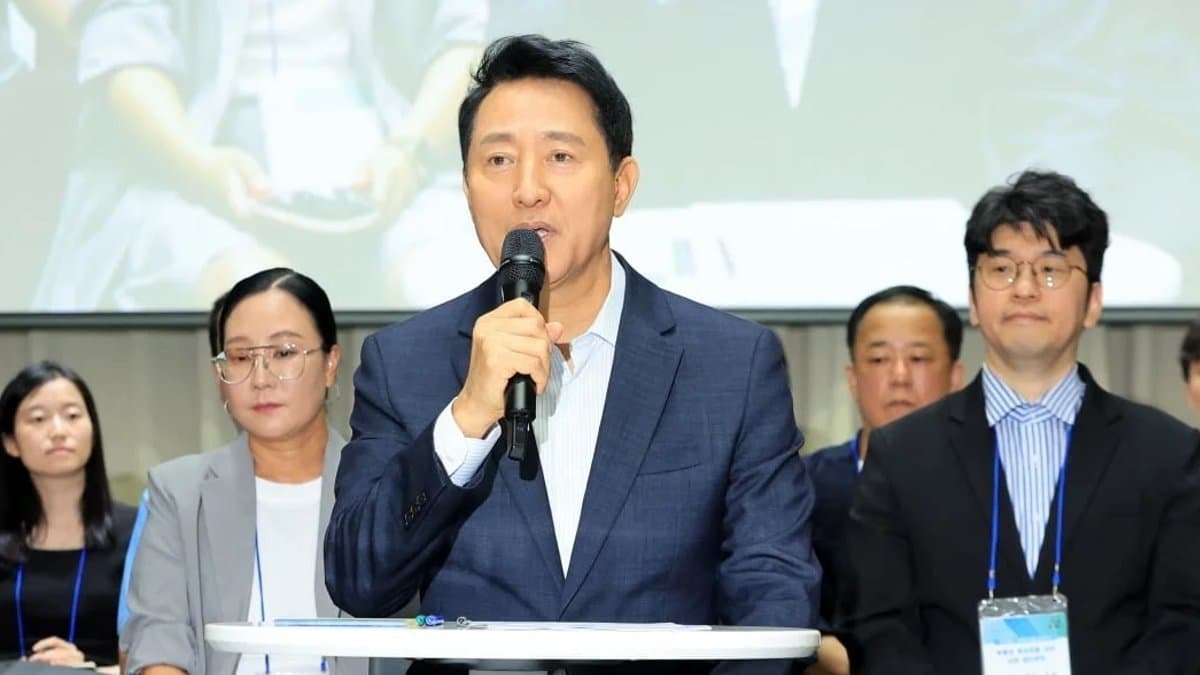
At 2:20 p.m. on August 10, Seoul Mayor Oh Se-hoon visited Seoul Startup Hub Gongdeok. On the sixth floor, at AI content company AiPark, he created an AI avatar of himself and used it to produce a promotional video. AiPark is a Seoul startup that builds AI avatars and multilingual video, and it won a CES 2026 Innovation Award.
He then held a roundtable on the second floor with founders of five youth AI startups: AiPark (AI content), Tanalysis (patent analysis), LK Robotics (autonomous robots), Korea Education Partners (education software), and Uptempo Global (multilingual content). A deliberately broad spread of sectors.
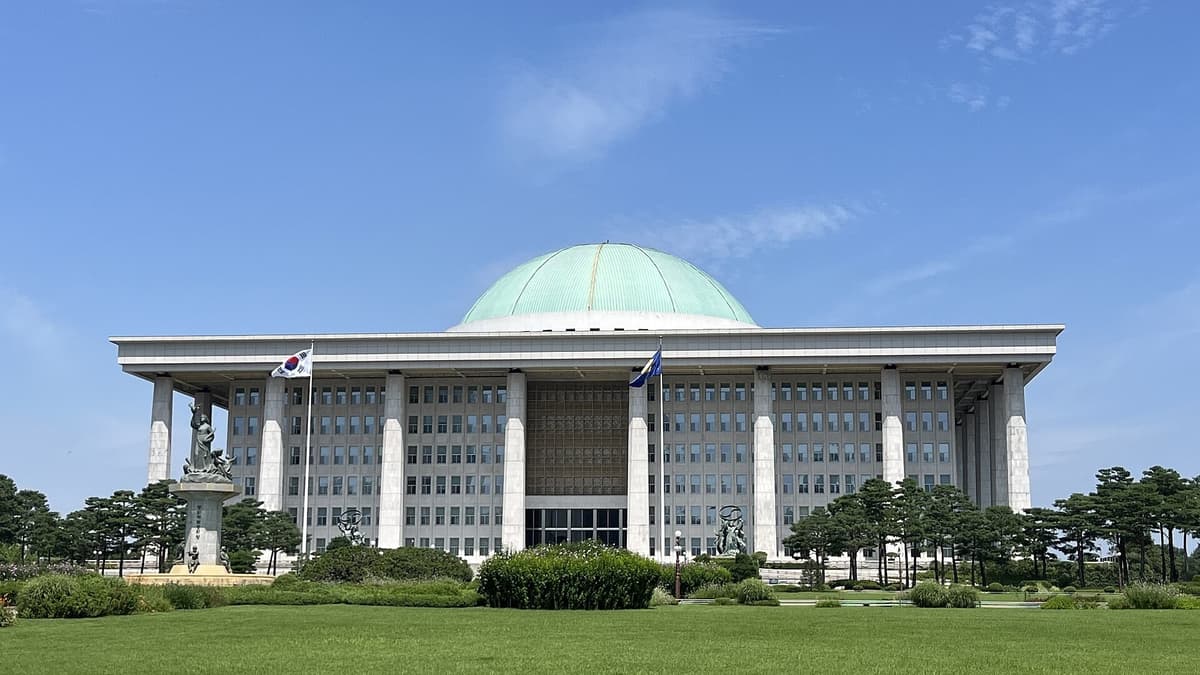
But the day's real news wasn't the photogenic itinerary — it was the paperwork that went to the city council. Seoul submitted its first supplementary budget of the new administration, KRW 2.8061 trillion, and inside it sat a new line item: KRW 5.6 billion for a "Youth AI Growth Rights" program. The plan funds one year of premium generative AI access — explicitly including coding and AI agent capabilities — for 500,000 students and job seekers aged 19 to 29.
The framing Oh chose is "Youth AI Basic Rights." The claim is that every young person deserves an equal starting line for AI regardless of economic circumstances. In his words, guaranteeing youth AI basic rights is "more than providing every young person an equal starting line — it's the first step in growing Seoul's AI technology ecosystem," and the city will "build a dense policy ladder so that young people who use AI become founders who build AI, and then global AI companies competing in world markets."
Divide 5.6 Billion by 500,000
Do the arithmetic. KRW 5.6 billion across 500,000 people is roughly KRW 11,200 per person — about $8 — for a year.
ChatGPT Plus runs $20 a month. Claude Pro is $20. Gemini Advanced is comparable. Annualized, that's well over KRW 300,000 per person. At list price, eight dollars a head does not buy a year of "premium generative AI with coding and agent capabilities."
That gap points to one of three things, or some mix. First, the program may only run for part of the budget period — reporting indicates full rollout starts next year, which would make this appropriation system setup plus an initial tranche. Second, Seoul may be negotiating a bulk contract far below list price; 500,000 users is a number no AI company ignores, and that creates leverage. Third, actual take-up may be projected well below 100% of the eligible population.
Seoul hasn't published its unit-cost basis, so none of these can be confirmed today. But skipping past the number would mean misreading the policy. KRW 5.6 billion isn't a budget for buying half a million premium subscriptions — it's closer to seed funding that opens an access channel. The policy's real size will emerge from the program plan that survives council review and from what lands in next year's main budget.
Proportion helps too. KRW 5.6 billion out of KRW 2.8061 trillion is 0.2%. The same supplementary budget carries KRW 222.1 billion for expanded livelihood and medical benefits, KRW 40.3 billion for EV purchase subsidies, and KRW 4.4 billion for night economy programs. A city official said the budget "concentrated limited available resources on livelihood recovery, future growth, and safety."
| Line item | Budget |
|---|---|
| Total second supplementary budget | KRW 2.8061 trillion |
| Livelihood and medical benefits expansion | KRW 222.1 billion |
| EV purchase support | KRW 40.3 billion |
| Youth AI Growth Rights | KRW 5.6 billion |
| Night economy activation | KRW 4.4 billion |
Why the Word "Rights" Is the Real Story
The framing may matter more than the money.
Korean AI policy has been industrial policy almost throughout. The Ministry of Science and ICT's sovereign AI foundation model program, which selected five elite teams, supports companies and research institutes to build national capability. The move into education is recent, reflected in the Lee Jae-myung administration's "AI education for all" posture.
"Basic rights" is a different register. It isn't industry promotion or talent development — it defines access itself as an entitlement. The claim is that AI belongs with water, electricity, and internet: not a convenience when present, but an inequity when absent. No Korean local government has put that word in a policy name before.
The framing needs one premise to hold: that AI access genuinely produces gaps in opportunity. There's growing observational support. The productivity difference between developers who pay for AI tools and those who don't, and the learning-speed difference between students with and without coding agents, are already ordinary topics of conversation. Notably, Seoul specified "coding and AI agent capabilities" rather than chatbot access — a signal the city is thinking about working tools, not novelty.
The risk in the framing is equally clear. "Rights" language is hard to walk back. Once access is defined as an entitlement, a budget cut reads as a revocation rather than a reduction. And AI services are commercial products from private companies, so a vendor's pricing or policy change introduces variables a city can't control. The city owns the water mains. It doesn't own ChatGPT.
Who Gains What
Young users gain tools. Roughly KRW 30,000 a month is not trivial for a student or job seeker, and removing it lowers a real barrier. If coding and agent features are genuinely included, the effect on how fast someone can build a personal project or portfolio is substantial.
AI vendors gain a user cohort. 500,000 people is material for any provider, and conversion after the free year is a business in itself. Which services Seoul selects becomes a decision with direct consequences for Korea's AI market — and whether domestic providers are included, or only global ones, will be contested.
Seoul-based AI startups gain a policy pipeline. The "growth ladder" Oh described extends from vouchers into founder support. The five companies at the roundtable, all in the Seoul Startup Hub orbit, occupy the next rungs.
The city council and the treasury carry the cost. Supplementary budgets get scrutinized, and new programs always face priority arguments. Justifying KRW 5.6 billion for AI vouchers in a budget that allocates KRW 222.1 billion to livelihood and medical benefits is a question that will surface in review.
What Happened When Governments Handed Out AI Access
This has been tried, and the precedents are instructive.
The furthest along is Estonia's "AI Leap" program. From September 2025, the Estonian government began providing high school students and teachers with access to educational services from OpenAI and Anthropic — a national program in a country of 1.3 million. The small scale made negotiation and execution fast, and crucially, teacher training was designed in alongside the tools rather than assumed.
The second is the California State University system, which contracted with OpenAI in early 2025 to provide ChatGPT Edu to roughly 460,000 students and staff. It was the largest university deployment at the time and demonstrated that bulk agreements can drive per-seat cost far below list. That mechanism is plausibly part of why Seoul's per-person figure looks the way it does.
The ambiguous precedent is device distribution programs. Numerous countries handed out tablets and laptops at scale; the hardware arrived, but where usage training and content didn't follow, adoption collapsed. Korea's own education device programs drew similar criticism. AI vouchers carry the same exposure — issuing an account and getting it used are different problems.
Estonia and CSU share the thing that separated them from that outcome: both paired access with structured programs. How Seoul designs that layer is likely to determine whether this works.
How Other Actors Move
The central government is the first variable. The Lee administration's "AI education for all" and MSIT's sovereign AI foundation model program are both in flight. Seoul's voucher scheme could overlap with them or complement them. Avoiding duplicate-subsidy criticism requires a clear division of roles; done well, it could instead become the channel that builds a user base for domestic models.
Other metropolitan governments will likely follow. Policies that carry a "first in the nation" label tend to spread. If Gyeonggi or Busan run similar programs, bulk pricing improves further — and a new regional equity problem appears, because Seoul-only vouchers become an inequity of their own if they persist.
Korean AI companies face both opportunity and test. Becoming a supplier means large-scale user acquisition and data. But what students and job seekers actually want is coding and agent performance, and global services currently lead there. Whether selection criteria weight domestic industry support or user utility will decide the outcome.
Global AI companies pursue exactly these public contracts. Tools adopted during study tend to persist into employment, which makes education and youth agreements a long-horizon customer acquisition channel. It's why OpenAI and Anthropic maintain separate education product lines.
What Actually Changes
If you're 19–29 and live in Seoul, wait and watch. The budget still has to clear council, and neither the eligible services nor the application process has been announced. Reporting points to full rollout next year, so there's nothing to apply for today. When it's confirmed, checking student/job-seeker eligibility and the application channel is step one.
If you already pay for AI tools, this is potential cost relief — with a caveat. The selected services may differ from what you use now, in which case switching cost is part of the calculation.
If you run a Seoul AI startup, policy touchpoints multiply. Startup Hub tenancy and city support programs are being bundled under the "growth ladder" banner, which makes tracking program announcements worthwhile.
If you follow policy, two things are worth watching. First, how the KRW 11,200 per-person figure gets explained — bulk pricing or partial-period execution. Second, whether the program ships vouchers alone or vouchers plus training. The international precedents split precisely along that line.
If you work in AI, this signals a new procurement channel. When a city government buys AI services in blocks of 500,000 users, a B2G line opens between B2C and B2B. Who wins those contracts has direct consequences for domestic market share.
🥄 Three Things You're Probably Wondering
— So what does this mean for me? If you're a student or job seeker aged 19–29 in Seoul, you may save on generative AI subscriptions starting around next year. Outside that group it doesn't apply yet — but first-in-the-nation policies tend to spread, so it's worth tracking.
— Can KRW 5.6 billion really buy premium AI for 500,000 people? Not at list price. That's about KRW 11,200 each. Plausible explanations are a deeply discounted bulk contract, partial-period execution, or a conservative take-up assumption. Seoul hasn't published its basis, so it's too early to call.
— Isn't "basic rights" overstating it? The criticism is fair to raise. That said, the underlying observation — that paid AI access changes the pace of learning and job preparation — keeps showing up in practice. The real problem with the phrasing is that it's hard to reverse: once access is a right, any budget reduction reads as revocation.
Further Reading
- Seoul's KRW 2.8 trillion supplementary budget includes KRW 5.6 billion for youth AI vouchers (Hankyung, 2026-08-10) — the primary source: the KRW 5.6 billion allocation, 500,000 recipients, the one-year term, and comparative line items.
- Seoul submits KRW 2.8 trillion second supplementary budget (Edaily) — full composition of the KRW 2.8061 trillion package and its submission to council.
- Seoul to fund one year of AI vouchers for 500,000 young people (Herald Business) — eligibility requirements and the explicit inclusion of coding and AI agent capabilities.
- Seoul allocates KRW 2.8061 trillion for night economy and youth AI (Etoday) — budget rationale and the city official's framing of priorities.
- Mayor Oh Se-hoon meets youth AI startups on August 10 (Korea Media News) — the Seoul Startup Hub Gongdeok itinerary, the five participating startups and their sectors, and Oh's full remarks.
- Oh Se-hoon announces the "Youth AI Ladder" plan (Herald Business) — the origin of the policy concept this budget line implements.
- Oh Se-hoon pledges Seoul "AI basic rights" for 500,000 young people (News1) — coverage from when the "AI basic rights" framing was first introduced.
Numbers are as of announcement and may change. The supplementary budget is still under council review, so final figures may differ.