"The law is in force, but the fines aren't" — a strange six-month limbo
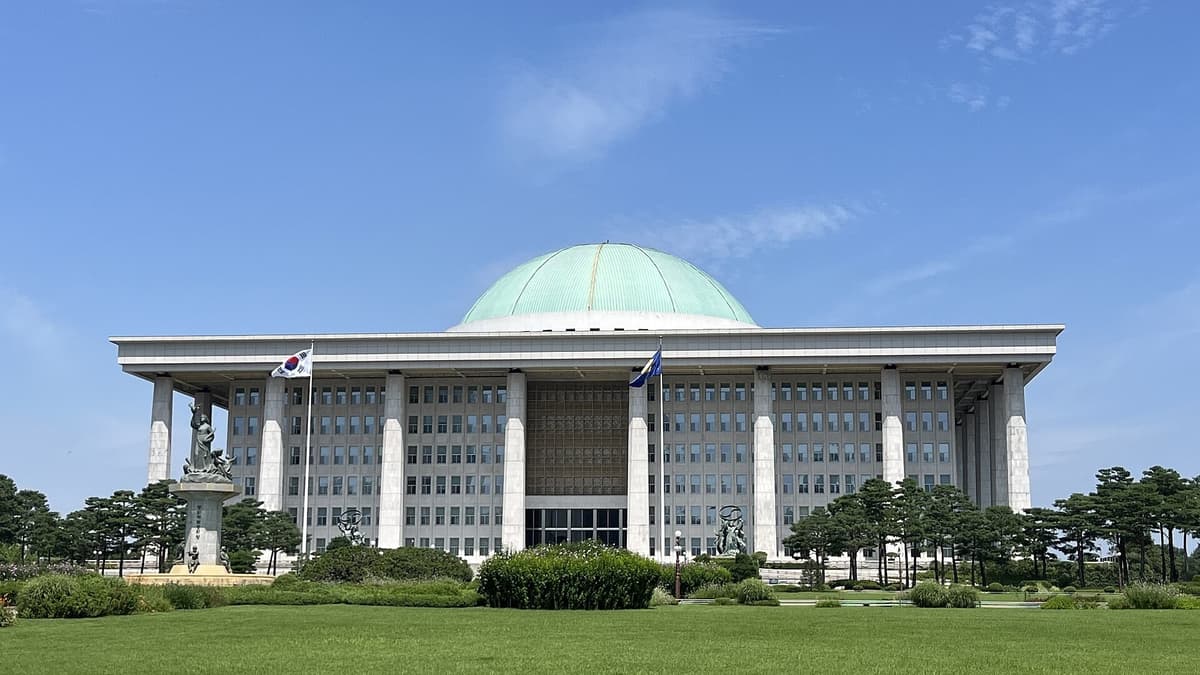
Here's the deal: Korea's AI Basic Act, in force since January 22, 2026, just hit six months. Why does that matter? Korea is among the earliest nations to actually run a comprehensive AI law spanning public and private sectors. Alongside the EU, it's one of the few places where "a law that governs AI wholesale" is genuinely operating.
But the situation is strange. The law is clearly in force, yet the penalties for violations (up to KRW 30 million) are on a one-year grace. So actual punishment won't start before 2027. These six months are an odd limbo of "the law exists, but the punishment doesn't yet." The government (the Ministry of Science and ICT, MSIT) is leaning on guidance and education to let companies adapt rather than swinging the stick now.
Remember two core pieces. First, "high-impact AI" rules. AI in fields that heavily affect human life, rights, or welfare — healthcare, finance, energy, transportation, education — carries heavier obligations. Second, generative-AI labeling. AI-made content must be marked so people can tell it's AI-generated. Those two axes are the backbone of Korea's AI regulation.
So here's what we're unpacking: why the "one-year grace on fines" design is a clever balance, what "high-impact AI" and "labeling" actually demand on the ground, and why — at the six-month mark — the government entered a "calibration mode" of reworking the law. A few concepts and you've got it.
The players — the AI Basic Act, the government, and "high-impact AI"
First, the AI Basic Act itself. Its full name translates to "Basic Act on the Advancement of AI and the Establishment of a Foundation of Trust" — and the name says it all. It packs "advancement" (promotion) and "trust" (regulation) into one law. It aims simultaneously at "grow the AI industry" and "make AI safe to use." Chasing both rabbits rather than tilting to one side is the law's basic character.
Next, the government, especially MSIT. The lead ministry enforcing the law — and its current stance is interesting. Not "you broke the law, here's a fine!" but education-first: "everyone's still adapting, so give guidance and time." The one-year fine grace is the expression of that intent. Squeeze the industry too hard with new rules and innovation chills, so it sheathed the punishment sword for now.
The third "player" is a concept: "high-impact AI." Regulating all AI the same is inefficient. So the law bundles "high-risk-domain AI" for heavier treatment — healthcare (misdiagnosis = life), finance (mistakes = wealth), energy/transportation (accidents = safety), education (broad impact). Companies running such high-impact AI get extra duties like prior disclosure and risk management. "Regulate in proportion to risk" is the core philosophy.
One sentence to bind it: a law fusing promotion and regulation (the AI Basic Act), run by a government leading with adaptation over punishment (MSIT), focused on high-risk domains (high-impact AI), gradually. That's the skeleton.
The state of play at six months
Words scatter, so here are the confirmed facts in a table.
| Item | Detail |
|---|---|
| In force since | January 22, 2026 |
| Status | Comprehensive AI law across public + private (among the world's earliest) |
| Core rule 1 | High-impact AI (healthcare, finance, energy, transport, education) — extra duties |
| Core rule 2 | Generative-AI content labeling |
| Fines | Up to KRW 30M, but on a one-year grace (no earlier than 2027) |
| Current phase | Guidance/education over punishment, gradual move to enforcement |
| Additional move | Public-private task force (40+ experts) refining/calibrating the law |
Line by line. First, the "one-year fine grace" is the law's cleverest part. Building a new rule but structuring it as "the law applies now, the punishment starts a year later" is a cushion: give companies time to adapt while signaling "real enforcement is coming" to prompt early preparation. Don't swing the whip now, but clearly show the whip exists.
Second, "reworking the law via a public-private task force" matters. Six months in, the government gathered 40+ experts from industry, academia, and civil society to refine and calibrate the law. That's "we'll keep refining with field feedback," not "make the law and walk away." Fast-built laws always have gaps — and entering "calibration mode" acknowledges and fixes them.
Third, the practical weight of "labeling." Requiring "AI-generated" marks on AI-made text, images, and video is a pretty practical device in an era awash in deepfakes and disinformation. But the specifics — "how much, and how, to label" — will keep getting refined in practice, and that's one of the task force's homework items.
Who gains what
Start with consumers' and citizens' wins. The most direct beneficiaries. Thanks to high-impact AI rules, the AI used in your loan screening or medical diagnosis is forced to meet minimum safety and transparency standards. And thanks to labeling, you get a clue whether the content you're seeing was made by a human or an AI. "The right not to be kept in the dark when AI intrudes on important decisions in my life" gets legal backing.
Companies' ledger is two-sided. The cost is clear — handling high-impact AI adds duties (disclosure, risk management, labeling), which is expense and hassle. But there are gains too. First, the one-year grace means no immediate fine bomb, so there's time to prepare. Second, clear rules paradoxically stabilize business. A "gray zone where you're anxious about what's legal" is worse for the long run than a "playing field with strict but clear lines." Companies that comply well also earn a "trustworthy AI" reputation as a bonus.
The unexpected beneficiary: Korea as a nation. By running a comprehensive AI law early alongside the EU, it gained a position as "a key reference case in global AI governance debates." Other countries designing AI regulation will study the Korean model. Run regulation well and it becomes a kind of soft power. But this is a benefit that shines only if "regulation doesn't choke innovation too hard."
Net: citizens get safety and transparency, companies get (despite the burden) clarity and prep time, the nation gets governance leadership. But whether the "promotion-vs-regulation balance" is genuinely struck is for future operation to decide.
Precedents — wins and losses
"Putting comprehensive regulation on a new technology" has plenty of historical reference. The closest success reference is data-privacy regulation. There was loud pushback ("it chokes business"), but clear rules ("you can't misuse data") settled in and lifted both consumer trust and industry order. The lesson: clear rules, a burden short-term, make the market healthier long-term. Korea's AI Basic Act is aiming down that road.
But the failure/concern cases keep us honest. Regulation failing to keep pace with tech, or being so strict it only chokes domestic firms while foreign Big Tech slips through — "reverse discrimination" side effects — are common in history. AI changes especially fast, so it's natural that a law made in January has parts misaligned with reality by June. The government immediately forming a task force to rework the law is precisely because it knows this risk — acknowledging a "fast-built law's" fate and committing to fix it fast.
Another balanced angle: the two sides of grace. A one-year fine grace is a good cushion that gives adaptation time, but conversely it risks companies delaying prep with "no fines anyway, so why bother." Whether the grace becomes "time to prepare" or "time to slack off" depends on how companies and the government use this year. Having eased the whip, how dense the guidance is during the gap will decide success.
So the balanced conclusion: the law's design (promotion + regulation, the grace cushion, the calibration task force) is careful and clever, but whether it truly catches both rabbits — "build trust without choking innovation" — is for future operation to decide. The lesson from precedent: good regulation is finished not in the statute book but in enforcement and calibration.
How rivals counter
Here "rivals" aren't companies but other regulatory models and nations. The first comparison is the EU. It also runs a comprehensive AI law, with a somewhat different approach from Korea. How the two models operate becomes each other's "control group." If Korea emphasizes "balance of promotion and regulation + a grace cushion," other countries pick stronger regulation or looser self-regulation. Which model better catches "innovation and safety" will be compared internationally.
Counter two: competition with "no regulation" or "light regulation" regions. For AI companies, lightly regulated places can be easier to operate in. So if Korea runs regulation too tightly, there's a "regulatory arbitrage" concern of some firms and capital fleeing to lighter jurisdictions. The government putting "advancement" right in the law's name and adding the grace is, in part, a balancing instinct to prevent that flight.
Counter three: the domestic-firms-vs-foreign-Big-Tech fairness problem. Regulation tends to apply tightly to domestic firms but is hard to enforce on foreign Big Tech. That breeds "why only us?" reverse-discrimination grievances. One of the task force's key tasks is exactly this fairness — how to build an enforcement system that applies evenly to everyone.
And the wild card: global coherence. AI services cross borders, so if Korean rules diverge too far from world standards, companies face soaring costs juggling different rules per country. So Korea must mind "coherence" — aligning with the EU and others even while running its own model. These six months aren't an end but a starting point for gauging how "Korean-style AI governance" finds its place on the world stage.
So what changes — by who you are
If you're a developer or practitioner. Recognize clearly that this is a "year of preparation." Sit on your hands because fines are deferred and you'll struggle in 2027. Especially if you handle AI in high-impact fields like healthcare, finance, or transportation, bake duties like prior disclosure, risk management, and labeling into your process now. If you make content with generative AI, think early about how to implement "labeling." Use the grace for "system-building," not "slacking."
If you're a manager or policymaker. The key: AI compliance is itself a trust asset. A company that follows clear rules earns a "trustworthy AI" reputation that appeals to customers and investors. At the same time, with the law still being calibrated, monitoring the task force's discussions and guideline changes matters. Shift from viewing regulation as pure "cost" to seeing it as a "differentiation opportunity."
If you're an ordinary citizen. The law's significance: when AI intrudes on important decisions in your life, you now have a right to know and to be protected. AI used in loans, diagnoses, and hiring is forced to meet minimum standards, and the content you see must be labeled if AI-generated. Not perfect, but a minimum framework so you're not kept in the dark before AI now exists.
The one line across all three: Korea took on early the hard balance of "grow AI while controlling it," and the next year's enforcement and calibration will give the verdict. Right now at six months is the most interesting stretch to watch which way that balance tips.
🥄 Three Things You're Probably Wondering
— The law's in force, so why no fines yet? A one-year grace was put in on purpose. Building a new rule with the cushion of "the law applies now, the punishment a year later" gives companies time to adapt while signaling "real enforcement is coming" to prompt prep. So fines (up to KRW 30M) are expected to actually apply no earlier than 2027.
— What exactly is "high-impact AI"? A concept bundling AI in fields that heavily affect human life, rights, or welfare. Healthcare (diagnosis), finance (loan screening), energy/transport (safety), and education are the prime examples. Such AI carries extra duties like prior disclosure and risk management. Rather than regulating all AI the same, it's proportional regulation — "more scrutiny where the risk is greater."
— Did Korea make the world's first AI law? "Among the earliest" is fair, but "the only first" is something to be careful about claiming. The EU also runs a comprehensive AI law, so it's more accurate to see Korea as one of the few places to actually enforce a comprehensive public-and-private law. That's why other countries are studying the Korean model as a key reference when designing their own AI regulation.
References
- Between Innovation and Oversight: Korea's AI Basic Act Enters Enforcement — KoreaTechDesk
- Global AI Governance Law and Policy: South Korea — IAPP
- South Korea AI Basic Act — U.S. Department of Commerce (trade.gov)
- Korea's AI Law Enters Its Next Phase as Real-World Feedback Shapes Policy — KoreaTechDesk
- AI Basic Act Update: Enforcement and Key Implications — Lexology
Numbers are as of announcement and may change.