The government just raised its hand to see the strongest AI before the public does
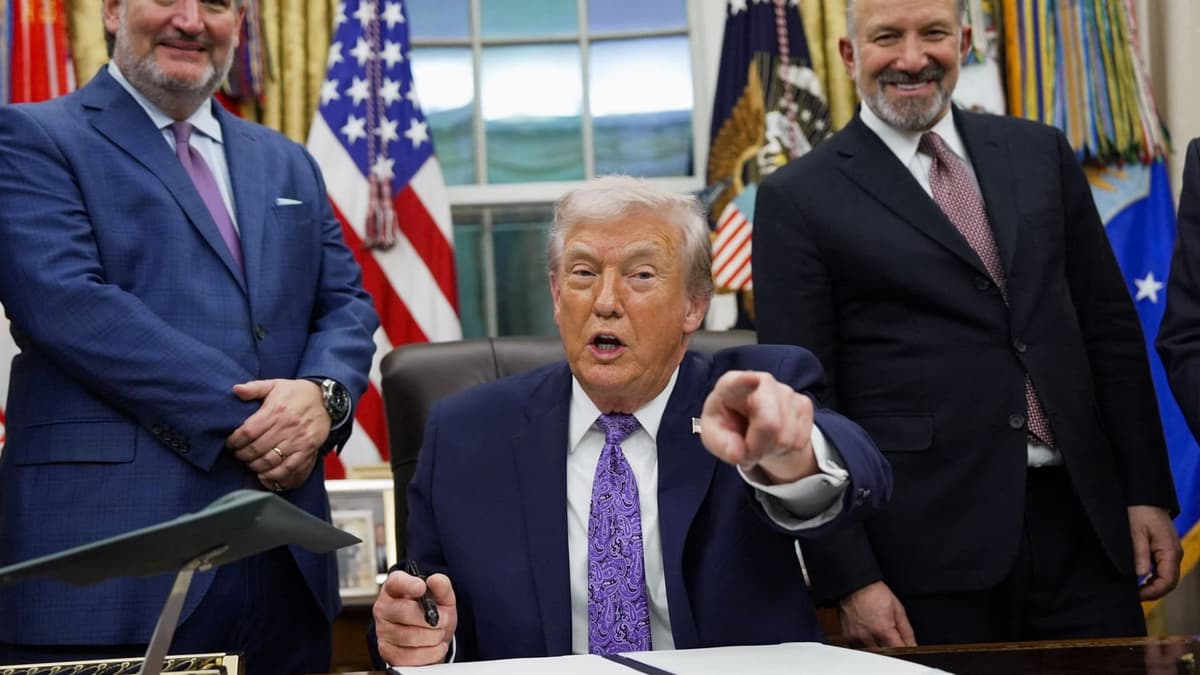
On June 2, Trump signed an executive order with a long name — "Promoting Advanced Artificial Intelligence Innovation and Security." Here's the deal in one line: "Hey, you companies building the most capable AI on Earth — show it to the federal government up to 30 days before you release it publicly." It's voluntary, not mandatory. So why is it the top story? Because it's the first time the US government has put it in an official document that it intends to look at frontier models before launch.
The signing itself is telling. Trump originally planned a flashy ceremony with prominent tech CEOs in front of the cameras. Then he postponed it because he "didn't like certain aspects" of the order — and ended up signing it quietly, in private. That's the internal White House and industry friction laid bare. The "America must win AI" acceleration instinct collided, inside a single document, with the "but the strongest models need safe handling" security instinct.
The mechanism has three parts. First, the government will build a benchmarking process to assess a model's "advanced cyber capabilities." Second, models that meet that bar get classified as "covered frontier models." Third, developers who opt in will work with the government to pick "trusted partners" who get early access to covered models — all aimed at strengthening critical-infrastructure cybersecurity. No licensing, no pre-approval requirement. That makes it closer to a collaboration framework than a regulation.
The players — the White House, frontier labs, and a brand-new yardstick called "cyber capability"
The sender here is the White House. From day one, the Trump administration has preached AI deregulation and acceleration — stripping out the Biden-era safety order and pushing "America-first AI dominance." So it's striking that this same administration reached for the opposite kind of card. Not pure laissez-faire, but a voluntary safety valve: "for the very strongest models, the government gets a look first." It's a tightrope walk between hating regulation and being unable to ignore security risk.
The recipients are the frontier AI labs — OpenAI, Anthropic, Google DeepMind, xAI, Meta, the companies building the most advanced large models. What they ship becomes a candidate "covered frontier model." Voluntary or not, this is effectively the White House extending a hand and saying "let's do this together," which is hard for these firms to flatly ignore. Opt in and you gain standing with the government and in critical-infrastructure markets; opt out and you wear the political label of being "uncooperative on security."
The newest thing to watch is the "advanced cyber capabilities" yardstick. Frontier status isn't sorted by how smart a model is or how many parameters it has, but by how usable it is for cyber attack and defense. In other words, what the government really cares about is: can this AI become a hacking tool, or can it be a shield for critical infrastructure? Law firms (WilmerHale, A&O Shearman, Wiley) read the order as a fusion of cybersecurity governance and frontier-model governance.
What's actually in it — unpacking "30 days" and "voluntary"
The most-quoted number is "up to 30 days." Participating companies grant early access up to a month before going public. During that window the government runs its benchmarks, assesses cyber capability, and — if something looks dangerous — buys time to prepare a response. The point isn't to block a launch; it's to see it coming. It's a right to know first, not a power to halt. That's exactly why the industry finds it far more palatable than mandatory licensing.
The second keyword is "voluntary." The EO does not require government licensing or pre-approval of new models. There's no penalty for not playing; it's a "who's in?" raise of the hand. Why structure it this way? Because mandatory rules (1) rest on shaky legal footing without an act of Congress, and (2) collide head-on with the administration's deregulation stance. So instead of force, it picks a voluntary framework that pulls labs in with incentives — trusted-partner status, critical-infrastructure security collaboration, and the like.
The third piece is the "trusted partners" structure. Opt-in developers help the government select trusted partners who receive early access. That effectively creates a new distribution path: frontier model → government + vetted critical-infrastructure operators. The strongest AI gets a route to a specific group (government, the grid, finance, telecom) before it reaches the general public.
| Item | Detail | Nature |
|---|---|---|
| Early-access timing | Up to 30 days before public release | Pre-review |
| Assessment bar | Benchmarking of "advanced cyber capabilities" | New process |
| Classification | Qualifying model = "covered frontier model" | New category |
| Participation | Voluntary; no licensing/pre-approval | Non-binding |
| Access recipients | Government + "trusted partners" | Critical infra |
What each side gets — the government, the labs, and critical infrastructure all win something
For the government, it's both optics and substance. The optics: "America proactively reviews the most advanced AI through a security lens." The substance: a month's head start to prepare for cyber threats aimed at critical infrastructure. Without paying the political cost of new legislation, it secures visibility into frontier models with a single executive order. And because it's voluntary, industry pushback is minimized.
For the frontier labs, it cuts both ways. The burden is real: showing your model to the government 30 days before launch complicates competitive timing and secrecy. But played well, it's an opportunity. A security relationship with the government becomes a calling card for entering critical-infrastructure markets (defense, energy, finance), plus a marketing line — "our model is a government-vetted, safe frontier system." Voluntary makes it look optional, but the company that abstains carries the political tag of being uncooperative.
For critical-infrastructure operators, it's almost pure upside. The grid, telecom, finance — prime targets for cyberattack — get to receive the most powerful AI before the general public and apply it to defense. The picture is defenders arming themselves before attackers can get their hands on the same model. Being picked as a trusted partner effectively makes you part of the national cyber-defense fabric.
Echoes from history — "voluntary safety pacts" have both succeeded and failed
There's precedent for government and AI firms agreeing on safety in a voluntary, non-mandatory form. The results were mixed.
Partial success — the 2023 White House voluntary commitments. Under the Biden administration, major labs (OpenAI, Google, Anthropic, Meta) made voluntary pledges to red-team models before release and adopt watermarking. No enforcement, but it became a starting point for industry norms. This EO continues that lineage, with a tweak: instead of the vague "red-teaming," it bolts in a more concrete yardstick — "cyber-capability benchmarking" — and nails down a timing of "30 days before launch." A step from abstract promises toward a measurable process.
Cautionary tale — the limits of self-regulation. History across finance and social media shows voluntary pledges collapsing easily under pressure. When incentives are thin or competition is fierce, companies pick launch speed over promises. This EO carries the same weakness. Being voluntary, it has no legal teeth; if the administration changes or the race overheats, the "show us 30 days early" norm can be quietly hollowed out by the "whoever ships first wins" pressure. Whether it actually holds depends on whether firms feel enough reason to honor it.
The contrasting road — mandatory rules in the EU and Korea. On the other side sit the EU AI Act and Korea's AI Basic Act, which write obligations into law. The US, again, chose voluntary cooperation over mandatory legislation. Fast and flexible but weakly binding, versus slow and rigid but firm. Which approach gets closer to actual "AI safety" is a question the next few years will have to answer.
How rivals counter — Congress, the states, and the rest of the world
First, Congress is the wild card. An executive order is made with one president's pen and erased with the next's. So the case that "real AI safety needs to be written into law" could grow louder on the Hill. At the same time, the deregulation camp will protest that "even an EO is too much, it strangles innovation." This order pokes both sides — politically, it sits right in the middle.
The states will move too. States like California, which have pushed their own AI safety laws, may argue that the federal "loose, voluntary" approach isn't enough and advance tougher state statutes. That leaves companies juggling federal voluntary standards and state-by-state mandatory ones — a regulatory patchwork. Without clear federal legislation, that fragmentation only deepens.
The rest of the world, especially China, will read this very differently. The US government wanting to see its own frontier models "before launch" signals that it now treats AI explicitly as a national-security asset. That pairs with the same week's other thread — tighter AI chip export controls — as one set. China will accelerate its own model ecosystem and use America's "securitization" turn to justify its own regulation and domestic substitution. AI governance keeps getting translated into the language of geopolitics.
So what actually changes — by persona
If you build AI models or do research, this EO signals that a government step could slot into your launch process. Not mandatory yet, but if you're building frontier-grade models, it's worth designing for a new "cyber-capability assessment" stage in advance. Especially if you're targeting government or critical-infrastructure markets, joining this voluntary framework could be your entry ticket. If you only do pure commercial/consumer products, the near-term impact is limited.
If you're in security or infrastructure, this is an opportunity signal. A new market opens around using "covered frontier models" for critical-infrastructure defense. The "trusted partner" seat — receiving the strongest AI before the public to apply it to cyber defense — effectively makes you part of the national security ecosystem. Security vendors, consultancies, and MSSPs should position early.
If you watch policy and regulation, the takeaway is this: the US has chosen to approach "AI safety" through voluntary cooperation plus a security frame, not mandatory regulation. That diverges clearly from the EU/Korea legislative road, and it previews a future where global AI governance splits into two competing models — mandatory versus voluntary. Whether voluntary pledges actually get honored, and whether they survive a change of administration, will be the real test of this experiment.
References
- The White House — Promoting Advanced Artificial Intelligence Innovation and Security (Presidential Actions)
- Trump signs AI executive order asking companies to give government early access to models — CNBC
- New Executive Order Addressing Early Government Access to Frontier AI Models — WilmerHale
- Executive order sets voluntary cyber reviews for advanced AI — Roll Call
- US order seeks 30-day frontier model access before public release — Interesting Engineering