Here's the deal: an order with invitations already out got killed by two phone calls
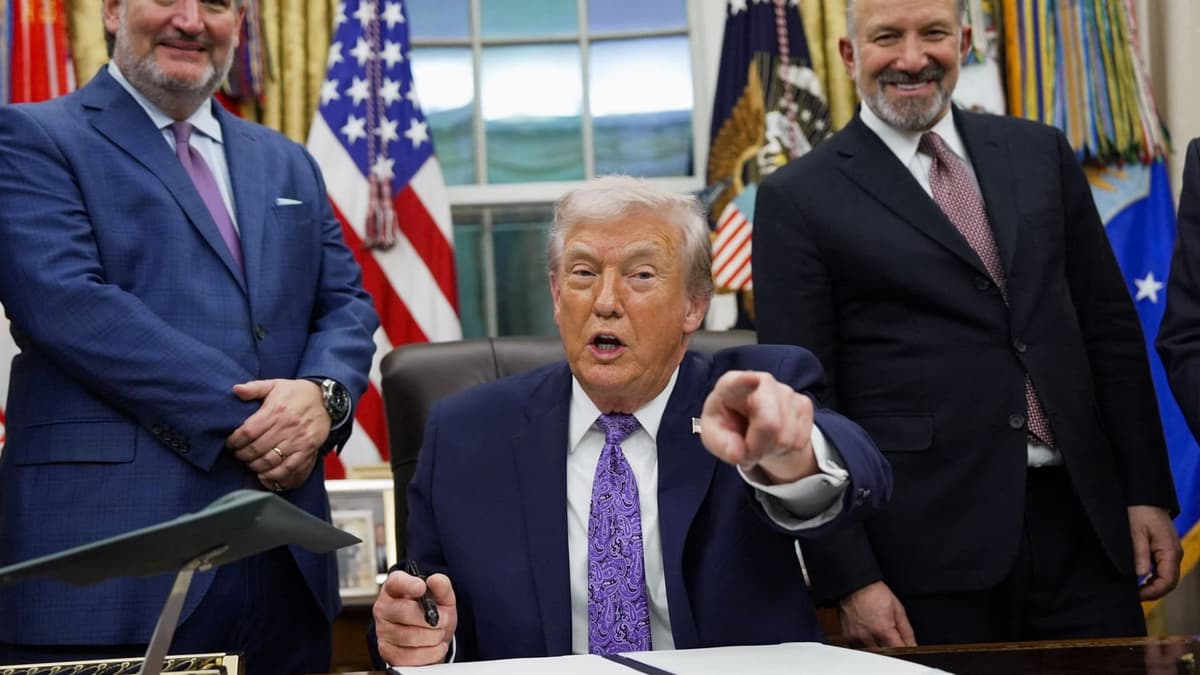
On Thursday afternoon, May 21, President Trump abruptly cancelled the signing of his AI executive order — hours before the ceremony. Not a routine delay: months of interagency, security-focused work stopped at the last minute. Trump told reporters only that he "didn't like certain aspects of it," but the backstory reported by the Washington Post, Axios and Fortune is much more specific.
The core of the scrapped order: a voluntary pre-launch review under which frontier AI developers would submit models to federal agencies up to 90 days before release for a security check, plus NSA involvement in classified testing. A safety-first framework meant to vet dangerous capabilities before launch. Per reporting, it was partly a response to concrete security risks — like an AI model's ability to find zero-day vulnerabilities at scale (the "Claude Mythos" episode tied to Anthropic).
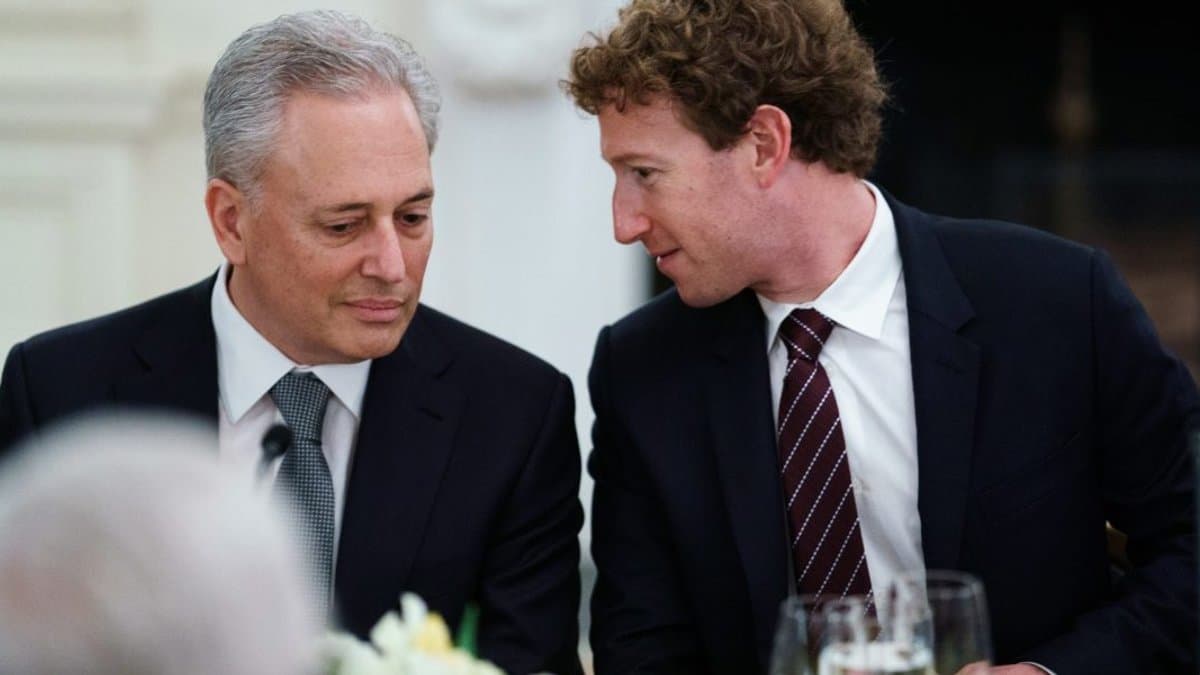
Then, between Wednesday and Thursday, Elon Musk, Mark Zuckerberg and David Sacks each spoke with Trump directly, warning that regulation slows AI development. Sacks — Trump's former "AI czar" — feared the voluntary process could mutate into a de facto licensing regime, or be made mandatory by a future administration. The twist: Sacks initially called the framework "acceptable" after a national-security briefing, then called Trump again Thursday morning and the momentum flipped entirely. By then invitations had gone out and some attendees were already on planes.
Trump's rationale fits in one sentence: "We're leading China, we're leading everybody, and I didn't want to do anything to get in the way of that lead." In other words, no regulation that slows America in the U.S.–China AI race. Months of interagency consensus lost to two CEOs with massive AI-infrastructure stakes getting Trump on the phone. That's why this reads as a watershed for AI governance.
The players — Trump, Sacks, Musk, Zuckerberg, and the security staff
Donald Trump (U.S. President). Anti-regulation is part of his brand. Deregulation was a first-term core; here he killed the order with the frame "AI regulation = handing the edge to China." Notably, Fortune reports that much of the MAGA base actually favors AI regulation — so even among his supporters, this isn't a united front.
David Sacks (former White House AI czar). A Silicon Valley VC who became central to the administration's AI policy. Named as the decisive force here. He first signed off after briefings from security staff (science adviser Kratsios, cyber director Cairncross), then reversed and lobbied Trump on the "voluntary becomes licensing" risk.
Elon Musk & Mark Zuckerberg. Musk (xAI/Tesla) and Zuckerberg (Meta) have both made astronomical bets on AI infrastructure — datacenters, chips, models. A 90-day pre-launch review hits their release speed directly. That they each called Trump personally is itself a symbol of how much White House access Big Tech CEOs have.
The security staff (Kratsios, Cairncross, etc.). They defended the order's security value. Science adviser Michael Kratsios and National Cyber Director Sean Cairncross helped shape the draft. The cancellation reads as the "security line vs. deregulation line" fight, won by the latter with CEO lobbying behind it.
What got killed, and why it flipped at the last minute
What the order said. (1) Voluntary pre-launch submission of frontier models to federal agencies up to 90 days before release; (2) NSA involvement in classified testing; (3) partnerships with leading AI firms to vet cutting-edge models. The "voluntary" nature and the review window (90 days vs. the 14 days industry preferred) were the negotiating points. Industry thought 90 days was too long.
— Why oppose it if it's 'voluntary'? Sacks's logic is the crux. Even voluntary now, (1) the administration can pressure it into quasi-mandatory, and (2) a future administration could convert it into a mandatory "license." Once a government review channel exists, it's hard to undo — an "institutional inertia" worry. To deregulators, a license = a gatekeeper standing in front of AI innovation.
The drama of the decision. The ceremony was set, invitations sent, some attendees en route. Then the Sacks/Musk/Zuckerberg calls landed Wed–Thu, and Sacks's final Thursday-morning call changed Trump's mind. The White House called it a "postponement," but in practice it's closer to shelving the security-first draft.
The security backdrop. Per reporting, the order wasn't abstract — it sat against concrete events: AI's growing ability to find zero-days at scale (the Anthropic-linked "Claude Mythos" case), and the GitHub supply-chain breach that hit the same week. Hence the criticism: why scrap a security review right now?
| Item | Scrapped EO | Industry's (Musk/Zuck/Sacks) objection |
|---|---|---|
| Review type | Voluntary pre-submission | "Voluntary" becomes quasi-mandatory |
| Window | Up to 90 days | Too long (industry wanted 14) |
| Security role | NSA classified testing | Slows development |
| Long-term fear | — | Turns into licensing / future mandate |
| Rationale | Vet risk before launch | Keep the lead over China |
Who gains what
Musk and Zuckerberg. The most direct winners. Killing the 90-day review preserves release speed and autonomy — no government gate in the cadence of xAI's Grok or Meta's Llama. They also flexed the power to reverse policy with a direct call to the White House.
Sacks and the deregulation camp. A win for the "markets should lead AI" line. Blocking a licensing/gatekeeper regime cements the Silicon Valley libertarian case. For Sacks personally, it proves near-final say over AI policy.
Trump. Reinforces the "America won't lose to China" political message. But it's double-edged — parts of MAGA and security-minded voters could see it as caving to Big Tech. Another security incident, and "why did you scrap the review?" becomes blowback.
The losers — the security line and safety camp. Security staff (Kratsios, Cairncross) and players like Anthropic who emphasize "responsible release" lost some ground; a pre-launch government check vanished. Then again, the "voluntary" frame was weak to begin with, so some argue the loss is small.
Precedents — wins and failures
Biden's AI EO (2023) → Trump's rollback. Biden issued a sweeping AI executive order in 2023, much of which Trump rolled back early in his second term. This cancellation is the continuation — a consistent "minimize federal AI regulation" stance. The difference: this time Trump scrapped his own order.
EU AI Act (2024–). Europe went the opposite way — a comprehensive law classifying and regulating high-risk AI, with the AI Office now enforcing. As the U.S. scraps even a pre-launch review, the U.S.–EU regulatory gap widens. Global firms may converge on the de facto EU standard ("meet EU and you auto-clear the U.S.").
California SB 1047 (2024) veto. California's frontier-AI safety bill died by gubernatorial veto after industry lobbying. Same pattern as this federal cancellation — a safety bill collapsing under last-minute industry pressure. Repeated last-minute deaths of regulation are becoming a structural feature of U.S. AI governance.
How rivals counter
Anthropic. Having championed "responsible scaling," Anthropic is in a delicate spot. With government review gone, it can lean harder on the importance of voluntary safety standards. Jack Clark's Oxford lecture the same week — urging "pandemic-level institutional readiness" — fits this context: filling the regulatory vacuum with industry self-governance.
The EU and national regulators. As the U.S. slows, the EU AI Office and national regulators gain relative clout — a chance to pre-empt the global standard. Korea, the UK and others may expand their AI Safety Institutes to fill the space the U.S. left.
Democrats and security hawks. Congressional Democrats and some GOP security hawks could counter via legislation — a president can scrap an EO, but not a law. Divided government and lobbying make actual bills an uphill climb, though.
OpenAI's tightrope. OpenAI has long balanced "we welcome regulation" gestures with "innovation first." The cancellation buys short-term release freedom, but it also wants predictable regulation long-term, so its position is genuinely mixed.
So what actually changes — by persona
AI companies and developers. Short-term, more freedom to ship in the U.S. — the 90-day gate is gone. But don't forget the EU AI Act stands; if you ship globally, you'll meet EU rules anyway. Don't mistake a U.S. vacuum for "no rules."
Startups and investors. Lower near-term compliance cost — but policy volatility itself is the risk. One security incident could swing regulation back fast. Smart move: build compliance capacity now, assuming a low-predictability environment.
Security and safety researchers. With government pre-review gone, industry self-standards and third-party evaluation matter more. AISIs, red teams, and outside audits gain both opportunity and responsibility.
Policy and regulatory folks. The lesson is blunt: an EO can flip at the last minute, and direct CEO access can beat interagency consensus. Stable governance needs sturdier paths — legislation or international coordination.
Ordinary citizens. No felt impact, but it reveals the power map of "who decides AI's safeguards, and how." It also means you're using AI products without a pre-launch government check — a reason to read companies' voluntary safety promises more critically.
References
- Axios — Trump AI executive order postponed, why
- NBC News — Trump abruptly scraps signing of landmark AI executive order
- CNBC — Trump postpones AI executive order signing
- Washington Post — Last-minute lobbying led Trump to cancel AI order
- Fortune — Tech billionaires convinced Trump to back off AI executive order