Washington Finally Pulled a Knife in the 'Who Gets to Regulate AI' Fight
Here's the deal: the United States has 50 states, and lately they've all been racing to write their own AI rules. California does it one way, New York another, Illinois yet another. One state demands transparency reports from model builders, another mandates safety testing, a third sets a totally different bar. For an AI company, it's a migraine. You build one product and suddenly you're trying to satisfy 50 different legal regimes at once. The industry has a name for this mess: the "patchwork." Picture a quilt stitched together from random scraps — that's the regulatory map AI companies are staring at.
Then on June 4, 2026, something big landed in Washington. Republican Rep. Jay Obernolte and Democrat Rep. Lori Trahan teamed up and dropped a 269-page document called the "Great American AI Act." It's a bipartisan federal framework sketching out how the U.S. should govern AI. And buried at its heart is a bombshell clause: for the next three years, federal law would preempt any state law "specifically regulating the development" of AI models. In plain English, the development-stage AI rules states have built would get frozen.
One crucial detail before we go further: this isn't a law. It isn't even a bill yet. It's a "discussion draft" — released to gather public feedback before anyone formally introduces it. So what we're looking at isn't a finished product, it's a blueprint. And yet the moment it dropped, Washington went into uproar. One camp cheered, finally a way to untangle the patchwork. The other camp is furious, accusing the feds of trying to strip states of their power to protect their own people. Let's walk through this fight piece by piece.
Who's Actually at This Table — Meet the Players
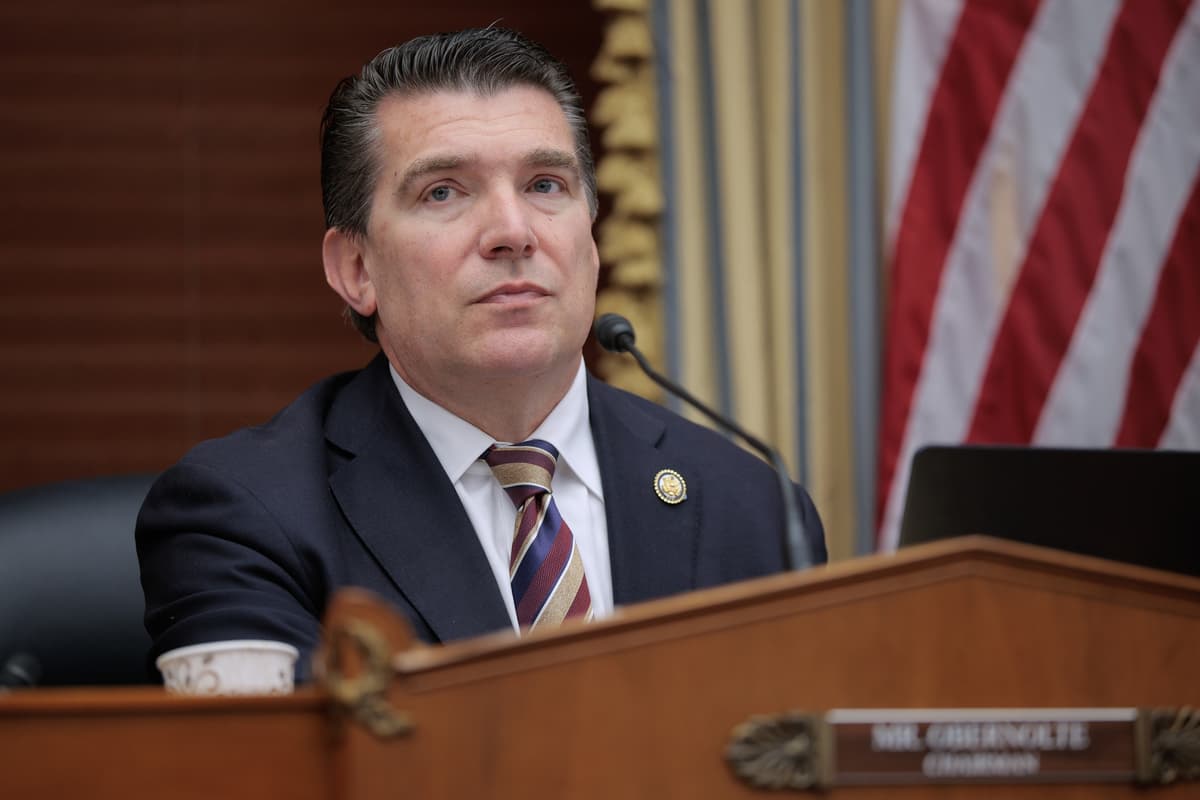
Start with Rep. Jay Obernolte, a California Republican with an unusual resume. He started out as a video game developer and went on to earn a master's degree in artificial intelligence. In Congress, he's known as one of the few lawmakers who actually understands the tech. That matters: when politicians who can't tell a model from a spreadsheet write tech rules, they tend to whiff. Obernolte has written code and trained models, so the industry feels it can at least talk shop with him. On this draft, he's the Republican engine.
His partner across the aisle is Democrat Rep. Lori Trahan of Massachusetts. Trahan has spent years pushing on consumer protection and Big Tech accountability. That's what makes this pairing so interesting. A tech-friendly Republican and a consumer-watchdog Democrat sitting at the same table and hammering out a deal — that's a message in itself. The signal: AI regulation shouldn't be a partisan brawl. And it's not just the two of them. Other lawmakers from both parties signed on in support, including Rep. Scott Franklin (R-FL) and Rep. Suhas Subramanyam (D-VA).
Then there's the star of the show: the bill itself. The Great American AI Act isn't a one-line "let's regulate AI" slogan. As its 269-page heft suggests, it's a comprehensive blueprint built on four pillars spanning model governance, the labor market, cybersecurity, and research. The state-preemption clause sits right in the middle of it.
Another player: state regulators. Places like California, New York, and Illinois had already built (or were building) transparency and safety rules aimed at AI developers. While the feds dithered, the states moved first. But if this draft becomes law, those efforts get put on ice for three years. From a state's point of view, the reaction is blunt: "Why is Washington walking in to switch off the safeguards we worked to build?"
The final players are the critics. The standard-bearer is the consumer advocacy group Public Citizen, which argues this measure strips states of their power to protect consumers, workers, and children. Pushback also comes from the safety-advocate corner. Brendan Steinhauser of the Alliance for Secure AI, for instance, praised the draft's focus on catastrophic risk but opposed the preemption piece. Industry group ITI (the Information Technology Industry Council) weighed in too. So this isn't a clean "for vs. against" — it's a tangled landscape where the same person says "this part's good, that part's not."
The Core — Four Pillars and How Preemption Actually Works
So what's actually packed into these 269 pages? The Great American AI Act stands on four pillars. The first is frontier model governance: forcing the labs that build the most powerful, cutting-edge AI to disclose details about their models. The second is tracking workforce changes — the government would gather data on how AI is shaking up jobs. The third is fortifying cybersecurity. The fourth is spurring AI R&D. So it's not pure regulation; there's an industrial-policy streak running through it, aimed at keeping America's AI edge sharp.
Of these four, the hottest potato is the first pillar and the preemption clause attached to it. Here's the mechanic. The draft says federal law preempts, for three years, any state law that "specifically regulates the development" of AI models. The keyword is "development." State laws governing how a model is trained, built, and released would be frozen or superseded by federal law. And there's a sunset: the freeze runs three years, not forever. The idea is to use that window to build a unified federal framework.
Now the distinction that really matters. This preemption does NOT touch laws regulating the "use" or "deployment" of AI. Existing consumer-protection, civil-rights, and privacy laws stay fully intact. Laws saying you can't use AI for discriminatory hiring, or that AI can't run wild with personal data — those are untouched. What gets frozen are things like the development-stage transparency mandates passed in places like California, New York, and Illinois. Supporters describe it as a precise cut: keep every existing safety net, just clean up the patchwork of development rules.
So what does the federal government ask in return? It forces the most powerful frontier labs to disclose details about their models. The play isn't to delete regulation outright — it's to swap a patchwork of state transparency demands for one unified federal transparency mandate. Here's the picture in a table.
| Category | Preempted (frozen)? | Notes |
|---|---|---|
| State laws regulating AI model "development" | Yes (3 years) | The core target. Has a sunset clause |
| State laws regulating AI "use / deployment" | No | Remain in force |
| Existing consumer-protection laws | No | Preserved |
| Existing civil-rights / anti-discrimination laws | No | Preserved |
| Existing privacy laws | No | Preserved |
| Frontier-lab model disclosure | — | New federal mandate |
| Workforce-impact tracking | — | Federal data collection |
| Cybersecurity / R&D | — | Industrial-policy pillars |
As the table shows, the strategy isn't "deregulate everything." It's closer to a selective cleanup: unify the development rules federally, leave the rest of the safety net standing. The catch — and where the fight ignites — is that the line between "development" and "use" isn't as clean as slicing a cucumber.
What Each Side Gains
Start with the frontier labs — the big shops building cutting-edge AI. Their biggest prize here is predictability. Right now, with 50 states each pushing different development rules, a single company can run multiple legal teams and still struggle to keep up. Unify the development rules at the federal level, and suddenly you only have to satisfy one set across the whole country. Costs drop, and the minefield of "this is legal in this state but not that one" disappears when launching a new product. Yes, in exchange they take on a new federal model-disclosure obligation — but the labs do the math and conclude one unified rule beats 50 patchwork ones.
For the federal government, the gain is the steering wheel on AI policy. Until now, while Washington hesitated, the states charged ahead. The result was awkward: oversight of the most powerful frontier models sat in Sacramento or Albany rather than D.C. This draft flips that. The feds would receive frontier-model details directly, track labor-market impacts directly, and set the unified framework. It's a statement of intent — Washington wants to manage a nation-scale technology directly.
So what do the states get? On the surface, it looks like they mostly lose, since their development rules freeze for three years. But supporters argue states gain too. First, their authority over use and deployment survives intact, so the core tools for protecting residents stay in their hands. Second, thanks to the three-year sunset, the power isn't taken permanently — states get to watch how the federal framework performs and reassess. Third, clearing out the patchwork could lighten the load on AI companies operating within the state, which might pay off economically.
Finally, the public. This is the most contested point. Supporters argue that a unified federal transparency mandate actually strengthens scrutiny of the riskiest frontier models — better to have the feds look hard once than have 50 states each look weakly. Critics see it the opposite way: if Washington switches off the protections states built for their citizens, a single federal disclosure obligation isn't enough to fill the gap. In the end, whether the public wins or loses comes down to one thing — how firmly the feds plug that gap over three years.
Past Parallels — Some Worked, Some Crashed
This preemption fight isn't actually new. Back in 2025, there were similar attempts — a push for a moratorium that would have barred states from making AI rules for a stretch of time. Those attempts ultimately collapsed. The backlash over trampling state authority came from both parties, and the criticism — "the feds want to tie states' hands without offering an alternative" — proved fatal. The fact that the Great American AI Act arrives not as a bare moratorium but bundled with four pillars and a federal transparency mandate reads like a lesson learned from 2025: you can't just block; you have to offer an alternative if you want to pass.
Federal preemption itself is no stranger to American law. Historically, the feds have preempted state law in plenty of areas — telecommunications, aviation, certain food and drug labeling rules — on the logic that the whole country should run on one rule for efficiency's sake. The more an industry spills across state lines, the stronger the preemption argument gets. AI, like the internet, makes state borders almost meaningless, so supporters argue it's only natural for the feds to unify it the way they did telecom.
But preemption hasn't always gone smoothly. Every time the feds blanket over state law, the same debates follow: what if the federal standard is weaker than the state's? What if a state wants stronger protections but is now barred from setting them? In environmental and consumer-protection arenas especially, the recurring critique is that preemption "turns the federal floor into a federal ceiling." And that's exactly the central criticism showing up in this draft. Today state law acts as a minimum (a floor); preempt it, and that becomes a maximum (a ceiling).
So this case's fate will land somewhere between those two precedents. It could follow the telecom/aviation model where unification bred efficiency — or it could hit the same "states' rights" wall that sank the 2025 moratorium. It's still a discussion draft, so the ending isn't written. But history makes the key variable clear: is the alternative the feds offer as sturdy as the authority states give up? That's the whole ballgame.
The Opposition's Counter-Play
Leading the opposition is the consumer advocacy group Public Citizen, and their argument is simple but forceful. "States are the government closest to the people. They're the first line of defense for consumers, workers, and especially children. If the feds strip that power for three years, who protects citizens in the meantime?" The feds may promise a unified framework, but building one takes time — and who's accountable for the gap that opens while it's under construction?
The sharpest critique is captured in that "floor to ceiling" phrase. Today state law functions as a minimum protection — a floor. If a state wants to, it can build higher. But under preemption, the federal standard becomes a ceiling that says "only this far." A state that wants to protect its residents more aggressively simply can't. Critics put it bluntly: AI companies want the weakest possible regulation, and this draft basically lays exactly that across the entire country.
What's striking is that the opposition isn't one color. Even the safety-advocate camp has a nuanced take. Brendan Steinhauser of the Alliance for Secure AI praised the draft's focus on catastrophic risk — aiming squarely at the most dangerous frontier models is the right direction, in his view. But even he drew a line at the state-preemption piece: focusing on risk is good, but tying states' hands is a separate problem. So you get this complicated picture where the same person is half for, half against.
Industry didn't sit quietly either. Groups like ITI (the Information Technology Industry Council) weighed in, and industry is generally friendly to clearing out the patchwork — a unified federal framework is easier to do business under. So the battle lines roughly look like this: on one side, industry and the tech-friendly camp waving "predictability and competitiveness"; on the other, consumer groups and some state governments defending "states' rights and citizen protection"; and wedged in between, a safety-advocate camp that says "yes to risk regulation, no to preemption." A messy three-way triangle.
In the end, the opposition's core counter-cards boil down to two words: "gap" and "ceiling." Who protects citizens during the three-year gap, and won't the federal standard become a ceiling that blocks stronger protections? If supporters can't answer those two questions convincingly, this draft could hit the same wall as the 2025 moratorium. Releasing it as a discussion draft first looks like a deliberate strategy — absorb this counter-play and refine the text before any formal introduction.
So What Actually Changes — Sorted by Who You Are
If you're an AI developer, especially one building large models, here's the headline: should this draft become law, the biggest change is "one rule." Today you sweat different development rules in every state; once preemption kicks in, you satisfy a single federal standard nationwide. In exchange, if you're a lab holding the most powerful frontier models, you take on a new obligation to disclose model details to the feds. If you're a small startup, the disclosure mandate is limited to "the most powerful models," so the direct hit is lighter — while you still enjoy the benefit of the patchwork going away. But remember, it's still a discussion draft, so there's nothing to change today. Just watch the current.
If you're a state policymaker, things get trickier. If you're pushing — or have already passed — a law targeting the AI development stage, you need to game out the scenario where it freezes for three years. On the flip side, laws on use and deployment, consumer protection, anti-discrimination, and privacy aren't affected, so you might recalibrate your legislative strategy toward those. The key is drawing a clear line between "development regulation" and "use regulation." If that boundary is fuzzy, you'll end up fighting over whether your law is even subject to preemption.
If you're an ordinary user, honestly you won't feel much right away. This isn't law yet, and even if it passes, the effects take time to surface. But zoom out, and it's a signal that the center of gravity for who oversees AI in America — and how — could shift from "50 states" to "one federal government." Read optimistically, that means more consistent, stronger federal oversight. Read pessimistically, it means the state you live in might want to protect you more and no longer be able to. Which reading proves right depends on how the feds fill that space over three years.
Bottom line, at this stage the common takeaway for everyone is the same: nothing's decided because it's still a draft, but an inflection point that could reshape the entire U.S. AI-regulation board has just been thrown down. Where it flows from here will be decided by the debate playing out in Washington over the coming months.
🥄 Three Things You're Probably Wondering
— Q1. Does this kill every state AI law? No. The core is that it preempts only state laws "specifically regulating the development" of AI models, and only for three years. Laws regulating the use and deployment of AI, plus existing consumer-protection, civil-rights, and privacy laws, all stay intact. It's not a blanket repeal — it's a selective freeze limited to development rules.
— Q2. What happens after three years? The preemption has a sunset clause. It doesn't take state authority permanently; it sets a three-year window meant for the feds to build a unified framework. Once those three years are up, there's room to look at the results and reassess.
— Q3. Is this in force as law now? No. This is a discussion draft. It was released to gather public and stakeholder feedback before anyone even formally introduces it as a bill. So nothing is settled, and the content could change significantly or fall apart entirely.
— Q4. Why did a Republican and a Democrat write this together? It's a signal that they want to treat AI regulation as a bipartisan issue rather than a partisan brawl. Tech-savvy Republican Obernolte and consumer-protection-minded Democrat Trahan stepped up together, and other lawmakers from both parties signed on. Having watched the 2025 moratorium attempt collapse, they're arriving armed with "bipartisan consensus."
References
- Obernolte, Trahan release a discussion draft of the Great American AI Act — House.gov
- Bipartisan AI draft proposes three-year preemption of state laws — Roll Call
- What's inside the House draft bill to regulate AI — Axios
- Bipartisan 'Great American AI Act' draft proposes new federal AI governance framework — FedScoop
- Lawmakers propose AI framework that would preempt state laws for 3 years — Nextgov/FCW
This article covers a "discussion draft," not enacted law. It hasn't even been formally introduced as a bill, and its contents could change substantially or be abandoned. This article is also not legal advice. For any specific legal question, consult a qualified professional.