Apple is out shopping for news, and it doesn't want to pay a flat fee
Here's the deal: The Wall Street Journal reported on August 12 that Apple has spent recent months approaching news publishers about multiyear content agreements. The goal is narrow and urgent — make Siri AI, which ships this fall, capable of answering "what happened today?" without embarrassing itself.
The dollar figure is the headline, but the structure is the story. What Apple has put on the table isn't a flat license. It's variable compensation: publishers get paid when their content is actually used in a Siri answer. Nearly every AI content deal signed since 2023 has worked the other way — a fixed annual fee in exchange for broad access to an archive. Apple is proposing to invert that.
The budget being discussed is nine figures. In plain terms, somewhere north of $100 million and short of a billion. Apple has never allocated that kind of money to news content alone. For comparison, when Apple last went shopping for publisher content in late 2023, the offers on the table were around $50 million for multiyear archive rights, and most of those talks went nowhere. Three years later the order of magnitude has moved up a notch.
Apple declined to comment. So nothing is signed, and the terms could change or collapse entirely. But the timing tells you something on its own. Siri AI is weeks from general release and Apple is still negotiating its news supply. That's not a nice-to-have being tidied up late. That's the weakest link in the product getting patched at the last minute.
The cast: a Siri two years late, publishers with scar tissue, and a rented brain
Start with Apple. The company needs no introduction, and yet in AI it has been strangely behind. Apple Intelligence was announced in 2024 with a promise of a rebuilt Siri. That Siri didn't actually appear until WWDC on June 8, 2026. Two years elapsed between the promise and the product, and Apple wore the "late to AI" label for every month of it.
The new assistant — Apple officially calls it Siri AI — is built on three pillars. Personal context, meaning it can reason across your messages, mail, and photos. Onscreen awareness, meaning you can ask about whatever you're looking at. And broad world knowledge, which Apple's own announcement describes as the ability to "get up-to-date information from the web on virtually any topic." Craig Federighi, Apple's software chief, framed the pitch around Siri taking action across apps more naturally than before.
That third pillar is where the trouble lives. Personal context stays on device. Onscreen awareness stays on device. Even when processing moves to the cloud, Private Cloud Compute keeps it inside Apple's own trust boundary. But answering "how did that story end today?" requires information from outside, and most of that information is reporting somebody paid a journalist to produce. Apple's control chain breaks right there.
The second character is the publishing industry, which has spent three years walking two roads at once. One road is deals: Axel Springer, Le Monde, Prisa Media, Condé Nast, and Axios all signed with OpenAI, and The New York Times licensed content to Amazon in May 2025 for use in Alexa and model training. The other road is litigation: the same New York Times is suing OpenAI and Microsoft over copyright, and other outlets have followed. Negotiating and suing simultaneously is now standard practice, not a contradiction.
The third character is the awkward one. Siri AI's brain isn't Apple's. According to reporting around the WWDC reveal, Apple leases a customized Gemini model of roughly 1.2 trillion parameters from Google, at a cost reported near $1 billion a year — about eight times the size of Apple's own cloud model at roughly 150 billion parameters. So Apple pays a billion a year to rent the reasoning, and now wants to spend nine figures more on the day's news to feed it.
The fourth character isn't a company. It's an incident. In December 2024, Apple Intelligence notification summaries mangled a BBC story badly enough to put a false headline on iPhone lock screens — stating that a murder suspect had shot himself when he had not. The BBC complained publicly, Reporters Without Borders called for the feature to be pulled, and Apple switched off summaries for news and entertainment apps in iOS 18.3 in January 2025. That switch stayed off for more than a year. Every conversation Apple is now having with a publisher happens with that episode in the room.
What's actually on the table: usage, not access
The reported terms come down to three things. Multiyear agreements. Compensation tied to usage — publishers get paid when their content shows up in what Siri says. And a total budget discussed in nine figures. Apple has reportedly framed this as explicitly distinct from the industry norm of paying fixed fees for broad access.
Line it up against the other deals and the shape becomes clear.
| Buyer / program | Structure | Disclosed scale | What triggers payment | When |
|---|---|---|---|---|
| Apple — Siri AI (in talks) | Multiyear + usage-linked | Nine-figure budget discussed | Content used in an answer | Aug 2026 report |
| Apple — archive training offer | Multiyear flat | $50M+ | Bulk archive license | Dec 2023 (mostly failed) |
| Amazon — The New York Times | Multiyear flat | ~$20M–$25M/year reported | Training + Alexa summaries | May 2025 |
| OpenAI — Axel Springer et al. | Multiyear flat | Undisclosed | Training + ChatGPT citation | Dec 2023 onward |
| Perplexity — Comet Plus | Subscription rev-share | $42.5M pool, 80% to publishers | Cited in an answer | Jul 2024 onward |
| Apple News+ | Subscription rev-share | Undisclosed | Reader time spent | Mar 2019 onward |
Read down that table and Apple's proposal doesn't belong to the flat-license lineage at all. It belongs to the lineage Apple itself has been running since 2019 with Apple News+, where subscription revenue is allocated by how long readers actually spend with a publication. Apple extended that logic in 2021 with the News Partner Program, cutting the in-app subscription commission to 15% from day one for qualifying publishers. Usage-based allocation isn't a new invention at Apple. It's a familiar instrument being pointed at a new problem.
But news reading and AI answers don't count the same way. Time-on-article is a clean measurement. "How much did this article contribute to this answer?" is not. If the model synthesizes three outlets into two sentences, how do you split it? Does a citation link count, and does an uncited fact count? Whoever writes those definitions into the first signed contract is effectively writing the industry standard, because everyone else will negotiate against that template.
For publishers the model cuts both ways, and this is the part worth sitting with. An outlet Siri leans on constantly could earn far more than a flat deal would have paid. A niche outlet gets revenue that is lumpy and nearly impossible to forecast. Structurally it's music streaming royalties: the top of the catalog takes most of the pool, and the long tail collects fractions. Apple, of all companies, knows exactly how that curve looks, because Apple Music has been living on it for a decade.
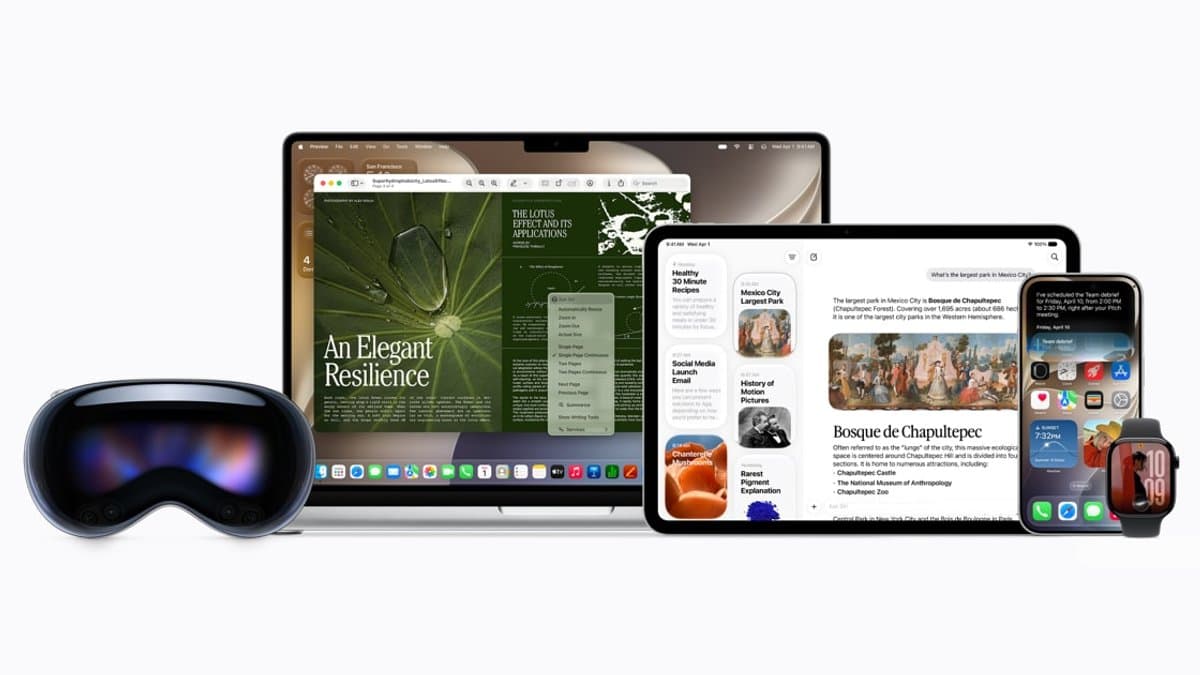
One more constraint: the clock. Siri AI ships with iOS 27, iPadOS 27, and macOS 27 this fall, and it's already been in users' hands since the public beta on July 13 — English only, behind a waitlist. In the European Union it isn't shipping on iOS or iPadOS at all, because of the Digital Markets Act. Apple's own statement says EU regulators didn't accept any of its proposed solutions, and Federighi said there's no timeline for availability there. Mac and Vision Pro users in the EU still get it. Negotiating the news pipeline this close to launch means this piece was never settled.
Who gets what out of it
Apple gets two things, and accuracy is only the first. Licensed, current articles routed directly into answer construction produce fewer errors than scraping and summarizing the open web. But the second benefit may matter more: liability cover. If Siri garbles a story built from content Apple paid for under contract, the criticism is a product bug. If it garbles a story Apple took without asking, the criticism is theft plus distortion. For a company where brand trust is a load-bearing asset, that distinction is worth nine figures by itself.
Publishers may value the reporting more than the money. Usage-based payment requires usage measurement, which means outlets would receive counts of how often their journalism appeared in Siri answers. The loudest complaint publishers have had about AI is not merely that they weren't paid — it's that they can't see anything. Traffic falls, usage is invisible, and there's no number to argue with. Usage data becomes leverage in the next negotiation: you can walk into a renewal with Google or OpenAI holding a figure Apple already validated.
Large outlets are clear winners here. When Siri fields a breaking news, politics, or sports question, the sources most likely to be cited are the ones with the biggest reporting operations. News Corp, parent of the Journal, already has a commercial relationship with Apple, and the Journal was an early Apple News+ participant. Those are good seats at this table.
Small and specialist publishers face a harder calculation. Usage-based pay has no floor. Zero citations means zero dollars, where a flat deal at least guaranteed cash flow. The counterweight is that a dominant outlet in a narrow domain — local news, a trade publication — may be the only plausible citation when questions land in its territory, which could push its effective rate up. Whether that upside is real depends entirely on whether Apple negotiates minimum guarantees, and there is no reporting yet that says it will.
Google is the quiet beneficiary. As long as Siri AI runs on a Gemini model, better news inputs mean better outputs from Google's model. None of Apple's publisher money flows to Google, but every user who thinks "Siri actually knows what's going on now" is validating the roughly $1 billion a year Apple reportedly pays for the model. Google gets credit it doesn't have to buy.
Users get a simple change: you can ask your phone about today. For iPhone owners, "Siri doesn't know current events" has been a constant for a decade. Removing it creates a path to being informed without opening a news app — which is precisely why it threatens publishers. Once you have the answer, the reason to click through shrinks. The whole question is whether usage payments compensate for the visits that never happen.
Regulators get a precedent. The EU has already blocked Siri AI on iOS under the DMA, and competition authorities in several jurisdictions are examining how AI answers absorb news traffic. If a private contract establishes that a platform pays when it uses journalism, that number becomes the floor in any future legislative fight. Australia's news bargaining code did something similar for search and social. An Apple contract could do it for AI answers.
Precedents worth studying — the deals that held and the ones that didn't
Start with what worked. OpenAI's December 2023 agreement with Axel Springer is the origin point for this market: summaries and attribution inside chatbot answers, plus training rights, in exchange for a fee. Le Monde, Prisa Media, Condé Nast, and Axios followed. Those arrangements have been stable, and the reason is boring — flat terms are easy for both sides to model. The publisher can budget. The buyer converts legal risk into a fixed line item.
Amazon's May 2025 deal with The New York Times is the closest structural cousin to what Apple wants. It covers news articles, NYT Cooking recipes, and sports from The Athletic, and it explicitly includes real-time display of summaries and short excerpts inside Amazon products like Alexa, alongside training rights. Reported value: roughly $20 million to $25 million a year. That number is the useful one for sizing Apple's ambitions. If a single flagship outlet costs $20 million-plus annually, a nine-figure budget buys a handful of majors and a stack of mid-sized partners. It does not buy the news industry.
Now the failures, starting with Apple's own. In December 2023 Apple approached Condé Nast, NBC News, IAC, and others with multiyear offers reported at $50 million and up, seeking archive rights for generative AI training. The response was tepid, for two specific reasons that are worth remembering. Publishers felt the rights being requested were far broader than the price justified, and they objected to terms that would leave them legally exposed for however Apple used the material. Most of those talks died. The usage-based structure Apple is pitching now reads like a direct response to that failure — don't buy the whole archive, buy each use.
The second cautionary tale is Perplexity. It launched a Publishers' Program in July 2024 with TIME, Der Spiegel, Fortune, Entrepreneur, The Texas Tribune, and WordPress.com, then evolved it into Comet Plus, distributing 80% of an initial $42.5 million pool to participating publishers based on citation. Directionally that's almost exactly what Apple is proposing. It did not end the fighting. Scraping disputes continued, and some outlets pursued legal action regardless of whether they were in the program. The lesson is sharp: a revenue-share does not manufacture trust by itself. Without an agreed definition of "use," a trustworthy counter, and an audit right, a usage model is a press release.
The largest failure case is still open. The New York Times' copyright suit against OpenAI and Microsoft is ongoing, and its existence sets the background conditions for every AI-publisher conversation. Both sides now know that if talks break down, the next move is a courtroom. That's very likely part of why Apple is willing to put nine figures on the table weeks before launch. One lawsuit can cost more than a licensing program.
How the competition responds
OpenAI is the most directly exposed. ChatGPT already handles current information through search integration, and its publisher agreements are overwhelmingly flat-fee. If Apple normalizes usage-based pricing, every renewal turns into a demand for usage numbers. Predictability, which was the flat model's selling point, becomes a negotiating weakness. And OpenAI is boxed in either way: publishing per-outlet usage counts would hand journalists direct evidence of how much AI answers substitute for their traffic. Disclosing is bad. Refusing to disclose is also bad.
Google sits in the strangest position of all. It supplies the model powering Siri AI while simultaneously being the company most accused of absorbing news traffic through AI Overviews and AI Mode. Google's standing argument has been that search exposure is itself the compensation. That argument gets much harder to hold once a peer platform is writing checks. With news-payment regulation still live in the EU and elsewhere, the mere existence of Apple's contracts strengthens the regulatory case against Google's position.
Amazon is already a step down this road with Times content wired into Alexa+. Apple and Amazon control different doorways — the phone versus the smart speaker — so head-to-head collision is limited. But their terms will be compared at every publisher's negotiating table. If Amazon stays flat while Apple goes variable, the industry ends up choosing between stability and upside, which is a healthier market for publishers than the one that exists today.
Meta will likely go the opposite direction. It has already reduced or removed news distribution in several markets rather than pay for it. If news isn't essential to the business, declining to carry it beats paying for it. So you may get a split screen: Apple buying news while Meta drops it. That contrast is its own kind of pressure on the industry, because it caps how much leverage publishers really have.
Perplexity and the AI search upstarts lose a differentiator. "We share revenue with publishers" was a genuine distinction in 2024. It stops being one when Apple arrives with a budget several times larger doing the same thing. A $42.5 million pool and a nine-figure budget aren't in the same weight class. The upstarts' remaining edge is speed — they can rewrite their allocation logic in a quarter, while Apple's contracts will ossify the moment they're signed.
Publisher coalitions are the other actor with a move to make. There's already a shared understanding that individually negotiated deals let a platform set favorable terms by default. Expect three clauses to become the battleground: how "use" is defined, whether there's a minimum guarantee, and whether publishers get audit rights over the counts. The minimum guarantee matters most for everyone outside the top tier — without one, a usage model can quietly mean supplying content for free.
What actually changes
For developers, nothing immediate. But if Siri AI's path to current information hardens into "licensed feeds" rather than "web crawl," it matters for anyone building news or content apps. The fork is whether Apple eventually exposes that pipeline through an API or keeps it locked to Siri. Apple News has been a closed ecosystem since day one, so betting on closed is the safe read.
For people working inside publishers, this is the moment to prepare infrastructure. Usage-based contracts require things many newsrooms don't have: stable per-article identifiers, structured metadata, and the ability to serve a real-time feed. Outlets already publishing in Apple News Format start ahead. And when a contract lands, three clauses deserve the lawyer's full attention — the definition of use, the minimum guarantee, and audit rights over the usage data.
For investors, the interesting thread is Apple's AI cost stack. A reported billion a year for the model, plus nine figures for content, makes Siri AI one of the most expensive free features Apple has ever shipped. The open question is recovery. Services revenue growth, shorter hardware replacement cycles, or an eventual paid tier are all plausible, and Apple hasn't signaled which.
For everyday users, the thing to watch this fall is attribution. Does Siri cite sources? Are the citations tappable? Do they sit somewhere visible or get buried below the answer? That single design decision determines whether this relationship reads as partnership or extraction — and publishers will renew or walk based on it. Also worth knowing: if you're in the EU, Siri AI still isn't coming to iPhone or iPad. Mac and Vision Pro only.
For enterprise teams, treat this as a repricing signal for proprietary content generally. If usage-based compensation works for news, the same argument applies to industry data, research reports, and technical documentation that AI assistants increasingly answer from. Any organization sitting on that kind of corpus should be watching whether Apple's contracts actually close, because they'd become the reference point.
For media startups, opportunity and trap arrive together. If usage-based payment becomes standard, "content that AI assistants like to cite" turns into an optimization target, and answer-engine optimization follows search-engine optimization as a discipline. The trap is that citation-friendly format and journalism worth reading are not the same thing, and the incentive gradient doesn't care about the difference.
🥄 Three Things You're Probably Wondering
— So which publishers actually signed? None have been named. The Journal's report didn't identify specific outlets, and Apple declined to comment. The one relationship noted is that News Corp, the Journal's own parent, already has a commercial arrangement with Apple. Expect names to surface around the Siri AI launch rather than before it.
— If Siri knows the news, do I still need news apps? Too early to call. Apple hasn't disclosed how Siri AI handles attribution, and the official language stops at "get up-to-date information from the web." If answers arrive with no meaningful path back to the source, app visits drop — but so does any publisher's reason to keep the contract alive, which limits how far Apple can push it.
— Nine figures sounds like a lot for the news business. Isn't it? In aggregate, sure. Divided up, less so. Amazon reportedly pays The New York Times $20 million to $25 million a year on its own. At comparable rates, a budget starting around $100 million covers a handful of major outlets. And in a usage-based model that figure is a ceiling, not a guarantee — what actually gets paid depends on how often people ask Siri about the news.
Further Reading
- Apple in Talks to Pay Publishers to Improve AI-Powered Siri (The Wall Street Journal, 2026-08-12) — the original report, and the source of all three core terms: multiyear agreements, usage-linked compensation, and a nine-figure budget.
- Apple introduces Siri AI, a profoundly more capable and personal assistant (Apple Newsroom, 2026-06-08) — the official launch text, including the "up-to-date information from the web" language, the three-pillar architecture, and Private Cloud Compute details.
- Apple unveils next generation of Apple Intelligence, Siri AI, and more (Apple Newsroom, 2026-06-08) — the broader iOS 27, iPadOS 27, and macOS 27 announcement showing where Siri AI lands on each platform.
- Due to DMA, Siri AI delayed in EU for iOS 27 and iPadOS 27 (Apple Newsroom, 2026-06) — Apple's own account of the EU exclusion, including which platforms are exempt and Federighi's statement on timing.
- Announcing Apple's next big step for Siri and iPhone (Apple Developer, WWDC26 session 121) — the developer session covering how Siri AI connects to apps.
- News Partner Program (Apple Developer) — the standing 15% commission terms and eligibility rules that define Apple's existing contractual relationship with publishers.
- Apple introduces the News Partner Program (Apple Newsroom, 2021-08) — the original framing Apple used when it built publisher support into its business terms.
- Partnership with Axel Springer to deepen beneficial use of AI in journalism (OpenAI) — the canonical flat-fee publisher deal, and the benchmark Apple's usage model is departing from.
- Apple in talks to pay publishers to provide Siri with current news: report (TechCrunch, 2026-08-13) — confirms the terms and Apple's refusal to comment.
- Report: Apple seeks publisher deals to give Siri AI better access to current events (9to5Mac, 2026-08-12) — useful context linking the talks to Apple News+ and Apple's earlier licensing history.
Numbers are as of announcement and may change.