"The IPO Is Not a Finish Line. It Is a Milestone, Another Fundraise."
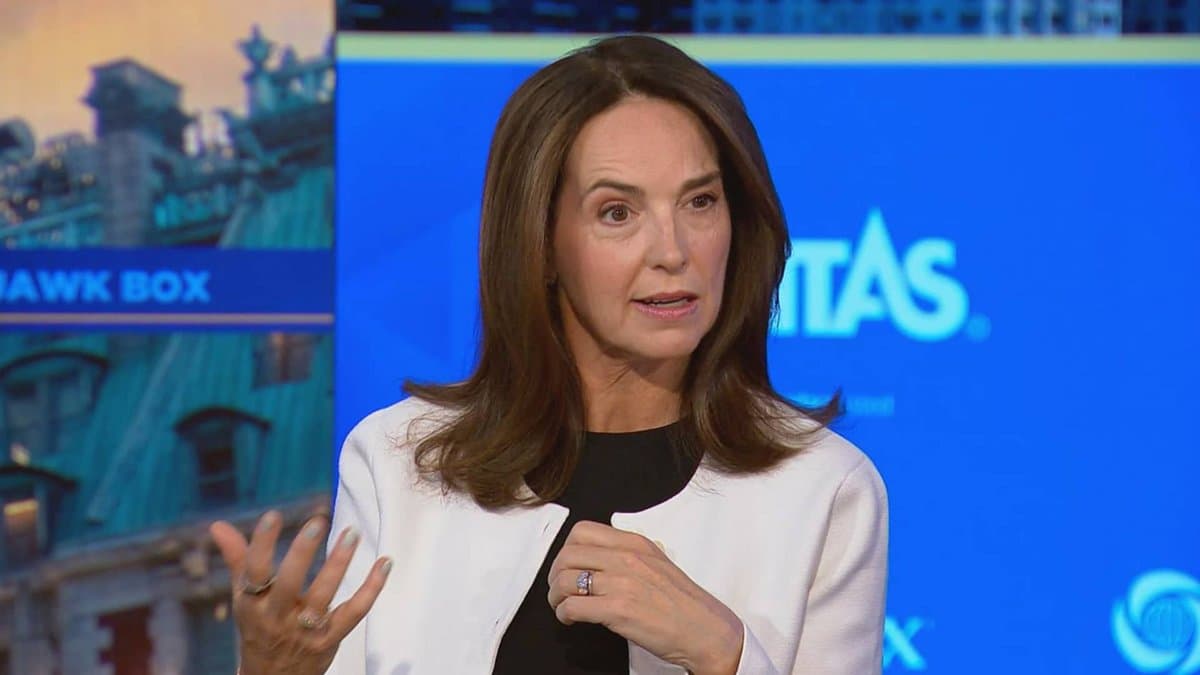
That's what CFO Sarah Friar told OpenAI employees at an all-hands on August 19. The sentence before it was more concrete: the company "will be a public company in 2027," or sooner if "our business continues to inflect."
Here's the deal: that's the first time a year has been attached to a question that's been open inside the company for months. Everything said publicly about OpenAI's listing timing had been "eventually." Even the fact that OpenAI confidentially filed its IPO prospectus with regulators in June hadn't been publicly confirmed by the company. Now the CFO named a year in front of the entire staff. No CFO is unaware that all-hands remarks leak. This was internal communication and a market signal at the same time.
There's a second implication. The Altman-Friar timing dispute resolved in Friar's direction — which tells you something about how decisions actually get made at OpenAI.
The Cast: Friar, Altman, and Where the Company Sits
Sarah Friar joined OpenAI as CFO in 2024. Her résumé is the story. Goldman Sachs analyst, then Salesforce, then CFO of Square (now Block) through its 2015 IPO, then CEO of Nextdoor through its 2021 SPAC listing. She has taken companies public twice — and lived through what quarterly reporting pressure does to an organization afterward.
That history explains the caution. Reporting in May said Friar argued for 2027 on the grounds that OpenAI wasn't ready for public-market reporting requirements or the infrastructure financing structure it would need. The Wall Street Journal reported she was instrumental in keeping the Microsoft deal on track and has pushed for tighter discipline on data-center spending.
Sam Altman was on the other side, pushing for an earlier listing. His logic is straightforward: the compute commitments OpenAI has made exceed what private markets comfortably absorb, and access to public capital is itself a strategic asset.
Where the company sits makes both arguments legible. OpenAI raised $122 billion in March, and Friar noted at the all-hands that this gives the company flexibility. Translation: there's no cash emergency. At the same time, given the scale of data-center and power commitments OpenAI has announced, even $122 billion doesn't cover the multi-year requirement.
What Actually Happened
| Date | Event |
|---|---|
| 2026-03 | $122B raise closes |
| 2026-05 | Friar's 2027 position and Altman's earlier-listing preference surface in reporting |
| 2026-06 | Confidential IPO prospectus filed with the SEC |
| 2026-08-18 | OpenAI announces frontier RL training pause over cyber capability concerns |
| 2026-08-19 | Friar confirms 2027 listing target at all-hands |
August 18 and 19 sitting adjacent is the interesting part. Within a single day, OpenAI said "we paused training because our next model might be dangerous" and "we're going public in 2027."
You can read that as contradiction or as preparation. Public companies must disclose material risks in writing. Having no framework for how you handle frontier capability risk is itself a disclosure problem. Conversely, "we can detect risk and halt training, and here is a documented instance where we did" is a sentence you can put in a prospectus. Reading the August 18 announcement as part of listing preparation is not a stretch.
The financial picture points the same direction. Friar has publicly referenced Q2 ARR figures, and mid-August reporting indicated OpenAI's enterprise revenue overtook consumer. Both facts serve the same listing narrative. Consumer subscriptions grow fast but carry churn and seasonality; enterprise contracts are multi-year and predictable. Public markets pay for predictability. Naming a listing year right after enterprise crossed over is unlikely to be coincidence.
On the other side of the ledger sits compute. The data-center and power commitments OpenAI has announced are large enough that their accounting treatment materially changes how the financials read — long-term purchase commitments disclosed in footnotes look very different from lease liabilities on the balance sheet. Reporting that Friar has pushed discipline on data-center spending connects directly here. What a CFO controls in this situation is less the total spend than the shape that spend leaves on the statements.
Friar's "not a finish line, it is a milestone, another fundraise" belongs in this context too. It's morale management and expectation-setting at once. It lowers the expectation that listing is a liquidity event. Employees holding options heard "the IPO is the next round," not "the IPO is the payoff."
Who Gets What
Friar confirmed operational control. Everything about listing preparation routes through the CFO organization — audit structure, internal controls, revenue recognition policy, segment definitions, risk disclosure. Whoever builds that defines the company's financial narrative. Fixing 2027 means that workplan now has a schedule.
Altman looks like he lost, but not necessarily. A fixed date fixes the financing plan up to that date. It creates room for another private round, and that round gets priced off the fact of a scheduled 2027 listing. A confirmed IPO timeline typically works in a private round's favor.
Employees face a mixed calculation. The liquidity path is now legible. The wait runs to 2027, plus a lockup after. Layer Friar's "not a finish line" on top and the message to anyone hoping for early liquidity is pointed. That said, OpenAI has repeatedly opened employee secondary sales, so that channel isn't closing.
Microsoft is the most directly exposed party. Once the listing structure firms up, the equity and revenue-share provisions of the existing agreement need a clean mapping onto a public-company structure. This connects to the reporting that Friar protected the Microsoft negotiation — an IPO is partly the process of freezing that negotiation's outcome into documents.
Public market investors get direct exposure to a frontier AI lab for the first time. Until now, investing in AI meant proxies — Nvidia, Microsoft. An OpenAI listing makes the path direct. It also creates a valuation anchor: whatever multiple OpenAI trades at will flow straight into private valuation discussions for Anthropic, xAI, and Mistral.
SoftBank and large private holders recalculate too. A fixed timeline makes the exit visible and simplifies participation in follow-on rounds. It also raises the risk of a down-round IPO — where the listing price undercuts the last private mark. Whatever price the March round came in at effectively sets a floor that 2027 has to clear.
Nvidia is the simplest stakeholder. Better capital access for frontier labs means more GPU demand. That said, public markets scrutinize spending far harder than private ones. If listing tightens OpenAI's compute discipline, the effect could run the other way.
Precedents: Two Patterns for Giant Tech Listings
The success pattern is Google (2004). Profitable at listing, an advertising model already validated, founder control preserved through dual-class shares. That structure survived twenty years and the market accepted it. The key was that the revenue model was established before the listing.
The hard pattern is Uber (2019). Deeply unprofitable at listing, forced to defend valuation with a growth narrative, and stuck below its offer price for a long stretch. The problem wasn't the business model, it was timing — public markets refused to ratify the private mark.
OpenAI sits somewhere between them. Revenue is climbing fast and enterprise has overtaken consumer. But given compute spend, the path to profitability remains contested.
A third reference is Saudi Aramco (2019), where the listing itself was part of a national strategy and its timing and size tracked political schedules rather than market conditions. OpenAI isn't that. But it's worth noting that listings aren't always purely financial decisions, and given OpenAI's compute commitments, its relationship with the US government, and its position in national AI infrastructure debates, this one won't be either.
And Friar's own Nextdoor experience is the most direct lesson available. After the 2021 SPAC listing, Nextdoor's stock underperformed for a long stretch. She personally experienced how brutally public markets punish the gap between growth expectation and delivered results. Many read her months-long "we're not ready" stance as coming straight from that.
Competitor Counterplay
Anthropic is most sensitive to this news. Mid-August reporting kept circling its listing prospects and valuation, and prediction markets have been moving its IPO odds around. With OpenAI naming 2027, Anthropic faces two options: go first and capture the "first frontier lab to list" premium, or go second and price against OpenAI's anchor. Each carries different risk. Going first means being priced with no comparable; going second means getting dragged down if OpenAI trades poorly.
xAI and Mistral still need to raise privately. An OpenAI listing cuts both ways for them — a public comparable makes valuation conversations more transparent, and transparency isn't always favorable.
Google, Meta, and Microsoft view this from a different angle. Their AI sits inside existing businesses and isn't valued separately. Once OpenAI lists and the market reveals what multiple it assigns a pure-play AI lab, the sum-of-the-parts arguments about big tech's AI divisions get much more active. Whether that helps or hurts depends entirely on what multiple OpenAI receives.
What Actually Changes for You
If you build on the OpenAI API: plan for pricing policy to move over the medium term. Listing preparation creates pressure to show revenue growth and margin improvement simultaneously. Frontier lab pricing has fallen aggressively on share-capture logic; a fixed listing date weakens that logic. Or it could go the other way — one last growth sprint before the S-1. Either way, don't assume today's prices persist.
If you handle enterprise procurement: there's genuinely good news. Public companies publish audited financials. Vendor financial-stability diligence on OpenAI has been essentially impossible; that resolves after 2027. The flip side is that public companies feel quarterly pressure, and product roadmaps commonly get reordered by revenue contribution.
If you're an investor: three things to track. First, how OpenAI's for-profit/nonprofit governance finally resolves into a listable structure. Second, how compute commitments land as liabilities or obligations in the financials. Third, what language the August 18 safety framework takes in the risk factors section. The third is genuinely novel — the first frontier AI lab's risk disclosure will become the industry template.
If you're a founder: take the lesson from Friar's position. The listing date at this company was set by a CFO who has done it twice, after months of holding a view different from the CEO's. Past a certain scale, "when do we list" stops being a vision question and becomes a question of whether internal controls, accounting policy, and disclosure machinery are ready — and whether anyone in the building can judge that.
If you hold OpenAI equity: take Friar's sentence literally. Milestone, not finish line. 2027 listing, lockup after, and probably a few more secondary windows in between. Plan against all three.
🥄 Three Things You're Probably Wondering
— Is 2027 locked in? No. It's a target stated by the CFO at an all-hands, and the company has not announced listing plans publicly. The June confidential filing shows real progress, but confidential filings can be withdrawn or delayed. Friar herself hedged with "or sooner if our business continues to inflect." The date can still move.
— Why say it now? Morale and equity-expectation management is the most plausible answer. Talent competition among frontier labs is intense, and an opaque path to cashing out options becomes an attrition driver. The training pause announced a day earlier, which raised internal uncertainty, may also be part of the backdrop.
— Will going public change OpenAI? A quarterly clock is definitely new. Whether that affects safety decisions is the real question, and it's too early to call. What is clear: for a public company, a decision like "pause training for two weeks" acquires an additional layer of board and disclosure process before it can be made.
References
- CNBC — OpenAI 'will be a public company in 2027' or sooner, CFO Friar tells employees (2026-08-19)
- Yahoo Finance — OpenAI CFO Sarah Friar says Q2 ARR topped in July 2026
- IBTimes UK — OpenAI IPO debate: CFO pushes 2027
- TechTimes — OpenAI IPO Delay To 2027? Sarah Friar Flags $600 Billion Risk (2026-05-04)
- Startup Fortune — OpenAI is leaning toward a 2027 IPO as its CFO warns the company isn't ready for public markets
- OpenAI — Pacing model development in an era of cyber-critical capabilities (2026-08-18)
Numbers and criteria are as of announcement and may change. Investment calls are yours to make!