One rack shipped. A month later, the valuation doubled
Here's the deal: AI inference chip startup Etched announced a $700 million raise on August 18 at a $21 billion valuation.
On its own that reads like one more large AI silicon round. Add the calendar and it changes. Etched closed a $300 million Series C just a month earlier, on July 23, at a $10.3 billion valuation, led by Sequoia. The company's price doubled in four weeks.
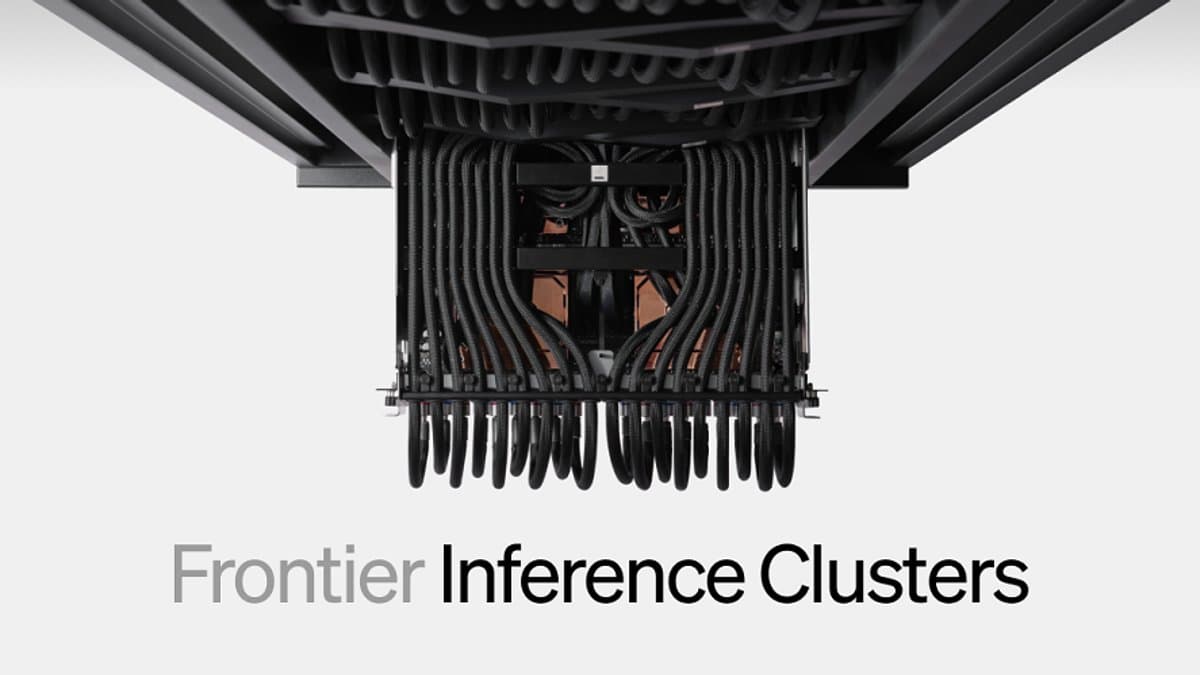
What happened in between? The first rack shipped to a customer.
The round was led by quantitative trading firm Jane Street — which is also Etched's first customer. Jane Street tested the hardware, bought it, installed a rack in its own data center, put it on real workloads, and then became the company's largest investor. That sequence is the entire story.
Kleiner Perkins, Sequoia, Andreessen Horowitz, Peter Thiel, Tiger Global, Bain Capital Ventures, Stripes and Blackstone also participated. The company says it has booked more than $1 billion in orders and has begun shipping.
The cast — Etched, prefill and decode, and Jane Street
Etched was founded by three Harvard dropouts, and the original bet was aggressive: if the transformer architecture is going to keep dominating, a chip that runs only transformers will be overwhelmingly faster. Abandon generality, go all-in on one thing. The risk was equally clear — if the architecture shifts, the chip is scrap.
Etched has since moved off that spot. It broadened toward an inference accelerator supporting multiple architectures, and what it sells isn't a chip but a complete system it calls a "frontier inference cluster." It ships by the rack.
Separate inference from training for a moment. Training builds the model; inference runs it to produce answers. Training drove GPU demand for the past few years, and the center of gravity is now moving to inference. The reason is simple: you build a model once, but inference happens on every single request. As token-hungry workloads like coding agents proliferate, inference has become the dominant line in the cost of running an AI service.
And inference splits internally into two stages. The first is prefill — reading the entire user input at once and building internal state. It's compute-heavy and parallelizes well. The second is decode — generating the answer one token at a time, where each token depends on the previous one. It parallelizes badly and instead hammers memory continuously.
The two stages have opposite bottlenecks. Prefill is limited by compute; decode is limited by memory bandwidth and latency. A GPU was designed to do both adequately, which means it is optimal for neither. That gap is exactly what Etched attacked: a low-voltage chip dedicated to prefill, plus new memory architecture and interconnect designed for decode.
On the technical specifics: the chip is built on TSMC's N4P process and runs at substantially lower voltage than other AI silicon. Lower voltage means less heat; less heat means more transistors in the same area. On top of that sits a low-latency shared memory pool spanning the entire scale-up domain and a proprietary ultra-low-latency, high-bandwidth interconnect. The approach is to solve decode's memory-bound problem structurally rather than incrementally.
The design philosophy compresses to one line. A GPU says "we don't know what's coming, so be good at everything." Etched says "we know what's coming, so be great at that." The second wins enormously when right and loses everything when wrong. Widening from transformer-only to multi-architecture support reads as an adjustment to lower that risk — neither fully general nor fully specialized, hunting for the middle.
Selling by the rack matters too. Sell only chips and the customer bolts on memory, boards, power, cooling and networking themselves, frequently landing well below the design's rated performance. Sell a complete system and you can guarantee performance and capture more margin — at the cost of far heavier inventory exposure and supply-chain complexity. A large slice of the $700 million goes to carrying that.
Why Jane Street became the first customer follows naturally. A quant trading firm is pathologically latency-sensitive, operates its own data centers, and has the engineering staff in-house to evaluate new hardware. It doesn't need to validate at the tens-of-thousands scale a cloud provider does. It is about the most testable early customer a new chip could ask for.
The month in numbers
| Date | Round | Raised | Valuation | Led by |
|---|---|---|---|---|
| 2026-07-23 | Series C | $300M | $10.3B | Sequoia (Nvidia participated) |
| 2026-08-18 | Series D | $700M | $21B | Jane Street |
| In between | — | — | — | First rack delivered to Jane Street |
Doubling a valuation in a month is not normal. It usually gets one of two explanations: risk genuinely fell, or the market is overheated.
Etched has a real event in the first category. The largest unknown for any hardware startup is whether a design actually becomes silicon and runs in a customer's environment. Simulations and demos don't answer that. Once a first rack is running real workloads in a customer data center, the unknown disappears. For investors, that's a legitimate basis to re-rate.
There's also grounds to suspect the second. AI infrastructure valuations are climbing broadly, and a structure where the lead investor is also the first customer can distort price discovery. Jane Street invested knowing the hardware works — and it is simultaneously a buyer with an interest in raising the value of its own stake. The incentives point one direction.
The $1 billion order book deserves the same scrutiny. In semiconductors, an order's weight depends entirely on cancellation terms and prepayment ratios. How much of it is binding hasn't been disclosed.
The investor list carries a signal too. Traditional venture — Kleiner Perkins, Sequoia, Andreessen Horowitz — sits alongside crossover capital like Tiger Global and Blackstone. The latter typically shows up when a company is moving toward public-market readiness. Semiconductors require enormous capital to reach volume production, which limits how long a company can stay private, so this cap-table shape reads as positioning for an eventual listing.
What each side gets
Etched gets production capital. In a chip company, the expensive part starts after the design is done: mask sets, wafer prepayments, packaging, and — for rack-scale systems — memory, power and cooling components. Foundries like TSMC want prepayments and volume commitments. Seven hundred million dollars is money for surviving that stretch.
Jane Street gets two layers, arguably three. On the surface, low-latency inference infrastructure. Underneath, an investment return. The third is more interesting: supply priority. With AI silicon chronically scarce, being both the earliest customer and the largest investor means being at the front of the allocation queue.
The other investors get exposure to an Nvidia alternative. The biggest concentration risk in AI infrastructure investing right now is Nvidia dependence, and backing a dedicated inference-chip company is a diversifying position. Sequoia, in from the prior round, doubled its paper mark in a month.
Prospective customers are still watching. One rack running at one customer is a different problem from many customers operating hundreds reliably. Software stack maturity, driver stability, failure handling, and how much existing CUDA-based code needs rewriting are all unverified.
For Nvidia, the threat is small in scale but uncomfortable in direction. Nvidia reportedly participated in the July round — the classic position of checking a competitor while watching the technology up close.
For fabless startups elsewhere, including in Korea, the lesson is about reference customers rather than technology. The hardest part isn't building a competitive inference chip; it's finding the one customer willing to prove it on real workloads. Etched's relationship with Jane Street played exactly that role, and in smaller markets the pool of potential anchor customers — telcos, portals, banks — is structurally thin.
Precedents — how AI chip startups win and lose
Graphcore is the cautionary case. Once considered a leading Nvidia challenger with a multibillion-dollar valuation, it never filled in the software ecosystem and ended up acquired by SoftBank. The lesson is clean: a fast chip and a chip developers actually use are different products. Displacing CUDA was never a hardware-performance problem.
Cerebras shows the other path — differentiating with an extreme design that uses an entire wafer as one chip, then proving overwhelming speed on specific workloads. It recently surfaced again in ultrafast inference work with OpenAI. The core move was avoiding general competition and manufacturing a domain where it is simply dominant.
Groq's recent trajectory reads more like a warning. It drew attention for inference speed, then, after Nvidia's licensing deal took its founder and core staff, saw its valuation fall from $6.9 billion to $3.5 billion and pivoted from chip design to running data centers. Even with good technology, staying independent is hard in a market where talent and capital concentrate.
On the success side, look at Google's TPU. Never sold externally, optimized for in-house workloads, iterated across generations for close to a decade, and now serving outside customers like Anthropic. The takeaway: one serious customer and many generations beats a hundred interested parties. The Etched–Jane Street relationship looks like an early version of that shape.
The same case carries the caution. TPU worked because Google's own workload was enormous and durable. Jane Street's workload is latency-critical but nowhere near hyperscaler scale. Etched's next step requires a large customer of a different character, and that's a different problem from the one it just solved.
How competitors respond
Nvidia is already responding — strengthening inference-oriented products and absorbing structural optimizations like prefill/decode separation into its software layer. Nvidia's real moat isn't silicon; it's CUDA and everything stacked on it. However fast a new chip is, if adopting it means rewriting code, switching cost eats the performance gain.
AMD competes on memory capacity and price-performance while pushing an open software stack — a generalist strategy that collides with Etched only narrowly.
Cloud providers' in-house silicon applies the most real pressure. Google's TPU, Amazon's Inferentia and Trainium, Microsoft's Maia all come with guaranteed internal demand. The addressable market for a company like Etched narrows to what those don't cover.
For other inference-chip startups, this round cuts both ways. It lifts the valuation baseline for the category, and it concentrates capital in the leader. Unlike software, hardware makes capital scale itself a competitive weapon, so gaps are hard to close once opened.
What actually changes for you
If you run an AI service, nothing today — Etched isn't generally procurable. But the direction matters operationally: inference cost will likely keep falling for years. Splitting prefill and decode for separate optimization is advancing in hardware and software simultaneously. A three-year plan built on today's inference cost is probably conservative.
If you're an infrastructure engineer, prefill/decode separation is usable right now. Handling the two stages with different batching strategies or different hardware is already in several inference servers. There's often meaningful headroom without changing hardware at all.
If you're a developer, this won't change your tool choices, but the framing helps diagnostics. A slow first token is a prefill bottleneck; slow generation after the first token is a decode bottleneck. That distinction alone tells you whether to adjust batch size, trim context, or change models — the same split the chip designers are building around.
If you're an investor, the thing to verify isn't the valuation — it's who the next customer is. Jane Street alone doesn't explain $21 billion. Whether a structurally different second and third large customer surfaces within six months settles whether this price was real.
If you follow AI policy or industry structure, this round is another slice of capital concentration. Very few companies can design and build inference infrastructure, and funding piles onto the top few. Harden that structure and the power to set the cost of AI services sits with an even smaller group than it does now.
🥄 Three Things You're Probably Wondering
— Doubling in a month — isn't that a bubble? Too early to call it that. A first rack started running in a customer's data center during that month, and for a hardware startup that genuinely removes a large risk. But the lead investor being that same customer should factor into how you read the price. Whether a structurally different customer signs on is the test.
— Can this replace Nvidia? Not at this scale. Etched targets inference, and specific stages of it. And the real barrier for new silicon isn't performance, it's the software ecosystem — how much existing code must be rewritten determines adoption. Graphcore didn't fail for lack of speed.
— Why is a trading firm buying AI chips? Quant trading is extraordinarily latency-sensitive, and these firms run their own data centers with in-house hardware evaluation teams. They're among the few customers positioned to test new silicon on real workloads quickly. Being an early customer also buys allocation priority when supply is tight.
Sources
- GlobeNewswire — Etched Raises $700M at a $21B Valuation and Completes First Customer Delivery to Jane Street (2026-08-18, official release)
- SiliconANGLE — Inference chip startup Etched raises another $700M at $21B valuation (2026-08-18)
- Data Center Dynamics — Inference chip startup Etched raises $700m, doubles valuation to $21bn (2026-08-19)
- Unite.AI — Etched Raises $700M Series D at $21B Valuation to Ramp Inference Hardware Production (2026-08-19)
- Tech Times — Etched Ships First Rack to Jane Street, Valuation Doubles to $21B in One Month (2026-08-19)
- Tech Funding News — Etched raises $700M led by Jane Street, doubling to $21B (2026-08-19)
- TNW — Etched raises $700M at a $21B valuation led by Jane Street (2026-08-19)
Numbers and criteria are as of announcement and may change. Investment calls are yours to make!