Good Technology Isn't Enough If Nobody Uses It
Here's the deal: on August 18, Korea's Ministry of Science and ICT and the National IT Industry Promotion Agency published round-two results for the country's sovereign AI foundation model program — known domestically as dokpamo. Three teams advanced: Upstage, SK Telecom, and LG AI Research. One was cut: Motif Technologies.
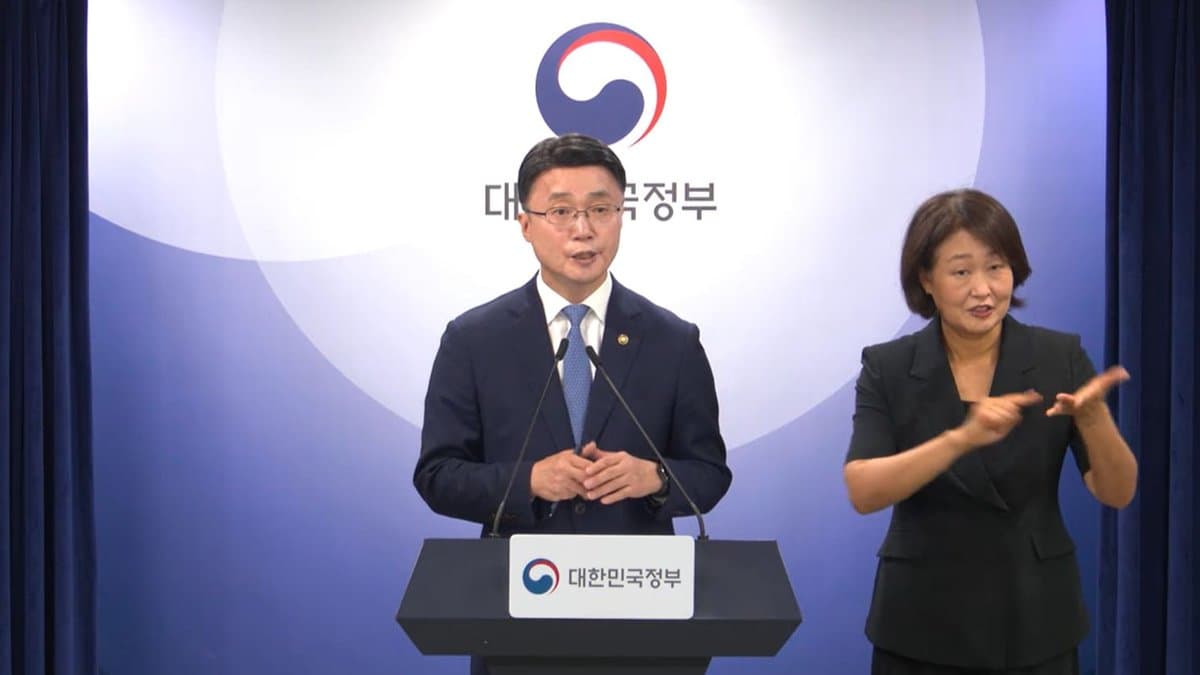
Motif's elimination is what surprised people. Motif had failed the first cut and rejoined through a second-chance track, and its technical reputation was solid. Vice Minister Ryu Je-myung addressed it directly in the briefing: Motif's technical capability was excellent, he said, but on usability and real-world application — categories carrying substantial weight — it scored lower than the others.
That one sentence explains the entire design of this evaluation. Round two was scored out of 100 points: 40 for benchmarks, 35 for expert review, 25 for user assessment. Pure performance accounts for only 40%. The remaining 60% comes from experts and actual users. How smart the model is matters less than who is using it and how.
For a government-run AI program, that weighting is a deliberate choice. The classic failure mode of state-funded model development is producing something that scores well and ships to nobody. This evaluation pre-empted that trap in the scoring rubric — and the rubric is what eliminated a team.
Worth noting alongside the result: the ministry confirmed it will still select two finalists in the next stage, as originally planned. Nothing about the team count or timeline shifted mid-program, which matters more than it sounds — when criteria move during a multi-year project, participating teams have to re-plan, and that alone burns development velocity. The broader AI support policy, however, is under review, so the form of support may yet be adjusted.
What Each Surviving Team Led With
SK Telecom entered A.X K2, and led with mathematical reasoning. SKT reported a score at the gold-medal threshold on 2026 International Mathematical Olympiad problems. IMO problems can't be solved by recall — they require multi-step reasoning — so they're a common proxy for a model's reasoning depth. A telecom carrier getting an in-house team to that level is a notable result by Korean standards.
Upstage entered Solar Open2 and pushed a different axis: a context window of up to one million tokens, enough to ingest hundreds of pages at once. But the factor that seems to have scored highest for Upstage wasn't the model — it was distribution. Its plan to wire the model into the Daum portal and the Timely platform, putting output in front of ordinary users, was reportedly viewed favorably. With 25 points allocated to user assessment, that's a direct scoring lever.
LG AI Research entered K-EXAONE 2.0 and competed on international standing, reporting a global ninth-place ranking on the Artificial Analysis Intelligence Index (AAII) — a composite of nine metrics across four domains: agents, coding, general, and scientific reasoning. Ninth in the world means sitting immediately behind the frontier labs, which is a meaningful position for a Korean model.
That the three teams led with three different strengths is itself telling. SKT on reasoning, Upstage on context and distribution, LG on composite ranking. Korean foundation model development hasn't converged on a single answer yet. For evaluators, that means comparing incommensurable strengths on one scorecard — which is part of why expert review carries 35 points.
The benchmark composition deserves a look too. The 40-point benchmark block used AAII alongside NIA's own suite, covering math, knowledge, long-context comprehension, instruction following, Korean language, safety, and reliability. Not leaning solely on an international index, and breaking out Korean-language and safety as separate axes, aligns the measurement with what the program is actually for.
The Structure, Summarized
| Item | Detail |
|---|---|
| Announced | 2026-08-18, MSIT and NIPA |
| Advanced | Upstage (Solar Open2), SK Telecom (A.X K2), LG AI Research (K-EXAONE 2.0) |
| Eliminated | Motif Technologies |
| Scoring | Benchmarks 40 + expert review 35 + user assessment 25 = 100 |
| Benchmark suite | AAII (9 metrics, 4 domains) + NIA suite (math, knowledge, long-context, instruction following, Korean, safety, reliability) |
| GPU support | B200: 768 units in H1 → ~1,000 units in H2 |
| Next stage | Round three early next year, two finalists confirmed |
The GPU allocation is worth flagging. B200 support expands from roughly 768 units in the first half to around 1,000 in the second. The field shrank from four teams to three while the allocation grew, so per-team supply thickens considerably. Given how few paths exist in Korea to reliably secure current-generation accelerators at that scale, this is a substantial incentive on its own.
And the next gate isn't the last one. Round three, early next year, narrows three teams to two finalists. One of the survivors is going to be cut.
What Each Party Gets
The three surviving teams get time and compute — the two most expensive inputs in foundation model work. Roughly a thousand B200s plus stable state funding is a package that's hard to assemble privately in Korea. Attach a national-champion label to it and you get preferential positioning in public procurement and large-enterprise adoption.
There's a branding effect too. Round-two coverage put all three model names in front of the market at once. When a Korean company evaluates AI adoption, a model it has heard of and a model it hasn't don't start from the same line — and passing a state evaluation reads as having cleared a vetting step.
The government gets optionality. The core question in sovereign AI is whether a domestic alternative exists when foreign models become unavailable or unaffordable for policy reasons. Concentrating everything on one team means no fallback if that team stumbles. Staged elimination down to two finalists is how you manage that risk.
Motif doesn't walk away with nothing. Rejoining through the second-chance track and reaching round two is technical validation, and the vice minister said so explicitly. But continuing foundation model development on private capital alone is a different order of difficulty. Where Motif goes next is worth watching as a signal about the Korean AI startup ecosystem.
Domestic infrastructure operators benefit indirectly. Running roughly a thousand B200s in-country requires data center space with the power, cooling and networking to match, and that demand lands locally. A less-discussed output of this program is that it leaves behind physical capacity and operational experience, not just model weights.
Korean AI companies now have a clearer shortlist. When choosing a domestic foundation model, the question of which one will keep receiving state support and continuous updates just narrowed. Adoption decisions hinge on whether a model will still be maintained in three years as much as on how it scores today, and program survival is usable evidence for that forecast.
Precedents — What Worked and What Didn't
France's Mistral is the standard citation for successful European sovereign AI. The government didn't build the model; a private startup grew on European capital and public-sector demand. The decisive move was open-weight distribution early, which built a developer ecosystem that in turn pulled enterprise adoption. Government supplied money and demand, not engineering.
Japan's attempts ran differently. Multiple government-and-industry consortia set out to build large Japanese-language models, and when output quality lagged the global frontier, industrial adoption came in below expectations. Diagnoses vary, but the most common one is distance between builders and users. When the organization making the model and the organizations using it are separate, the feedback loop runs slow.
The UAE's Falcon deployed capital and talent aggressively and briefly held real presence in open-model competition. As the open-model field reorganized around Chinese releases, its relative position slipped. The lesson there is that sustained update capability beats one strong model.
China's approach is another reference point: rather than picking a team, let many companies flood the field with open models and let whatever survives take the ecosystem. Qwen's rise to number one by cumulative downloads came out of that volume strategy. But it only works with a domestic market large enough to sustain it, which makes it hard for Korea to copy directly.
Dokpamo's scoring design looks like it absorbed these lessons. Carving out 25 points for user assessment is a guard against build-and-forget, and rewarding distribution plans like the Daum integration follows the same logic. Whether the design actually works is a question round three and the years after it will answer.
How the Competitive Picture Moves
The three-way race is now the real game. Round two passed three of four; round three passes two of three. The drop from 75% to 67% understates the change — with only one loser previously, the teams weren't direct rivals. Now they are. The question is whether each can hold its strongest axis while patching its weakest. SKT leads on reasoning but trails Upstage on distribution; Upstage trails LG on international ranking. With points split three ways, excelling on one axis guarantees nothing.
The gap to global models remains the program's fundamental problem. Ninth on AAII is a good result, but the eight above it are frontier labs refreshing models on a months-long cadence. A thousand GPUs is large domestically and an order of magnitude off frontier training scale. Competing under that constraint argues for narrow wins — Korean language, specific domains, cost efficiency — rather than a general assault.
Chinese open models apply direct pressure. Qwen has already passed Google and Meta on cumulative downloads and is an attractive price-performance option. On raw specs and cost alone, there are segments where a Chinese open model beats a Korean one for a Korean buyer. The case for domestic models has to rest on data sovereignty, regulatory fit, and real-world quality in Korean contexts.
Open-weight policy is likely to become a live issue. Mistral's European position came from releasing weights and winning developers first. Whichever release policy the dokpamo teams settle on will heavily influence actual adoption. With 25 points riding on user assessment, openness looks advantageous — but it collides with commercialization plans, so the teams may well diverge here.
Deployment experience matters as much as the model. For domestic models to be used, they have to be easy to serve. If Korean cloud providers don't make deployment straightforward, developers drift back to familiar foreign APIs regardless of benchmark parity.
So What Actually Changes
If you build AI products in Korea, nothing changes today, but this result helps you time when to put domestic models on your shortlist. Models from teams that survive round three are likeliest to be adopted first in public sector, finance, and healthcare, where data export is constrained. If you work in those areas, it's worth reviewing API specs and license terms now.
If you're evaluating AI adoption for a public agency or large enterprise, look at continuity rather than benchmark rank. Making the final two is the signal for whether updates keep coming for the next several years. If you're signing now, write a model-substitution clause into the contract.
If you run an AI startup, Motif is the case study. Technical strength alone no longer wins state programs. Without designing user touchpoints and distribution alongside the model, you're disadvantaged in the 60% of scoring that isn't benchmarks — and increasingly the same logic governs fundraising.
If you're a researcher or ML engineer in Korea, this affects hiring. The three surviving teams run for the next six months with secured GPUs and budget, which makes them among the very few places in the country to get hands-on large-scale training experience. That experience is hard to substitute on a résumé, so their recruiting position just improved.
If you follow AI policy, the scoring design is itself the thing to watch. A 40/60 split between benchmarks and application is unusual for Korean state AI programs, and whether it produces good models or merely selects for good marketing will take years of results to judge.
If you're just a user, the tangible change is more touchpoints — Upstage's Daum integration being the clearest example. More people will use a Korean model without knowing it, which is precisely the outcome the program was designed to produce.
🥄 Three Things You're Probably Wondering
— Can a Korean model actually beat ChatGPT? Across the board, realistically no. The compute gap in training is an order of magnitude. But narrow "better" to Korean-language quality in real use, domestic regulatory fit, and keeping data in-country, and the question changes. That narrow axis is what the program is aiming at, not a head-on fight.
— Is this a good use of tax money? Genuinely contested, and it's too early to call. The case against is clean: government spending in an area private industry does far better. The case for is equally clean: if foreign models get restricted or repriced for policy reasons, having a domestic fallback is insurance. The judgment rests on whether the premium is proportionate.
— Which two make the final cut? Hard to predict from here. Points split across three axes and each team leads on a different one. The useful hint is that round two turned on usability — so how much real user volume and how many service integrations each team accumulates over the next six months is probably where this gets decided.
Sources
- ZDNet Korea — Motif eliminated in round two; Upstage, SKT, LG advance (2026-08-18)
- ZDNet Korea — Round two: two finalists to be picked as planned; AI support policy under review (2026-08-18)
- Byline Network — Upstage, SKT, LG AI Research pass round two; Motif eliminated (2026-08-18)
- AI Times — Upstage, SKT, LG advance to round three; Motif eliminated (2026-08-18)
- Bloter — 'AI usability' decided the sovereign model round-two outcome (2026-08-18)
- Financial News — Sovereign AI round two: SK, LG, Upstage pass; Motif eliminated (2026-08-18)
Numbers and criteria are as of announcement and may change.