An EV Company Just Put a $6.3B Price Tag on Its Robot Division
Here's the deal: on August 24, XPeng put out two press releases in a strange order. The first was Q2 earnings — RMB 19.74 billion in revenue (about $2.91 billion), 103,295 vehicles delivered, and a miss against Wall Street expectations. The second one was the actual news. XPeng's robotics business had raised over $900 million from outside investors at a post-money valuation of more than $6.3 billion.
On its own that's just another big round. Add the context and it gets more interesting. XPeng described it as the largest single-round private financing in the history of China's embodied AI industry. And the entity taking the money isn't XPeng the carmaker — it's a robotics subsidiary that has now been carved out of the parent. Which means the market has started pricing "XPeng the EV company" and "the humanoid robot XPeng builds" as two separate assets.
The timing is the part worth sitting with. XPeng stock is down roughly half over the past twelve months. The core EV business is squeezed between Chinese price wars and Tesla, and vehicle-specific margin actually slipped to 12.1% from 14.3% a year earlier — group gross margin rose to 20.7% from 17.3%, but that's driven by services and other revenue rather than cars. And in the middle of all that, IDG Capital, Gaorong Ventures, and both Tencent and Alibaba wrote checks into the robot arm. The core business is under pressure while the robot valuation stands up on its own.
Why now? Because XPeng's IRON humanoid targets mass production by the end of 2026. Right now the company sits in the single best window a robotics business ever gets for raising money: the demo has been seen, the factory is under construction, and nobody has yet been judged on actual shipped units. This round went in before that window closes.
The Cast — Who Builds It, Who Funds It, and the Founder Who Wrote His Own Check
Start with XPeng (NYSE: XPEV / HKEX: 9868), founded in 2014. It's one of China's EV upstarts alongside NIO and Li Auto, and it has been unusually aggressive about self-driving and in-house silicon. That silicon matters here: the Turing AI chip XPeng designed for cars is the same chip now sitting inside the robot.
The legal entity holding the robot business is Dogotix. Per the Hong Kong Stock Exchange filing, XPeng, Dogotix, the investors and the executive subscribers entered a conditional share purchase agreement. XPeng continues to consolidate Dogotix after the deal, holding roughly 81.97% excluding additional investments — falling to 68.41% in the maximum-dilution scenario where every warrant is exercised and a 15% equity incentive mandate is fully used.
IDG Capital led. It's one of the oldest names in Chinese venture with a deep hardware and semiconductor track record. Gaorong Ventures participated, and Tencent and Alibaba came in as strategic investors. Don't skim past that word "strategic." Tencent is already a significant shareholder in XPeng itself, and Alibaba has backed the company for years. The fact that both went into the robotics subsidiary separately tells you Chinese big tech is treating physical AI as its own track rather than a feature of the car business.
The last character is the most telling. Chairman and CEO He Xiaopeng and Vice Chairman Brian Gu put in roughly $100 million of personal money. He Xiaopeng also took on the CEO role of the robotics business in a recent reorganization that created nine new second-tier departments under the unit. A founder writing a personal check and taking direct operational control is how you say, without saying it, that this is no longer a side project — it's the company's second core business.
What Actually Happened — Inside the $900 Million
Summarizing this as "$900 million of outside money" would be wrong. CnEVPost's read of the HKEX filing breaks it down like this: roughly $600 million from genuine external investors, about $200 million from an XPeng subsidiary, and about $100 million from He Xiaopeng and Brian Gu personally. That's how you get past $900 million. On top of that there's a four-month window for another $15 million in preferred shares, plus warrant options worth up to $500 million more ($400 million for He, $100 million for Gu).
The valuation needs the same treatment. Pre-money is $5.0 billion; post-money is over $6.3 billion. The post-money figure assumes full utilization of the equity incentive plan, so the headline "$6.3 billion" is closer to a fully diluted number than a clean cash-in valuation. Easy to miss if you only read the headline, so worth flagging.
IRON's specs: 76 degrees of freedom across the body, 21 per hand. Three of XPeng's in-house Turing AI chips delivering up to 2,250 TOPS of compute running on the robot itself. The skin is a "fully enclosed flexible lattice structure," and the central technical claim is that IRON executes physical AI models on-board with no remote operation. Given how many humanoid demos in this industry are teleoperated by a human just off camera, that claim is worth verifying rather than accepting.
| Item | Detail | Basis |
|---|---|---|
| Raise | Over US$900M (external ~$600M + subsidiary ~$200M + executives ~$100M) | Official release, HKEX filing |
| Pre-money / post-money | US$5.0B / over US$6.3B | Reporting on HKEX filing |
| Lead investor | IDG Capital (Gaorong Ventures participating) | Official release |
| Strategic investors | Tencent, Alibaba | Official release |
| XPeng stake | ~81.97% (68.41% fully diluted) | Reporting on HKEX filing |
| Additional headroom | $15M preferred (4-month window) + up to $500M warrants | Reporting on HKEX filing |
| IRON degrees of freedom | 76 body, 21 per hand | Official release |
| IRON compute | 3x Turing chips, up to 2,250 TOPS | Official release |
| Mass production | End of 2026 | Official release |
| Monthly capacity target | 1,000+ units by year-end | July 2026 company plan reporting |
| Commercial launch | 2027, China plus overseas | Official release |
| Long-term target | 1 million units by 2030 | He Xiaopeng, per reporting |
The use of proceeds is unusually specific for a press release: software and hardware R&D, physical AI model training and iteration, high-quality data generation, end-to-end mass production facilities, and global commercial expansion. The interesting pairing is "data generation" sitting right next to "production facilities." Humanoids don't get better from models alone — you need real motion data, and real motion data only comes from robots that are actually out there moving. Which reframes the store-and-campus rollout: it isn't just marketing, it's a data collection pipeline.
The manufacturing base already physically exists. XPeng broke ground in Q1 2026 on a roughly 110,000 square meter humanoid production facility in Guangzhou that spans R&D validation, small-batch trial production, and scaled manufacturing in one place. Reporting puts this year's physical AI R&D allocation at around RMB 7 billion (about $1.03 billion). Group R&D expense in Q2 was RMB 2.91 billion, up 32.1% year over year, which the company attributed to new vehicle models and AI technologies.
The rollout sequence goes: mass production starting end of 2026 → deployment first at XPeng stores and campuses → Q1 2027 as sales assistants in Chinese retail → overseas stores later in 2027 → households from 2028 onward. That's neither B2B nor B2C to start with — it's a controlled environment the company owns. If it goes badly, that's an internal problem, not a customer complaint.
Who Gets What — Four Different Calculators
XPeng the parent wins the most. Robotics burns enormous amounts of cash, and the EV business is currently under margin pressure. The balance sheet is fine — RMB 40.48 billion (about $5.97 billion) in cash as of June 30 — but funding robots purely out of EV cash flow is exactly the kind of thing shareholders punish. Carving the unit out and taking external capital splits the R&D burden while preserving consolidated control at 81.97%. It's the cleanest financial structure available.
IDG Capital and Gaorong bought an entry point. A $5 billion pre-money is not cheap in humanoids. But the relevant comparison is Figure AI at $39 billion post-money from its September 2025 Series C. Figure is running a production line and XPeng hasn't started, yet XPeng has something Figure doesn't: a manufacturing organization and supply chain that already ships more than 400,000 vehicles a year. For an investor, that's not a bet on a robotics startup — it's a bet on robots built by an organization whose manufacturing competence is already proven.
Tencent and Alibaba bought an option. Neither builds its own humanoid. Alibaba has the Qwen model family; Tencent has its own models and cloud. If robots actually start selling, somebody's model runs inside them and somebody's cloud processes the data they generate. Coming in as a strategic investor locks in that interface early. It's also the cheapest possible exposure to the robot market without building a robot.
He Xiaopeng personally bought a signal. With the $400 million warrant included, his personal exposure is substantial. A founder putting his own money into the round is the strongest alignment signal available to outside investors, and taking the robotics CEO title nails down that this isn't a side bet. Read it the other way, though, and it's also a founder moving the narrative while the core business wobbles. Which reading is right gets decided by 2027 shipment numbers.
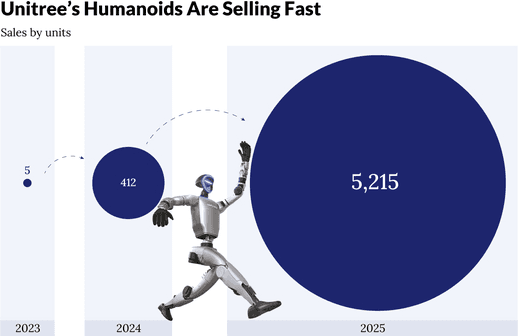
China's physical AI ecosystem benefits indirectly. This round resets the valuation floor for every Chinese humanoid company raising behind it. Unitree already listed on Shanghai's STAR Market on August 19 and closed its debut up 629%, touching an intraday market cap of RMB 445 billion (about $66 billion) with subscription oversubscribed more than 8,000 times. XPeng just stacked a private-market record on top of that heat.
Precedents — When Carve-Outs Work and When They Don't
The success case people always cite is Waymo. Alphabet pulled the self-driving project into a standalone entity, then raised outside capital from Silver Lake, CPPIB, and Mubadala at a separate valuation. Alphabet kept control while sharing the funding burden, and Waymo got long-horizon capital independent of the parent's annual budget fights. Structurally, that's exactly what XPeng is doing. The other half of that lesson: even Waymo took more than a decade to reach commercialization.
The second reference point is Unitree — not a carve-out, but the current high-water mark for what a Chinese robot company can pull out of the capital markets. In its August 19 debut, the RMB 150.8 IPO price opened at RMB 1,100 and closed at RMB 845. DeepSeek put in RMB 141 million with a three-year lockup. Two takeaways: demand for robot assets in China is real, and that demand is still attached to the narrative rather than to revenue.
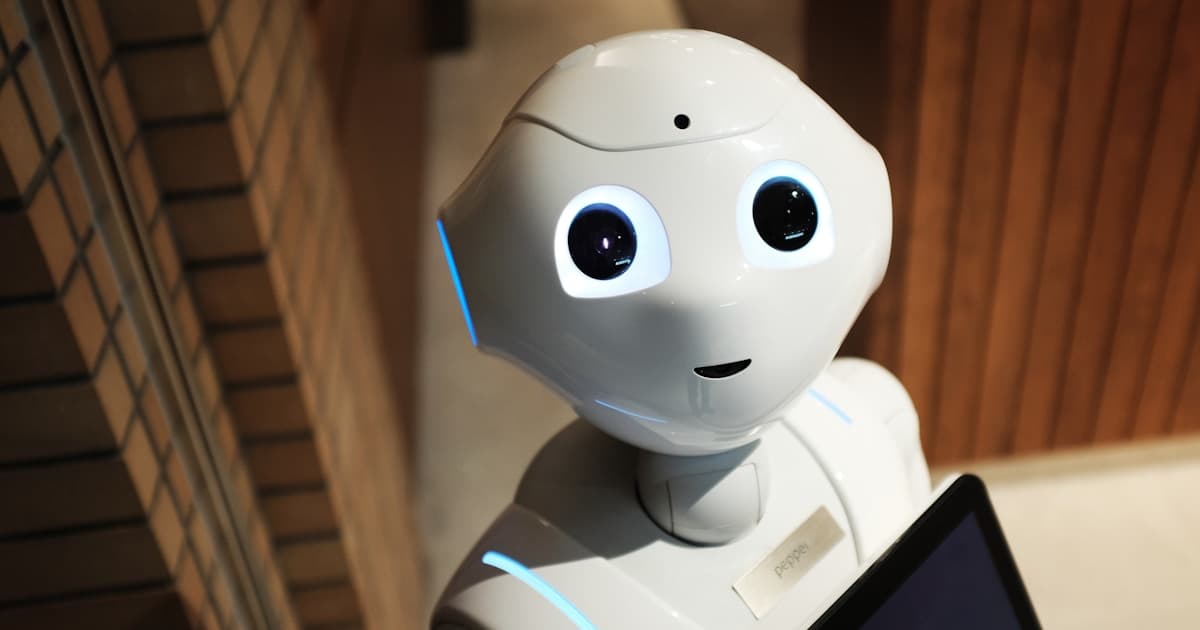
The failure case matters more. Look at SoftBank's Pepper. Unveiled in 2014 with an emotion-reading story, deployed into banks, stores, and airports — which is precisely the scenario XPeng is describing for IRON. Retail greeter robot. The outcome: production halted in 2021. The reason wasn't technical, it was economic. The value of what the robot did never exceeded its total cost of ownership (purchase price plus maintenance plus the staff needed to babysit it). Store assistant robots are the category that demos most beautifully and gets abandoned fastest in the field.
Then there's Rethink Robotics. Rodney Brooks' collaborative robot company raised close to $150 million behind Baxter and Sawyer and the promise that anyone could program a robot. It ended in a 2018 asset sale. The performance never met the precision requirements of the target tasks, and productivity-per-dollar lost to conventional industrial arms. The lesson is that looking human doesn't by itself create value. If IRON's 76 degrees of freedom and 2,250 TOPS don't demonstrably lower the cost of some specific job, the spec sheet is just a spec sheet.
How the Competition Punches Back
Tesla's Optimus is the direct comparison. On April 23, 2026, Tesla again pushed the Optimus V3 reveal, targeting large-scale production somewhere between July and August 2026. Musk himself said initial output would be "quite slow" and that with roughly 10,000 unique parts on an entirely new line, this year's production rate is "literally impossible to predict." The long-term targets — 1 million units a year at Fremont, 10 million a year at Giga Texas by 2027 — are intact, but the schedule has slipped repeatedly. Electrek's read is that XPeng's timeline keeps it ahead of a stalling Optimus program; that's an outlet's judgment, not a settled fact.
Figure AI dominates on valuation. Its September 2025 Series C exceeded $1 billion in committed capital at a $39 billion post-money, led by Parkway Venture Capital with Brookfield, NVIDIA, Intel Capital, Qualcomm Ventures, and LG Technology Ventures participating. Figure 03 launched in October 2025, and as of April 2026 the BotQ factory was reportedly producing a robot roughly every 90 minutes, with a stated goal of shipping 100,000 humanoids over four years. That's six times XPeng's $6.3 billion — though XPeng's number is for a business unit that hasn't started selling anything.
Unitree threatens from a different direction. It's already public and famous for crushing hardware costs, seeding developers and research institutions cheaply, and owning the ecosystem from below. If XPeng plays premium on automotive-grade safety standards and a highly finished exterior, Unitree eats the market from underneath. But Unitree carries geopolitical risk: the US FCC moved to restrict imports of Chinese humanoid and quadruped robots, putting Chinese robots' access to the American market in question. XPeng's 2027 "overseas markets" plan runs into that same wall.
Agility Robotics took the opposite path entirely. Its robot is a humanoid with no face and no attempt at human resemblance, focused on one job: moving totes in warehouses. In June 2026 it announced a SPAC merger with Churchill Capital Corp XI at a $2.5 billion pre-money equity value, expected to close in Q4 under the ticker AGLT, with more than $620 million in expected gross proceeds including roughly $200 million of PIPE committed at $10 per share. The number that actually matters: Agility says it has secured more than $300 million in multi-year contracted Digit v5 orders, with real customers including Schaeffler, GXO, and Toyota Motor Manufacturing Canada. That's exactly the thing XPeng doesn't have yet — contracted revenue.
The short version of the competitive map: Figure owns valuation, Unitree owns volume and price, Agility owns actual bookings, and Tesla owns vertical integration. XPeng's claim is a single square nobody else fully occupies — an organization that has genuinely mass-produced complex machines before. Whether that's a real moat gets answered in 2027.
So What Actually Changes
If you're a robotics developer, watch the IRON SDK. XPeng released it at 2025 AI Day with a stated intent to collaborate with global developers. A platform running 2,250 TOPS on-device would be one of very few pieces of hardware where you can iterate on a VLA model locally with no cloud round trip. That said, nothing is verified yet about how open the SDK really is, how good the documentation is, or whether overseas developers can get access at all. Without Unitree-style cheap hardware in developers' hands, an SDK alone doesn't create an ecosystem.
If you're an investor, the deal structure is the story. First, the $6.3 billion post-money embeds a full-dilution assumption, so don't compare it at face value to other headline valuations. Second, XPeng's own stock fell on the day despite this announcement, because the earnings miss dominated — the market is not yet crediting robot value to the parent. Third, the real test isn't mass production starting at the end of 2026; it's actual 2027 shipment volume and per-unit price. "1,000 units a month" and "1 million by 2030" are targets, and targets and shipments are different words.
If you're an enterprise buyer, 2027 is your first realistic evaluation window. XPeng says commercial sales begin that year in China and overseas, with retail sales assistance as the opening use case — so retail, showrooms, and reception are the first targets. Keep Pepper in mind though. The evaluation question is never "what can the robot do," it's "how does one robot's fully loaded annual cost compare to the labor it replaces." With no announced price, you can't even run that math yet. And import restrictions on Chinese robots could block adoption outright depending on your region.
If you're a regular person, nothing changes right now. Household deployment is 2028-plus even in the company's own plan. But there's a real chance you walk into an XPeng store somewhere in China in 2027 and meet IRON. When you do, there's one thing worth checking: whether it's genuinely moving on its own, or whether somebody in the back room is driving.
🥄 Three Things You're Probably Wondering
— So what does this mean for me? Not much immediately. Household deployment is 2028 or later by the company's own roadmap, so you won't have one at home for years. What's worth noting is that two Chinese big tech firms who build no robots of their own just took strategic stakes in someone else's robot company — a signal that the fight over whose model and whose cloud runs inside these machines has started.
— Isn't this just cover for a bad earnings quarter? Reasonable suspicion, given both landed the same day, and the stock did fall anyway. But this is a real transaction disclosed to the Hong Kong Stock Exchange as a conditional share purchase agreement, and the founder personally committed roughly $100 million plus up to $400 million in warrants. That's too much real money on the line to be pure narrative management. Though money on the line has never guaranteed a business works.
— Is XPeng actually ahead of Tesla's Optimus? Too early to call. On schedule alone XPeng is more specific — mass production end of 2026, sales in 2027 — while Optimus V3's reveal has slipped more than once. But neither company has ever published actual shipment numbers. In humanoids, the gap between announced timelines and real deliveries has been large without exception so far. Waiting for the first 2027 delivery figures before judging costs you nothing.
References
- PR Newswire — XPENG robotics business raises over US$900 million at a post-money valuation of over US$6.3 billion (2026-08-24, official press release)
- PR Newswire — XPENG Reports Second Quarter 2026 Unaudited Financial Results (2026-08-24, official earnings release)
- CnEVPost — Xpeng carves out robotics business at $6.3 billion post-money valuation (2026-08-24, based on HKEX filing)
- Electrek — XPeng robotics raises $900M at $6.3B valuation for IRON robot push (2026-08-24)
- AI News — XPENG IRON humanoid robot draws record physical AI funding (2026-08-24)
- CnEVPost — Xpeng unveils next-gen Iron humanoid robot at 2025 AI Day (2025-11-05)
- CnEVPost — Xpeng aims to build over 1,000 robots a month ahead of 2027 global roll-out (2026-07-15)
- SCMP — Race against Tesla, China EV maker Xpeng to launch viral humanoid globally in 2027
- Figure AI — Figure Exceeds $1B in Series C Funding at $39B Post-Money Valuation (2025-09-16, official announcement)
- Business Wire — Agility Robotics to Go Public Through $2.5 Billion Merger with Churchill Capital Corp XI (2026-06-24, official press release)
Numbers and criteria are as of announcement and may change. Investment calls are yours to make!