$40B in four months — Nvidia just balance-sheeted the entire AI ecosystem
Here's the deal: on May 9, CNBC tallied it up. From January through May 9, Nvidia has committed more than $40B to AI infrastructure equity in four months. $30B into OpenAI. Up to $3.2B into Corning. Up to $2.1B into IREN. Plus the late-2025 $5B Intel stake (now worth $25B+). This is not idle-cash management. Nvidia has fully turned on a "vendor financing" playbook — fund the customers so they can buy your GPUs. The market read is unmistakable: this rhymes with Cisco in the late '90s, which lit up fiber operators with capital so they'd buy more Cisco routers.
The cast — Nvidia, OpenAI, Corning, IREN, Intel
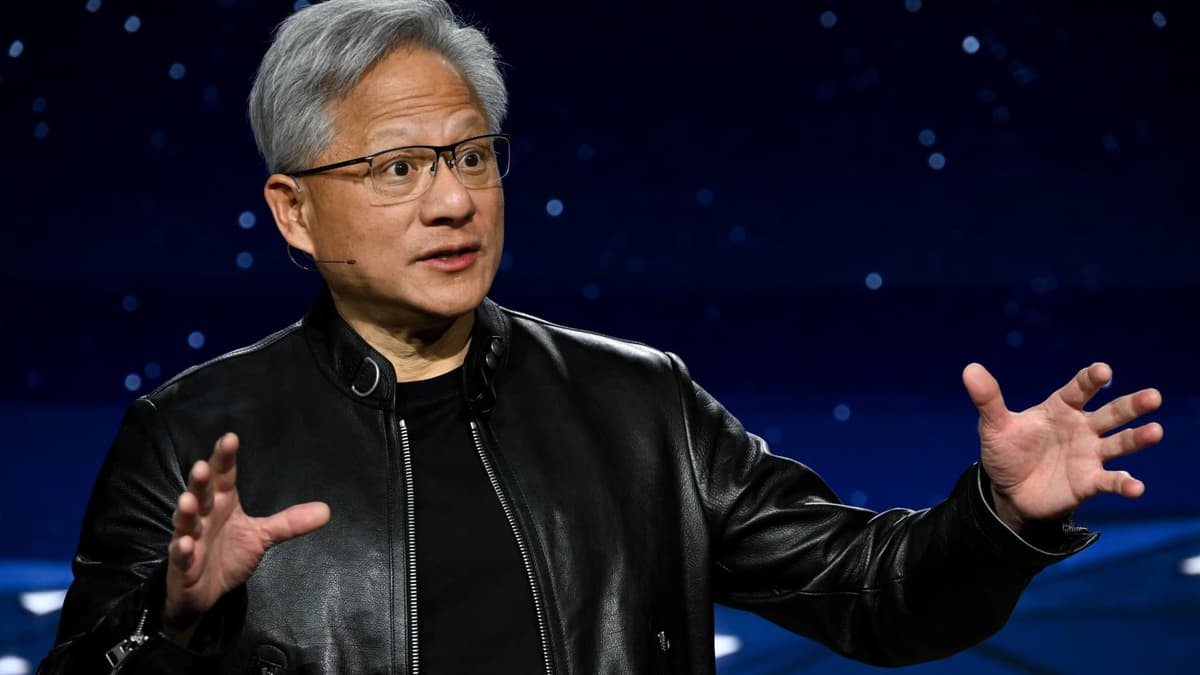
Nvidia first. Q1 2026 revenue: $48B. Operating margin: 65%. Cash on the balance sheet: ~$120B. The market's biggest open question was what Nvidia would do with it. On May 9, Jensen Huang said it himself: "Our investments are focused very squarely, strategically on expanding and deepening our ecosystem reach." Decode "ecosystem reach": fund people who will buy GPUs.
OpenAI got the biggest check. The early-2026 $30B is the largest single equity bet in Nvidia's history. OpenAI uses the capital to place GPU orders through Microsoft, Oracle, and Stargate; Nvidia ships those GPUs. The dollars trace Nvidia → OpenAI → Microsoft → Nvidia. On the books, OpenAI revenue lands as "GPU rental" at the cloud provider, and 70%+ of that flows back to Nvidia as GPU payments.
Corning makes optical fiber and specialty glass. The up-to-$3.2B Nvidia commitment is about optical interconnect inside the data center. From GB300 and Rubin onward, NVLink 5/6 swaps copper for optical, and Corning is the key supplier. Nvidia's capital underwrites Corning capacity ramp, which in turn unblocks NVLink supply.
IREN started life as an Australian bitcoin miner; it pivoted hard into GPU data centers in 2024-2025. Nvidia committed up to $2.1B to accelerate Texas and Canada buildouts. Roughly 80% of IREN's GPU rental revenue cycles back to Nvidia as GPU purchases.
Intel is the most interesting case. Nvidia put in $5B in September 2025; market value sits at $25B+ today, a 5x. The stated rationale is x86 + Nvidia GPU SoC collaboration. The real rationale is bigger: if Intel Foundry collapses, US semiconductor self-sufficiency goes with it — and Nvidia's own supply chain is at risk. So Nvidia is half-investing, half-bailing-out a strategically essential American foundry.
The hard numbers — who got how much, by quarter
Here's the $40B broken out.
| Date | Recipient | Size | Stated rationale |
|---|---|---|---|
| 2025-09 | Intel | $5B | x86 + GPU SoC collaboration |
| 2026-01 | OpenAI | $30B | Lock in GPU demand |
| 2026-04 | Corning | up to $3.2B | Optical interconnect capacity |
| 2026-05 (wk1) | IREN | up to $2.1B | GPU data-center ramp |
| 2026-05 | Nscale | ~$700M | UK GPU cloud |
| 2026-05 | Mistral AI | ~$500M | European model lab |
| Other (10+ deals) | Wayve, Recursion, Hippocratic, etc. | ~$1.5-2B | Verticalized AI applications |
| Cumulative | $40B+ |
The pattern's clear: Nvidia capital is thickening every layer of the GPU supply chain at once. (1) Model labs (OpenAI, Mistral). (2) Data-center operators (IREN, Nscale). (3) Components (Corning). (4) Foundry (Intel). (5) Vertical apps (Wayve in autonomy, Recursion in pharma, Hippocratic in healthcare). Every layer is now ramping on Nvidia's balance sheet.
The accounting nuance matters. Per the 10-Q, Nvidia classifies these as available-for-sale securities or equity-method investments — investment gains do not flow through revenue. But critics zero in on the cycle: OpenAI takes $30B from Nvidia → pays Microsoft for compute → Microsoft buys GPUs from Nvidia → Nvidia revenue. That's structurally identical to the late-1990s Cisco / Nortel / Lucent vendor-financing playbook.
Under GAAP it's legal and the SEC hasn't pushed back, but the market is suspicious of two things. First, "Is Nvidia's 70% revenue growth real demand, or demand it bought?" Second, "Cisco's vendor-financed share started ramping in late-1999 and the bill came due in 2001 with massive write-downs." Whether Nvidia follows the same arc gets answered over the next 4-6 quarters.
What each side gets — Nvidia, OpenAI/Mistral, Intel, infrastructure
Nvidia gets three benefits at once. First, demand lock-in. Capital recipients almost certainly stay on Nvidia GPUs for 5-10 years; AMD/Broadcom/TPU switching cost just rose meaningfully. Second, mark-to-market gains. Intel $5B → $25B+ is the template — through the cycle peak, equity gains alone are enormous. Third, narrative dominance. Being the lead investor in OpenAI cements "AI = Nvidia" in capital-market psychology.
OpenAI, Mistral, Wayve and the other model/app companies get GPU priority allocation. In 2024-2025, OpenAI training runs slipped 6-12 months because of GPU shortages. Now, "Nvidia portfolio company" gets priority, compressing training cycles to a quarterly cadence.
Intel is the biggest win. When Intel posted its first quarterly operating loss in 60 years in August 2025, the $5B Nvidia stake instantly restored confidence. Successor CEO Lip-Bu Tan announced an "Intel Foundry + Nvidia GPU SoC" roadmap, the stock 5x'd in eight months. Nvidia capital arguably saved Intel.
Corning, IREN and other infra plays get a "Nvidia-guaranteed" effect. With Nvidia owning 30%, credit spreads tighten 50-100 bps and follow-on capital is much cheaper. IREN raised $1.8B more in debt at 4.5% post-announcement — six months earlier the same paper would have priced 7-9%.
Historical comps — Cisco's rise, and its fall
Win #1: Cisco's vendor financing through the late 1990s. Cisco extended ~$2.5B in capital to telecom carriers (Global Crossing, Worldcom, Qwest) from 1996-2000, who used it to buy Cisco routers and switches. Vendor-financed revenue was estimated at 18% of Cisco's 1999 sales. Both sides of that story landed: Cisco's market cap 100x'd from 1996-2000 and peaked near $580B; then dotcom unwound, Cisco fell ~80% in a year, and Cisco wrote down $2.2B of vendor-financing assets.
Win #2: Intel's 2010s mobile and autonomy investments. Intel deployed roughly $10B across Mobileye (acquired for $15.3B), mobile (Whitman/Atom), and AI silicon (Nervana). Mobileye produced an 8x return; most of the rest was a write-down. Lesson: betting capital early in an AI cycle is a delayed-payoff strategy that takes years to work.
Bust #1: Nortel circa 2000. Together with Lucent, Nortel ran $3.5B of vendor financing into telecom carriers, which was wiped out almost entirely after the dotcom crash. Nortel filed for bankruptcy in 2009. The cleanest case study of vendor financing failing at the cycle peak.
Bust #2: IBM Watson Health, 2014-2015. IBM committed roughly $4B to Watson Health acquisitions and partnerships; almost all of it failed. Lesson: AI application layers are far harder to underwrite than infrastructure. Several Nvidia application-layer bets (Hippocratic, Recursion) carry that risk.
A more balanced parallel: Microsoft's IE + .NET play in 1995-2000. Microsoft didn't fund customers with capital; it shipped IE for free and used standards to drive 90% browser share. The closest analog to what Nvidia is doing — capital plus standards lock-in via CUDA, NVLink, InfiniBand — is the Microsoft pattern, not the Cisco pattern.
Counter-plays — AMD, Broadcom, hyperscalers, China
AMD is the closest direct competitor. MI400X / MI500X specs are comparable to GB300 / Rubin, but AMD can't keep up on the vendor-financing axis. With ~$7B of cash, AMD can't write $3B+ checks. AMD's counter is to focus on customers Nvidia hasn't bought — Meta, Tesla, China — and it's working: AMD took ~35% of Meta's 2026 GPU spend.
Broadcom plays a different game. Not vendor financing — ASIC design services. Google TPU v6, Meta MTIA v3, OpenAI's rumored in-house chip all run through Broadcom. That's the real fissure inside Nvidia's ecosystem: even with Nvidia capital, OpenAI is under no obligation to stop developing in-house silicon with Broadcom.
Google and Microsoft are reducing Nvidia dependency through TPU and Maia. Google targets 60% of its accelerator capacity on TPU v6 by year-end 2026; MS Maia 100/200 is ramping. But neither can hit "TPU/Maia only" — they still buy Nvidia at the margin.
China is its own theater. Huawei Ascend 910C/910D, Cambricon 290, Biren BR104 are all displacing Nvidia inside Huawei Cloud and BAT data centers. China AI silicon self-sufficiency is estimated at 25-30% in 2026. Nvidia counters with downspec H20/H30 SKUs, but tightening US export controls drag China's share of Nvidia revenue from 18% in 2025 to ~8% in 2026.
The newer threat is quantum and neuromorphic compute. IBM Quantum, IonQ, Rigetti on the quantum side; Loihi (Intel) and TrueNorth (IBM) on neuromorphic. They could take a slice of GPU workloads in 5-10 years. Nvidia counters with cuQuantum and CUDA-Q hybrid SDKs, but the long-tail risk is real.
So what changes — investors, founders, engineers
For Nvidia shareholders, two things shift. First, the narrative reinforcement keeps the multiple intact. P/E ~35x holds even with vendor-financing concerns because the market is paying for "Nvidia uses its balance sheet to extend 50% YoY revenue growth one to two more years." Second, accounting risk. May 8 reports said the SEC is reviewing vendor-financing disclosure. If 70% of the OpenAI $30B were ever reclassified as related-party revenue, growth could re-rate from 70% to 45%.
For startup founders, "NVentures" (Nvidia's in-house venture arm) has become the new seed round on top of Sequoia and a16z. Nvidia capital comes bundled with priority GPU allocation, which model-training startups almost always accept. The hidden cost is the optionality you give up — getting locked into Nvidia means losing the option to migrate to other chips later.
For AI engineers, the labor market has shifted. Nvidia-portfolio companies pay sign-on bonuses 30-40% above non-portfolio peers. As of May 2026, OpenAI / Mistral / Wayve sign-on bonuses for senior ML engineers run $500K-$800K (TC $800K-$2M). If short-term comp is the goal, take the Nvidia-portfolio offer.
The bigger market signal: "the AI cycle has entered the vendor-financing phase." Cisco's 1999 vendor-financed revenue share crossing 18% was widely read as a peak signal. Nvidia's 2026 vendor-financed share is estimated at ~12-15%. The point at which it crosses 18% is the warning level. Track quarterly check size and OpenAI / Mistral revenue growth alongside Nvidia revenue.
Last thing: the "is this dotcom or not" debate itself. Three structural differences from dotcom: (1) AI models generate real revenue (OpenAI ARR $20B+, Anthropic $3B+); (2) AI capex is funded ~80% by hyperscaler operating cash flow, not vendor financing; (3) AI applications are already in production at 60%+ of the Fortune 500. Those three facts are different from 1999. The forks ahead are: vendor-financed share, China self-sufficiency, and any new compute paradigm — that's what to watch over the next 18 months.
References
- Nvidia embraces AI investor role, topping $40 billion in equity bets in 2026 — CNBC
- Nvidia has already committed $40B to equity AI deals this year — TechCrunch
- Nvidia Q1 FY2027 Earnings — Nvidia Investor Relations
- Cisco Vendor Financing Lessons from the Dot-com Bubble — Harvard Business Review (archive)
- Form 10-Q Filings — Nvidia SEC EDGAR