Read it carefully — separate "confirmed" from "still just reported"
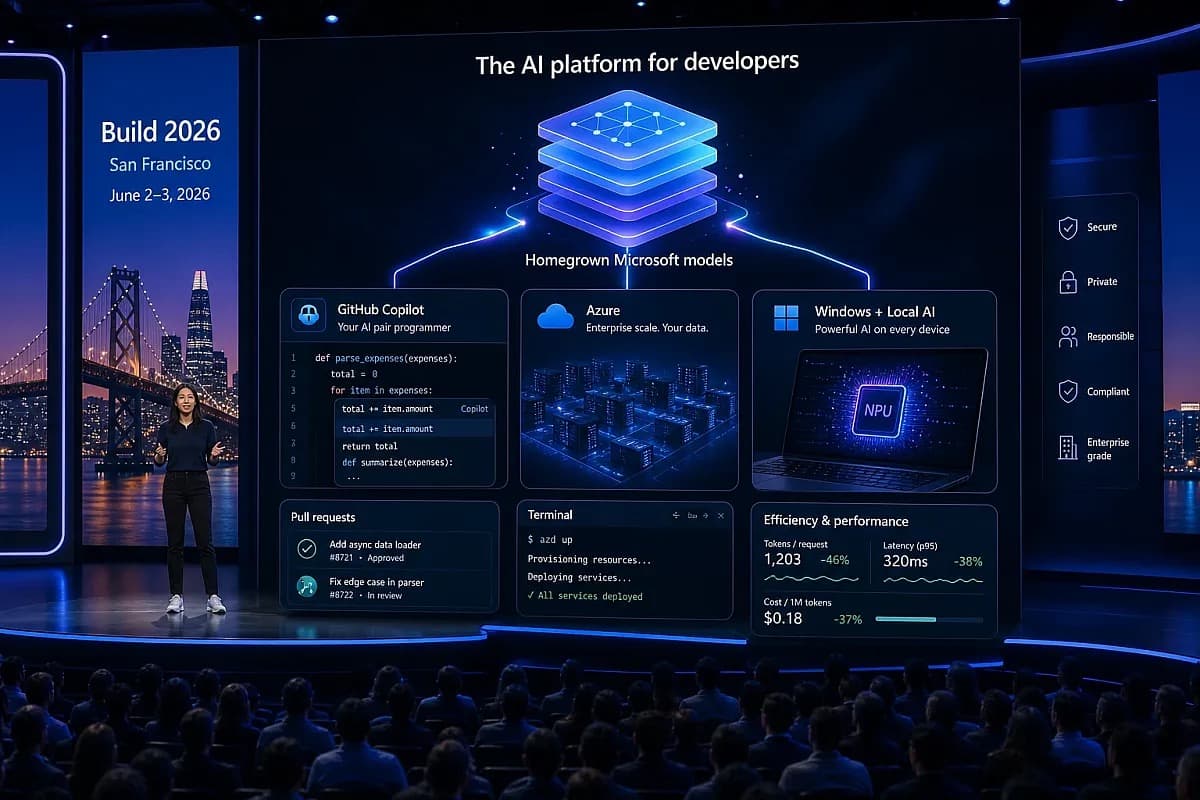
On June 2, Microsoft Build 2026 opens at Fort Mason Center, San Francisco. Build is Microsoft's annual developer conference — not a consumer event, but the place where Microsoft tells the world's developers what they'll get over the next year. So every year a flood of preview coverage arrives around the keynote.
This year, even before the keynote, the tech press buzzed about one story: "Microsoft is finally laying down a full in-house model stack that runs without OpenAI." But from here you have to read carefully. What's certain and what's still rumor are circulating mixed together. Bottom line: the direction — switching to its own models — is real, but specific assertions like "Polaris replaces GPT-4 Turbo starting in August" are (as of this writing) not yet officially confirmed. This piece separates the two.
Confirmed fact #1 — Microsoft already runs its own MAI models
Facts first. On April 2, Microsoft officially announced its in-house model family MAI all at once: text-to-speech MAI-Voice-1, speech-to-text MAI-Transcribe-1, and text-to-image MAI-Image-2, made available to developers on the "Microsoft Foundry" platform. This isn't speculation — Microsoft said it directly on its official blog (microsoft.ai). The image model was later updated to MAI-Image 2.5 and climbed near the top of the image-generation leaderboard (LMArena). So "Microsoft owns its own image, voice, and transcription models" is a confirmed fact.
Confirmed fact #2 — Mustafa Suleyman and the "own-our-models" strategy
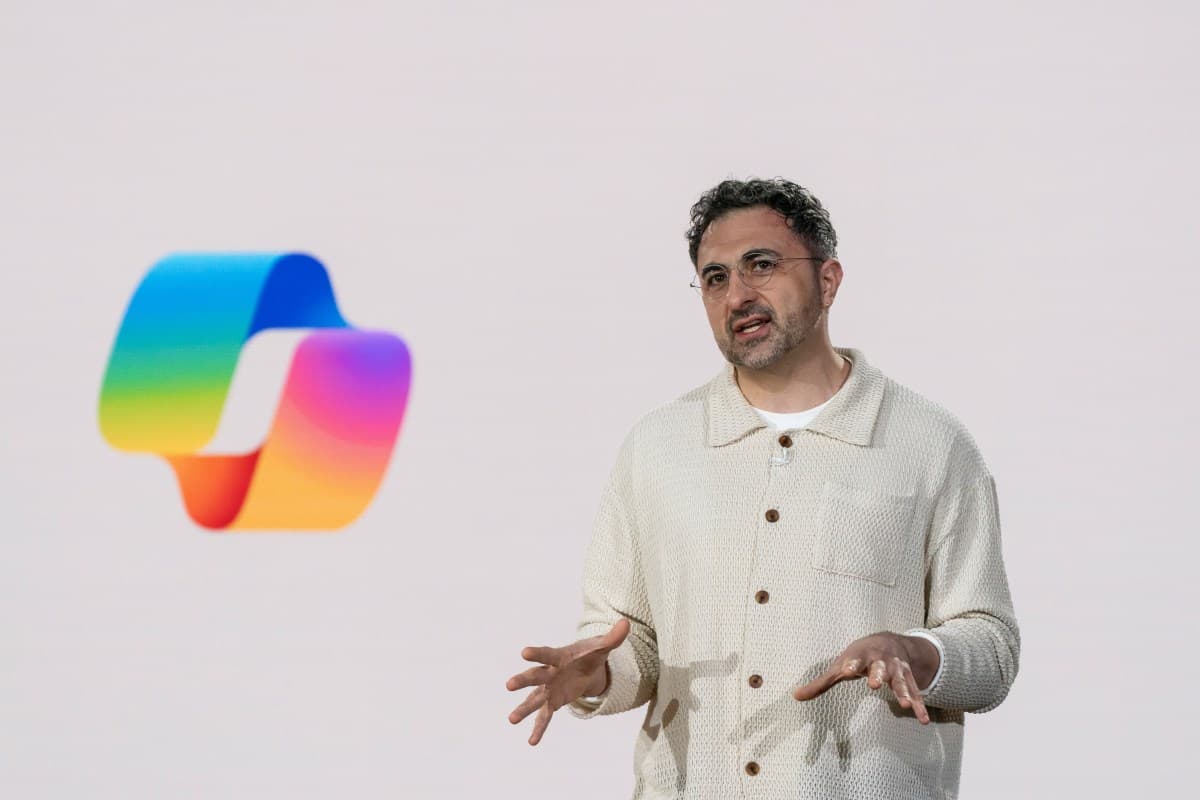
The person driving this is Mustafa Suleyman. A DeepMind co-founder who, after Inflection AI, joined Microsoft in March 2024 to run all of consumer AI (Copilot included) as "Microsoft AI." In November 2025 he formally launched an "MAI superintelligence" team. That's exactly why Microsoft brought him in — to stop being "a company that sells models others built for it" and become "a company that owns its own models."
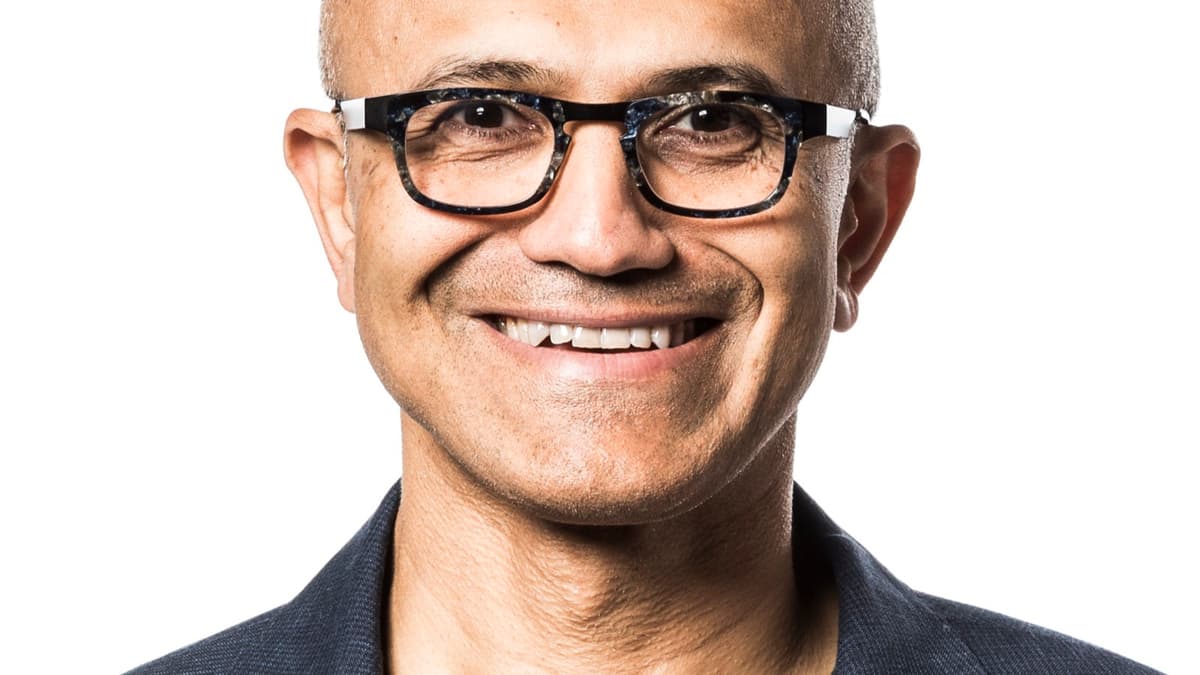
So the direction — reducing OpenAI dependence via in-house models — is not a Build 2026 surprise but a months-long, established trajectory. Satya Nadella is the one drawing the big picture, with the ambition that a company owning the PC OS, the cloud, Office, and GitHub should hold the steering wheel of the AI era directly. (That said, one-line "quotes" relayed from the keynote often lack a clear primary source, so we don't reproduce any specific quote as a direct quotation here.)
Still at the "reported/expected" stage — 'Project Polaris' and the August swap
Here's the part to handle with care. Ahead of Build 2026, multiple outlets reported this: a Microsoft in-house coding model for GitHub Copilot called 'Project Polaris' would be unveiled, replace GPT-4 Turbo as Copilot's default starting August 2026, and give existing users roughly a three-month fallback — with a Mixture-of-Experts (MoE) architecture and staged reasoning to boot.
Plausible? But the sources for all of this are speculative/forward-looking outlets. As of this writing, neither Microsoft's nor GitHub's official announcements or docs confirm the name "Project Polaris" or an "August default-model swap." GitHub Copilot's official supported-models docs list no Polaris. So we mark this as an "unconfirmed report." If Microsoft announces it directly at the keynote, we can promote it to "fact" then.
Likewise, "MAI-Voice 2 and MAI-Transcribe 1.5 will be unveiled at Build" is still preview-stage reporting. The officially confirmed voice/transcription models stop at April's first generation (Voice-1, Transcribe-1); a "next gen" is, for now, only reported.
At a glance — confirmed vs unconfirmed
| Item | Status | Basis |
|---|---|---|
| MAI first-gen trio (Voice-1, Transcribe-1, Image-2) announced | ✅ Confirmed | Apr 2 official microsoft.ai blog; in Foundry |
| MAI-Image 2.5 update; top of LMArena | ✅ Confirmed | Released/deployed model |
| Suleyman leading Microsoft AI; "own-our-models" strategy | ✅ Confirmed | Official MS org (joined Mar 2024) |
| 'Project Polaris' coding model | ⚠️ Unconfirmed | Speculative outlet reports; no official docs |
| Aug GPT-4 Turbo→Polaris default swap; 3-month fallback | ⚠️ Unconfirmed | Reports only; no MS/GitHub schedule |
| MAI-Voice 2 / MAI-Transcribe 1.5 (next gen) | ⚠️ Unconfirmed | Preview-stage reporting |
| Specific Nadella keynote "quotes" | ⚠️ Unclear sourcing | Relayed lines; no primary source |
Why Big Tech wants to depend less on "someone else's model"
Strip out the rumors and the big picture is sharp: the axis is shifting from an era of buying models to one of building them. The reason is simple — rent someone else's model and they set the price, policy, and roadmap, and the better something like Copilot sells, the more inference cost you owe them. (The recent reports that Microsoft trimmed internal use of an external coding tool over cost pressure fit the same theme — also on a reports basis.)
So it's not just Microsoft: Google (Gemini) and Amazon (Nova) are moving core workloads onto in-house models too. Microsoft hiring Suleyman to build the MAI team sits squarely on this trend. The move from "a company that buys models" to "a company that owns them" is already an industry-wide direction, and Build 2026 is one more stage to showcase it.
Historical parallels — the upside and downside of "switching to your own parts"
Replacing someone else's core component with your own is a recurring move in tech history — with both wins and losses.
Success — Apple's silicon independence. Apple used Intel CPUs for years, then moved the whole Mac line to its own M-series chips. Early doubts about compatibility gave way as it led on performance, power efficiency, and cost. Lesson: internalizing a core component brings short-term pain but long-term margin and control.
Cautionary — bumpy in-house model transitions. Several companies pushed their own LLMs into flagship products and hit quality controversies and delays; some "our model is best" claims fell short in real use. Lesson: in-house models always carry a gap between "announced spec" and "real-world quality." If Copilot's default really changes, the real test is whether it beats the incumbent in actual developer experience — not on HumanEval scores.
Failure risk — backlash from forced switches. Various SaaS products force-swapped their engine for in-house tech and watched users churn ("the old one was better"). Dev tools especially: users adapt to a tool's "habits," so changing the default breeds subtle resistance. If, as reported, Microsoft stresses auto-migration and fallback, that's a design aware of this risk.
Who's affected (if the reports are confirmed)
The following is a scenario conditioned on "if Polaris and the August swap are confirmed at the keynote." Until then, read it conditionally.
For Microsoft, the core is cost control and independence. Switching to its own model lets it control inference cost directly, keep the margin, and set feature priorities — bigger than "saving money," it's about who holds the steering wheel.
For developers, choice expands and cheaper/faster defaults may open up in free/low-cost tiers. But a default-model change is double-edged: teams tuned to the incumbent may see subtly different output — which is exactly why a fallback window (if reported correctly) matters.
For OpenAI, it's a complicated signal. Microsoft remains the biggest investor and cloud provider, yet publicly signals "we can do this without you." Until a "Copilot default swap" is official, though, that shock stays potential.
Editor's note
Three things to watch at today's Build 2026 keynote: ① whether a Copilot in-house coding model is actually unveiled with a name and specs, ② whether a default-model swap actually gets a real schedule, and ③ whether a next generation of MAI voice/image models appears. If all three are confirmed on stage, we'll update this article to fact then.
The takeaway for now: trust the "direction," but wait on "assertions" until the keynote. Flashy preview pieces and actual announcements are different things — so let names like Polaris and schedules like "August swap" cool a beat until Microsoft says them directly.
References
- Microsoft AI official — three new MAI models in Foundry
- Microsoft Build 2026 official home
- TechCrunch — Microsoft takes on AI rivals with three new foundational models (2026.04.02)
- [unconfirmed report] AI Weekly — Microsoft targets Claude Code with Project Polaris
- [unconfirmed report] Windows News — Build 2026 homegrown models to power Copilot
- [unconfirmed report] TestingCatalog — Microsoft readies MAI voice and image models for Build 2026