Intel bet on the 'inference era'
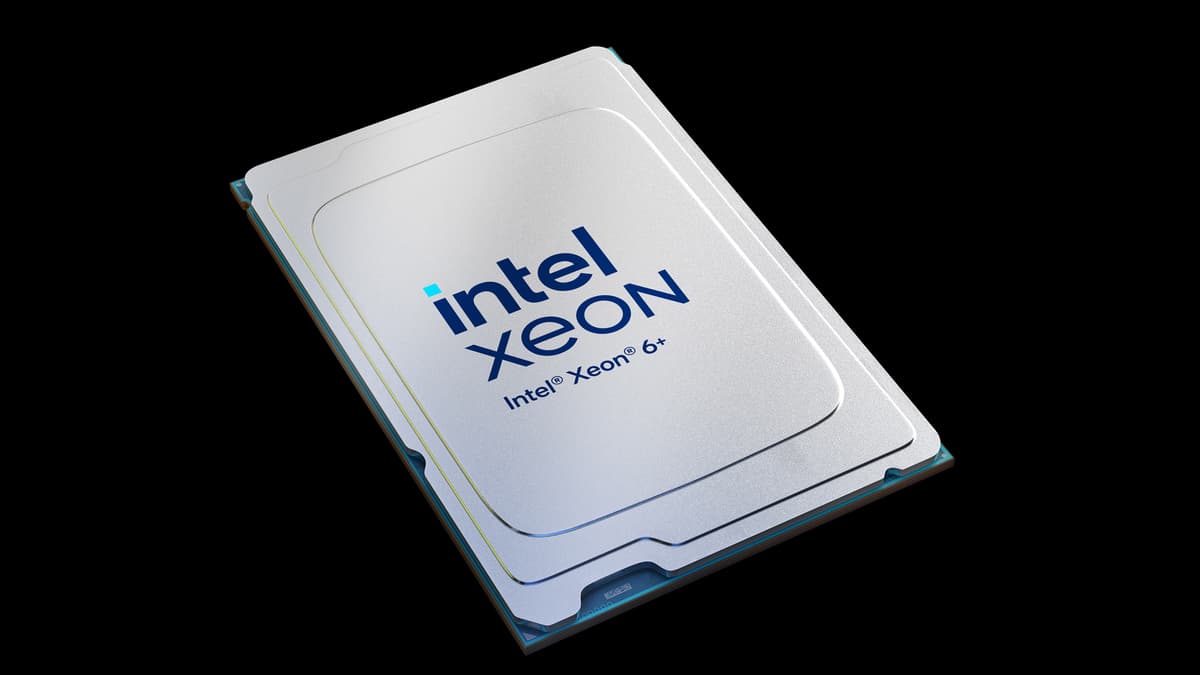
Here's the deal: while NVIDIA conquered the world with GPUs for AI training, Intel fell far behind. But the card Intel played on June 2 at Computex 2026 isn't "training," where NVIDIA is strongest — it's the next battlefield: inference and agentic workloads. There Intel announced a new lineup of AI innovations, including rackscale AI infrastructure solutions aimed at customers scaling inference and agentic work.
Two terms to pin down. "Inference" is the stage of actually running an already-trained AI model to produce an answer. The moment a chatbot replies, code is generated, an image is drawn — that's all inference. As AI left the lab to become services used daily by hundreds of millions, the compute going into inference is exploding past training. "Rackscale" means systems designed as a whole at the server-rack level, not a single chip — to run AI at scale, you operate an entire rack as one unit, not one chip.
To be honest, this announcement isn't at the stage of crisp per-product specs, pricing, and ship dates (an area needing further confirmation). So this piece focuses less on "what chip at what nanometer" and more on why Intel is betting on inference/rackscale now, and what it means for the AI-infrastructure race.
The players — Intel, Computex, and the 'inference economy'
First, Intel. Once the undisputed king of semiconductors, it has struggled against NVIDIA and AMD in the AI-accelerator race. Its GPU accelerators (the Gaudi line) and its own foundry didn't capture the market as hoped. For Intel, "inference / agentic / rackscale" is a crack to get back in the game. NVIDIA nearly monopolized the training market, but inference is more varied, more cost-sensitive, and more distributed — leaving more openings for a challenger.
Next, Computex 2026. Held in Taipei, Taiwan, it's one of the world's largest IT and semiconductor shows. This year Computex effectively became "the home base of the AI-infrastructure race." At the same event, NVIDIA announced its "AI into the fab" collaboration with TSMC, AMD continued its AI-accelerator push, and Intel showed rackscale infrastructure. The future of AI chips and infrastructure collides on one stage.
The last player is the 'inference economy' trend. If 2023–2024 was "who trains giant models best," 2025–2026 shifted toward "who runs those models cheaper and faster." The more AI services go mainstream, the more the cost, power, and latency of the billions of inferences happening daily decide a business's life or death. Intel's announcement targets exactly this inference economy.
What's inside — why 'rackscale' and why 'inference'
Intel's core message boils down to three points.
First, move the stage from training to inference. NVIDIA's moat, built on high-end training GPUs, can't be torn down quickly. So instead of a head-on fight, Intel goes for the flank — in inference, "performance per watt," "cost per token," and "whole-system efficiency" matter more than raw peak performance. Here Intel's CPU/system-integration strengths and price competitiveness can become weapons again.
Second, sell a 'system (rack),' not a chip. That's why "rackscale" matters. What customers want isn't a single chip but "plug-and-run AI infrastructure as a whole." Bundle compute, networking, power, and cooling at the rack level, and customers can scale inference fast without complex assembly. It's a strategic shift to "selling AI infrastructure as a finished product, not parts."
Third, target agentic workloads squarely. Beyond simple chatbot replies, as "agents" that plan multiple steps and use tools proliferate, a single user request balloons internally into dozens to hundreds of model calls. In the agent era, inference demand grows exponentially. Intel volunteers to be the infrastructure that absorbs that surging inference load.
| Dimension | Training | Inference |
|---|---|---|
| Key metric | peak performance, large clusters | performance per watt, cost per token |
| Market structure | concentrated in a few Big Tech | broad and cost-sensitive |
| Competitive intensity | NVIDIA near-monopoly | more open to challengers |
| Intel's angle | (disadvantaged) | rackscale efficiency, price |
To re-emphasize: exact specs, pricing, and ship schedules for individual products need further confirmation against Intel's official materials. This piece's core is strategic direction, not a product catalog.
What each side gets — Intel, customers, the market
For Intel, it's "a foothold for a comeback." Beating NVIDIA head-on in training GPUs is hard, but inference/rackscale is an area where Intel can revive its assets (CPUs, system integration, data-center customer relationships). Capture meaningful share here and Intel has grounds to flip the "Intel lost the AI era" narrative. It may not win the high-margin training market, but claiming a slice of the ballooning inference market is a realistic goal.
For customers (cloud, enterprise), the core gain is "having options." AI infrastructure today over-depends on NVIDIA, weakening bargaining power on price, volume, and lead times. If Intel offers usable inference infrastructure, customers escape the "NVIDIA or nothing" bind and gain a card to negotiate cost. Inference especially is cost-sensitive, so a good alternative on performance per watt and unit price draws real demand.
For the AI market at large, diversifying inference infrastructure can translate into "lower AI usage prices." As the cost of running inference falls, AI applications that were too expensive become economical, and inference-heavy services like agents spread faster. In other words, a challenger like Intel fighting hard may come back to everyone who uses AI in the form of "cheaper AI."
Prior cases — Intel's history of AI-accelerator attempts
This isn't Intel's first AI-chip attempt. That history shows the weight of this bet.
Repeated setbacks — Gaudi and earlier generations. Intel challenged NVIDIA with several AI accelerators (the Gaudi line and others), but the wall of the software ecosystem (CUDA) and timing problems kept it from capturing the market as hoped. Even with decent chip performance, switching costs were high once developers were already fluent in CUDA. That experience taught Intel "the limits of a head-on fight" and underlies its pivot toward inference and systems this time.
A hint of success — the CPU data-center legacy. Conversely, Intel has had strong areas. In the data-center CPU market, Intel was long the standard, with deep assets in system integration and enterprise relationships. Inference isn't a GPU-only game — it's a "system game" where CPU, memory, and networking must deliver efficiency together — so this legacy can shine again. The rackscale strategy is a choice to fight with Intel's strength (systems) rather than its weakness (single accelerators).
Warning flag — 'announcement and volume are different.' Still, a flashy trade-show announcement doesn't equal market share. Intel has a history of impressive roadmaps that stumbled on production, lead times, and ecosystem. This rackscale push only becomes meaningful if real customers adopt it at scale and the software stack matures enough. So treat it as "direction reasonable, execution to be watched."
Counter-plays — NVIDIA, AMD, and the in-house-chip camp
The biggest wall is, again, NVIDIA. At the same Computex, NVIDIA announced the "AI in the fab" collaboration with TSMC, widening its influence across manufacturing and ecosystem, not just training. And NVIDIA doesn't ignore inference — it defends with inference-specialized products and software. Even if Intel finds a gap in inference, NVIDIA's moat of the CUDA ecosystem and integrated stack remains enormous.
AMD is no pushover either. AMD already claimed the spot as NVIDIA's strongest rival with its AI accelerators (Instinct line) and is penetrating the inference market on value. For Intel, it must also compete with AMD for the "NVIDIA-rival" seat. Ultimately, within the challenger camp too, it's a contest over "who's the better alternative."
The cloud in-house-chip camp is a variable. Google (TPU), Amazon (Trainium/Inferentia), and Microsoft build their own inference chips to cut dependence. They're potential Intel customers and simultaneously rivals who ask "why buy when we can build?" For Intel to win with rackscale, the key is how many mid-tier clouds, enterprises, and nation-scale infrastructure customers — those without the means to make their own chips — it can capture.
So what changes — by persona
If you run or buy AI infrastructure, this signals "inference-infrastructure options are widening." More alternatives to sole NVIDIA dependence means more bargaining power and room for cost optimization. But before adopting, verify directly (1) software-stack maturity, (2) performance per watt on your actual workloads, and (3) migration costs. The answer is "measured on your workload," not announced specs.
If you invest in or strategize around AI, the core point: "the AI value chain's center of gravity is moving from training to inference." Training is a game for a few Big Tech players, but inference is a large, distributed market open to more players. The inference competition among Intel, AMD, and cloud in-house chips will, over time, push AI compute prices down.
If you're just watching the trend, the core point: "AI has crossed from research into everyday infrastructure." When words like inference and rackscale move to the front, it means AI has matured past "who makes the smartest model" into "how to supply it cheaply and reliably to hundreds of millions." Intel's Computex announcement is a challenge to rejoin that "supply-infrastructure war." Whether it succeeds will be told by execution ahead.
🥄 Three Things You're Probably Wondering
— Why is Intel targeting inference instead of training? Because training is effectively NVIDIA's monopoly, defended by the CUDA ecosystem and high-end GPUs. Inference is a different, more open battlefield — it's cost-sensitive, distributed, and rewards performance per watt and cost per token over raw peak power. That's where Intel's CPU and system-integration strengths can matter again.
— What does "rackscale" actually mean, and why sell it? Rackscale means a system designed as a whole at the server-rack level — compute, networking, power, and cooling bundled together — rather than a single chip. Customers scaling AI want "plug-and-run infrastructure," not parts to assemble. It's a strategic shift to selling AI infrastructure as a finished product, fighting with Intel's strength (systems) rather than its weakness (single accelerators).
— Should I take the announcement at face value? Watch execution, not the trade-show slide. Exact specs, pricing, and ship dates need confirmation against Intel's official materials, and Intel has a history of impressive roadmaps that stumbled on production and ecosystem. It becomes meaningful only if real customers adopt at scale and the software stack matures.
— Why should anyone outside Intel care? Because more inference options means less sole dependence on NVIDIA — more bargaining power for buyers and downward pressure on AI compute prices over time. Cheaper inference makes more AI applications economical and accelerates inference-heavy services like agents. A challenger fighting hard can come back to everyone as "cheaper AI."
Bottom line: Intel can't beat NVIDIA head-on in training, so it's flanking into inference and rackscale — fighting with its system-integration strength rather than its single-accelerator weakness. The strategy is reasonable and the timing (the inference economy, the agent boom) is right. But Intel's history says execution, not announcements, decides this. If it lands real customers and a mature software stack, it diversifies AI infrastructure and pushes compute prices down for everyone. That's the prize — and it's still all to play for.