Nvidia Just Lined Up All Three Memory Giants — Here's Why That's a Big Deal
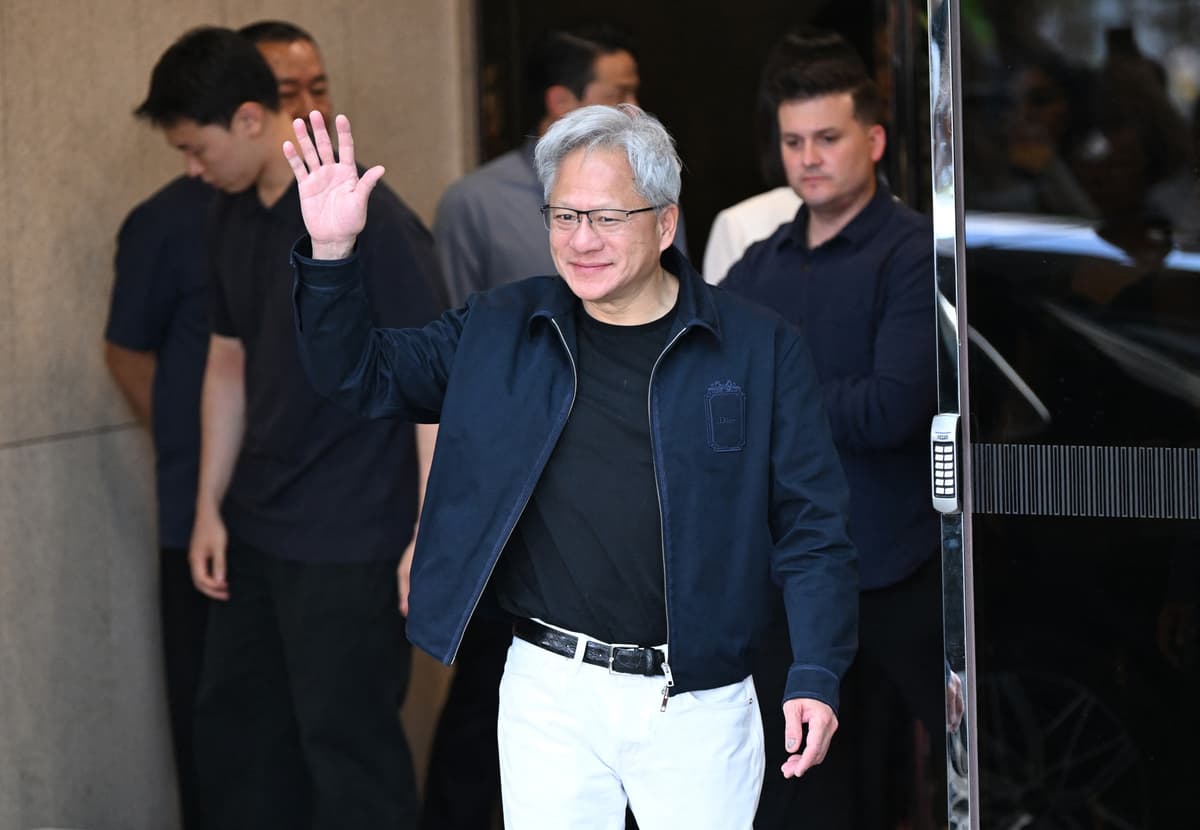
Here's the deal: on June 5, 2026, Jensen Huang touched down in South Korea and dropped a single sentence that the entire semiconductor world had been holding its breath for. Samsung, SK Hynix, and Micron — all three of them passed. Passed what? Qualification to supply the HBM4 memory that goes into Nvidia's next-gen AI accelerator, codenamed Vera Rubin. It sounds like a throwaway line, but it isn't. It means Nvidia can now shop for memory across three vendors instead of being chained to one.
The part that actually matters is "all three, at the same time." Up to now, the HBM market was basically SK Hynix's show. Nvidia couldn't really crank out GPUs without SK Hynix in the loop. Now that Samsung and Micron have both cleared qualification, Nvidia has knocked down its scariest single point of failure — the memory bottleneck. You can design the best AI chip on earth, but if the memory beside it can't keep up, you can't ship the thing. That weak spot just got patched.
And the timing is everything. Vera Rubin was unveiled only days earlier, at the GTC Taipei keynote on June 1, and it's already in full production, with deliveries targeted for Q3 2026. Nvidia is claiming roughly 10x the agent throughput at scale compared to the previous Grace Blackwell platform. So the chip is ready to ship, the memory supply is locked in across three vendors, and the delivery window is set. Every piece of the puzzle just clicked into place.
The Players — Who's Who Here
Start with the star: Nvidia. No introduction needed — it's the undisputed king of AI silicon, dominating the GPU market and riding the AI boom harder than anyone. But even Nvidia has a soft underbelly, and it's HBM, the high-bandwidth memory that sits next to the GPU. A gorgeous GPU design means nothing without the HBM to complete the package, and Nvidia leaning heavily on a single supplier — SK Hynix — was a constant source of anxiety inside the company.
Enter the three memory makers. SK Hynix is the reigning HBM champion. It entered qualification ahead of its rivals this time too. Ever since the HBM3E generation, it's effectively been Nvidia's sole supplier and made a fortune doing it. Huang was so thirsty for SK Hynix volume that on June 2, in Taiwan, he publicly told them to "make more." That's how tight supply has been.
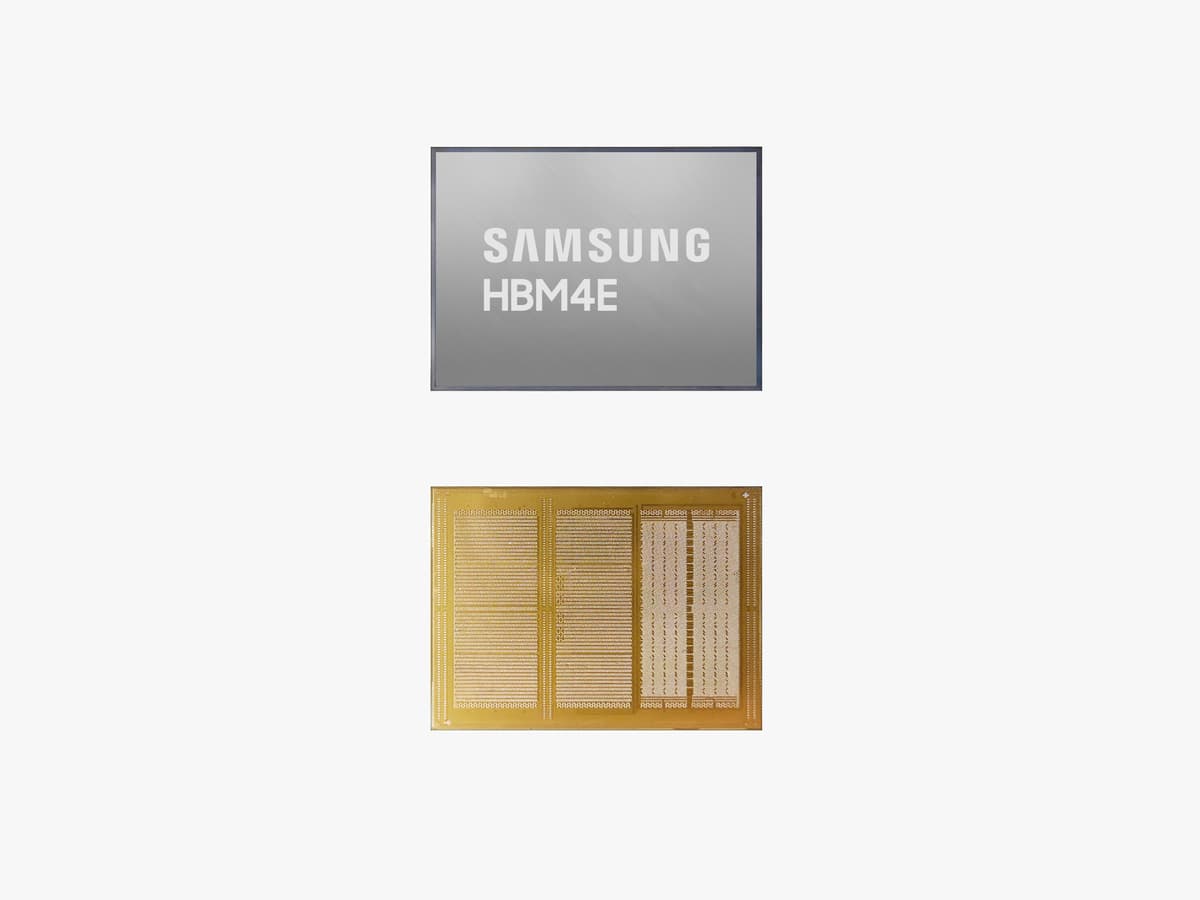
Samsung Electronics is the comeback kid. During the HBM3E era it stumbled on Nvidia qualification, and the narrative turned into "Samsung is slipping." But the mood around HBM4 is different. Samsung kicked off HBM4 mass production around February 2026, and clearing this qualification puts it back on the main stage. For Samsung, this is redemption and a counterpunch rolled into one.
Then there's Micron, and the key detail is that it's American. Unlike the two Korean firms, Micron is a US-based memory maker, and it was a latecomer to the HBM race. Yet here it is, taking the third supplier slot outright. For Nvidia, that's a geopolitical insurance policy — a US-based supply line in the mix. And the man orchestrating all of it: Jensen Huang. The leather-jacket guy flew to Korea to deliver this himself.
The Core of It — What Actually Happened
Let's lay out the facts cleanly. On June 5, as he arrived in South Korea, Jensen Huang officially confirmed that Samsung, SK Hynix, and Micron had all passed qualification to supply HBM4 for Vera Rubin. Passing qualification isn't a "nice samples, thanks" formality. It means a vendor has cleared Nvidia's brutal quality, performance, and yield bar and earned the right to ship real production volume. In the memory business, Nvidia qualification is essentially a pass/fail certificate — and these three just got the stamp.
Vera Rubin itself was unveiled June 1 at GTC Taipei and has already entered full production, with a Q3 delivery target. The headline number Nvidia is pushing is roughly 10x the agent throughput at scale versus Grace Blackwell. With AI shifting from simple inference toward agentic workloads — models that use tools and reason across many steps — a 10x figure is enormous for anyone running a data center.
So how is the volume split? This is the important part: there is no officially disclosed allocation. What's floating around are unofficial analyst estimates — SK Hynix at roughly 60-70%, Samsung at 25-30%, and Micron taking the remainder. Worth repeating: those are estimates, not numbers Nvidia confirmed. Keep that firmly in mind.
| Item | Detail |
|---|---|
| Announcement date | June 5, 2026 (confirmed during Huang's Korea trip) |
| Vendors qualified | Samsung, SK Hynix, Micron (all three) |
| Target product | HBM4 for the next-gen "Vera Rubin" accelerator |
| Vera Rubin unveiled | June 1, 2026, GTC Taipei keynote |
| Production status | Full production; deliveries targeted Q3 2026 |
| Performance claim | ~10x agent throughput at scale vs. Grace Blackwell |
| Volume split (unofficial est.) | SK Hynix 60-70% / Samsung 25-30% / Micron remainder |
| Sequence | SK Hynix entered qualification first; Samsung began mass production ~Feb 2026 |
Read the table and the picture snaps into focus. The chip is ready, all three memory makers are lined up, and product ships in Q3. Within that, SK Hynix still grabs the biggest slice, while Samsung and Micron split meaningful chunks of the rest.
What Each Side Gains
Start with Nvidia. The biggest win is risk diversification. It had been leaning heavily on SK Hynix alone for HBM, and that was a thorn it could never quite remove. If anything happened to SK Hynix, or supply tightened, Nvidia's entire revenue picture wobbled. Now that Samsung and Micron are in the mix, Nvidia gains negotiating leverage and supply stability at once — plus a "we have other options" card at the bargaining table.
What about SK Hynix? Short term, it still pulls the largest volume (an estimated 60-70%), so it remains the biggest beneficiary. But the monopoly is broken. The old story was "Nvidia can't run without us." The new one is "we're still the biggest, but alternatives exist now." Given that Huang literally asked them to "make more," near-term demand is overflowing. SK Hynix kept the throne but quietly surrendered a bit of its absolute power.
For Samsung, this is a genuine rebound. After slipping on HBM3E, it spent a while dogged by the "Samsung is a beat behind" label. But starting HBM4 mass production in February and now clearing qualification puts it back among the top-tier suppliers. The share may be smaller than SK Hynix's, but this is reputational redemption and a launchpad for bigger future volume. For Samsung, it's the decisive blow in winning back lost trust.
Micron might be the most dramatic story of all. A latecomer to HBM, it just planted its name on Nvidia's supply roster outright. Even with the smallest share (the remainder), having a US memory company inside Nvidia's newest platform carries real symbolic weight. With US-China tensions running hot, a "made-in-America supply line" card has value all by itself. That's exactly why Micron's stock perked up.
Past Parallels — Has Multi-Sourcing Always Worked?
Multi-sourcing — spreading supply across several vendors — isn't a new strategy. Throughout semiconductor history, giant buyers carving their supply across multiple vendors has been a go-to move. The classic success story is Apple. Apple once leaned hard on Samsung for displays, then broadened to LG Display, BOE, and others, sharply boosting its leverage. No longer hostage to one supplier, it tamed prices and stabilized supply. Nvidia's three-vendor HBM4 qualification is straight out of that textbook.
Another success is Nvidia's own past. Even while depending heavily on TSMC for foundry, Nvidia at times routed some volume to Samsung's foundry, hedging against single-source risk. That diversification experience clearly fed into this memory strategy. When a giant buyer adds suppliers, it's more work in the short run, but long term you get both negotiating leverage and stability — Nvidia learned that lesson well.
But there are failures too. Multi-sourcing isn't always rosy. Pulling from several vendors at once can introduce quality variance, yield gaps, and subtle performance differences. Samsung's long struggle to pass Nvidia qualification during the HBM3E generation is the poster child. Not all "HBM" is created equal. Heat, signal integrity, yield — the details vary by vendor, and they feed straight into final product performance and cost. So passing qualification doesn't mean the game is over; the real contest is who can churn it out reliably in mass production.
Bottom line: multi-sourcing is a buyer-friendly card, no doubt, but for the suppliers, passing qualification isn't the finish line — it's the starting gun. The actual war is fought on production yield and stable supply. All three passed, but who ultimately wins more volume will be decided by future execution.
How Competitors Counter-Play
First, the counter-play among the three memory makers themselves. The moment all three cleared qualification, the real fight shifted to "who supplies more, and more reliably." SK Hynix will floor the accelerator on capacity expansion to defend its lead — and with Huang literally asking it to "make more," it has all the justification it needs. Samsung will push to raise its share through better yields and price competitiveness, while Micron will wield its US-supply geopolitical card to grow its slice. Ironically, the shared qualification makes the three-way rivalry fiercer, not calmer.
Nvidia's chip rivals won't sit still either. AMD is chasing the AI accelerator market with its MI series, and with Vera Rubin in full production and a three-vendor memory pipeline secured, catching up gets harder. AMD has to compete for the same HBM suppliers' attention against Nvidia — and Nvidia is such a whale that AMD risks getting bumped down the priority list. So AMD needs to deepen its own memory partnerships or bet on a differentiated architecture.
The custom-silicon hyperscalers are a wild card too. Google's TPU, Amazon's Trainium, Microsoft's Maia — these in-house AI chips keep getting stronger, and they all need HBM. With Nvidia lining up all three memory makers, these big-tech players may find themselves fighting Nvidia for whatever HBM volume is left over. If memory supply tightens, it could trip up their custom-chip roadmaps.
You can't ignore the geopolitical counter-play. Amid US-China friction, China is betting big on homegrown HBM. Memory firms like CXMT are racing to catch up, but the gap is still wide. Nvidia building its supply chain from two Korean firms plus one US firm is — intentionally or not — a map that leaves China out. Over time that could accelerate the bloc-ification of the memory market.
Finally, watch Nvidia's own next move. This round was HBM4, but HBM4E and HBM5 are coming. Each generation, the board resets around who qualifies first. In other words, this simultaneous three-vendor pass isn't the end — it's one round in a qualification race that repeats every generation.
So What Actually Changes — By Persona
For investors, the first thing to watch is the shifting positions of the three memory makers. SK Hynix remains the biggest beneficiary, but its monopoly premium may erode a bit. Samsung gets a "valuation catch-up" catalyst from its qualification comeback, and Micron has re-rating room on the US-supply-line story. Just remember: the allocation percentages are analyst estimates, not official disclosures. Betting on estimates is risky. Until earnings reveal who actually got how much, it's all hypothesis.
For the AI-infrastructure crowd, this is genuinely welcome news. Easing the memory bottleneck means Vera Rubin accelerator supply should loosen up. AI chips have been nearly impossible to source, and with three supply lines instead of one, volume could climb and lead times could shrink. If that "10x agent throughput vs. Grace Blackwell" claim holds up in the real world, you could run far more inference on the same power budget — and data-center total cost of ownership math gets rewritten wholesale.
For the general AI watcher, the key takeaway is grasping the big-picture shift: the bottleneck moved from the GPU to memory. People assumed enough GPUs meant you could run AI, but it turned out the HBM riding beside the GPU was the real chokehold. This three-vendor qualification loosens that chokehold a little. If AI's pace was tied to memory supply, the shackle just got a notch looser.
It also means a lot for Korea. With both Samsung and SK Hynix inside the Vera Rubin supply line, it's proof that Korea still sits at the center of the AI era's most critical components. That's the context behind Huang's Korea visit, where he met SK Chairman Chey Tae-won, Hyundai Executive Chair Euisun Chung, LG Chairman Kwang-mo Koo, and Naver Chairman Lee Hae-jin. This is bigger than a parts deal — it's sketching out cooperation across the whole AI ecosystem.
Put it all together and the announcement boils down to one sentence — "Nvidia reduced its memory risk" — but the ripples spread across the three-way memory rivalry, AI-infra supply stability, and Korea's standing in semiconductors. Nothing changes dramatically overnight, but the effects will surface slowly over the next several quarters.
🥄 Three Things You're Probably Wondering
— What does "passing HBM4 qualification" actually mean? It means the vendor satisfied all of Nvidia's quality, performance, and yield requirements and earned the right to actually ship HBM4 for Vera Rubin. It moved past the sample stage to be officially recognized as a production supplier. In the memory industry, Nvidia qualification is treated as a pass/fail certificate.
— So do the three companies split the volume evenly? No. There's no officially disclosed allocation. Unofficial analyst estimates put SK Hynix at 60-70%, Samsung at 25-30%, and Micron at the remainder. But those are estimates only — not numbers Nvidia confirmed.
— Is Vera Rubin really that impressive? Is the 10x figure real? Nvidia claims roughly 10x the agent throughput at scale versus the prior Grace Blackwell platform. The word "claim" matters — it's a company figure, so whether it holds in real-world deployments has to be verified after shipping. What is confirmed: it's in full production, with a Q3 delivery target.
— Is this good news for Korean semiconductors? Broadly positive, since both Samsung and SK Hynix are in the Vera Rubin supply line. That said, it's a double-edged sword for SK Hynix because its monopoly is broken, while for Samsung it's a clearer win as reputational redemption. The impact differs by company.
References
- Nvidia certifies Samsung, SK Hynix and Micron for Vera Rubin HBM4 supply — Reuters (via Yahoo Finance)
- Nvidia Vera Rubin HBM4: Jensen Huang Confirms All Three Suppliers in Production for Q3 Ship — TechTimes
- Nvidia certifies Samsung, SK Hynix and Micron for Vera Rubin HBM4 supply — Investing.com
- Nvidia Certifies Samsung, SK Hynix, Micron for HBM4 Supply — GuruFocus
- NVIDIA Newsroom (Vera Rubin platform)
Numbers and criteria are as of announcement and may change. Investment calls are yours to make!