The 7th-gen AI-memory race just narrowed to a matter of weeks
The real bottleneck for AI chips is often not compute but memory. However fast your GPU is, performance stalls if you can't feed it data fast enough. The pipe that does the feeding is HBM (high-bandwidth memory) — and its next generation, HBM4E, is where Korea's two giants are squaring off again.
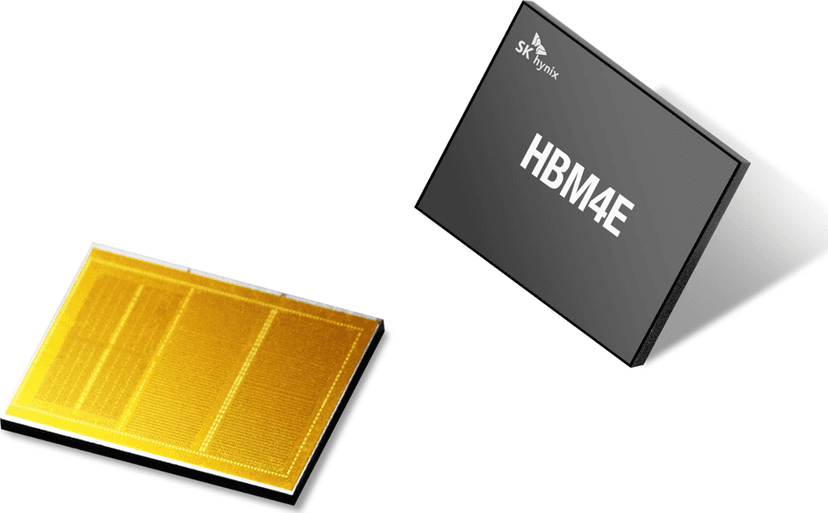
SK Hynix fired the signal flare. On June 18, SK Hynix shipped 12-layer HBM4E samples to major customers — more than a month ahead of the "second half" timeline it gave on its Q1 earnings call in April. After Samsung announced the "world's first" HBM4E 12-high 48GB sample shipment on May 29, SK Hynix pulled its schedule forward to close the gap. It's an unusually tight race, swapping the lead by mere weeks.
Who's running — Samsung, SK Hynix, and Nvidia
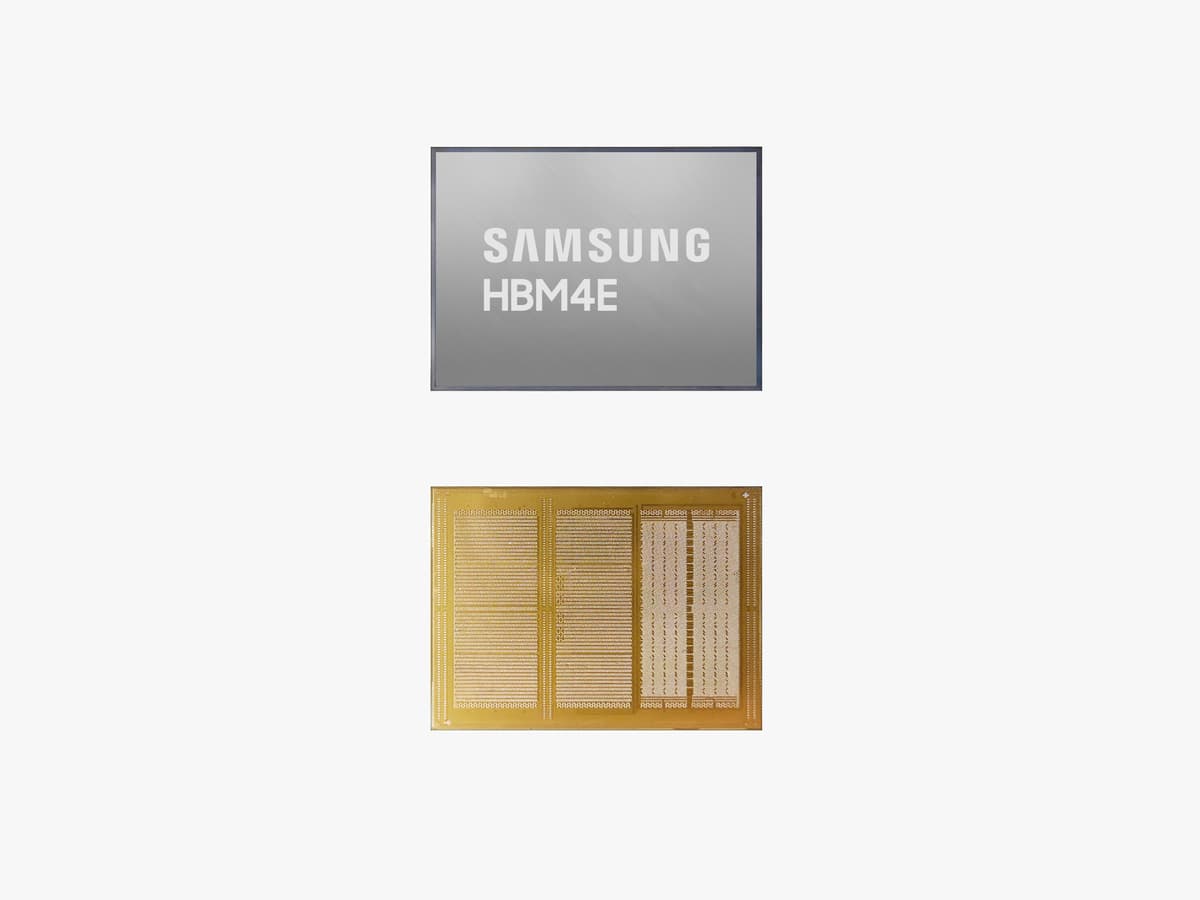
Samsung Electronics moved first this round, announcing on May 29 the world's first HBM4E 12-high 48GB sample shipment and grabbing the "world's first" title. For a company seen as having ceded HBM leadership to SK Hynix in recent generations, getting ahead on the next one is a shot at restoring pride.
SK Hynix is the incumbent leader of the HBM market — especially as a major HBM supplier to Nvidia and a top beneficiary of the AI-memory boom. Pulling its schedule forward to ship 12-layer HBM4E samples on June 18 is a statement that it won't hand the crown to Samsung easily. Both companies are also aggressively recruiting US-based AI talent, so the competition is spilling beyond chips and into people.
Nvidia is both referee and biggest customer. It decides whose HBM4E goes into next-gen AI accelerators, and in what volume. The reason Samsung and SK Hynix are racing by weeks to rush samples is, ultimately, to win Nvidia's qualification first. In the chain of sample shipment → customer qualification → volume contract, getting the first button done fast is an advantage on production volume.
The core of it — what's new in HBM4E
The specs of SK Hynix's 12-layer HBM4E make the generational leap obvious. The theme is "stack higher, run faster, run cooler."
| Item | HBM4E (this 12-high sample) | Vs. prior gen |
|---|---|---|
| Capacity per stack | 48GB | 36GB → 48GB |
| Speed per pin | up to 16Gbps | ~11–13Gbps → 16Gbps |
| Bandwidth | ~4TB/s range | a big jump |
| Power efficiency | 20%+ better | eases heat/power load |
| Core die | 6th-gen "1c" DRAM | "1b" → "1c" |
The most meaningful change is the move to a 6th-generation "1c" DRAM core die. Packing cells more densely into the same area lifts per-stack capacity from 36GB to 48GB. Per-pin speed climbs to 16Gbps, sharply raising bandwidth, and the 20%+ efficiency gain matters just as much: in AI data centers, power and heat are operating cost, so efficiency is as big a selling point as raw performance.
The "12-high" phrasing is worth noting too. HBM stacks DRAM dies vertically, and 12-high means twelve layers. Stacking higher boosts capacity but makes heat control and yield (the share of good dies) harder. That both companies are racing on 12-high 48GB at the sample stage signals just how high the memory bar has climbed for next-gen AI chips.
Who gains — why fight over weeks
For SK Hynix, the early shipment is "throne defense." To carry its HBM market leadership and tight Nvidia relationship into the next generation, it needs to lead the production and qualification race even if it conceded "world's first." Pulling the timeline forward by a month-plus signals both urgency and confidence.
For Samsung, this is a prime chance at an "HBM rebound." To shed the label of trailing SK Hynix on Nvidia qualification and volume last generation, it needs to prove technical leadership on the next one. The "world's first" title is the start of that narrative; add real production yield and customer qualification, and the memory-supremacy picture could shift again.
Nvidia and the broader AI industry benefit too. With two-plus suppliers competing fiercely, buyers get better memory at more stable prices, faster. Since HBM is a core bottleneck for AI chips, the Samsung–SK Hynix speed war directly pulls forward the launch timing and performance of next-gen AI accelerators.
Past parallels — successes and failures
The history of HBM competition is itself the lesson. Early on, SK Hynix's bold, preemptive investment made it the biggest winner of the Nvidia AI boom. Samsung, once the undisputed memory king, was seen as a beat late on early HBM and ceded leadership. "Great tech still loses the market if you miss the timing and the customer qualification" is this market's cold rule.
The key to the success stories was "co-development with the customer." HBM has to interlock tightly with GPU design, so the company that ships samples early to match a customer's (especially Nvidia's) next-gen roadmap and passes qualification sweeps up the volume. Samsung and SK Hynix rushing samples now is following exactly that playbook.
But there's a failure shadow. Push the timeline too hard and miss on yield, and you fall into the paradox of "early samples, late production." High-stack structures like 12-high carry real heat and yield risk, so a "world's first" or "early shipment" title doesn't automatically convert to market share. The real contest is decided in volume production — making them in bulk, reliably, at good yield — not in sampling.
The competitor counter-play
Outside this race stands a third runner: Micron. The US memory maker is pressing into the HBM4 / HBM4E contest, trying to crack the "Korean duopoly." Amid Washington's push to strengthen domestic chip supply chains, Micron can wave the geopolitical card of "American-made HBM" at Nvidia and AMD.
Another variable is HBM back-end packaging. Beyond making good chips, the advanced packaging that fuses them with the GPU matters more and more — which is why SK Hynix is deepening packaging cooperation with TSMC. The memory contest is expanding from "the tech of stacking cells" to "the tech of attaching them next to the GPU."
Samsung's counter-play is likely "turnkey." Samsung is nearly the only company with memory, foundry, and packaging all in-house, so it can differentiate from SK Hynix and Micron with an integrated "HBM through packaging, solved in one place" pitch. That integration could be the hidden battleground of the next generation.
So what changes
For AI-infrastructure and semiconductor investors, this race is a direct thing to watch. HBM is central to the AI-memory cycle, and the winner of the next-gen qualification race shapes profits for years. Treat Samsung and SK Hynix sample timelines and Nvidia qualification news as leading indicators of both companies' earnings.
If you build AI products, you feel it later, but it does flow down. When HBM4E lands in next-gen GPUs, hardware that runs bigger models faster gets unlocked. A leap in memory capacity and bandwidth ultimately means stronger AI accelerators and better models.
For the general observer, this competition is an interesting window into Korean manufacturing's standing in the AI era. With much of the AI boom's value flowing into GPUs (US) and HBM (Korea), the Samsung–SK Hynix tech fight shows where a core engine of Korea's economy is running.
🥄 Three Things You're Probably Wondering
— So who's actually winning? Too early to call. Samsung took "world's first" (May 29) and SK Hynix closed in with an early shipment (June 18). The real contest is decided on production yield and Nvidia qualification, not sampling — so for now it's best read as "a dead heat, separated by weeks."
— What does HBM4E mean for me? No direct impact. But it's the component that determines the performance and launch timing of next-gen AI accelerators — so think of it as the foundation for how fast and smart the AI services you'll use become.
— If they rush the timeline, is quality okay? That's the key risk. High-stack structures like 12-high are hard to tame on heat and yield, so an early sample means less if production yield disappoints. "Fast samples" don't guarantee "stable mass production."
Sources
- The Korea Times — SK hynix ships 12-high HBM4E samples to customers
- TrendForce — SK hynix Reportedly Pulls Forward HBM4E Sample Timeline (June–July)
- Seoul Economic Daily — Samsung to Ship World's First HBM4E Samples
- TechTimes — SK hynix Ships 12-Layer HBM4E Samples Ahead of Schedule
- VideoCardz — SK hynix ships 12-layer HBM4E samples with 16 Gbps per pin speed
Numbers are as of announcement and may change.