Korea's AI policy is shifting from "AI on a screen" to "AI with a body"
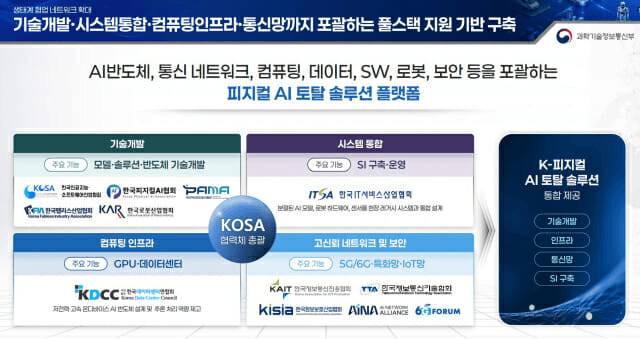
On June 19, the Korean government unveiled a "K-Physical AI" full-stack strategy. In one line: tie together the previously separate layers of domestic AI chips → AI models → robots and machines into a single stack, and grow "AI that actually does work in the real world" on home-grown tech. It moves the center of gravity past chatbots that just answer on a screen toward AI that moves its body on factory floors, in logistics, and in care settings.
Timing matters. Korea enforced its AI Basic Act on January 22 this year, putting AI inside a formal national industrial and regulatory frame. Layering this physical-AI strategy on top, Korea's AI policy expands from "catching up in software" to "securing full-stack sovereignty including hardware." Let's unpack what's in it and why "physical" now.
Who and what — physical AI and the meaning of full-stack
Physical AI means AI that operates physically in the real world — robots, autonomous driving, drones, smart factories, where AI senses the world and moves motors to get real work done. Unlike "digital AI" handling text and images, physical AI has a body, inseparable from hardware like chips, batteries, motors, and sensors.
Full-stack is the strategy's key word. For AI to work in reality, you need three layers: the AI chips (NPUs) that compute, the AI models that decide, and the robots and machines that act. These have developed separately; the government wants them integrated into one domestic stack — Korean models running on Korean chips to drive Korean robots, rather than chip, model, and robot each on their own.
The "K-" prefix is meaningful: this is Korea's edition of sovereign AI. Rather than leaning solely on US and Chinese chips and models, it localizes the core stack to secure supply chain, security, and industrial competitiveness together.
What's in it — the backbone and timeline
The core is integration and localization: bundle scattered capabilities and fill the key layers with domestic tech.
| Layer | Detail |
|---|---|
| AI chips | Compute infrastructure on domestic NPUs |
| AI models | Domestic models tuned for physical environments |
| Robots/machines | Domestic hardware that works in the field |
| Integration goal | Combine chips, models, and robots into one full stack |
The policy arc:
| Date | Event |
|---|---|
| 2026-01-22 | AI Basic Act takes effect (national AI regulatory/industrial frame) |
| 2026-06-19 | K-Physical AI full-stack strategy unveiled |
| H2 2026 onward | Phased execution of priority projects |
The message is clear. Korea has a hardware-power foundation — memory chips, manufacturing, robotics — and wants to connect that strength to the AI era's "physical AI." Korea is seen as having fallen behind the US in software models, but embodied AI is decided by manufacturing and hardware capability, an area where Korea can hold comparative advantage.
Who wins — why Korea bets on "physical"
Government and nation gain "fighting on home turf." Pure software LLM competition favors US big tech overwhelmingly on compute, data, and talent, making a head-on fight hard. Physical AI hinges on chips, batteries, precision manufacturing, and robots — areas where Korea is world-class. It's a strategy of moving the battlefield to "a game we can win."
Domestic chip and robot firms gain demand and integration. Good domestic NPUs or robots have lacked a shared ecosystem to be used together. Bundling them full-stack turns chip, model, and robot makers into each other's customers and partners — a crucial primer for home-grown tech with weak early markets.
Industrial fields gain real problem-solving. In manufacturing, logistics, care, and agriculture — where labor shortages bite — physical AI can be a practical answer. In a fast-aging Korea with a shrinking workforce, demand for "AI that moves to do work" is more urgent than elsewhere. Done well, it could fill productivity and care gaps.
Past parallels — wins and losses
State-led "full-stack cultivation" has split between success and failure. The standout success is Korea's own memory chips: government and companies partnered long-term, bundling materials, equipment, and production, and Korea held the world's number-one position. Physical-AI full-stack rewrites that vertical-integration formula for the AI era.
But the failure shadow is real. Fixating on localization while ignoring the performance and cost gap with the global frontier can yield an inefficient ecosystem spinning only inside a protective shell. The model layer especially moves so fast globally that the market won't follow "just because it's domestic." The key is meeting two conditions at once: domestic and world-class.
Also, full-stack lives or dies on connection. If chip, model, and robot layers don't align on standards and compatibility, integration stays a slogan. Whether ministries, companies, and labs actually align — and whether globally sellable products emerge on top — decides the outcome.
Competitor counter-play
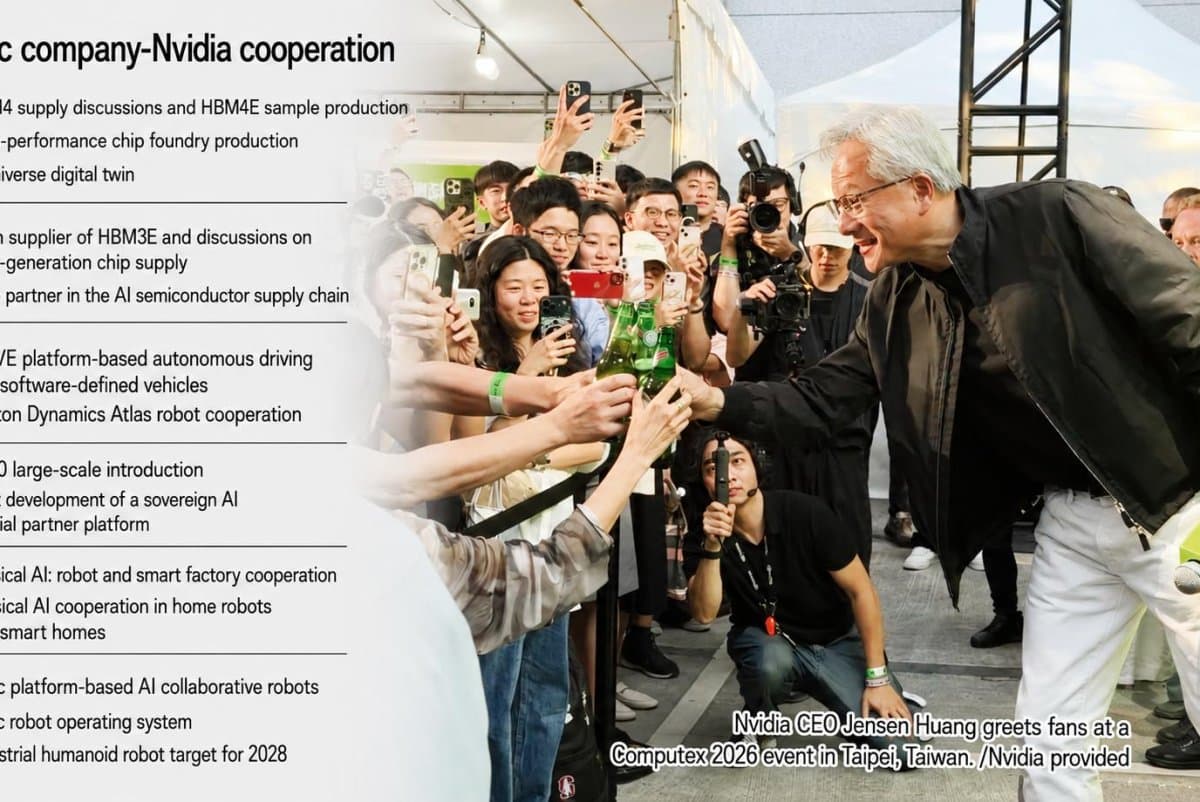
The biggest rivals are the US and Chinese physical-AI camps. The US, led by Nvidia, is rapidly building AI platforms for robots and autonomy, leveraging capital and model strength to claim standards. China, with strong state support and a vast manufacturing base, is already mass-producing and listing humanoid robots. Korea must aim for both a niche and an edge between them via "hardware strength plus precise integration."
Global big tech's platform strategy is a variable too. If a company like Nvidia owns the "operating system" of physical AI, Korea's domestic stack may end up running on it. So the practical crux is the balance between insisting on "fully domestic" versus "localizing the core and partnering globally on the rest."
Long term, this is a fight over who holds the standards and supply chain of physical AI. Having lagged in digital AI, Korea reads physical AI as a chance to stand at the starting line again — but the US and China eye the same chance, making speed and execution decisive.
So what actually changes
If you work in domestic AI/robotics, this signals a home market and government demand opening. Whatever layer you're in — chip, model, or robot — quickly grasping how you connect into full-stack integration projects is the opportunity. Designing your "role in the stack" now matters more than standalone tech.
If you're in manufacturing, logistics, or care, watch for physical AI entering as a practical tool to fill labor gaps. But field deployment needs safety, standards, and cost validation, so phased adoption beats short-term hype.
If you watch AI policy and industry, note Korea pivoting its strategic axis from "chasing LLMs" to "claiming physical AI." If this bet to connect hardware strength to AI works, Korea's global AI position could change. The key is proving it with real integrated, exportable products — not slogans.
🥄 Three Things You're Probably Wondering
— Is physical AI really that important? Increasingly, yes. Where digital AI automated on-screen work, physical AI touches real labor — factories, logistics, care. In labor-short Korea it's especially urgent, so its strategic weight is high.
— Can it all be made domestically? Realistically, not all of it. Korea is strong in core layers (chips, robots), but the model layer makes global cooperation and competition unavoidable. How to balance "localize the core, partner on the rest" is the crux, and too early to call.
— Does it affect ordinary people? Not immediately, but it could over time. As care robots, smart factories, and logistics automation spread, the services we receive and the job landscape shift. The pace depends on policy execution and tech maturity.
Sources
- ZDNet Korea — K-Physical AI Full-Stack Strategy Announced
- AI Basic Act explainer — Peekaboo Labs blog
Figures and timing are as of announcement and may change.