Beyond chatbots toward "AI with a body" — Korea will build the full stack itself
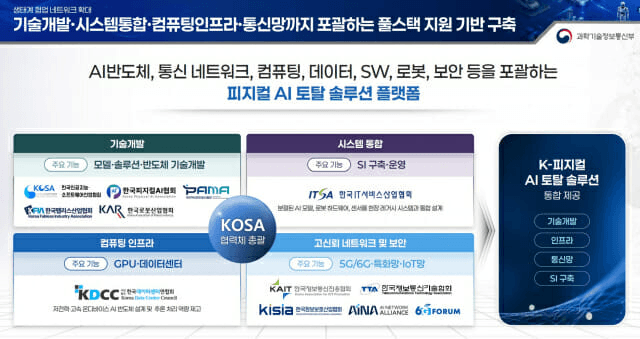
Here's the deal: on June 19, Korea's Ministry of Science and ICT announced the revamp of its "Physical AI Alliance" (phase 2) and unveiled a "K-Physical AI Full-Stack" strategy. In short, beyond on-screen chatbots toward "AI that moves in the real world (physical AI)," it aims to fill every layer needed to run it — semiconductors, AI models, data, world models, compute platforms, robot hardware — with domestic, independent technology.
The word "full-stack" is the crux. For AI to operate in the physical world like robots or autonomous driving, excelling at one layer (the chip) isn't enough. A model sits on the chip, data and world models on the model, robot hardware on top — stacked into one "AI with a body." Korea declared it will assemble that whole stack itself, "without dependence on others."
Why is this big? Because the next stage of the global AI race is shifting from "software chatbots" to "physical AI." Nvidia, Google, and Tesla are all moving their center of gravity to robots and world models. In the thick of it, Korea is stepping up to build a self-reliant ecosystem — under the name "K-Physical AI Full-Stack" — not swayed by any single foreign technology. A bet on technology sovereignty.
So today's story: what physical AI is and why "full-stack" matters, what phase 2 of the Alliance concretely plans, why Korea chose this path, and whether the strategy can work amid global competition. Start with the cast.
The cast — the Ministry, physical AI, and the Alliance
First, the Ministry of Science and ICT (MSIT). The Korean government ministry leading this strategy. Context matters: Korea fully enacted an "AI Basic Act" in January 2026, cementing AI as a national strategic industry. On that legal foundation, this "Physical AI Full-Stack" is the concrete industrial strategy answering "so what do we domesticize?" The law laid the frame; this strategy puts flesh on it.
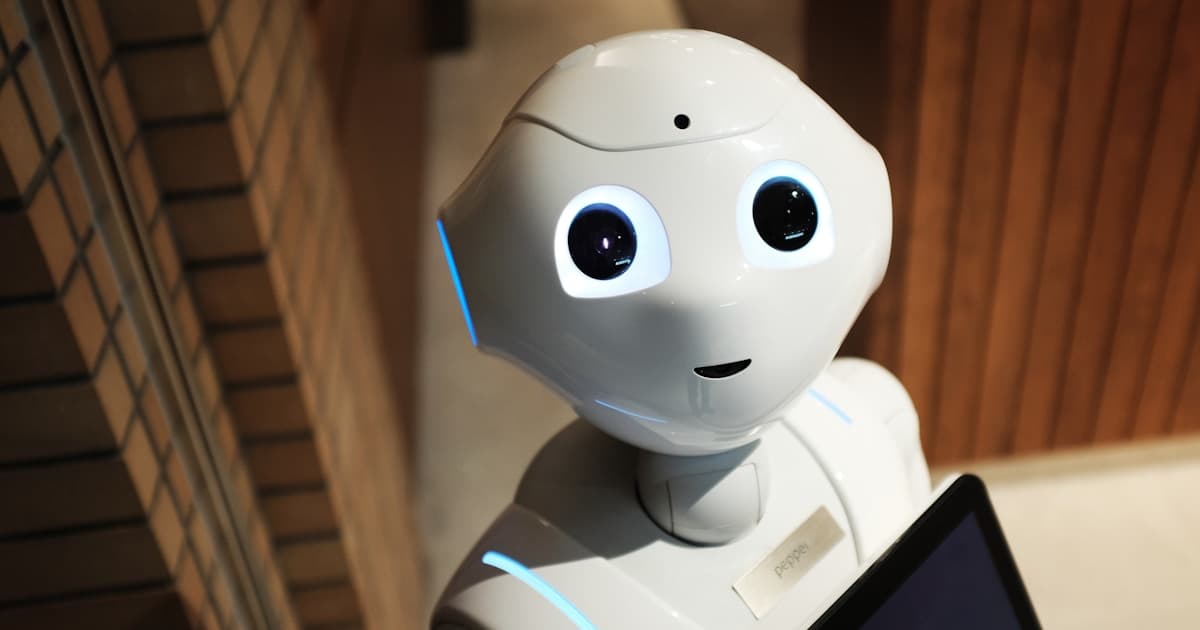
Next, Physical AI. Not AI that writes and answers on a screen, but AI that "perceives and moves in the physical world" — robots, autonomous driving, drones. The key: it's not just software. It sees the world via sensors, judges via models, and moves via motors — a domain where software and hardware are one body. So without a "full-stack," real competitiveness doesn't emerge.
Third, the Physical AI Alliance. A government-created industry-academia-research consortium. Reorganized into phase 2 with three subcommittees: ① K-Physical AI Full-Stack (tech sovereignty / domestication), ② Vertical Industry Bridge (spreading into defense, maritime/shipbuilding, manufacturing, medical/wellness, autonomous driving/logistics, daily services), ③ Foundational Governance (standards, institutions, safety, talent, global cooperation). A triangle: build the tech (1), spread it to industry (2), support it with institutions (3).
Tie the three together: a government that laid the foundation with the AI Basic Act (MSIT) activates a consortium spanning tech, industry, and institutions (Alliance phase 2) to domesticize the entire stack of "AI with a body" (physical AI). That's the spine.
What was actually announced
Words scatter, so here are the confirmed facts.
| Item | Detail |
|---|---|
| Announced | June 19, 2026, by MSIT |
| Strategy name | K-Physical AI Full-Stack |
| Stack scope | Domestic AI chips, models, data, world models, compute platforms, robot hardware |
| Driver | Physical AI Alliance phase 2 |
| Subcommittees | ① Full-Stack (tech sovereignty) ② Vertical Bridge (industry spread) ③ Foundational Governance |
| Target industries | Defense, maritime/shipbuilding, manufacturing, medical/wellness, autonomous driving/logistics, daily services |
| Key projects | Korean full-stack platform, behavioral-data training center, (tentative) Physical AI Promotion Act |
| Legal basis | AI Basic Act fully in force, January 2026 |
| Focus window | June–December 2026 |
Line by line. First, the ambition of the "stack scope" stands out. Not one layer — chip or robot — but binding every layer from semiconductors to world models to robot hardware as domestic. The underlying conviction: "if even one layer depends on foreign tech, it isn't true sovereignty." Ambitious, but a hard target that demands competitiveness across all layers at once.
Second, the "behavioral-data training center" matters practically. For physical AI, the "behavioral data" a robot accumulates while actually moving is competitiveness. Just as chatbots learn from text, robots learn from movement and interaction. Building a center to gather and train on such data signals the government will directly unblock the "can't grow because there's no data" bottleneck — aiming squarely at the weakest link in the stack.
Third, note the (tentative) Physical AI Promotion Act. Pursuing a separate promotion act when an AI Basic Act already exists means treating physical AI as an "independent strategic domain" distinct from general AI. Building separate law and institutions to support it signals real intent. But legislation takes time and carries variables, so the gap between declaration and execution bears watching.
What each side gets
Korea's (government's) win first. The biggest is technology sovereignty. In physical AI — AI's next battlefield — depending on foreign tech for the core stack shakes industrial security, since one blocked layer stops everything. An in-house full-stack provides resilience: "even if supply chains are cut, we keep running." Simultaneously, applying physical AI to industries Korea is strong in — defense, shipbuilding, manufacturing — can lift existing manufacturing competitiveness a notch.
Domestic companies and research institutes clearly gain too. Joining the government-led Alliance lets them share common infrastructure — chips, data, platforms — they couldn't build alone. For small robotics/AI startups especially, shared resources like the "behavioral-data training center" are decisive, creating a foothold to experiment with physical AI without massive capital. Connecting to real industry sites through the Vertical Bridge subcommittee is a big opportunity too.
Conversely, there are clear challenges and costs. Domesticizing the whole stack takes enormous resources and time. The gap with global leaders is large for chips alone; being competitive across every layer at once is realistically hard. The risk is the trap of "trying to do everything and being #1 at nothing." The real test is balancing focus-and-select versus full-layer self-reliance.
Past parallels — wins and failures
A success of state-led full-stack strategy already exists within Korea: the semiconductor and display industries. Over decades, Korea grew a chain from materials and equipment to finished products in memory chips, rising to global leadership — proof that "core industries are strong when you hold the whole stack." That DNA is the basis of confidence in the physical-AI full-stack strategy.
Another is the global "AI sovereignty" trend. The EU, Japan, and China are all actively building their own AI chip, model, and data ecosystems. The recognition that "you can't depend on a single foreign company for a general-purpose technology" is spreading worldwide. Korea's strategy rides this current — a rational decision to build a self-reliant ecosystem before it's too late.
Conversely, the shadow of failure is real. State-led tech self-reliance projects have often "had grand plans but fizzled in execution." The key isn't sprinkling budget evenly but concentrating resources on the truly competitive chokepoints. And a "Galapagos self-reliance" cut off from global standards and ecosystems can actually erode competitiveness. Miss the balance of self-reliance and openness, and the full-stack could end up "domestic but unused."
Competitor counter-plays
For global Big Tech, a country like Korea growing its own full-stack risks "losing some market." So the counter from platform players like Nvidia and Google is "ecosystem lock-in" — weaving their chips, models, and dev tools more tightly to reinforce the logic that "using ours is cheaper and faster than rebuilding everything domestically." Full-stack self-reliance's biggest enemy may not be a rival nation but "the already-convenient global ecosystem."
Rival nations like China, Japan, and the EU will counter with similar "AI sovereignty" strategies. The trend hardens toward "AI, each on its own ecosystem," and within it a speed race over who completes a full-stack faster and more practically. Korea's strength is a solid existing base in semiconductors and manufacturing; its weakness is the gap at the model and software layers.
And domestic industry sites are effectively the counterpart that holds the strategy's fate. Even if the government lays a full-stack, shipbuilding, defense, and manufacturing sites must actually adopt and use the domestic tech for the ecosystem to turn. "Built but unused" makes a dead stack. So "real on-site adoption" through the Vertical Bridge subcommittee will decide whether this ends as a declaration or comes alive as industry.
So what actually changes
If you're a domestic robotics/AI startup, this is a signal of opportunity. Government-led Alliance and shared infrastructure like the behavioral-data training center provide a foothold to share resources you couldn't build alone. But "joining a government program" isn't success itself — coldly assess at which stack layer your tech is genuinely competitive.
If you're in traditional industry like manufacturing, defense, or shipbuilding, watch "putting physical AI on top." Combining your strong manufacturing base with autonomous robots and world models has large room to lift productivity and competitiveness. Giving an AI body to industries Korea does well is the most practical battleground of this strategy.
If you're a general reader, the meaning is "the AI race is stepping off the screen." Beyond the chatbot AI we're used to, AI that moves in reality — robots, autonomous driving — is the next stage, and Korea has begun building a self-reliant ecosystem so as not to be dependent there. Given how large the plan is, watch over the long run how much the declaration translates into actual industry.
One more layer — where "full-stack self-reliance" is really decided
"Domesticize the whole stack" sounds great, but coldly, being world #1 across every layer at once is near impossible. The key isn't "everything" but "strategic self-reliance" — using the global best in peacetime, yet securing "a minimal full-stack you can run yourself" when supply chains are cut or export controls hit. This is insurance against the reality — like Anthropic's Fable/Mythos episode — that "core technology can suddenly be cut off by external politics." Read Korea's strategy not as "autarky" but as "securing resilience," and the picture looks far more rational.
Here Korea's real strengths and weaknesses diverge. The strength is clear — a world-class base in "industries with a body": semiconductors, shipbuilding, defense, manufacturing. Physical AI ultimately creates value when it meets real-world hardware, and Korea already owns those hardware sites. The weakness is the model/software layer — a gap with global leaders in core software like large language models and world models. So the real battleground is "how fast Korea can raise and fuse the deficient software layer on top of its strong hardware."
The biggest risk is "Galapagos-ization." If, in the name of self-reliance, you insist on proprietary specs cut off from global standards and ecosystems, you build isolated tech the world won't use. True self-reliance done well isn't "closed" but "openness that holds the option to substitute" — staying compatible with the global ecosystem in normal times, while able to switch to your own stack when needed. A dual track. Whether the government strikes this balance, or gets trapped by the "domestic" banner into closure, will decide success.
And the last variable is "on-site adoption." No matter how complete a full-stack the government lays, shipyards, factories, and the military must actually adopt and use the domestic tech for the ecosystem to turn. Tech built on subsidies but shunned on-site becomes a dead stack. So "real industrial adoption" through the Vertical Bridge subcommittee is the heart of this strategy. Declarations and budgets are only the start; the real verdict comes two to three years out, from the on-site question: "are the robots in a Korean shipyard running on the domestic full-stack?"
🥄 Three Things You're Probably Wondering
— Is domesticizing the whole stack realistically possible? Honestly, being world #1 across every layer at once is hard — the global gap is large for chips alone. The key isn't "#1 everywhere" but balancing "self-reliance that runs even if cut off" with "concentration on strong chokepoints." Avoiding the do-everything-achieve-nothing trap is the crux, so it's too early to call the outcome.
— What does this mean for me? Nothing direct right now. But if physical AI is layered onto Korea's strong manufacturing, shipbuilding, and defense, over time it affects industrial competitiveness and the jobs landscape — and ties to the domestic share of the robots and autonomous services we use.
— Why now? AI's next battlefield is shifting to "AI with a body," and the AI Basic Act laid the foundation in January 2026. Think of it as the timing right after the law set the frame, filling in "what to domesticize" with an industrial strategy on top.
Further reading
- Government unveils K-Physical AI Full-Stack strategy, aiming to spread independent tech — ZDNet Korea
- Korea National AI Master Plan (2026–2028) — Ministry of Science and ICT
- Physical AI SuperConnect in Silicon Valley 2026 — Korea Association of Robot Industry
- 2026 World IT Show: "the starting point of the physical-AI transition" — Daum News
- MWC 2026 preview: Korea's three carriers go "full-stack" on AI — Digital Daily
Numbers and criteria are as of announcement and may change.