Why does a telco put $481M into a US chip affiliate?
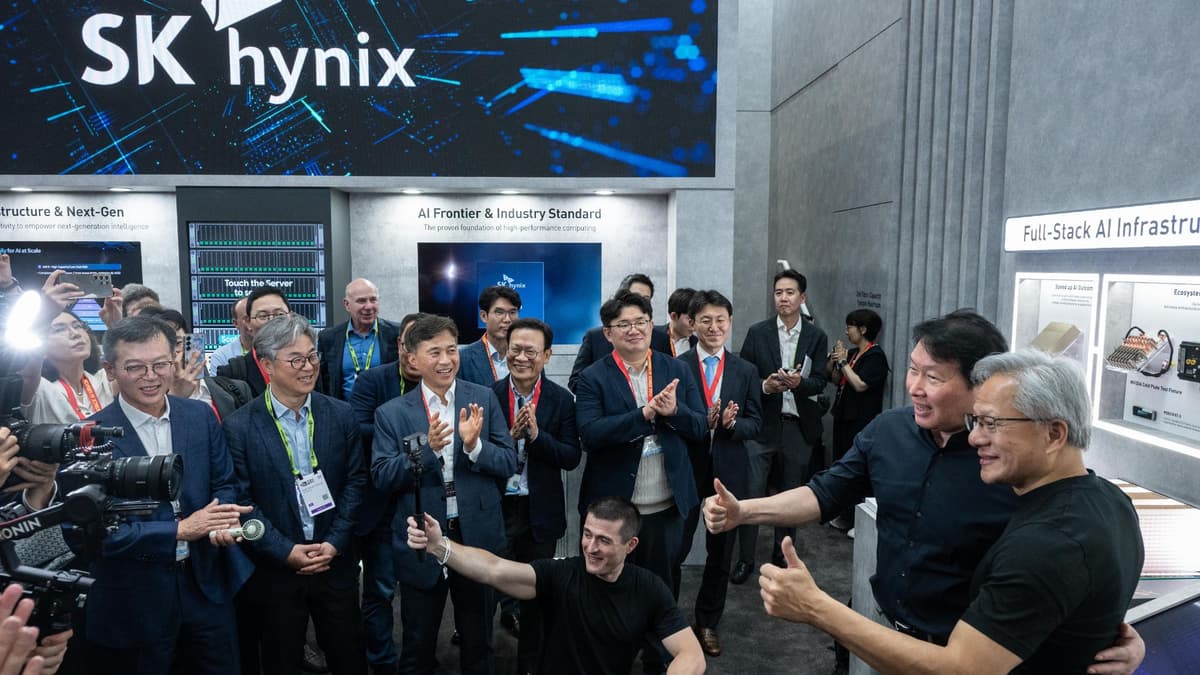
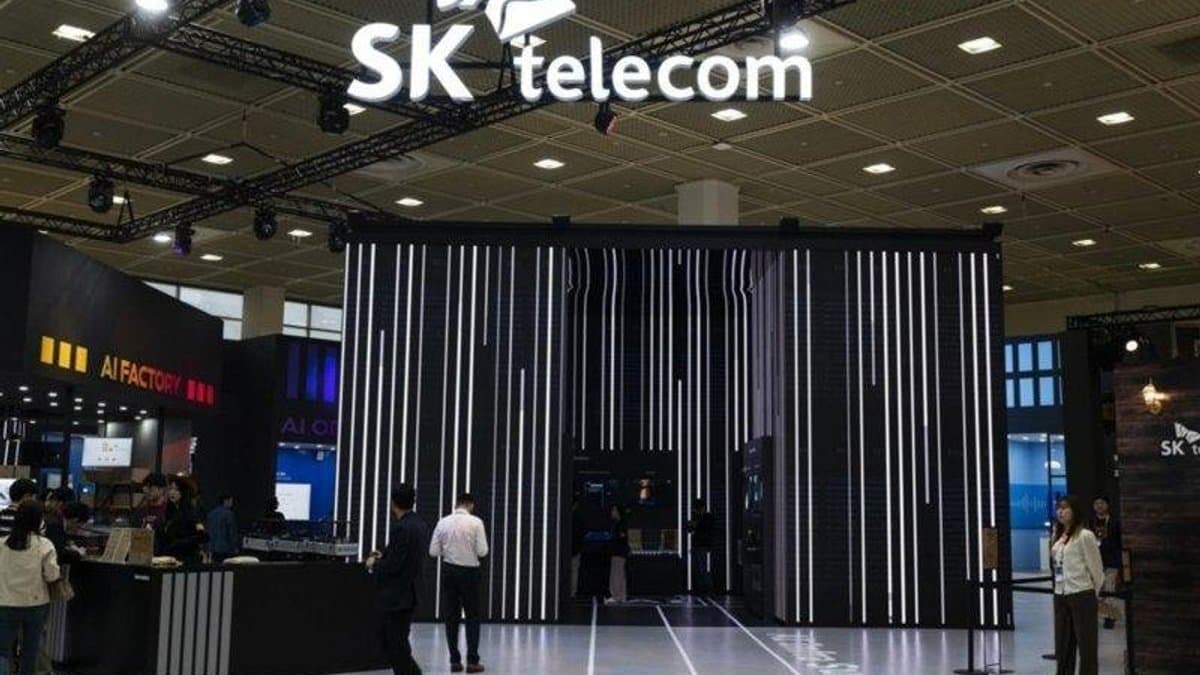
Here's the deal: SK Telecom's board decided on June 25 to invest about $481 million (₩738.4 billion) into SK Hynix's US-based AI investment company. A Korean telco funding the investment subsidiary of its chip affiliate in the US seems mismatched at first, right? But that one line holds SK Group's entire grand "AI Company" strategy.
Let's unpack the structure. The money goes into a US subsidiary called SK hynix NAND Product Solutions. The name sounds like a storage (NAND) company, but its real role is a "vehicle for investing in innovative North American AI firms." SKT participates by buying about a 0.9% stake in newly issued shares. In other words, SKT's $481 million flows into US AI startup and infrastructure investments.
Add up the scale and the picture grows. SK Hynix pledged up to $10 billion to this US AI investment reorganization earlier this year; SK Innovation added $380 million and SK Inc. $250 million. With SKT's $481 million, SK Group's pledged commitment to the US AI ecosystem reaches about $11 billion. The whole group is pooling money in one direction.
So here's what we'll unpack: why SKT is putting in this money, what SK Group's "AI Company" strategy is, why it targets the US market, and what this large Korean bet means in the global AI infrastructure race.
The players — SK Telecom, SK Hynix, and the 'AI Company' strategy
First, SK Telecom. Korea's No.1 telco — but the key point is SKT no longer wants to stay just a "telco." For years it has set "transformation into an AI Company" as its top goal. Telecom is a growth-stalled cash cow, and it sees future growth in AI. This investment is SKT proving its "we'll become an AI company" declaration with capital — and not in Korea, but in AI's home turf, the US.
Next, SK Hynix. A global memory-chip powerhouse and one of the biggest beneficiaries of the AI boom. AI devours massive high-bandwidth memory (HBM), and SK Hynix leads that HBM market. The key is that SK Hynix is broadening from a "chip seller" into a "company that invests in the AI ecosystem." Setting up a US AI investment arm is a move to tie itself to chip customers (US AI firms) through capital and deepen those relationships. There are also reports SK Hynix is pursuing a US listing to raise $29.4 billion.
The third lead isn't a company but a strategy: SK Group's "AI Company." Spearheaded by Chairman Chey Tae-won, its core is linking "semiconductors – AI infrastructure – data centers" into one chain. SK Hynix makes memory, that memory goes into AI data centers, those data centers run US AI firms, and SK capital invests in those AI firms — a vertically connected giant loop. SKT's $481 million is the final connecting piece of that loop.
One sentence to tie it together: a telco trying to become an AI company (SKT) is adding capital to the US investment vehicle of its AI-boom-beneficiary chip affiliate (SK Hynix), completing SK Group's whole "semiconductor–AI–data center" vertical-integration strategy (AI Company) at an $11 billion scale. That's the backbone.
What's confirmed
Words scatter, so here are the facts in a table.
| Item | Detail |
|---|---|
| Decision date | June 25, 2026 (SKT board) |
| Investment | ~$481 million (₩738.4 billion) |
| Target | SK hynix NAND Product Solutions (US subsidiary) |
| Stake acquired | ~0.9% (new-share subscription) |
| Subsidiary role | Vehicle for investing in North American AI firms |
| Payment method | Sequential, on capital calls, final deadline June 25, 2030 |
| Group total pledged | SK Hynix up to $10B + SK Inno $380M + SK Inc. $250M + SKT $481M ≈ $11B |
| Strategic context | SK Group "AI Company" vertical integration, led by Chairman Chey |
| Related move | Reports SK Hynix pursuing $29.4B US listing |
Line by line. First, the "buy 0.9% via new shares" structure is key. SKT isn't buying existing shares — it's subscribing to newly issued ones, so its money goes directly into the subsidiary's "investment ammo." Rather than SKT picking US AI firms itself, it's a clever structure to bet indirectly on the US AI ecosystem through SK Hynix's specialized vehicle.
Second, the "sequential payment through 2030" condition is telling. SKT doesn't drop $481 million at once — it pays in stages whenever the subsidiary issues a "capital call" after finding good targets. That spreads risk while making a five-year long bet. It signals SK views US AI investment not as a short-term event but as "a structural strategy for the next five years."
Third, "the whole group pooling money in one place" is the real crux. This isn't one SKT decision. SK Hynix, SK Innovation, SK Inc., and SKT — the group's major affiliates all invested in the same US AI reorganization, gathering $11 billion. That's not scattered individual bets but strategic concentration, with Chairman Chey setting the group-level direction to "go all-in on US AI" and mobilizing the affiliates.
What each side gets
Start with SK Telecom. First, capital proof of AI transformation: it showed "we'll become an AI company" through action with a $481 million investment. Second, US AI ecosystem access: as a Korean telco, SKT can't easily reach US AI startups directly, but through SK Hynix's US vehicle it gets capital-linked to cutting-edge AI firms. Third, future business synergy: the tech and relationships gained from investing in US AI firms become assets when SKT grows its own AI data-center and service businesses in Korea.
SK Hynix's gains are clear too. First, a capital alliance with customers: investing in US AI firms builds a deeper relationship than "HBM supplier." Beyond selling chips, it becomes a shareholder of the companies using those chips. Second, investment ammo: pooling contributions from SKT, SK Inno, and SK Inc. grows the US vehicle's investing power, letting it bet on bigger AI firms. Third, holding both ends of the AI boom — embedding into the AI ecosystem through both hardware (memory) and capital (investment).
The unexpected winner is Korea's AI industry standing. SK Group betting $11 billion on US AI means Korean capital enters as a key player in the global AI infrastructure race. It's also double-edged — with that vast capital heading to the US rather than home, "hollowing out of the domestic AI ecosystem" concerns follow. Capital going to the home turf (the US) may be rational, but it's a separate issue from accumulating AI capability inside Korea.
Precedents — successes and failures
Big conglomerates making group-level mega-bets on future tech is well-trodden. The closest parallel is SoftBank's Vision Fund. Masayoshi Son built a huge tech-investment fund off a telco (SoftBank) to bet on AI and tech startups worldwide. The logic: "in the AI era, becoming a shareholder of good tech companies is buying the future." SK's US AI vehicle, smaller in scale, echoes that idea — converting telecom and chip capital into AI investment.
Another is the US local investment of Samsung, Intel, and others. Korean and foreign chip firms increasingly build fabs and R&D in the US to plant themselves directly in "AI and chips' home turf." The US policy-pushes domestic chip and AI investment, and AI demand centers on the US, so "you have to be inside the US to be in the game." SK setting up its investment vehicle in the US fits the same logic.
On the flip side, the "trap of the mega-bet" is clear. The Vision Fund started spectacularly but took huge losses on some investments and drew criticism for "deploying money too fast and too expensively." With AI bubble talk now circulating, SK's $11 billion bet faces the same risk. If US AI valuations turn (as today's OpenAI IPO delay suggests), expensively-made investments can come back as losses. Timing is everything.
Competitors' counter-plays
The most direct comparison is Samsung. Samsung is also at the heart of the AI boom with memory (HBM) and foundry, crafting its own AI infrastructure and investment strategy. If SK chose to "pool group capital and invest directly in US AI," Samsung may strike a different balance with "strengthening its own chip competitiveness" and "selective investment." The two Korean chip giants' diverging AI strategies will sharpen further.
For US big tech and cloud companies, SK's capital is a welcome ally. Korean memory tech and investment capital entering their AI ecosystem benefits them on both supply-chain stability and funding. But the US is increasingly sensitive to foreign capital in core AI tech (today's GPT-5.6 government-control story is that trend). How far SK's investment is welcomed versus snagged on security review remains to be seen.
SK also competes with global AI capital like Japanese and Middle Eastern sovereign funds. Big money worldwide is rushing into US AI infrastructure — Japan's SoftBank, Gulf sovereign funds, and Asian conglomerates like SK all eye the same US AI assets. As competition to grab good targets intensifies, how good a deal SK's "local investment via specialized vehicle" structure can land will decide success.
So what actually changes
If you're an SKT shareholder or user, telecom service won't change immediately. But note the clearer shift of SKT's center of gravity from "telco" to "AI company." Long term, SKT's growth story likely comes from AI data centers, infrastructure, and investment returns — not phone bills. It's time to re-read the telco stock as an "AI infrastructure bet."
If you watch Korea's AI ecosystem, this is a complex signal. The good side: Korean capital enters the home turf of global AI competition directly. The worry: that vast capital heads to the US, not home. "Betting on AI's home turf is rational" clashes with "we should grow domestic AI capability." Hard to conclude, but where Korea's AI future weights — "domestic cultivation" vs "overseas betting" — is at stake.
If you watch global AI infrastructure, SK's $11 billion is another piece of the "Asian capital concentrating on US AI" trend. The astronomical cost of building AI infrastructure (Goldman estimates $7.6 trillion through 2031) is too much for US big tech alone, so global capital pours in to fill the gap. SK is Korea's flagship in that global capital procession. Whether entering now amid bubble talk is "first-mover advantage" or "buying the top" is for time to answer.
One step further — the weight of the "AI Company" gamble
To read this decision right, see why SK Group is reorganizing the whole group into an "AI Company." SK's core asset is SK Hynix's memory. Thanks to the AI boom, HBM demand exploded and SK Hynix became the group's dominant cash cow. The problem: the memory business is inherently cyclical and volatile — when the boom ends, prices crash. SK is trying to reduce that volatility by transforming from a "memory seller" into a "company embedded across the whole AI ecosystem." Not just selling chips, but becoming a shareholder of the AI firms using them, operating data centers, and weaving in telecom infrastructure — so if one part of the AI cycle bends, another holds it up. The $11 billion US bet is the core engine of that transformation.
Another easily missed angle is "why the US." AI's demand, capital, talent, and even regulation — all of AI's centers are in the US now. Staying only in Korea risks SK remaining on the AI ecosystem's periphery. Setting up an investment vehicle in the US and capital-linking with local AI firms is "buying a seat at the center of the game." It also aligns with US chip and AI re-shoring policy — placing capital and supply chains inside the US helps dodge export-control and security-review blades.
But there are cold variables. First, timing. Right as SK moves heavily into US AI, the bubble debate is erupting. With OpenAI delaying its IPO and big tech shedding $2.7 trillion, if US AI valuations bend, SK's investment could become "buying the top." Second, control. SKT doesn't pick targets directly but entrusts money to SK Hynix's vehicle, so returns depend on that vehicle's judgment. Third, domestic opinion. "Capital flight" criticism over vast money heading to the US could grow inside Korea.
In the end, SKT's $481 million isn't a single investment but a coordinate showing where the whole SK Group is betting its future. The ambition to overcome memory-cycle volatility through AI-ecosystem integration, and the decision to set that stage in the US rather than Korea. Whether that bet makes SK an "infrastructure giant of the AI era" or a heavy bill from entering at the bubble's peak is a question the US AI market will answer over the coming years.
🥄 Three Things You're Probably Wondering
— Isn't it odd for a telco to fund a US chip affiliate? On the surface it looks mismatched, but at the SK Group level it's natural. SKT's goal is "AI Company," and through SK Hynix's US vehicle it can capital-enter the US AI ecosystem it can't easily reach directly. The whole group is moving in one direction.
— $11 billion — isn't that Korean money flowing out to the US? That worry exists. "Betting on AI's home turf (the US) is rational" clashes with "we should grow domestic AI." On capital efficiency the US move may be right, but the domestic-hollowing concern is a separate issue. Too early to conclude.
— Is the timing okay to enter now? Honestly, it's delicate. Right now bubble talk is erupting and US AI valuations are shaking. Sequential payment (through 2030) spreads the risk, but the "are you buying the top?" question lingers. Time will answer.
References
- SK Telecom to invest $481 million in SK hynix's U.S. affiliate — UPI
- SK Telecom to invest W738b in SK hynix's US AI unit — The Korea Herald
- SK Telecom to Commit $483 Million to SK hynix's U.S. AI Hub — TechTimes
- SKT Invests 738.4 Billion Won in SK hynix's U.S. AI Investment Corporation — The Asia Business Daily
- SK Hynix Seeks $29 Billion With US Listing to Fund AI Boom — Bloomberg
Numbers and criteria are as of announcement and may change. Investment calls are yours to make!