6.5x the National Budget, Twice the GDP — Korea Just Placed Its Biggest Bet Ever
Here's the deal: on the afternoon of June 29, 2026, President Lee Jae-myung personally chaired the "Korea's Great Leap: Three Mega-Projects National Briefing" at the presidential office. And the number that came out of it is genuinely surreal. Samsung Group pledged 2,655 trillion won and SK Group pledged 2,100 trillion won — a combined 4,755 trillion won. Written in won that number is impossible to grasp, so translate it: roughly $3.4 trillion. That's 6.5 times this year's national government budget (about 728 trillion won) and equal to twice Korea's annual GDP. It's one of the largest single-day corporate investment plans ever announced anywhere, not just in Korean history.
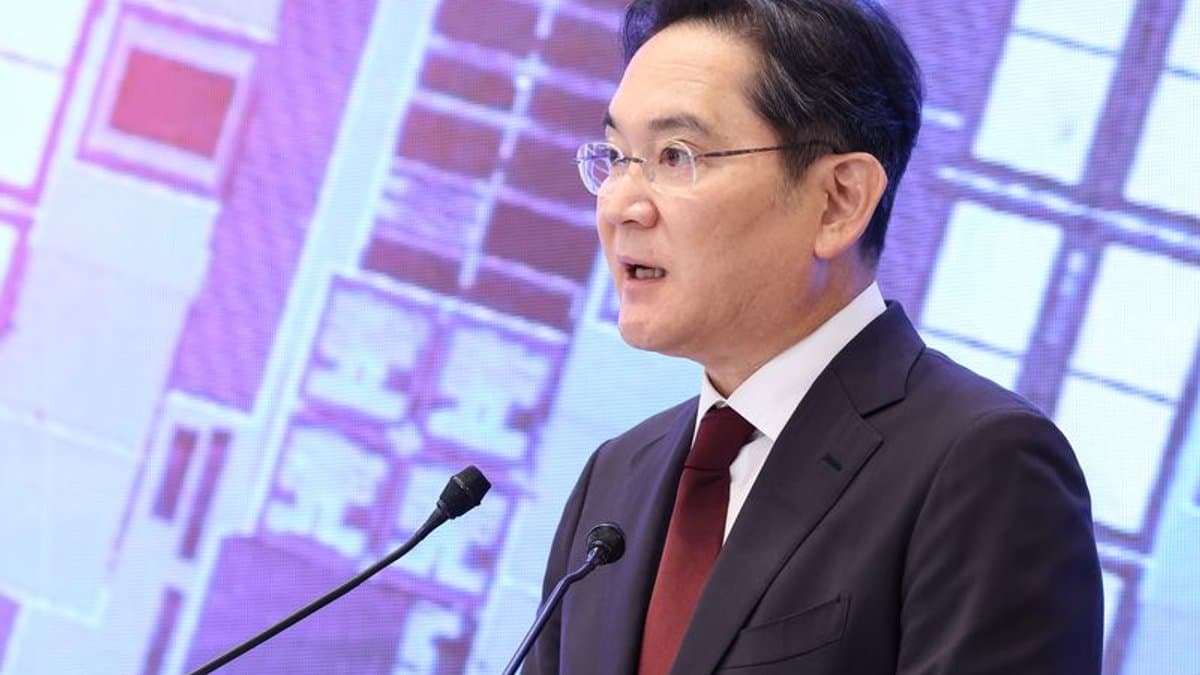
The key point is that this isn't just a "we'll spend a lot of money" declaration. The briefing's subtitle was "From Recovery to a Great Leap: An Insurmountable-Lead Korea." In other words, this is a national-level bet to catapult a Korean economy that's been dragging through years of sluggish growth into a "great leap" powered by semiconductors and AI. Lee repeatedly emphasized "chogyeokcha" — an insurmountable competitive lead — and Samsung Electronics Chairman Lee Jae-yong and SK Group Chairman Chey Tae-won both took the microphone in person. The very image of a president standing shoulder to shoulder with two chaebol chairmen briefing the public on an investment plan tells you this is no ordinary corporate IR event — it's a state strategy where government and industry move as one body.
There's one more thing you can't miss: the provinces. This 4,755 trillion won isn't concentrated in Seoul and the capital region — it's being spread across non-capital hubs like Honam, Gangwon, Chungcheong, and Yeongnam. Semiconductors go to Honam and Chungcheong, gigawatt-scale AI data centers go to Gangwon and Chungcheong, and "physical AI" like aerospace and robotics goes to Yeongnam, forming specialized regional belts. There's a real ambition here to tackle two old problems at once — the over-concentration in the capital region and the hollowing-out of provincial Korea — using the AI industrial revolution as the tool. If executed, it could reshape the country's economic geography entirely.
The Players — A President, Two Chaebol Chairmen, and "Team Korea"
The one who set the table is President Lee Jae-myung and the government. The administration framed the project as "completing a Korean-style AI industrial revolution," pairing it with a support package promising that if companies invest, the state will throw its full weight behind power, water, land, and permits. Whether it's an AI data center or a chip fab, actually running one requires enormous electricity, water, and vast sites — and all of that tends to get stuck in regulation and permitting. The government stepping up to say "this is a national project, so we'll clear the path" is arguably the real weapon in this announcement. Deputy PM for Economy Choi Sang-mok amplified it with the message that "the future of AI will be made in Korea."
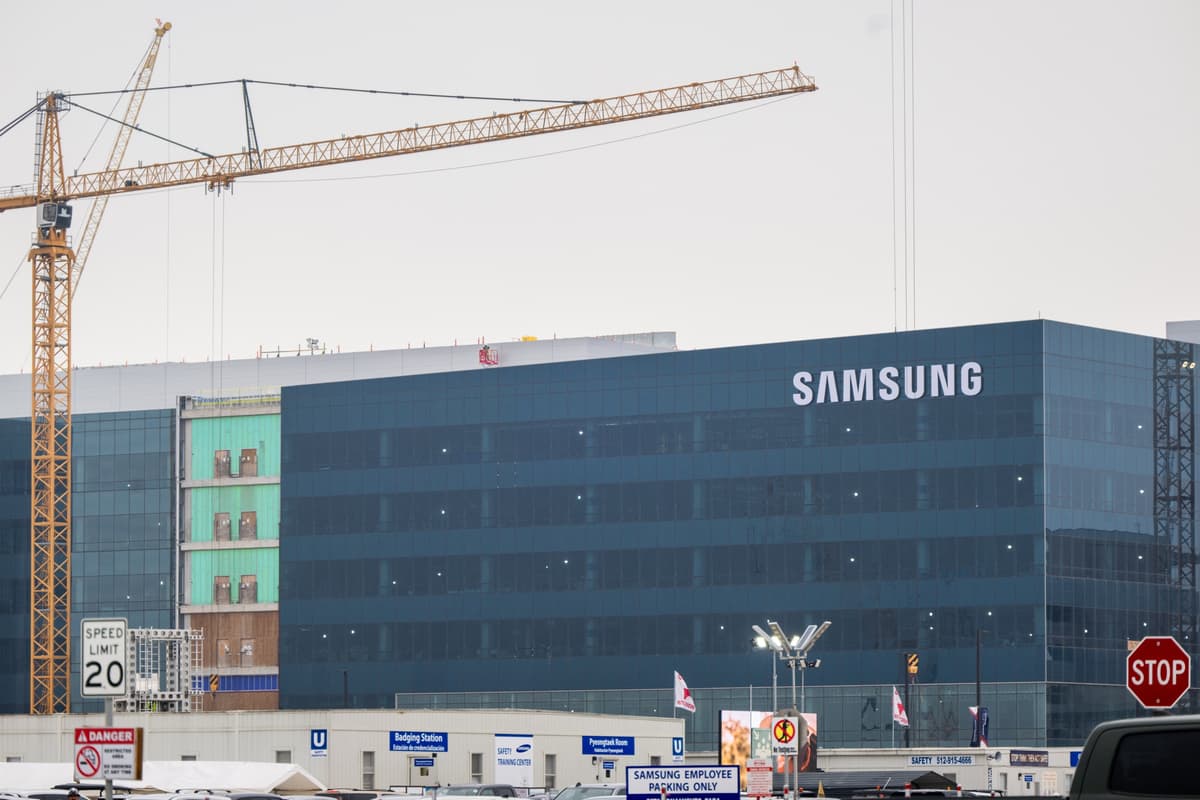
The second player is Samsung Group, which put an overwhelming 2,655 trillion won on the table. Break it down and it spans a second semiconductor cluster in the Honam region, large-scale HBM (high-bandwidth memory) packaging fabs in Chungcheong, and robotics and physical-AI businesses in Yeongnam. Samsung is still a memory powerhouse, but it carries the painful memory of ceding leadership in AI-specialized memory like HBM to SK Hynix. This massive investment is an expression of intent to reclaim that leadership and, by widening its portfolio into foundry (contract manufacturing) and robots, to rebuild "Samsung for the AI era."
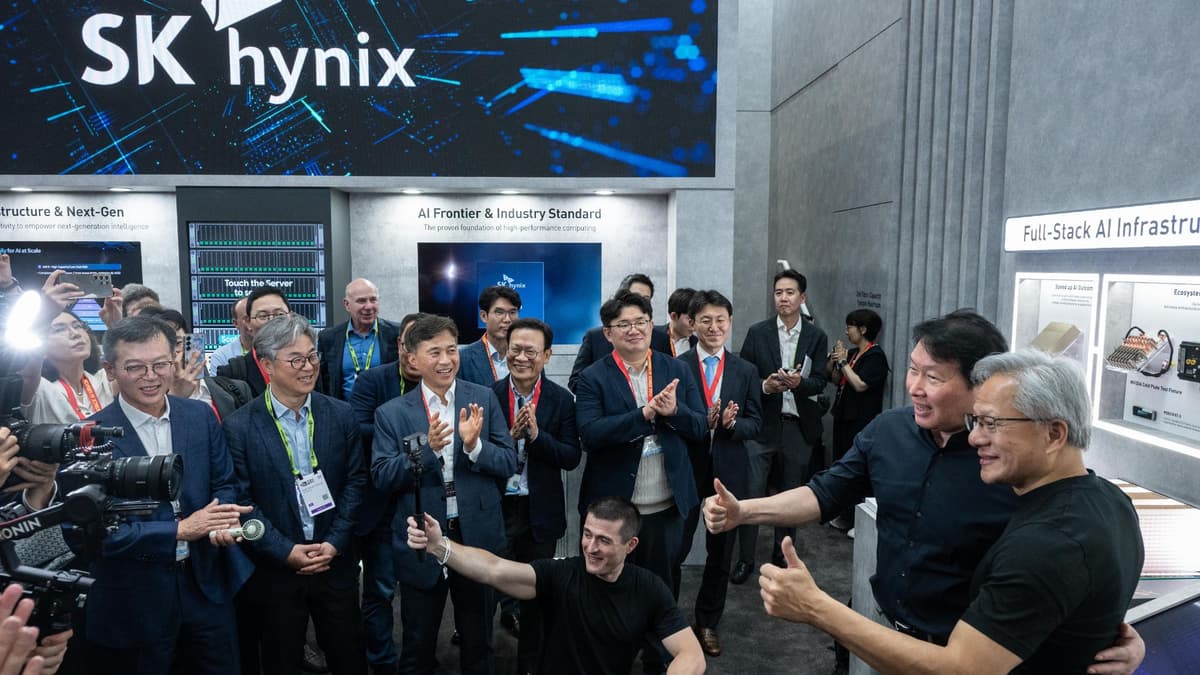
The third player is SK Group, which committed 2,100 trillion won — and its composition is especially interesting. SK allocated 1,000 trillion won to AI data centers and 1,100 trillion won to semiconductors, with the chip figure including 400 trillion won for a southwestern (Honam) cluster. SK Hynix has emerged as the biggest winner of the AI boom by supplying HBM to NVIDIA. On top of that, SK sketched out a plan to build 15 gigawatts (GW) of AI data centers nationwide in phases. The strong message from SK's side — that Korea must move "from an AI-consuming nation to a nation that exports intelligence" — fits squarely into this context.
Finally, this stage isn't just Samsung and SK. Gigawatt-scale AI data centers in Donghae (Gangwon) and Dangjin (Chungcheong) are set to draw in energy and infrastructure heavyweights like GS Group, while defense and heavy-industry firms like Hanwha and Doosan are slated to lead the aerospace-and-robotics "physical AI belt" in Yeongnam. In other words, this mega-project is a "Team Korea" structure built around a Samsung-SK chip duo at its axis, with major groups like GS, Hanwha, and Doosan each taking regional belts matched to their strengths. The state sets the table, and multiple chaebol divide the labor.
What Actually Happened — Where the 4,755 Trillion Won Goes
To really see the picture, you have to look at where the money actually lands. The overarching frame is the "Three Mega-Projects." First is semiconductors, second is AI data centers, third is physical AI (robotics) — and each was assigned to a different provincial hub. Chips to Honam and Chungcheong, AI data centers to Gangwon and Chungcheong, physical AI to Yeongnam. Then, four days after the announcement, Samsung and SK held another "Chungcheong Advanced Industry Vision National Briefing" in Asan on July 2, fleshing out the big picture with an additional 240 trillion won specifically for the Chungcheong region.
Look closer at the July 2 announcement and the texture of execution comes through. Samsung is putting 140 trillion won into Chungcheong: Samsung Display invests 67 trillion won in Asan and Cheonan to expand next-generation OLED lines, Samsung Electronics puts 56 trillion won into Onyang and Cheonan to build HBM fabs, Samsung SDI spends 9 trillion won on a next-gen battery mother line in Cheonan, and Samsung Electro-Mechanics builds a facility for high-performance AI-server package substrates in Sejong for 8 trillion won. SK Hynix invests 100 trillion won in Cheongju, allocating 80 trillion won to a new NAND line (M17) and 20 trillion won to an advanced packaging facility (P&T7). P&T7 is targeted for completion by end of 2027, and M17 breaks ground next year with a first-half-2029 operational target.
The numbers are so large that it helps to lay out the essentials in a table.
| Category | Lead company | Scale | Region / details |
|---|---|---|---|
| Group total | Samsung Group | 2,655T won | Chips + HBM + robots, etc. |
| Group total | SK Group | 2,100T won | AI data centers 1,000T + chips 1,100T |
| Combined | Samsung + SK | 4,755T won | 6.5x national budget, 2x GDP |
| Chip belt | Samsung, SK Hynix | 4 fabs in southwest, etc. | Second cluster in Honam (Gwangju/Jeonnam) |
| AI data centers | SK, GS, etc. | 15GW in phases | Gigawatt-scale in Donghae/Dangjin |
| Physical AI belt | Hanwha, Doosan, etc. | Separate | Yeongnam aerospace and robotics |
| Chungcheong follow-up (7/2) | Samsung, SK Hynix | 240T won (Samsung 140 / SK 100) | HBM, NAND, OLED, materials |
Even from the table alone, you can see this isn't "just semiconductors" — it's a plan to lay an entire AI value chain across the country, flowing from chips to AI data centers to robots. Make the chips (Honam/Chungcheong), build the data centers that run AI on those chips (Gangwon/Chungcheong), then put that AI into physical bodies — robots and aerospace (Yeongnam) — with the value chain's stages linked region by region. It's closer to reorganizing the entire nation into one giant AI factory, planting each stage of the chain in a different province.
Each Side's Angle — Why Bet This Big, Right Now
The government's angle is clear. First, stimulus: if 4,755 trillion won actually gets deployed, the ripple effects across construction, equipment, and employment are enormous. Second, balanced regional development: dispersing advanced industry that had crowded into the capital region out to Honam, Gangwon, Chungcheong, and Yeongnam lets the administration directly tackle the politically charged issue of provincial decline. Third, AI sovereignty: with the US and China fighting for AI supremacy, this is about national identity too — Korea's determination to become a country that makes and exports intelligence rather than one that imports it.
For Samsung, this is a fight for pride. As noted, Samsung ceded HBM leadership to SK Hynix, and in foundry the gap with TSMC hasn't closed. This mega-investment is both a signal that "we still have the stamina to flip the board" and a decisive bet to counterattack simultaneously on three fronts — HBM, foundry, and robots — with government backing in its corner. Riding a national project loosens bottlenecks like power, water, and permitting, so Samsung also pockets the practical upside of higher investment efficiency.
SK's angle is "making itself the durable biggest winner of the AI boom." SK Hynix is posting record results on HBM right now, but no one knows how long this upcycle lasts. So SK is reaching beyond memory chips like HBM to grab the "demand infrastructure" itself — AI data centers. Rather than just selling chips, if it lays down 15GW of data centers where those chips run, it seizes both the top and bottom of the AI value chain at once. Allocating 1,000 trillion won to data centers is a number that directly reflects the scale of that vertical-integration ambition.
The participating groups like GS, Hanwha, and Doosan each have their own math. GS wants to connect its energy and power-generation capabilities to the new business of supplying electricity to AI data centers; Hanwha and Doosan aim to extend the hardware muscle they built in defense and heavy industry into "physical AI" like robots and aerospace. At the perfect moment — with the state setting the table and layering on support — each group grabs a chance to convert its strengths into future growth axes. In short, this mega-project is what happens when the differing appetites of the government, Samsung, SK, and other big groups briefly align under one flag: "AI insurmountable lead."
Precedents — Wins and Failures
State-led megabets on industry are a familiar Korean story. Going way back, there's President Park Chung-hee's heavy-and-chemical-industry drive of the 1970s — a structure where the state funneled resources into steel, shipbuilding, and autos and chaebol executed, ultimately lifting Korea into a manufacturing power. More recently, there's Samsung's semiconductor rise in the 1980s-90s: it pushed through massive preemptive investment amid skepticism that "chips won't work," and that became a pillar of today's economy. These Three Mega-Projects can be read as the AI-era version of that "state-plus-chaebol all-in" success formula.
There are overseas success cases worth noting too. Taiwan effectively dominated the global foundry market by backing a semiconductor ecosystem around TSMC at the national level, and the US poured tens of billions of dollars into attracting domestic fabs through the CHIPS Act in recent years. These cases show that when the state sets direction and concentrates capital, industrial geography really does shift. In sheer scale, Korea's bet is the most aggressive version of this trend.
But you have to look coldly at the failures too, because a big announcement is not the same as a big success. Japan has been nationally pushing an advanced-chip revival led by Rapidus, yet despite enormous money and time the results remain uncertain. Plenty of state-led industrial projects across various countries have run aground — undone by misjudged demand, financing troubles, and lost momentum after changes in government — despite dazzling blueprints. Especially for an ultra-long-term plan like this one, requiring actual outlays of more than 260 trillion won every year for a decade, the real question is whether the heat at announcement can hold up five and ten years down the line.
The most realistic risk is funding. That 4,755 trillion won figure is the sum of a total investment plan spanning more than a decade, and how that money gets raised and how much actually gets spent is a separate matter entirely. If corporate earnings turn or global AI demand slows, the plan can be scaled back or delayed at any point. Given how often past mega-announcements ended up executing less than half the original figure at the actual disbursement stage, it's worth distinguishing the "announced number" from the "spent number" here too.
Rivals' Counterplay
The first to sit up will be Taiwan and TSMC. For the world's number-one in foundry and advanced packaging, Samsung pouring its largest-ever sum into chips, HBM, and packaging with national backing is not comfortable news. That said, TSMC already holds commanding technology, a deep customer base, and full-throated Taiwanese government support, so rather than wobbling immediately it's more likely to respond by diversifying production into the US, Japan, and Europe and by extending its lead in sub-3nm ultra-fine processes.
The US camp won't let this pass either. For NVIDIA, Korea laying down 15GW of AI data centers and sharply ramping HBM production is actually welcome — it means the biggest consumer of its GPUs and a core part of its supply chain is getting even bigger. For a US firm like Intel eyeing a foundry revival, though, Korea mounting an all-out national push on chip competitiveness could offset the effects of America's own CHIPS Act. The US government, too, will welcome allied Korea's massive investment while keeping a wary eye on where the center of gravity of the advanced-chip supply chain is tilting.
China is a major variable as well. Under US sanctions, China has made semiconductor self-sufficiency a top national priority, and Korea openly declaring an "AI insurmountable lead" raises the pressure on its catch-up. China is likely to accelerate the localization of legacy-process chips and AI silicon, wielding its domestic market and government subsidies as weapons. Ultimately, Korea's bet reads as a formal declaration that it's entering the semiconductor-supremacy war among the US, China, Taiwan, and Japan as a full combatant.
The dynamics among domestic players are interesting too. Samsung and SK shared the same stage as "Team Korea" this time, but they're also direct rivals colliding across HBM, NAND, and foundry. Even while staging cooperation under the big umbrella of a national project, in the actual market they have no choice but to fight fiercely over each other's share. Later-joining groups like GS, Hanwha, and Doosan also need to deliver in their assigned data-center and robotics belts to claim a bigger slice next round, so internal competition will be no joke either.
So What Changes
For developers and engineers, this announcement is a signal that "the map of jobs and infrastructure is shifting." Once chip fabs, AI data centers, and robotics plants get laid down across Honam, Gangwon, Chungcheong, and Yeongnam, advanced-tech jobs that had crowded into the capital region stand a good chance of spreading into the provinces. A large domestic buildout of AI infrastructure widens the room to use homegrown cloud and data-center resources, and a growing physical-AI (robotics) belt increases demand for putting software onto real hardware. That said, these jobs actually materialize years down the line when fabs and data centers are completed, so it's still too early to feel it right now.
For investors, this announcement is a major event that gives direction to Korean semiconductor, AI, materials, and power-related stocks broadly. Beyond the bellwethers like Samsung Electronics and SK Hynix, energy and power-generation names supplying data-center electricity, HBM and packaging materials and equipment plays, and robotics and aerospace names could all get bundled under a "mega-project beneficiary" theme. But look at it coldly: 4,755 trillion won is the sum of a plan spanning more than a decade, not current earnings. There's a big lag between announcement-driven expectations and actual disbursement and monetization, and the numbers and timelines are as of announcement and can change at any time. Ride the theme if you like, but keep the discipline to separate the "announced number" from the "number that will actually be realized."
For ordinary citizens, what hits home most is ultimately "region" and "power." If the area you live in gets included in a chip, data-center, or robotics belt, it can directly affect real estate, employment, and local commerce. Conversely, how the country will handle the enormous electricity and water these massive facilities consume — and how that burden comes back as electricity bills or environmental impact — is a question that hasn't been sufficiently discussed yet. Behind the rosy blueprint of an AI industrial revolution come real costs: expanding the power grid, transmission-line disputes, and water issues all ride along, and those deserve attention too.
Put it all together and these Three Mega-Projects are a national declaration that Korea intends to be a country that sets the board in the AI era, not one that merely follows. In scale alone it's the largest ever and a bet with few global parallels. But the announcement is only the start; the real contest hinges on how steadily this 4,755 trillion won gets deployed over the next decade and how it clears the real-world walls of funding, power, and regional conflict along the way. One thing is certain — Korea has gone big for the first time in a long while.
🥄 Three Things You're Probably Wondering
— So what does this mean for me? You may not feel it right away. But if you live in the provinces or are eyeing a career in chips, AI, or robotics, this could reshape the map of jobs and real estate a few years out. It might also come back to you as electricity bills or environmental burden. For better or worse, it's not somebody else's story.
— 4,755 trillion won — is all of it really going to get spent? Too early to say it'll be fully executed. This is the sum of a "plan" spanning more than a decade, so if the economy or AI demand turns, it can easily shrink or slip. Historically, mega-announcements rarely got realized in full as originally drawn. It's better to treat this as an "announced number."
— Are Samsung and SK best friends now? On stage they joined hands as "Team Korea," but in the market they're still rivals colliding head-on over HBM, NAND, and foundry. Cooperation under the umbrella of a national project and the actual fight over market share are two separate things.
References
- Financial News — Samsung & SK to invest 6.5x the national budget; Lee touts 'insurmountable lead', Choi says 'AI's future made in Korea'
- ET News — Samsung & SK to invest 4,700 trillion won in AI and chips; Three Mega-Projects kick off
- Etoday — Semiconductors, AI robots, data centers: the 'Three Mega-Projects' get all-out support on power and sites
- Financial News — Samsung & SK to invest 240 trillion won in Chungcheong; building a materials cluster and 'HBM mecca'
- Maeil Shinmun — Coverage of the Samsung-SK Three Mega-Projects briefing
Numbers and criteria are as of announcement and may change. Investment calls are yours to make!