Why move again from a HQ that's less than a year old
Here's the deal: companies don't relocate headquarters often. Yet Samsung is moving its U.S. HQ for the second time in under a year. Samsung Electronics America announced it will move its U.S. headquarters from Englewood Cliffs, New Jersey, to Plano, Texas, by the end of 2026. It notified employees first on May 29, then issued an official statement on June 1.
There's a striking detail. The Englewood Cliffs campus Samsung is leaving only had its grand opening on September 22, 2025. It's packing up less than a year after opening the new building. When a company moves like that, it usually reads as a signal that "something strategic has fundamentally shifted."
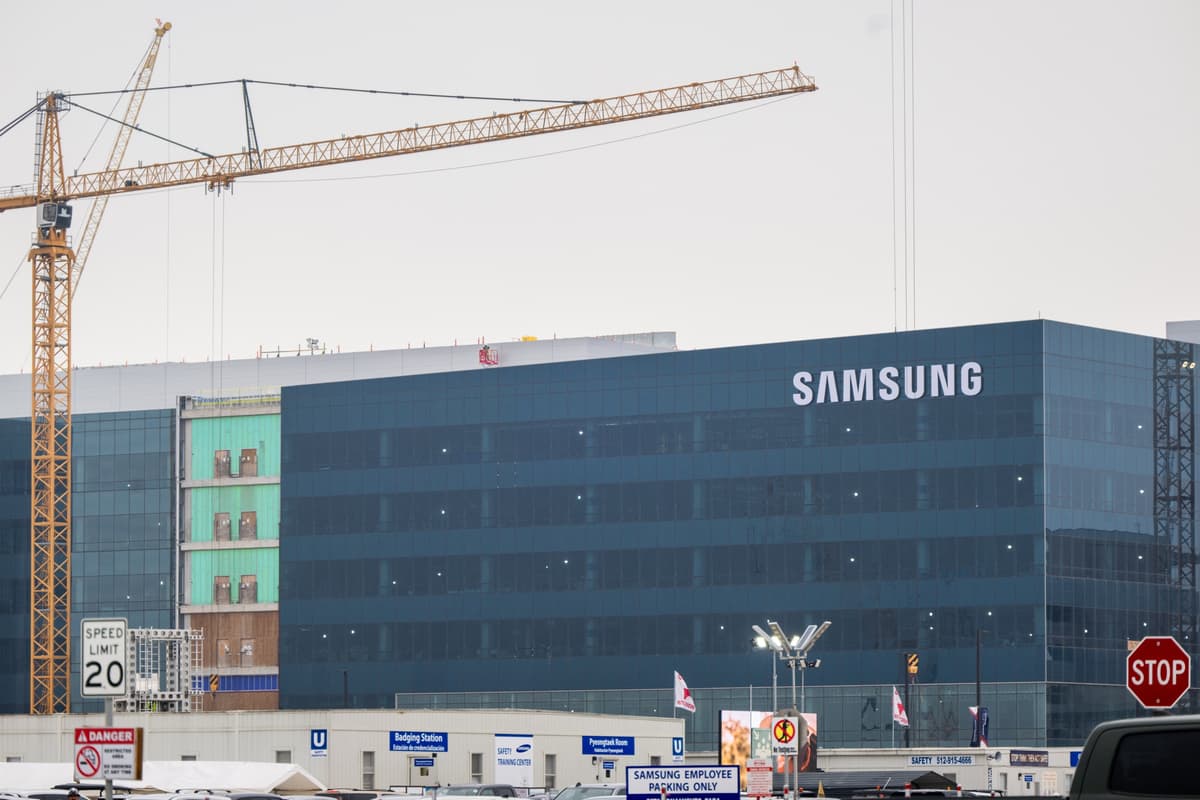
That big picture sums up in one word — semiconductors. Samsung has laid down its largest U.S. manufacturing investments in Texas: the Austin fab it has run since 1996, and an advanced foundry in Taylor slated to start operations by end-2026. Move the HQ to Plano and leadership sits physically tied to this huge manufacturing base, all within the Texas region. It's a declaration that, amid the AI semiconductor supercycle, the center of gravity of Samsung's U.S. business is shifting to "manufacturing."
The players — Samsung, Texas, and the 'AI semiconductor supercycle'
First, Samsung. Famous for phones and appliances, but what decides Samsung's future now is semiconductors — especially memory (HBM) and foundry (contract manufacturing). The AI boom is exploding HBM demand, and winning customers like NVIDIA requires advanced foundry competitiveness. Samsung is fighting hard on both fronts against SK Hynix (HBM) and TSMC (foundry), and U.S. manufacturing is the key card in that fight.
Next, Texas. Fast becoming the new center of U.S. chip manufacturing. Low taxes, ample land and power, friendly regulation, and federal chip support (the CHIPS Act current) are drawing companies. Samsung's Austin fab and new Taylor plant are there, and Plano (the Dallas region) is close to those bases. Moving the HQ here means "putting the heart of the U.S. business next to manufacturing."
The last player is the era backdrop — the 'AI semiconductor supercycle.' As demand for chips and HBM used in AI training and inference explodes, advanced fabs run at full tilt as fast as they're built. In this phase, manufacturing capacity is revenue and leverage. Pulling the HQ next to the manufacturing base is a bet to raise decision speed and on-the-ground proximity in this supercycle.
What's inside — the facts and meaning of the move
The core facts, as a timeline:
| When | Event |
|---|---|
| 1996– | Samsung operating Austin, Texas chip fab |
| 2025-09-22 | Grand opening of Englewood Cliffs, NJ campus |
| 2026-05-29 | Employees notified of HQ move |
| 2026-06-01 | Official statement (move to Plano by end-2026) |
| End of 2026 | Taylor advanced foundry slated to begin operations |
The most important message is the "HQ = next to manufacturing" realignment. Until now Samsung's U.S. HQ sat in New Jersey on the East Coast, physically far from the Texas manufacturing floor. When leadership is thousands of kilometers from the plants, decisions slow down. Move the HQ to Plano and the key decision-makers operate in the same region as the Austin/Taylor fabs. In a phase that demands supercycle speed, this "distance-closing" is a competitive edge.
Second is the symbolism of a "second move in under a year." Relocating again so soon after opening a new campus costs money and looks awkward. Pushing ahead anyway means Samsung judged a "manufacturing-proximate HQ" far more important than an "East Coast office HQ." The priority has clearly tilted toward manufacturing.
Third is the workforce impact. About 1,000 employees must relocate to Texas or leave. HQ moves always bring workforce reshuffling, and a large East-Coast-to-Texas move can cause real pain — talent attrition and redeployment. This is the most sensitive issue in the short term.
What each side gets — Samsung, Texas, the U.S.
For Samsung, decision speed and manufacturing integration are the core gains. With HQ and fabs in the same region, new investment, customer response, and process problem-solving get faster. To chase TSMC in the AI foundry race, that agility matters. And the "serious about U.S. manufacturing" message is a plus with the U.S. government and customers (Big Tech). In a political climate that values domestic production, the "we make it in America" card keeps getting stronger.
For Texas, attracting a major global company's HQ is a symbolic and substantive win. An HQ brings high-wage jobs, tax revenue, and a supplier ecosystem. On top of the manufacturing investment it already landed, adding the HQ further cements Texas's status as a "U.S. semiconductor hub." For the state, it's another success story for business-friendly policy.
For the U.S. at large, it's one scene in the supply-chain reshoring trend. America's strategy is to reduce the risk of depending on overseas (especially East Asian) production for critical chips, and Samsung planting manufacturing and management more deeply inside the U.S. fits that direction. That said, it also carries a complex implication for Korea — a shift in the balance between "home country vs. local U.S."
Prior cases — the history of HQ moves and manufacturing return
The trend of moving HQ next to a manufacturing base, or pulling production home/to a core market, has precedent.
Success case — companies flocking to Texas. In recent years Tesla, Oracle, and others moved HQs from California to Texas. Lower taxes/regulation and a friendly environment were the reasons, and most are seen to have benefited on cost structure and talent attraction. Samsung's move extends the same "Texas rush," but with a twist — Samsung isn't just chasing cost; going "next to its own manufacturing base" is more strategic.
A contrast — the inefficiency of HQ-plant separation. Conversely, there are many cases where HQ and production sat far apart, slowing decisions and creating distance from the floor. In manufacturing, "the CEO often walks the plant floor" isn't mere symbolism — it ties directly to quality and speed. Samsung folding its East Coast HQ and going next to manufacturing is a classic manufacturing-management choice to close that gap.
Warning flag — the hidden cost of moving. Still, HQ moves always carry the cost of talent attrition. If key people who can't relocate leave, organizational capability can spring a short-term leak. Moving twice in a year doubles that cost, so Samsung clearly judged the upside outweighs it. Whether the bet pays off will be told by the results in the years after the move.
Counter-plays — TSMC, Intel, and SK Hynix
TSMC is already building large fabs in Arizona. And around the same time, it announced the "AI into the fab" collaboration with NVIDIA to push manufacturing efficiency. Samsung moving HQ next to manufacturing to boost agility also reads as a response to TSMC's U.S. offensive. The foundry race is shifting to "who makes faster and more efficiently in America."
Intel is also growing its own foundry (IFS) and emphasizing U.S. manufacturing. With Samsung, TSMC, and Intel all playing the "advanced U.S. manufacturing" card, the U.S. has suddenly become the new battleground of the global foundry race. Moves like an HQ relocation are entrenchment on that battlefield — a fight over who roots into U.S. manufacturing deeper and faster.
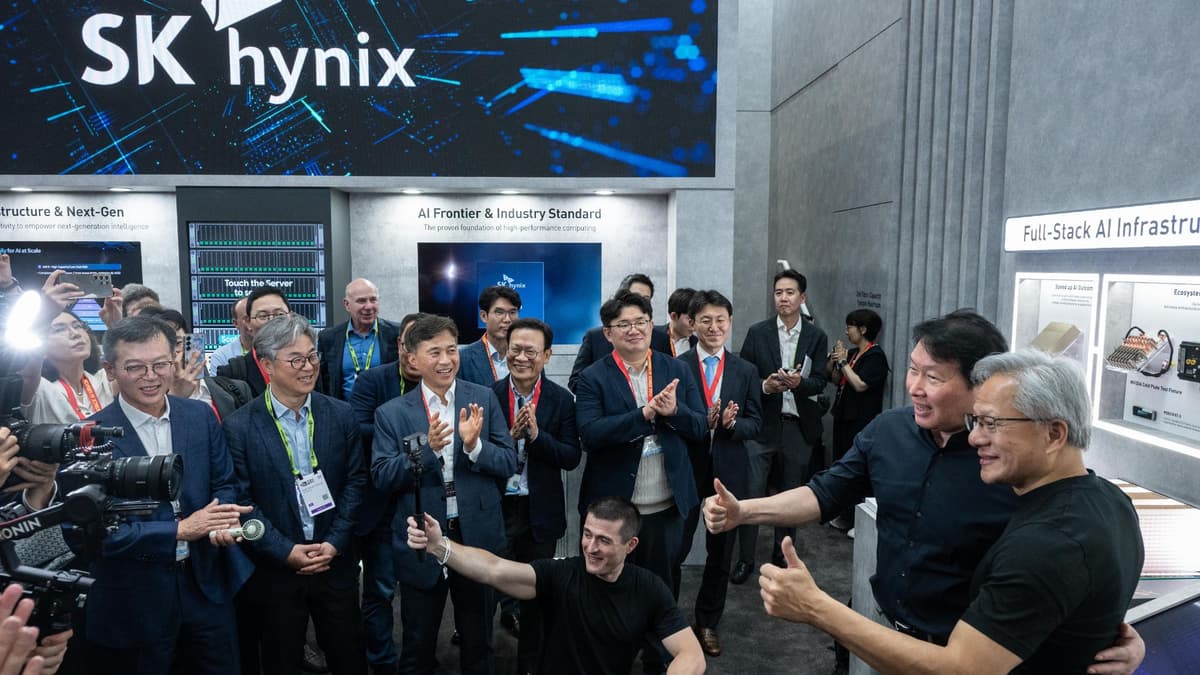
SK Hynix (memory/HBM) is a variable too. SK Hynix, which pressures Samsung in HBM, is also raising U.S. investment. If Samsung consolidates HQ and manufacturing in the U.S., its proximity to U.S. customers (NVIDIA, etc.) rises in the memory race as well. Ultimately, the rivalry between Korea's two semiconductor giants intensifies on American soil, beyond Korea.
So what changes — by persona
If you're in semiconductors/manufacturing, this signals that "the AI-era manufacturing race is moving to the U.S." As advanced fabs and their decision HQs converge in America, the supply chain, suppliers, and talent market reshape there too. The Texas semiconductor cluster looks set to be a hotspot drawing talent and investment for years.
If you watch Korea's economy/policy, see both sides. Samsung leaning into U.S. manufacturing is rational in global competition, but it touches on "hollowing-out of the home industry" worries. As core decisions and advanced production drift to the U.S., Korea's homework becomes how to hold the upper value chain — R&D and core tech. Policy-wise, the competition over domestic manufacturing incentives will intensify.
If you're just watching the trend, the core point: "the AI boom is redrawing the map." AI-chip demand is moving companies' plant locations, HQ locations, even the industrial center of gravity between nations. Samsung's move to Texas is a small but clear piece of that vast reshaping. The competition over chips has become a fight over geography, not just technology.
🥄 Three Things You're Probably Wondering
— Why move again less than a year after opening the New Jersey campus? Because the strategic priority changed. The Englewood Cliffs campus only opened September 22, 2025, so a second move is expensive and awkward — which is exactly why it's a strong signal. Samsung decided a "manufacturing-proximate HQ" near its Austin/Taylor fabs matters more than an East Coast office HQ. The priority tilted decisively toward chips.
— Is this mostly about taxes, like other Texas moves? Lower taxes and friendly regulation help, but Samsung's move is more strategic than the typical "Texas rush." Unlike companies chasing cost alone, Samsung is relocating next to its own largest U.S. manufacturing base. The goal is decision speed and on-the-ground proximity to the fabs, not just a cheaper address.
— What does it mean for the ~1,000 affected employees? They face relocating to Texas or leaving — the real short-term pain of any HQ move. Talent attrition is the hidden cost Samsung is accepting because it judged the upside (manufacturing integration, agility) to be larger.
— What's the bigger picture? The AI boom is redrawing the industrial map. Chip demand is moving plant locations, HQ locations, and even the center of gravity between nations. Samsung's Texas move is a small but clear piece of a reshaping where competition over chips becomes a fight over geography, not just technology.
Bottom line: Moving an HQ twice in under a year is expensive and awkward — which is exactly why it reads as a clear strategic statement. Samsung has decided its U.S. future is its Texas chip cluster, and it's putting leadership next to the fabs to match it. Watch whether the agility gains outweigh the talent attrition, and watch how TSMC, Intel, and SK Hynix respond on American soil. The foundry war now has a geography, and that geography is increasingly Texas — a shift that will shape supply chains, talent flows, and national industrial policy for years to come.
References
- Samsung moving US headquarters from New Jersey to Texas — NJBIZ
- Samsung Plano HQ — D CEO Magazine
- Samsung moving its U.S. headquarters to Plano — FOX 4 Dallas-Fort Worth
- Samsung Moves US Headquarters to Plano, Texas: Second Relocation in Under a Year — TechTimes
- Samsung Semiconductor — Taylor, Texas (Samsung)