KOSPI 7,000 — the Tuesday Korea's stock market got redrawn
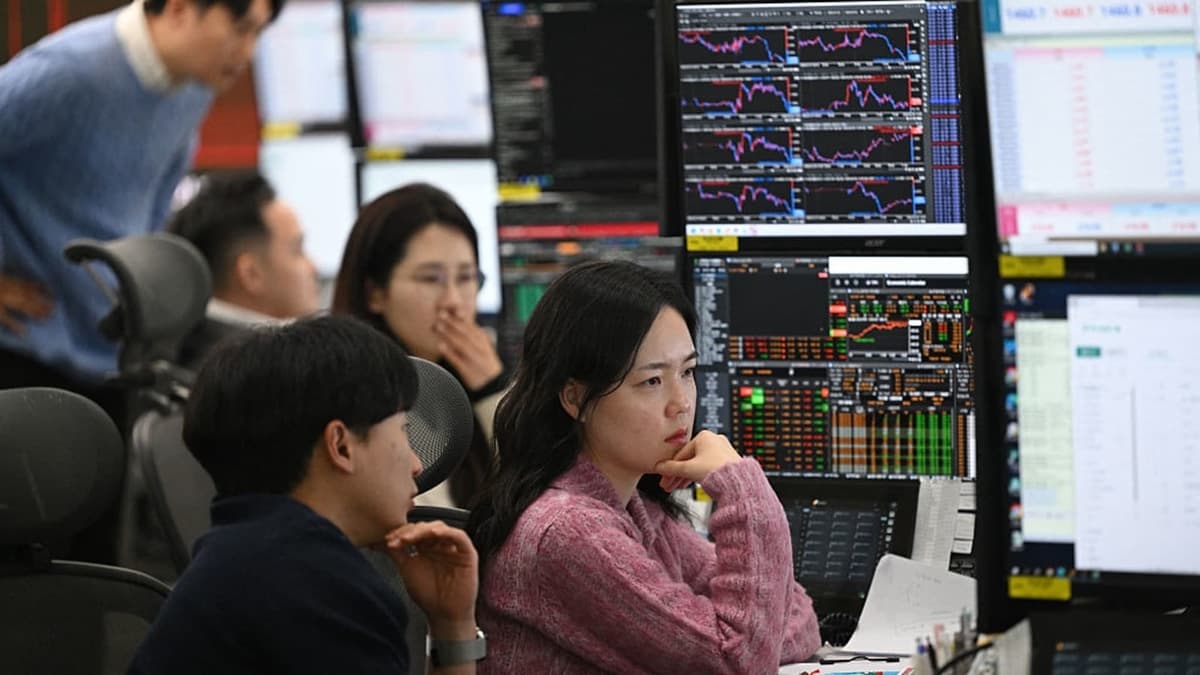
Here's the deal: at 3:30 PM on May 6, KOSPI closed at 7,384.56 — the first time ever above 7,000. In the same session, Samsung Electronics ripped up to 15%, crossing a $1 trillion market cap for the first time. That makes it the second Asian company in the trillion-dollar club after TSMC a year earlier. But the truly interesting part isn't the price action. Foreigners net-bought 3.1 trillion won (~$2.13B) of Korean equities in a single session — a record. That tells you what's actually happening: global capital just reclassified Samsung as an "AI infrastructure name" rather than a cyclical memory shop.
The cast — Samsung, KOSPI, TSMC, Apple, foreign capital
Start with Samsung. It's roughly 25% of the entire Korean stock market by cap. Through 2024-2025 the dominant narrative was "Samsung lost the HBM race to SK Hynix." Hynix had near-monopoly on HBM3/HBM3E supply to NVIDIA H100/H200, and Samsung was widely tagged the "AI cycle loser." That story flipped in late 2025: Samsung passed NVIDIA's HBM3E 12-Hi qualification, and by Q1 2026 had ramped HBM3E capacity to roughly 60-70% of Hynix's. The +15% pop on May 6 is what that turnaround looks like in the tape.
KOSPI is the headline Korean equity index. It crossed 5,000 for the first time in December 2025, 6,000 in January 2026, and 7,000 on May 6 — a 40% rise in five months. The S&P 500 was up about 8% over the same window. KOSPI's total market cap hit roughly $4 trillion, around the combined size of UK plus French equity markets.
TSMC is the comp. When TSMC crossed $1T a year ago, the read was "AI infrastructure has a single winner." Samsung's $1T entry now reads as "AI infrastructure is a duopoly, not a monopoly." TSMC dominates leading-edge foundry; Samsung has memory (HBM/DRAM/NAND) plus foundry plus system LSI. The market just paid up for the breadth.
Apple is part of the catalyst stack. The first-week-of-May reports that Samsung might fab iPhone APs at its Texas/Taylor plants were one of the rally drivers. Trump-administration tariff pressure forces Apple to lift "Made in USA" share, TSMC's Arizona fab is capacity-constrained, and Intel Foundry isn't yet trustable. Samsung walks into that gap. Nothing's officially signed, but the market priced the scenario at +15%.
Foreign capital is the actual main character. The 3.1 trillion won single-session foreign net buy on May 6 was a record, and cumulative foreign net buying from April 28 through May 6 (eight sessions) topped 14 trillion won. This isn't passive ETF flow — it looks like global active funds opening fresh "Korean AI infrastructure" positions.
The hard numbers — Q1 operating profit 57.23T won, AI memory = 94% of profit
The fundamentals behind the rip, in one table.
| Metric | Q1 2026 | Q1 2025 | YoY |
|---|---|---|---|
| Revenue | 133.87T won | 79.14T won | +69% |
| Operating profit | 57.23T won | 6.69T won | +756% |
| Semiconductor (DS) operating profit | ~53T won | 1.1T won | ~48x |
| AI memory revenue | ~41T won | — | — |
| AI memory share of company OP | ~94% | — | — |
One thing this table screams: AI memory has redrawn the company. Roughly 94% of operating profit coming from AI memory (HBM, server DRAM, enterprise SSD) is a structure Samsung has never had before. For comparison, in Q1 2024 the 6.69T won OP was about 30% memory and 70% mobile/displays/appliances. Two years and the income statement is unrecognizable.
All three product lines — HBM, server DRAM, enterprise SSD — are flagged as undersupplied through 2027. Samsung IR said it directly on the earnings call: "undersupply through 2027." That phrase is what the market actually paid for. It implies pricing power sits with memory vendors for the next six quarters. SK Hynix popped +12% the same day; Samsung outperformed because (1) it has more incremental capacity to ramp and (2) foundry/displays are recovering simultaneously.
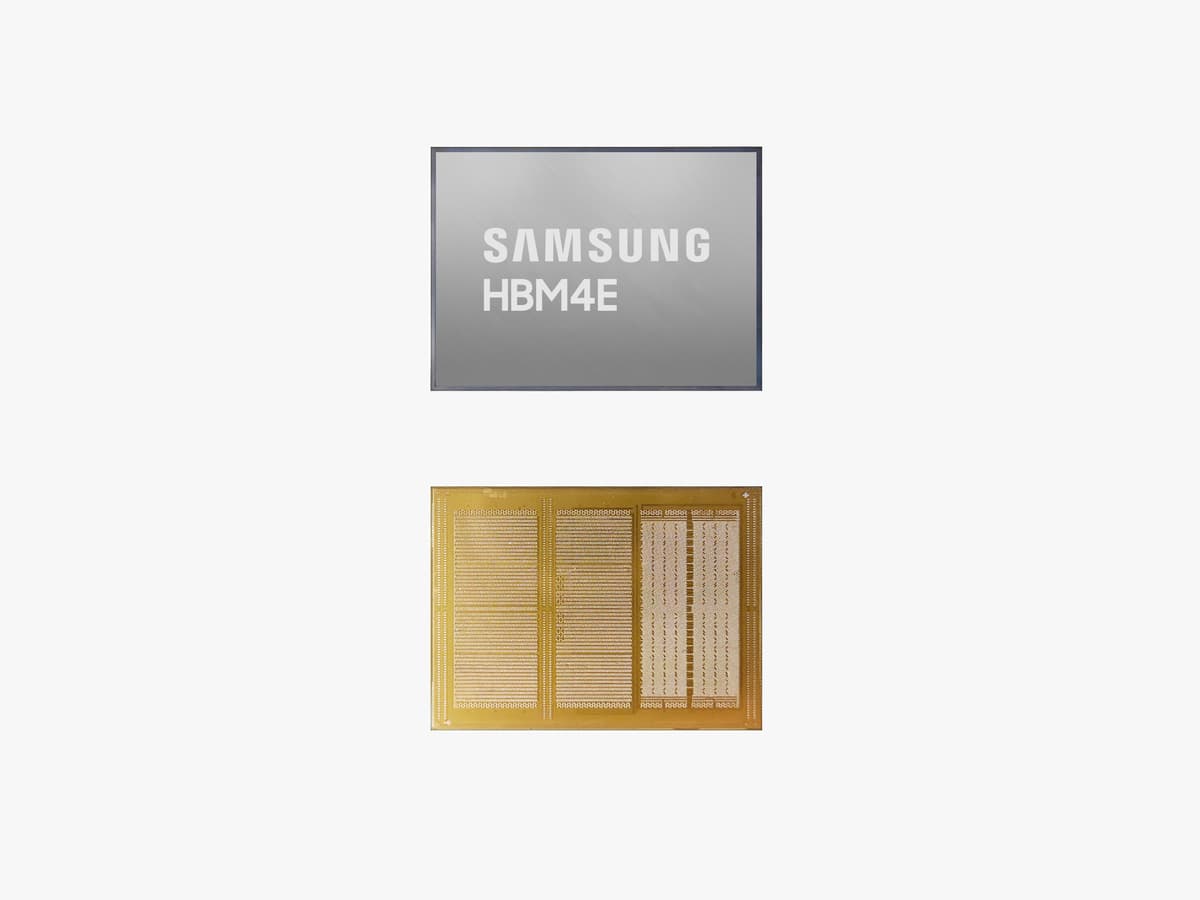
HBM4E samples ship Q2 2026 and that's the next catalyst. NVIDIA's next-gen Rubin Ultra uses HBM4E as primary memory, and the market is pricing a 30-40% probability that Samsung qualifies before SK Hynix. Confirmation would unlock another 5-10% leg.
What each side gets — Samsung, foreigners, Korea, NVIDIA & Apple
Samsung gets three things at once. First, $1T market cap auto-lifts global index weights. MSCI World allocation moves from ~0.4% to ~0.6%, dragging an estimated $5-8B of passive inflows over the next six months. Second, the cost of capital halves. Samsung's corporate-bond credit spread tightened 30 bps in a single session — that materially cheapens the multi-hundred-billion-dollar capex pipeline. Third, hiring leverage. The "trillion-dollar company" badge alone moves the needle on US PhD recruiting.
Foreign capital just found its real entry into "Korean AI infrastructure." US Mag-7 trades at P/E 30-40x; Samsung sits at 12-15x — half-price exposure to the same theme. That's why global active managers are crowding in. The Korea ETF (EWY) saw $2.2B of fresh inflows in the first week of May, a record.
The Korean government can claim a political win. April's AI Basic Act (effective 2026) and a freshly announced 50T-won AI semiconductor package both sit nicely behind the rally narrative — though it's hard to separate "policy effect" from "global AI cycle effect." President Lee leaned on the KOSPI-7,000 milestone the next day, and the FX reserve / KRW backdrop opens room for additional fiscal moves.
NVIDIA and Apple win indirectly. NVIDIA gets HBM supply diversifying from Hynix-only to Hynix-plus-Samsung, modestly restoring its negotiating leverage. Apple now has a US iPhone-AP fab option beyond TSMC Arizona alone — a real hedge against tariff and concentration risk. Both should welcome Samsung's comeback.
Historical comps — wins and busts
Win #1: 2017 memory super-cycle. Samsung hit a then-record 14.5T won quarterly OP in Q3 2017, with market cap reaching 380T won. The narrative back then was also "memory has redrawn the company" — but the 2018 memory price crash undid most of it within a year. The difference now: (1) AI training/inference creates structural demand, and (2) supply-side constraints (EUV, HBM packaging capacity) are tighter, so price sustainability is meaningfully better.
Win #2: TSMC's $1T crossing a year ago. TSMC has added another +35% over the following 12 months, hitting roughly $1.35T. If Samsung tracks the same path, consensus puts a $1.35T target by May 2027. TSMC is a pure-play foundry, however; Samsung's memory + foundry + displays + appliances mix is more volatile.
Bust: Intel circa 2000. Intel touched ~$500B in market cap in August 2000 and was cut roughly in half within a year as the dotcom bubble unwound. Capex-heavy industries that get re-rated as "structural change" at cycle peaks tend to mean-revert hard. Whether this cycle follows that pattern depends on (1) durability of AI training/inference demand and (2) the slope of hyperscaler capex.
One more comp: NVIDIA's $1T crossing in May 2023, which became $3T in 12 months — a 3x — as the "single AI winner" narrative pushed multiples from P/E 30x to 60x. Whether Samsung walks the NVIDIA path or the gentler TSMC path is the next 18 months' main fork.
Counter-plays — SK Hynix, Micron, TSMC, Intel
SK Hynix is the most direct competitor. Samsung +15% vs Hynix +12% on the day — Samsung outperformed because it has more incremental capacity to bring on. Hynix is already running near max capacity to NVIDIA. Samsung can convert P3/P4 lines at Pyeongtaek to HBM-dedicated through 2026, doubling HBM capacity. Plausible base case: Samsung HBM share moves from ~30% toward ~45%, Hynix slides from ~60% toward ~50%.
Micron is the US memory player. NVIDIA HBM3E qualification came late, share is stuck at 5-8%. CHIPS Act 2.0 funding is fueling aggressive expansion in Boise, ID and Clay, NY, with a 15-20% share target by 2027 — call it 50/50 to hit. Micron rallied +9% on May 6 but can't out-ramp the Korean two on capex velocity.
TSMC is a different game but an indirect competitor on packaging. CoWoS (HBM packaging) is a TSMC near-monopoly; Samsung's I-Cube and X-Cube packaging are starting to chip away. The most interesting May-6 detail: reports that NVIDIA is sampling Samsung X-Cube on a slice of GB300 SKUs. If accurate, that's the first real crack in CoWoS exclusivity.
Intel is the foundry counter-play. Intel Foundry's 18A is hitting yield issues and Samsung GAA 3nm is in production. First-week-of-May reports said NVIDIA is delaying Intel 18A adoption and shifting volume to Samsung 4nm/3nm — that was an additional catalyst. Intel was -3% on the day, going the opposite direction.
Japan/Europe: Kioxia and Western Digital are NAND-heavy and outside the HBM zone. ASML wins evenly via EUV tool sales across all memory ramps. Infineon and NXP (auto silicon) are a separate basket, minimal direct read-through.
So what changes — Korean retail, US funds, semi engineers
For Korean retail investors, two changes. First, "KOSPI 7,000 = all-time high" creates psychological friction. Fresh long entries get harder; profit-taking pressure builds. Second, the KODEX 200 ETF — basically the Korean equivalent of buying the index — has effectively become an "AI infrastructure ETF." Samsung is 25% of KOSPI and 94% of Samsung's profit is AI memory, so KOSPI ≈ global AI infrastructure index. Make sure you understand what you actually own.
For US fund managers, "Korea allocation" finally has the macro story to justify a bigger weight. Expect a wave of 60/40-style portfolios moving Korea from ~1.5% toward ~3% through May-June. FX hedge cost on KRW is the offset — net of hedge, real returns lag US Mag-7 by 20-30%, so the up-weight isn't unbounded.
For semiconductor engineers, the labor market just repriced. HBM4E packaging, EUV process, CIS design — sign-on bonuses are 30-50% higher than six months ago. Samsung announced 8,000 new hires this quarter, ~60% in AI memory and system LSI. If you've been considering a move, this is the window.
For long-term investors, the bigger shift is the "AI infrastructure duopoly" narrative becoming consensus. The NVIDIA (compute) — TSMC (foundry) — Samsung (memory) triangle now reads as the base case for global market-cap top-10 leadership for the next five years. The structures that break this: (1) AI bubble unwind, (2) China memory/foundry self-sufficiency above 50%, (3) photonic / neuromorphic compute paradigm shift. None looks likely inside 36 months.
Last note on the Korea side: the political win of "KOSPI 7,000" comes with a "Samsung-dependent economy" risk that just got bigger. Samsung now drives ~8% of GDP, ~18% of exports, and ~25% of market cap. The next cyclical drawdown will hit Korea harder than most. Worth holding both pictures in your head at the same time.
References
- Samsung Electronics shares up 15% on AI chip rally as KOSPI tops 7,000 — CNBC
- Samsung Hits $1 Trillion Valuation, Joining TSMC in Elite Club — Bloomberg
- Samsung Electronics Announces First Quarter 2026 Results — Samsung Newsroom
- KOSPI Index — Korea Exchange
- Foreign Net Purchase Records — Korea Securities Depository