Chips Doubled in Half a Year — Yeah, That Actually Happened
Honestly, some numbers make you rub your eyes and look again. The Philadelphia Semiconductor Index — the one everyone calls the SOX — jumped 87.8% in the second quarter of 2026. Not for the year. For a single quarter. Three months. To put that in perspective, since the SOX started being tracked back in 1994, no quarter has ever risen more than this one. Not even the delirious dot-com years produced a number this big. That record just got smashed.
And it's not just the quarter. Look at the full first half of 2026 and the SOX is up more than 100%. Plain English: if you'd parked money in the semiconductor index on January 1st, you'd have doubled it by the end of June. In six months. That's the kind of return that makes savings-account interest look like a joke — and it happened across the entire sector, not in some random microcap you'd never heard of.
So why did this happen? The answer is almost embarrassingly simple. It's AI. All of it is AI. CNBC put it about as cleanly as you can: "This is all about AI, which has supercharged demand for certain chips — in particular makers of memory chips like DRAM and NAND." Running AI models eats an enormous amount of memory, and right now that demand is completely swamping supply.
In this piece I'll walk through what exactly happened, who's actually making money, how rallies like this have ended before, and what an individual investor or someone in the industry should be thinking about right this second. The numbers are thrilling — which is exactly why some parts of this deserve a cold, hard look.
The Cast — Micron, the Memory Cycle, and AI Demand
Let me introduce the main character of this drama, and you can't tell this story without Micron. Micron is America's flagship memory-chip company. It makes DRAM and NAND — the chips your computer uses to temporarily hold and permanently store data. Historically this company was anything but glamorous. It was the poster child for a cyclical industry: it shines briefly in good times and bleeds red ink in bad ones, the kind of stock investors love and hate in equal measure. This quarter, though, Micron stepped fully into the spotlight.
The second character is a little more abstract: the memory cycle itself. Memory chips are a different animal from other silicon. Unlike a CPU or GPU that processes logic, memory behaves more like a standardized commodity, so its price swings wildly with supply and demand. Every few years the price punches through the ceiling, then the floor, then the ceiling again. That's exactly why chips are the textbook "cyclical" sector.
And here's the crucial part. Memory supply can't ramp up easily. Building a single new fab (a chip factory) costs tens of billions, and from groundbreaking to actual chips rolling off the line takes years. So when demand suddenly spikes, supply can't chase it in real time. Demand rockets skyward while supply stays roughly fixed — and there's only one thing that can give: price. Prices explode.
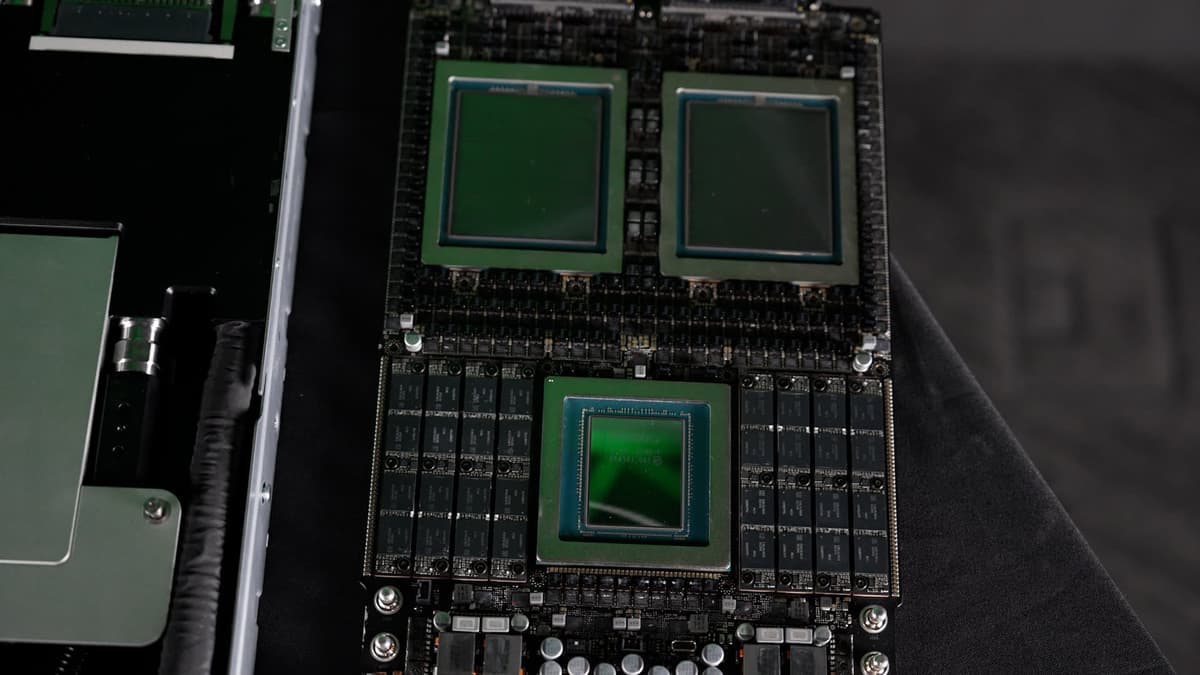
The final character is the trigger that set all of this off: AI demand. Generative AI, large language models, data-center buildouts — they all devour staggering amounts of memory. The high-bandwidth memory (HBM) packed into a single AI server dwarfs what a regular server needs. While cloud companies pour money into AI infrastructure, memory makers found themselves in a dream scenario: everything they build sells the moment it's made. On top of a cyclical upswing, AI dropped a nitro booster.
Put those three together and you get the picture we're staring at. Cycles always rise and fall, but this time a structural wave of AI demand blew the upswing out to record proportions. That's why people aren't just calling it a rebound anymore — they're calling it a "supercycle."
The Core — Here's What It Looks Like in Numbers
Words only get you so far, so I put the key figures from this rally into a table. Every one of them is worth a second look.
| Metric | Figure | What it means |
|---|---|---|
| SOX index, Q2 gain | +87.8% | Biggest quarter since tracking began in 1994, tops the dot-com era |
| SOX index, first-half (H1) gain | Over 100% | Doubled in six months, across the whole sector |
| Micron EPS (year over year) | +1,215% | Record results, market cap passed Meta |
| Intel, Q2 gain | +216% | The comeback poster child |
| AMD, Q2 gain | +185% | Direct beneficiary of AI-chip demand |
Start with the SOX itself. A quarter of 87.8% combined with over 100% for the half is genuinely absurd. An index is supposed to smooth things out — extreme moves in individual names cancel each other out. So when the whole index doubles, it means nearly every stock in the sector ran up like crazy at the same time. That's not a single company's event; it's a signal of a paradigm shift across an entire industry.
Micron's EPS of +1,215% is the most jaw-dropping number on the table. Earnings per share jumped more than twelve-fold year over year. That's the brutal leverage of the memory business laid bare: when memory prices rise, profits don't grow, they detonate. The result is that Micron's market cap passed Meta — the giant behind Facebook and Instagram. A few years ago, that ranking swap would have been unthinkable.
Intel's +216% and AMD's +185% are no small numbers either. Intel especially had spent a while being written off as past its prime, and it more than tripled in a single quarter. AMD, meanwhile, is directly absorbing demand as it grows its footprint in AI accelerators. That tells you the fire spread evenly through the sector — memory, logic, foundry, all of it caught.
CNBC flagged one more thing to watch. The results from bellwethers like NVIDIA, AMD, Micron, and Qualcomm will decide whether this rally keeps going. So far earnings have justified the price gains, but the moment a quarter comes in below expectations, the mood can flip in an instant. So instead of getting drunk on the numbers, keep an eye on the earnings calendar.
Who's Winning
The biggest grins belong to the memory companies, obviously. Micron is the headliner, but across the Pacific, Samsung and SK Hynix are in exactly the same boat. When memory prices rise, these companies' profits go vertical. Their cost structure barely changes while selling prices jump, so almost every dollar of the price increase drops straight to the bottom line. Micron's 1,215% EPS is the proof. A memory industry that spent years sweating over piled-up inventory is getting paid back in one enormous swing.
Second on the winners' list are the investors who spotted this rally early. With the SOX doubling in the first half, anyone who bought a chip ETF or a bellwether name at the start of the year has watched their money double in six months. Long-term holders of names like NVIDIA are even further ahead. Because this current runs through the entire AI theme, the people who bet on the AI boom through semiconductors are having the time of their lives right now.
Third, chip-equipment and materials companies are quietly smiling too. Once memory makers start printing money, the next step is expansion. Building a new fab or adding a line requires a mountain of lithography gear, etching tools, and specialty materials. Less about this quarter's numbers and more about the coming investment cycle, expectations are building across this whole slice of the value chain.
The last, and slightly ironic, winner is the AI companies themselves. On the surface, pricier memory means higher AI-infrastructure costs, so it looks like a loss. But flip it around: this insane demand is the clearest possible proof that their business is booming. A memory shortage is the most tangible physical evidence that the AI boom is real. The cost pressure is genuine, sure — but I'll come back to that in the next section.
History Rhymes — the Wins and the Wipeouts
Whenever you see a run like this, you have to look back. Chips have a long history of handing out both euphoria and regret. The first thing that comes to mind is the semiconductor rally of the late 1990s dot-com era. Amid the frenzy that the internet would remake the world, chip stocks shot to the moon. Back then people said "this time it's different" too. And when the bubble burst in 2000, chip stocks collapsed spectacularly. The fact that this quarter's 87.8% just topped even that dot-com record is thrilling — and, if you think about it, a little spine-chilling.
The second case is more recent: the 2017–2018 memory supercycle. Smartphone and data-center demand collided, DRAM prices exploded, and memory companies posted record results quarter after quarter. The vibe was almost identical to right now. And how did it end? From late 2018 into 2019, memory prices got cut roughly in half, and both earnings and stock prices cratered. Supply belatedly caught up, demand cooled, and that glittering cycle flipped into a downturn almost overnight.
The lesson from both is clear: a cyclical industry can fall as far as it rose. Memory especially has fixed supply, which is why prices are exploding now — but that same fact carries the seed of a crash. Once all those new fabs eventually come online, supply floods in all at once and prices can plunge. The scary thing about this industry is that the cause of the boom and the seed of the bust live in the same place.
Of course, not every rally ends in a bubble. There's a strong case that AI-era chip demand is fundamentally different from past fads. Data centers and AI models keep getting bigger; this isn't a two-quarter craze that vanishes, but a structural shift set to run for years. And unlike the dot-com days, this earnings surge is backed by real revenue and real profit, not just hope. That rebuttal has teeth.
The truth probably lives somewhere in the middle. AI demand being structural is real, but whether that lets it fully escape the gravity of a cyclical industry is another question entirely. History doesn't repeat, but it rhymes — and in the middle of all this euphoria, keeping the past downturns in mind is just the smart move.
The Competitors' Counter-Play
Micron is getting the spotlight, but the real heavyweights of the memory market are still Samsung and SK Hynix. These two Korean companies control more than half the global DRAM market, and SK Hynix in particular has long held the lead in high-bandwidth memory (HBM), the beating heart of AI servers. The companies smiling widest in this memory supercycle might not be in America at all — they might be in Korea. Their counter-play is simple: ramp HBM capacity as fast and as hard as possible.
And here's where the industry's signature dilemma shows up. Prices are so good right now that every company wants to expand. But as we said, a fab takes years to build. So companies have to decide now, and the decision is genuinely brutal. Don't expand, and you hand this golden window of demand to your rivals. Expand, and a few years from now those factories all fire up together, creating the exact glut that could tank prices — a risk you manufactured yourself.
This is precisely the mechanism that broke the 2017–2018 cycle. Everyone got giddy and built fabs while the money was good, and right as those fabs came online, demand rolled over and the glut arrived. That's why there's talk that companies are moving more carefully this time. Rather than blindly expanding, the strategy is to concentrate capacity on high-margin, AI-specific premium products like HBM. It's a different approach from the old game of chicken over commodity memory.
Another counter-play is new entrants and geopolitics. Governments now treat chips as a strategic resource and are pouring massive subsidies into domestic fabs. The US, Europe, Japan, and even China are all chanting semiconductor self-sufficiency while breaking ground on new plants. How this government-driven buildout reshapes the supply map a few years out is the key variable for the next cycle. Believing today's supply crunch will last forever is a dangerous bet.
So What Actually Changes for You
If you're an individual investor — congrats, first of all; if you held chips, the first half of this year was about as good as it gets. But reading this, your burning question is probably "can I still get in now?" Cold truth: buying into an index that's already doubled is a completely different risk than getting in first. Nobody knows for sure where we are in the cycle. Could be the early innings of the climb, could be near the peak. Sizing in gradually rather than going all-in, and staying within the volatility you can actually stomach, is just the sane move.
If you work in the chip industry — you're standing in the middle of a boom. Hiring is up, bonuses are fat, investment is flowing. But anyone who's worked a cyclical industry knows the good times don't last forever. This is a great moment to build your career and raise your market value, sure — but it's worth remembering that this industry has cycled through layoffs and pullbacks every few years. The judgment you show in the boom decides your safety net in the bust.
If you're an AI startup or the person who owns cloud costs — this is the headache news. Exploding memory prices flow straight into higher AI-infrastructure costs. GPUs were already hard to get, and now memory is getting pricier and scarcer too. If you run an AI service, you feel the pressure of a worsening cost structure directly. From here on, memory-efficient model optimization and locking in long-term supply contracts aren't just engineering topics — they're survival-level cost strategy.
Bottom line: it's the same news, but it lands completely differently depending on where you stand. To someone it's a jackpot, to someone else it's a warning light, and to yet another person it's a cost bomb. That's why with explosive headlines like this, the important thing is to work out, for yourself, exactly what changes for you.
Three Things You're Probably Wondering
— Should I buy now? Honestly, nobody can give you a straight answer. The index has already doubled in six months, so getting in now is a fundamentally different risk than getting in at the start of the year. If earnings keep backing it up, it could run further, but given the nature of a cyclical industry, buying near a peak can leave you badly underwater. Too early to call. The one sure thing is that this is absolutely not a "buy it while it's cheap" moment.
— Is this rally real, or a bubble? A bit of both, I'd say. Unlike the dot-com days, this run is backed by actual revenue and profit — real numbers like Micron's 1,215% EPS — so calling it a pure bubble is a stretch. But the sheer speed of doubling in six months clearly has a lot of hope baked in. The earnings are real; whether those earnings continue next quarter is what will decide the bubble question.
— What happens if the AI boom ends? Then the entire basis for this rally wobbles. The root of today's memory surge is AI demand, so if AI investment cools, demand cools, and the cycle likely rolls over into a downturn. That said, AI isn't vanishing overnight, and the real question isn't whether it "ends" but when its growth rate slows. Exactly when that inflection point hits, no one can say right now.
Sources
- Chip stocks close out best-ever first half and quarter — CNBC
- Semiconductor stocks just had their best quarter ever — Axios
- Chip stocks set for best quarter ever amid strong earnings surge — Crypto Briefing
- Micron Technology — Investor Relations
- PHLX Semiconductor Sector Index (SOX) — Nasdaq
- Understanding the memory chip cycle — SIA
Numbers and criteria are as of announcement and may change. Investment calls are yours to make!