A Country at War Just Made "AI Sovereignty" a National-Security Doctrine
Here's the deal: on July 7, Roman Kyslyi, Chief AI Officer at Ukraine's Ministry of Digital Transformation, told Reuters that Kyiv will now favor AI it can run on its own infrastructure. When picking models for government services, private business, and the military, Ukraine will prefer self-hosted ("on-premise") systems over models that stay under a provider's remote control. In plain terms: the country refuses to hand the "off switch" for its AI to anyone else.
The point isn't performance. It's control. Most of the smartest AI in the world right now is closed — run by companies like OpenAI and Anthropic inside their own clouds. You send a query over an API, you get an answer back, and the model itself lives on their servers. Which means they — or their government — can cut off your access whenever they decide to. In peacetime that's an abstract worry. For a country at war, "an ally, not an enemy, holds the switch" is itself a security risk.
Kyslyi named the exact trigger for this policy. In June, the U.S. government, citing export controls, ordered Anthropic to block access to its top models (Fable 5 and Mythos 5) for every foreign national worldwide. Anthropic said selective compliance was impossible and pulled both models globally. Countries that had been leaning on frontier APIs woke up to "you can't use that anymore." Kyslyi's line: "It confirms that AI sovereignty isn't just a defensive talking point, it's a necessity."
Why does this matter? For years the AI race has run on one question: who has the smartest model? Ukraine is now planting a second axis. For national infrastructure, "the one nobody can switch off" beats "the smartest one." This lands right in the middle of today's open-weights-vs-closed-API sovereignty debate swirling around OpenAI and Anthropic — and it's the first case where that debate hardens into actual policy under the extreme pressure of war.
Let's Line Up the Players
The protagonist is Ukraine's Ministry of Digital Transformation. Even before the war, this ministry ran Diia, the citizen digital-ID and government-services app, and earned Ukraine a reputation as one of the most digitized governments on earth. After the invasion, that digital capacity became defense capacity — administration, mobilization, finance, even battlefield intelligence all run on software. So when this ministry decides "where AI lives," it isn't routine IT procurement. It's a security decision.
The voice of the policy is Chief AI Officer Roman Kyslyi. The lines he gave Reuters are the backbone of this story, and one in particular sums it up: "If the vendor will provide it to run on our on-premise infrastructure, there are no restrictions." Origin isn't the decisive test — American or European doesn't matter. The only test is whether Ukraine can hold it in its own hands. He even called an AI model "essentially a commodity" — treat it like a swappable part, don't bet your life on any single supplier.
The second player is the telecom Kyivstar, Ukraine's largest mobile operator and part of the VEON group. Back in January, it announced — with the Ministry of Digital Transformation, the WINWIN AI Center of Excellence, and Google — that it would build a Ukrainian national large language model. The base is Google's open model, Gemma. Not closed Gemini, but the open family whose weights you can take and run yourself. That national model is exactly the thing due out this autumn, meant for use across government, business, and the military.
Finally, the supporting player lurking in the background is Google. Right now the AI assistant inside Ukraine's Diia app runs on Google's remote-only Gemini, accessed through servers inside the EU, with Google supplying free tokens so budget isn't even a constraint. And yet Kyslyi flatly called this an "interim" solution — because Ukraine "doesn't control those models." So even today, Ukraine strips out personal data before sending queries to Gemini. A model you can't control, however free, doesn't get to hold your sensitive data.
What They Actually Decided — In Numbers
The structure of the policy is this. Ukraine sorts AI into two buckets. One is models that "by design remain under the provider's control" — that's where OpenAI's and Anthropic's main closed models sit. The other is models where "the vendor lets us run it on our infrastructure" — open-weight families, or anything that permits on-premise deployment. The policy favors the second and limits the first. Even if the closed model is a bit better, if someone else holds the switch, it loses out for core national uses.
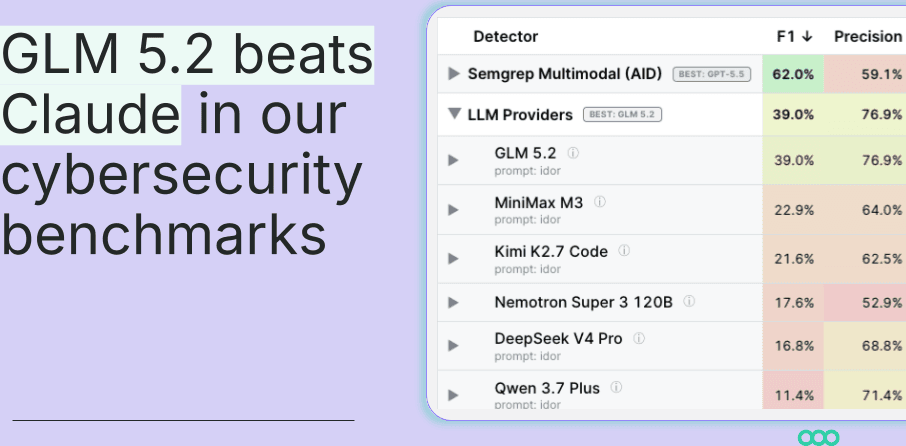
So what did they actually pick? The ministry compared several open-source candidates: Google Gemma, Mistral's models, and OpenAI's open-weight GPT-OSS. Kyslyi said Gemma and Mistral matched the remote-only alternatives on many performance tests. Gemma won as the foundation for the national model, and it's being reworked for Ukrainian — a retuned tokenizer, training on curated Ukrainian datasets — for an autumn release.
| Item | Detail |
|---|---|
| Policy statement | July 7, 2026, Roman Kyslyi (Ministry CAO) to Reuters |
| Core principle | Favor self-hosted (on-premise) over provider-controlled remote models |
| Trigger event | June U.S. order barring foreign-national access to Anthropic's top models |
| Current Diia AI assistant | Google Gemini (via EU servers, free tokens) — labeled "interim" |
| Data handling | Personal data stripped before querying uncontrolled models |
| Open candidates compared | Google Gemma, Mistral, OpenAI GPT-OSS |
| Adopted base model | Google Gemma (open family) |
| National-model partner | Kyivstar + Ministry of Digital Transformation (announced Jan 2026) |
| Ship date | Autumn 2026 |
| Scope | Government services, private business, military |
| Gemma specs | 140+ languages, 128K-token context, multimodal |
Dig into the numbers and the logic sharpens. The practical case for Gemma is Ukrainian-language handling and controllability: 140-plus languages covers Ukrainian, and a 128,000-token context lets it swallow something like a 200-page statute whole. But the truly decisive factor is the one line the spec sheet doesn't list: "we run it on our own servers." When performance is roughly even, control breaks the tie.
Who Gets What Out of This
Start with Ukraine. The biggest gain is resilience. A self-hosted model keeps running inside Ukrainian servers no matter what order the U.S. Commerce Department issues or which company suspends a service. For a country at war, just erasing the risk that "one outside policy move could switch off a core system" is worth a fortune. And because sensitive national data never leaves the country's servers, it locks in data sovereignty at the same time.
Google, oddly, wins too. Its closed Gemini got demoted to "interim," but its open model Gemma got adopted as the base for a national standard. Closed APIs can't get into markets where governments distrust closed systems on sovereignty grounds — open weights can. "You can run our open model on your own servers" has become a powerful pitch in the government market. That's also, ironically, why even OpenAI — the closed-model champion — had to put its open-weight GPT-OSS in the running.
Local telecoms like Kyivstar pick up a new role. They graduate from "company that sells connectivity" to "entity that builds and operates national AI infrastructure." Owning the training, deployment, and operation of the national model deepens the government relationship and gives them a claim to the center of digital infrastructure in postwar reconstruction.
The clear losers are the closed frontier API vendors. OpenAI's and Anthropic's flagship models may be the smartest on the planet, but they now wear a label: "the provider (or its government) can turn this off." The June episode stings for Anthropic in particular. It wasn't Anthropic's own doing — it was a U.S. government order — yet the result left an impression on government customers worldwide that "Anthropic's models can't be relied on." Broken trust doesn't get repaired by a spec sheet.
Past Parallels — Wins and Flops
This shape isn't new. The history of "handing control of a critical technology to an outsider and getting burned" runs long. The obvious case is Huawei. Many countries installed cheap, capable Huawei telecom gear, then U.S.-China tensions flared and panic set in — "is an adversary holding the switch on our comms infrastructure?" — and they ripped it out. The lesson learned then has crossed into AI: for infrastructure-grade tech, control comes before performance.
The success parallel is government adoption of open-source software. Linux is the poster child. Governments and militaries chose Linux over commercial closed operating systems for exactly this reason: you can inspect the source, and even if the vendor folds or changes its mind, you can keep maintaining and modifying it yourself. Not because it was the best-performing, but because it was in your hands. Ukraine's open-weights choice is that same Linux logic ported into the LLM era.
To be fair, we should flag the flop-scented side too. "Build your own" is no cure-all. Around the world, governments have set out to build their own models, run short on talent, compute, or data, and burned taxpayer money on mediocre output. Taking open weights off the shelf isn't the finish line. Tuning them for Ukrainian, deploying them safely, and keeping them current all cost continuous money and people. With frontier labs jumping performance every few months, a homegrown model that can't keep the pace risks the "we kept sovereignty but fell behind on capability" dilemma.
One more cold-eyed point. This policy is a national decision to accept a "control over performance" trade-off, and how costly that trade is remains unknown. That Gemma and Mistral "matched on many tests" is Kyslyi's own assessment, so take it with a grain of salt. If the gap to the closed top models blows open on specific hard tasks — complex reasoning, fresh-information handling — that gap could translate directly into loss in high-stakes uses like the battlefield or intelligence analysis. The sovereignty-versus-performance balance will keep getting rebalanced.
The Competitor Counter-Play
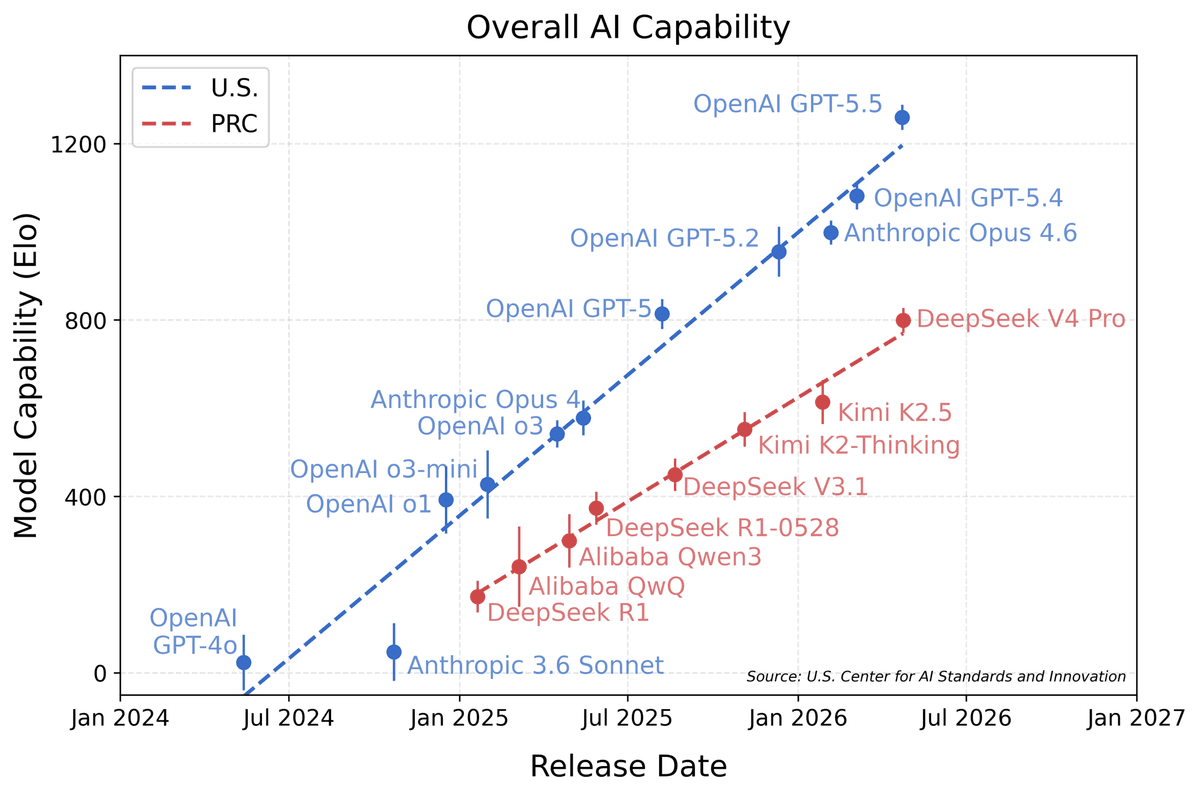
This isn't Ukraine's story alone. Right after June's Anthropic episode, similar sentiment spread across Europe, and Al Jazeera noted the incident "further strained" U.S. alliances. Once it was proven that the U.S. can cut off foreign access to its own AI on security grounds, every country that pinned national infrastructure to a U.S. closed API had to rerun the same math. Ukraine is just the sharpest front line of that shift.
So what's the counter for the closed camp, OpenAI and Anthropic especially? They're not fools — they're already fingering the open-weights card. OpenAI releasing GPT-OSS, which then landed on Ukraine's shortlist, is proof: "if governments won't trust a closed API, we'll hand you a version you can run yourself." Anthropic put out a statement over the June episode saying "this was a U.S. government order, not our choice" — but government customers don't want an explanation, they want a guarantee it "won't get cut off next time," and that trust repair is the far harder homework.
On the other side, the open camp — Google, Mistral, Meta — is playing for the rebound. Google already grabbed the base of Ukraine's national model with Gemma; European champion Mistral is courting the government market under a "European sovereign AI" brand; Meta's Llama family holds the same "self-hostable" card. For all of them, Ukraine's policy is the best possible reference: "see, open weights is the right answer for the sovereignty era." Even if the closed labs own the top of the performance charts, on the new evaluation axis of "controllability," the open camp sits in a structurally stronger spot.
In the end the fight has gained an axis — from "who has the smartest model" to "who gives governments and militaries a model they can safely hold in their own hands." And on that new axis, ironically, it's the closed labs monopolizing cutting-edge performance that find themselves on the back foot.
So What Actually Changes
For developers and engineers, this is the signal that "open-weights skill is now the paycheck." Until now, what mattered was prompt and integration craft on top of closed APIs. But once governments, regulated industries, and security domains start demanding "a model we run on our own servers," the value of skills like taking an open model, fine-tuning it, and deploying and operating it safely on-prem shoots up. People who've actually carried Gemma, Mistral, or Llama all the way to production get scarce.
For enterprises — especially anyone touching regulated industries or public procurement — this is both a warning and an opening: the procurement criteria themselves are changing. Government AI tenders will increasingly weigh "independence from provider control," "on-premise deployability," and "does data stay inside the border" as heavily as performance benchmarks. Vendors selling only closed APIs will trip on that bar, while those selling on-prem deployment, sovereign cloud, and verification layers see a new market open. The standard Ukraine set first under wartime extremity is very likely to get copied wholesale by peacetime European governments.
For the policy and geopolitics crowd, this is a defining scene in AI getting reclassified as a core asset of national sovereignty and security. Once it actually happened that the U.S. could cut off AI access via export controls, even allies are moving toward the conclusion that "depending solely on U.S. frontier models is dangerous." That's a subtle boomerang for U.S. AI leadership — the tighter Washington grips control, the more others scatter toward open alternatives and homegrown models to dodge "American tech we can't control." Whether Ukraine's case becomes a global standard or stays an exception born of war is too early to call. That hangs on which way European, Middle Eastern, and Asian governments move over the coming months.
🥄 Three Things You're Probably Wondering
— So what does this mean for me? Your chatbot doesn't change tomorrow. But the big picture matters. As governments and regulated industries start demanding "AI the provider can't switch off," the center of gravity in the AI industry inches away from closed-API-only toward open weights. That eventually reaches the backend model choices behind the services you use.
— Is Ukraine's own model better than GPT or Claude? On raw performance, probably not yet. Kyslyi himself said Gemma and Mistral "matched on many tests" — not that they beat them. The point isn't performance, it's control. The judgment is that "a slightly less smart model nobody can switch off" beats the alternatives for a nation's wartime infrastructure.
— Will this become a global standard, or is it a wartime special case? Too early to call. June's Anthropic cutoff genuinely spread the same anxiety across Europe, so the sovereign-AI trend is already growing. But self-hosting costs ongoing money, talent, and compute, so not every country can go the Ukraine route. You'll need to watch other governments' choices over the coming months to know.
Sources
- Ukraine to Pick AI Models Operated Without Provider Control, Official Says — Reuters (U.S. News)
- Ukraine to build national AI model on Google's Gemma with Kyivstar — Developing Telecoms
- Kyivstar taps Google Gemma to power sovereign AI model — Mobile World Live
- Statement on the US government directive to suspend access to Fable 5 and Mythos 5 — Anthropic
- US export ban on Anthropic's AI models further strains alliances — Al Jazeera
Numbers and criteria are as of announcement and may change.