A Korean memory company just debuted in New York at a trillion-dollar valuation
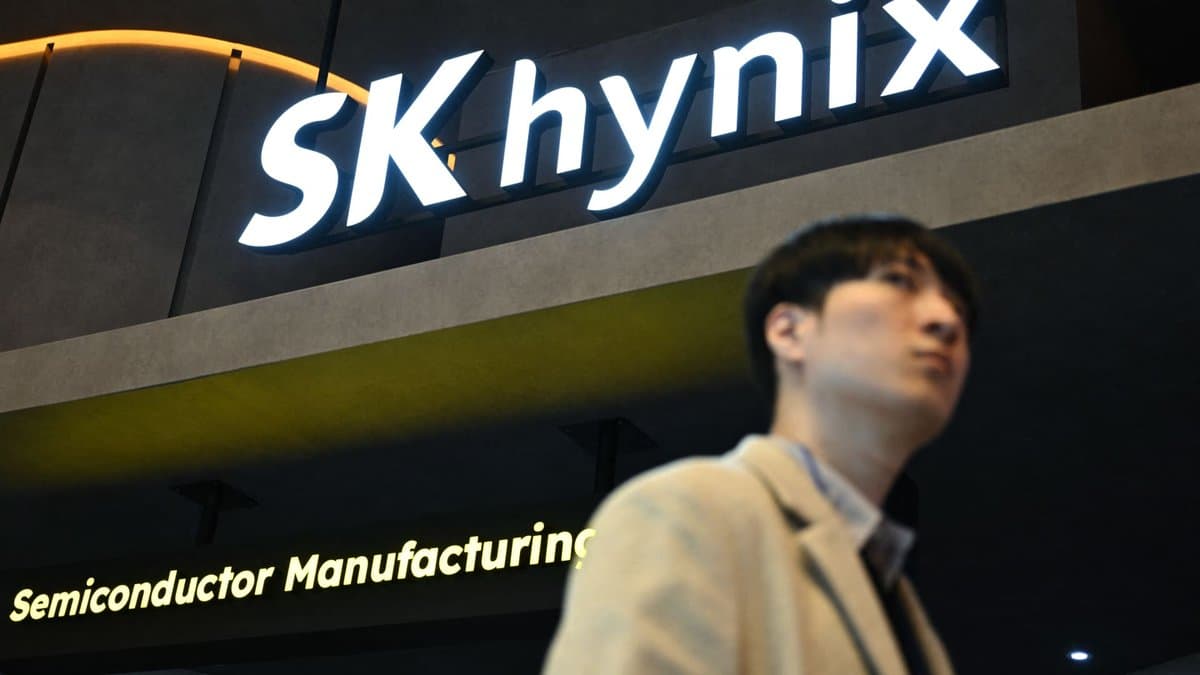
Today (Friday, July 10) a very unusual ticker showed up on Nasdaq: SK Hynix. In Korea it's just "the chipmaker after Samsung," but for U.S. investors this is a brand-new name to buy. Trading opened this morning under the temporary ticker "SKHYV" on a when-issued basis, and starting next Monday (July 13) it flips to its permanent ticker, "SKHY."
Start with the numbers, because the scale is genuinely intimidating. SK Hynix priced its American Depositary Shares (ADS) at $149 each and raised about $28 billion (roughly 39 trillion won). By the measure of "a foreign company listing in the U.S.," that's the largest in history — it beats Alibaba (2014) and Saudi Aramco (2019). And it listed after the stock rallied more than 700% over the past year, pushing its market cap to around $1 trillion. That's why CNBC ran the headline as "the trillion-dollar chipmaker debuting on U.S. markets."
Here's why this matters, and it's not just "Korean company lists in New York." The company that holds the physical bottleneck of the entire global AI boom just walked into the middle of the U.S. capital markets. You can have all the Nvidia GPUs in the world, but without the HBM (high-bandwidth memory) that sits next to them, an AI accelerator is only half a chip. And the number-one HBM supplier is SK Hynix. Today's debut is the signal that U.S. investors have started putting a direct dollar price on that fact.
The cast: SK Hynix, HBM, and Nvidia as the whale customer
First, the lead. SK Hynix is a memory-chip company inside Korea's SK Group. It makes DRAM and NAND flash, but the thing that rewrote its story over the past few years is HBM. HBM stacks DRAM dies vertically to push memory bandwidth to extremes, and it's essential for the GPUs used to train and run AI. It used to be a niche "premium memory." Then generative AI exploded, and overnight it became one of the most precious components on Earth.
The second character is the demand-side whale: Nvidia. Almost all of today's AI infrastructure spending revolves around Nvidia GPUs, and SK Hynix is the biggest supplier of the HBM that goes into them. The exact share varies by research firm, but IDC pegged SK Hynix at 56.4% of HBM revenue in Q1 2026 — number one globally — with other counts running closer to 60%. For Nvidia's next-generation "Rubin" platform using HBM4, UBS expects SK Hynix to hold roughly 70% share, which effectively cements its status as Nvidia's primary HBM supplier. Translation: as long as the AI boom continues, this company's revenue rises structurally with it.
The third piece is the stage machinery — the Nasdaq listing mechanics. SK Hynix is already listed on Korea's KOSPI, and this U.S. listing is done via ADS (ADR) structure. Because it's cumbersome for U.S. investors to buy Korean ordinary shares directly, a depositary bank holds the underlying shares and issues certificates that trade on the U.S. market. Here, one ADS represents one-tenth of an SK Hynix common share, and the company issued about 177.9 million ADSs in total.
One more thing worth knowing: today's first day is "when-issued" trading. That's a pre-settlement session where the price gets discovered before formal delivery, which is why it carries the temporary ticker SKHYV. Next Monday it converts to normal trading under the real ticker, SKHY. So the "SKHYV" you see on your screen today is basically a temporary name tag.
The story is in the numbers: $149, $28B, 700%, and 7x
Let's lay this out in figures, because nearly every one of them earns a "record" label.
The offer price first: $149 per ADS. Compared with big U.S. semiconductor names, it's pitched at a price point that doesn't feel psychologically punishing. Since one ADS is a tenth of an ordinary share, buying one gets you a small sliver of SK Hynix.
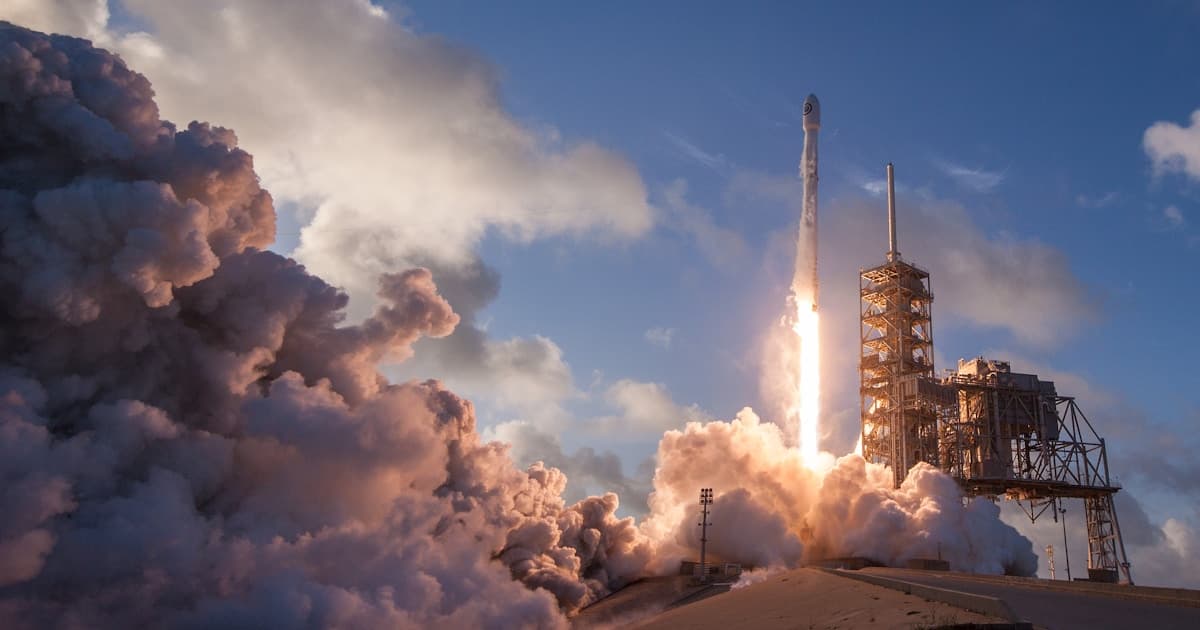
The raise is about $28 billion — the core headline of this whole event. It's the largest ever "U.S. listing by a foreign company." To be precise, though: measured against all share sales, it's the second-largest after last month's $85.7 billion SpaceX listing. Narrow it to "foreign company listing" and it's #1; broaden it to "all IPOs/share sales" and it's #2. That framing keeps it honest.
The rally: over 700% in the past year. It listed in the U.S. after already surging in Korea, which is how the market cap reached roughly $1 trillion. And the demand intensity: institutional orders topped the offering size by more than seven times. Korean media (the English edition of Asia Business Daily) reported nearly 40 trillion won of orders piling in. In IPO terms, "7x oversubscribed" isn't merely popular — it means the market could absorb this supply several times over.
| Item | Detail |
|---|---|
| Temporary ticker (today, when-issued) | SKHYV |
| Permanent ticker (from Mon 7/13) | SKHY |
| Exchange | Nasdaq |
| ADS offer price | $149 |
| ADSs issued | ~177.9 million |
| ADS ↔ ordinary share ratio | 1 ADS = 1/10 common share |
| Total raised | ~$28 billion (~39 trillion won) |
| Ranking | #1 foreign listing in U.S. history / #2 by all share sales (SpaceX is #1) |
| Trailing-year stock move | +700%+ |
| Market cap | ~$1 trillion |
| Institutional demand | 7x+ the offering |
| Use of proceeds | Domestic fab expansion (Yongin cluster, etc.), EUV lithography tools |
Where the money goes matters too. SK Hynix says the proceeds go mainly toward expanding domestic production capacity — the first fab at the Yongin Semiconductor Cluster, an advanced packaging fab in Cheongju (P&T7), and securing EUV lithography scanners that are central to cutting-edge process nodes. Because HBM is bottlenecked especially at the back-end (packaging) stage, this cash translates fairly directly into "capacity to print more HBM."
What each party gains: SK Hynix, U.S. investors, the Korean market, the AI supply chain
What SK Hynix gets is clear. First, ammunition: it just locked in $28 billion of cash in one shot to stay ahead in the HBM capacity race. The AI-memory "supercycle" is ultimately a fight over who builds more, faster — so this money counts. Second, a re-rating opportunity. SK Hynix has long carried the so-called "Korea discount" on the KOSPI, and direct exposure to the U.S. investor pool opens a path to being valued on the same yardstick as U.S. semiconductor peers. Pre-listing, SK Hynix traded around a 6.2x forward P/E — even lower than Micron's roughly 7x.
For U.S. investors, the "HBM number one" that used to be a hassle to buy is now purchasable straight from a domestic brokerage account. For anyone who wants to bet on the AI boom but feels Nvidia has already run too far, there's now an alternative: "the company that sells Nvidia an essential component." It's a new door into the AI value chain — through memory rather than through the GPU.
For the Korean market, it's symbolic. Korea's flagship tech company just got validated by the largest-ever foreign listing in the heart of U.S. capital markets, which hands the "Korea discount" debate a fresh reference point. That said, how this plays out for the KOSPI ordinary shares in the near term is still worth watching — liquidity could fragment toward the U.S., or a global re-rating could warm the ordinary shares too. Too early to call.
Finally, the whole AI chip supply chain. If SK Hynix's fresh capital flows into HBM expansion, the severe memory shortage now choking AI data-center buildouts could eventually ease. Flip that around and it means one company's expansion pace effectively governs the bottleneck of global AI infrastructure. Which is exactly why this listing isn't just an SK Hynix event — it's a financing the entire AI industry has reason to watch.
Precedents: Arm, Alibaba, Aramco, and SpaceX
Big listings always pit "this time is different" against "we've seen this before." Look at a few precedents.
The most recent "big semiconductor listing" was Arm in 2023. SoftBank floated the UK chip-design firm on Nasdaq, and riding AI enthusiasm it jumped hard on day one and kept a strong run afterward. It showed how powerful a premium the "semiconductor + AI narrative" can generate. SK Hynix has revenue tied far more directly to AI hardware than Arm does, so you could argue its version of the narrative is even purer.
For scale, the precedents are Alibaba (2014, ~$25 billion) and Saudi Aramco (2019, ~$25.6 billion). Both were among the biggest IPOs of their era, and SK Hynix's $28 billion clears both. But there's a lesson tucked in here. Alibaba dazzled at debut but got knocked around later by regulation and macro swings, and Aramco lurched with the oil cycle. "Largest ever" does not equal "best returns ever."
And the deal that just pushed SK Hynix to "#2 overall" is last month's $85.7 billion SpaceX listing. Two mega-listings in the span of a single month is itself evidence that capital markets are pouring unprecedented money into "future stories" like AI and space. That environment is great for getting deals done — but it also feeds the worried voice asking whether this is a top signal.
So the message from the precedents runs two ways. One is the optimistic read: the AI/semiconductor narrative really does command enormous premiums. The other is the cautionary read: the glamour of a mega-listing and its long-term returns are separate things. SK Hynix differs from a pure hype name because real AI revenue backs it — but entering after a 700% rally is undeniably a debatable spot.
Rivals' counter-play: Samsung, Micron, and the TSMC variable
This market is not a solo show. HBM is effectively a three-way race, and each rival holds a counter-card.
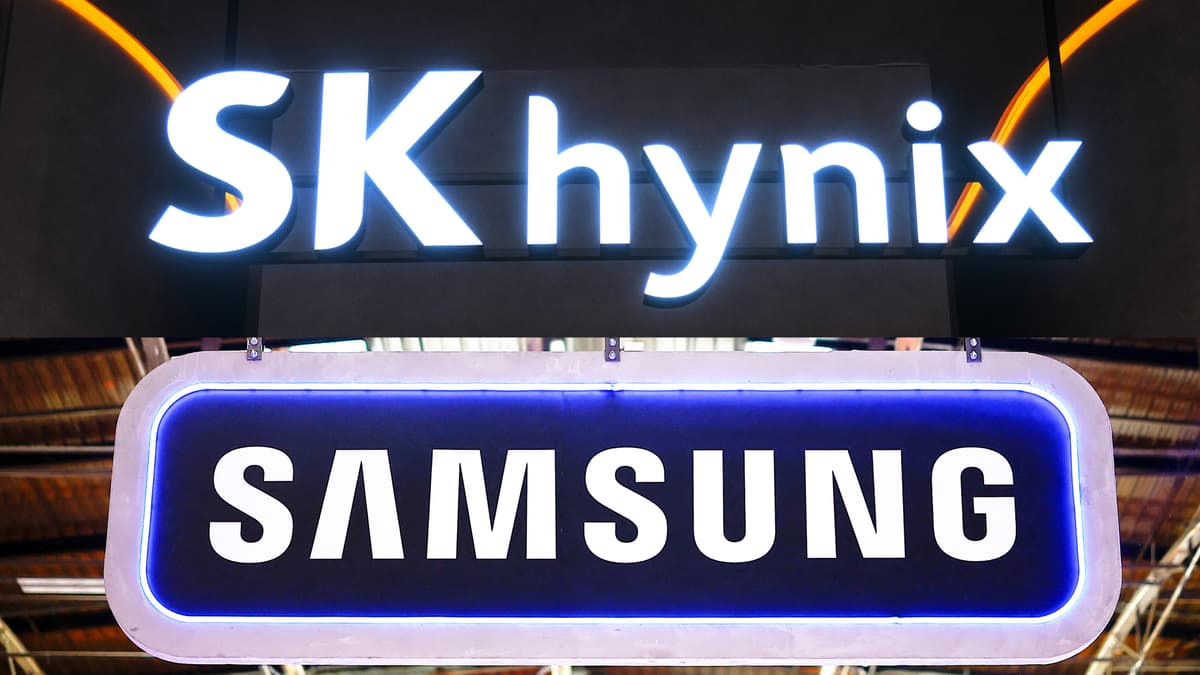
Rival one is Samsung Electronics. As a total semiconductor heavyweight Samsung is bigger, but in HBM specifically it has ceded the lead to SK Hynix. Samsung is chasing Nvidia qualification and a comeback in next-gen HBM4. Counterpoint Research projects the 2026 HBM4 market at SK Hynix 54%, Samsung 28%, and Micron 18%, so how much share Samsung reclaims here is the thing to watch. Its balance sheet, capacity, and overall memory scale remain cards you can't dismiss.
Rival two is Micron. It carries a geopolitical premium as a U.S. company, and its presence has grown to the point where some analyses say it out-allocated Samsung on certain volumes. Amid Washington's push to strengthen domestic chip supply chains, Micron can angle for an edge with specific customers and use cases via the "American-made HBM" card. In one sense, SK Hynix's Nasdaq listing puts it head-to-head with Micron on valuation — remember, pre-listing SK Hynix's forward P/E was set below Micron's.
Rival three is more of a variable: TSMC. TSMC doesn't make HBM itself, but it owns the advanced packaging (CoWoS) that fuses Nvidia GPUs and HBM into one. No matter how much HBM exists, if TSMC's packaging capacity can't keep up, final AI-accelerator shipments stall. Conversely, when TSMC adds capacity, demand for SK Hynix's HBM grows too — so the two are less rivals than "co-passengers sharing a bottleneck." Whether SK Hynix's expansion cash stays in step with this packaging bottleneck is another thing to watch.
In the end the core competitive question is this: does SK Hynix carry its dominant HBM lead through the HBM4 generation, or do Samsung and Micron claw back share in the next round? Today's listing prices "SK Hynix as the leader in this present moment." For that price to hold, the leadership has to be proven again in the next generation.
So what actually changes: for the investor, the industry watcher, the AI builder
For an investor, what changes is that "the AI-memory number one" is now buyable directly from a U.S. account. Just remember that today's SKHYV is when-issued and can be volatile, and the permanent ticker SKHY doesn't start until next Monday. Given the burden of entering after a 700% run — plus memory's signature cycle (booms are always followed by corrections) — diving in on the "largest listing ever" headline alone is risky. Strong demand (7x oversubscribed) helps early supply-demand dynamics, but it doesn't guarantee the long-run stock.
For an industry watcher, this listing confirms a status shift for memory companies. Memory used to be treated as a cyclical commodity part; thanks to HBM it's being reclassified as a "strategic asset of AI infrastructure." SK Hynix debuting in the U.S. at a trillion-dollar weight signals that the market has officially blessed that reclassification. The next things to watch are Samsung's and Micron's responses, the HBM4 mass-production race, and how U.S. semiconductor supply-chain policy tangles into all of it.
For someone actually building AI (data centers, model companies), it's a more practical matter. If SK Hynix's $28 billion flows into HBM expansion, the severe memory shortage could ease over time. But fabs and packaging lines take time to build, so there's no instant relief. In the near term, securing HBM volume remains the biggest bottleneck for scaling AI infrastructure, and this listing reads more like a promise to unclog that bottleneck over the medium-to-long term.
One sentence to sum it up: the SKHYV that appeared on Nasdaq today isn't merely a Korean company's U.S. listing — it's the moment the world's largest capital market began putting a direct price on the company that holds the physical bottleneck of the AI boom. Whether that price is justified comes down to whether SK Hynix defends its HBM leadership into the next generation.
🥄 Three Things You're Probably Wondering
— So what does this mean for me? If you wanted to bet on AI but felt Nvidia had already run too far, you can now buy "the number-one supplier of an essential AI part" straight from a U.S. account. But it's already up 700% in a year, so whether this is a good entry point is too early to call.
— Should I just buy SKHYV today? Today's SKHYV is when-issued trading, not the regular listing, so it can be volatile. The permanent ticker is SKHY, starting next Monday (7/13). Rather than rushing in on day one, it's safer to understand the structure before you act.
— If it's the HBM leader, doesn't it just keep going up? It's the leader right now, but memory is a cyclical industry, and Samsung and Micron are gunning to reclaim share in the next generation (HBM4). Whether today's dominant lead carries into that generation is still unproven, so watch it.
Sources
- CNBC — Meet SK Hynix, the trillion-dollar chipmaker debuting on U.S. markets
- CNBC — SK Hynix plans to raise $29 billion via Nasdaq listing as soon as July 10
- Reuters/Yahoo Finance — SK Hynix launches Nasdaq debut with $28B US share offering
- Yahoo Finance — SK Hynix's $28 Billion Nasdaq Listing Would Be the Second-Biggest Share Sale Ever
- SEC EDGAR — SK hynix Inc. Form F-1/A (FY2026 registration statement)
- SK hynix Newsroom — 2026 Market Outlook: HBM-led memory supercycle
Numbers and criteria are as of announcement and may change. Investment calls are yours to make!