The Fed Just Invited a Venture Kingpin Into the Monetary-Policy Room to Judge What AI Does to Jobs and Prices
Here's the deal: this is a genuinely strange pairing. On one side, the Federal Reserve — the beating heart of U.S. monetary policy. On the other, Marc Andreessen, the Silicon Valley venture capitalist who has spent years insisting that "software is eating the world." And now they're sitting at the same table.
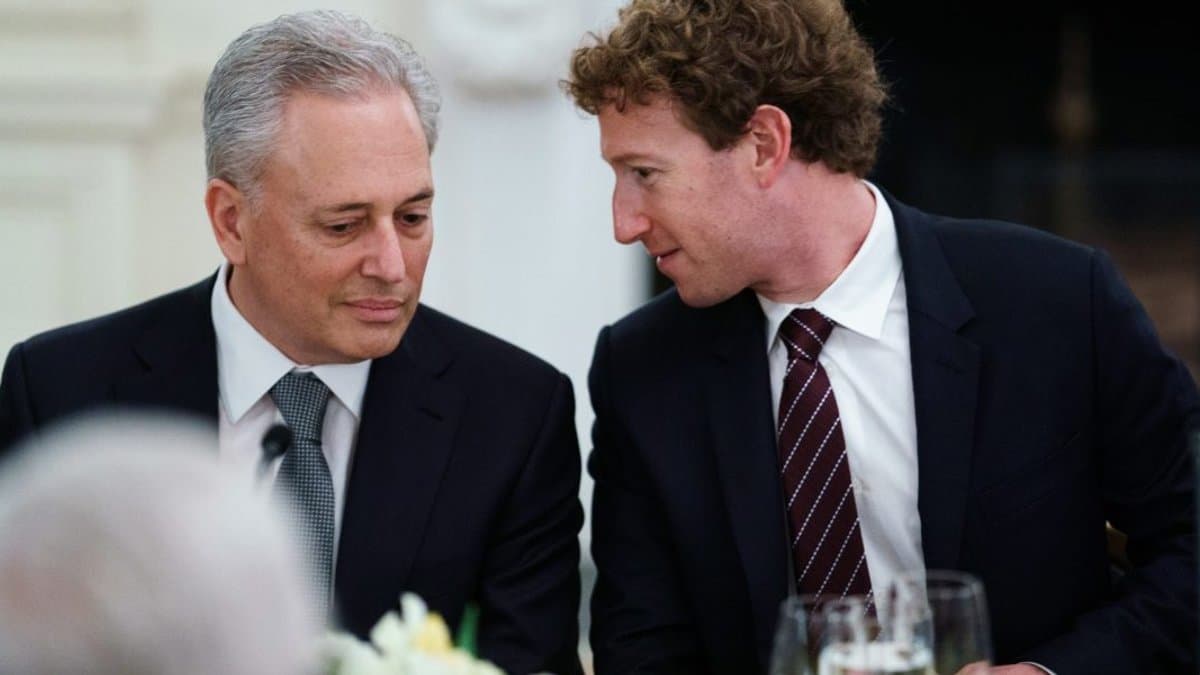
On July 9, 2026, Fed Chair Kevin Warsh announced five task forces made up of outside experts, framed as part of a top-to-bottom rethink of the Fed's monetary-policy framework. The one that grabbed everyone's attention is the "Productivity and Jobs" panel. Its co-chairs? a16z (Andreessen Horowitz) co-founder Marc Andreessen and Microsoft's Asha Sharma, sitting side by side.
The mission is clear enough. The panel is tasked with evaluating how AI and other general-purpose technologies (GPTs) affect the labor market and productivity growth, and delivering concrete recommendations by year-end. Put plainly: the Fed wants to figure out whether AI is really going to chew through jobs, or whether it'll juice productivity so hard that it grows the whole pie — and it wants that answer as an input to policy.
And that's where the weight lands. The Fed operates under a "dual mandate": stable prices and maximum employment. If AI rattles employment, that's a question that reaches all the way to interest-rate decisions. Yet for the advisory seat on that question, the Fed didn't reach for a government bureaucrat or an academic labor economist — it reached for a guy who has poured billions into AI startups. Why that's a big deal is worth unpacking piece by piece.
The Cast: Warsh, Andreessen, and Sharma
Start with Kevin Warsh. He's no stranger to the Fed. He served as a Fed Governor from 2006 to 2011, riding out the financial crisis as a monetary-policy veteran. He's less an ivory-tower economist and more a practitioner who has moved between Wall Street and policy. He's long been known as hawkish — critical of the Fed's easy-money leanings — and on taking the chairmanship he declared he'd re-examine the monetary-policy framework itself. Standing up five task forces is the symbolic opening move of that review.
Next, the star of this appointment: Marc Andreessen. He's a genuine legend — the guy who built the Netscape web browser in the 1990s — and in 2009 he co-founded the venture firm Andreessen Horowitz (a16z) with Ben Horowitz. a16z is now one of the largest venture firms in the world by assets under management. Over the past few years it has invested aggressively across AI infrastructure, models, and applications. Andreessen himself published the "Techno-Optimist Manifesto" in 2023, publicly pushing an extreme optimism that casts AI as a tool that will "save" humanity. He's also a well-known, forceful opponent of regulation, and he's been increasingly vocal politically.
Third is the less-famous name here: Asha Sharma. She's a Microsoft executive who leads AI platform and product work. If Andreessen represents the "investor and ideologue" lens, Sharma represents the "operator on the ground" lens — someone actually shipping AI products at scale and selling them to enterprise customers. Pairing the two as co-chairs was probably a deliberate balancing act: capital's view and product's view in one panel.
Look at that lineup and you can roughly sketch what Warsh wants. He seems to have decided that traditional labor economics — its statistics and models — can't capture the change AI is about to unleash. So he seated the people actually turning that change into money and products. Which, of course, is also the seed of the controversy.
What Actually Happened — The Task Force in Concrete Terms
Let's nail down the facts. Chair Warsh created five outside-expert task forces to support a review of the monetary-policy framework, and Andreessen co-chairs the "Productivity and Jobs" panel. That panel's job is to assess how general-purpose technologies like AI affect the labor market and productivity, and to produce recommendations by year-end.
Why does the phrase "general-purpose technology" matter? In economics, GPT refers to technologies that fundamentally reshape the whole economy — electricity, the steam engine, the internet. The Fed placing AI in that category signals it's treating this not as a passing fad but as a variable capable of reshaping the macroeconomic structure.
| Item | Detail |
|---|---|
| Announced by | Fed Chair Kevin Warsh |
| Date | July 9, 2026 |
| Overall scope | Five outside-expert task forces |
| This panel | Productivity and Jobs |
| Co-chairs | Marc Andreessen (a16z co-founder), Asha Sharma (Microsoft) |
| Mission | Assess labor-market and productivity impact of AI / general-purpose tech (GPT) |
| Deliverable timing | Concrete recommendations by year-end |
| Context | Part of a full monetary-policy framework review |
One thing to be clear about: this does not mean Andreessen is now setting interest rates. The task forces are advisory, and actual monetary-policy decisions belong to the Federal Open Market Committee (FOMC). But when advice arrives as formal recommendations, and those recommendations feed a framework review, you can't say the influence is zero. Who's in the room ends up shaping the agenda — that's just how it works.
Another point: Warsh didn't create one panel, he created five. That signals the Fed intends to re-examine multiple axes of monetary policy at once, and carving out "AI and jobs" as its own independent axis shows how heavily it weighs this subject. Compare that with the Fed's last framework review (under Powell, 2019–2020), which focused mostly on internal monetary-policy debates like the inflation target and average-inflation targeting. This time the aperture has widened to include "how technology reshapes economic structure."
Who Gains What — The Stakes Map
Start with Chair Warsh. This appointment gets him two things. One is genuine insight. To get a feel for what AI is actually doing on the industrial front lines — before the data catches up — you have to listen to the people at the edge. The other is a political and symbolic signal. Warsh wants to rebrand the Fed as an institution that reacts nimbly to the real economy and to technological change, and bringing in a Silicon Valley icon maximizes that message.
What does Andreessen get? This is the delicate part. He's spent years as a critic of regulation and government intervention. And now he's seated at the advisory table of the most powerful economic institution in America. That's a seat from which the interests of the AI companies a16z has backed can be represented at the earliest stage of policy debate. If an AI-friendly macro narrative — the "AI doesn't take jobs, it explodes productivity" story — seeps into the Fed's recommendations, that could work in favor of the entire AI sector's valuations and its regulatory environment. This is the core of the conflict-of-interest concern.
The same goes for Sharma and Microsoft. Microsoft has bet its future on AI infrastructure and enterprise AI products. Having its executive on this panel means Microsoft's perspective is reflected in the very place where the policy narrative about AI's employment effects gets written. That said, Sharma can bring real deployment data and instincts from the field, which has value in its own right.
And don't forget the stakeholder who isn't in the headlines — the ordinary worker. This panel's conclusions could shape how the Fed interprets the employment picture, and that reaches everyone's loans, home prices, and job security through the interest-rate channel. Yet how much weight worker representatives or labor economists carry at that table isn't clear from the crawl data alone. How that balance is struck will determine how credible this task force turns out to be.
Historical Parallels — The Fork Between Success and Failure
History offers several cases of governments seating tech optimists as policy advisers. The outcomes split.
On the success side, people often cite Fed Chair Alan Greenspan's "productivity bet" in the late 1990s. Unemployment was falling and yet inflation stayed oddly tame. Ahead of the statistics, Greenspan judged that "the IT revolution is structurally lifting productivity" and held off on rushing rate hikes. That call ended up underwriting the long boom of the late 1990s — a textbook success of reading technological change into macro policy early. What the Andreessen panel is chasing is essentially that Greenspan-style insight: read AI's productivity effect before all the data is in.
On the flip side, the failures are just as vivid — cases where tech optimism overshot and inflated a bubble. During the 2000 dot-com bubble, the "this time it's different, the internet has rewritten every economic law" narrative overheated markets and ended in collapse. If a set of recommendations overstates AI's productivity effect and the Fed leans on it to set policy, you risk asset bubbles or a misread of the labor market.
A different flavor of precedent is the Obama administration's various technology and innovation advisory councils. It pulled Silicon Valley figures into government advising en masse — some produced good insight, but the critique that "industry stakeholders are designing the regulation of their own industry" never went away. That conflict-of-interest problem is very likely to repeat here, especially with someone like Andreessen who has invested directly in AI.
Bottom line: injecting frontier insight into policy is a powerful weapon, but the moment that insight gets contaminated by self-interest, it turns into poison. This panel's success or failure comes down to how many mechanisms are attached to test and rebut Andreessen's optimism. It's too early to say for sure, but pairing him as co-chair with Sharma from the product front lines may be a designed check.
The Counter-Plays From Rivals and Opponents
Not many camps are going to view this appointment charitably. Expect counter-plays from several directions.
First, labor economists and progressive policy groups. They've warned for years that AI displaces low- and mid-skill jobs and widens inequality. Scholars like MIT's Daron Acemoglu have published empirical work arguing AI automation ramps up the displacement effect before the productivity effect. From their vantage, seating an extreme optimist like Andreessen as co-chair looks like the conclusion was set in advance. Expect pushback in the form of open letters or alternative reports.
Second, the political arena. Fed independence is always a hot potato in U.S. politics. If seating a particular flavor of venture capitalist as an adviser reads as partisan, it could spill into congressional hearings or oversight pressure. To keep its image as a "neutral technocratic institution," the Fed will have to manage this carefully.
Third, rival venture and Big Tech camps. a16z gaining a voice at the advisory table is unwelcome news for competing VCs and other Big Tech players. Expect lobbying and public-opinion campaigns aimed at checking whether the AI policy narrative gets tilted toward one camp. The open-source-versus-closed-model fight, and the rivalry among the big cloud providers, could all replay themselves over this advisory channel.
Fourth, unions and civil society. Worker organizations facing actual layoffs or reassignments from AI adoption will argue that "our future is being debated without us in the room." If that voice grows loud enough, the Fed may need to add labor-side figures or open separate listening channels to restore balance.
The common thread through all these counter-plays is a single question — who gets to write AI's macro narrative? The Fed's recommendations won't be just a document; they could become the reference point that frames AI regulation, investment, and employment debates for years. That's why everyone wants their perspective carved into that frame.
So What Actually Changes — By Persona
For developers and AI engineers, nothing in your code changes tomorrow. But it matters over the medium term. The Fed taking AI's productivity effect seriously means AI is being formally recognized as "infrastructure that reshapes the real economy." That can translate into a macro environment friendly to AI budgets, hiring, and investment. Conversely, if the panel lands hard on "AI is chewing through jobs," automation-related regulatory debates could accelerate. Either way, it's a signal that what you build is now on the policy radar.
For investors, this is a notable signal. An AI-friendly figure entering Fed advising can, at least in the short term, act as psychological support for AI valuations. But be cold-eyed: the task force is advisory, not a rate-setting seat. Reshuffling a big position off this one appointment would be hasty. It's more worthwhile to watch the direction of the year-end recommendations and the political reaction around them. Too early to call.
For business leaders, this trend firms up the policy legitimacy of AI adoption a bit more. The mere fact that an institution like the Fed is reviewing the "AI as productivity tool" narrative can serve as a board-persuasion argument for AI investment. At the same time, since the "impact on employment" is being assessed too, companies pushing aggressive automation and headcount cuts may face heavier policy and public scrutiny going forward.
For ordinary users and workers, this is the most direct yet most uncertain layer. The panel's conclusions shape how the Fed reads employment, and that reaches your loan rates, home prices, and job stability through the interest-rate channel. The glass-half-full read: the nation's top economic institution is finally taking the employment question of the AI era seriously. The glass-half-empty read: that table may be tilted toward industry interests. What we should watch is how much of a "worker's perspective" makes it into the year-end recommendations.
🥄 Three Things You're Probably Wondering
— So what does this mean for me? Nothing changes right away. But if the recommendations this panel delivers at year-end seep into how the Fed reads employment and rates, that can come back to you as loan rates and job security. Right now it's the "watch who's sitting in the room where your future is debated" stage.
— Why now, of all times? Because it's the opening move of Warsh's declaration, as new chair, to re-examine the entire monetary-policy framework. The moment AI grew into a variable big enough to shake the macroeconomy overlapped with a new chair wanting to stamp his own mark. That looks less like coincidence and more like a calculated first move.
— Is it common for a venture capitalist to advise the Fed? No, it's unusual. That seat usually goes to academic economists or government officials. Seating someone who has invested directly in AI makes the conflict-of-interest debate hard to dodge. Whether pairing him with a Microsoft product executive as co-chair is a genuine check or just industry bias — you'll have to see the year-end output to judge. Too early to call.
Further Reading
- Axios — Fed's Warsh names task forces, taps Andreessen (2026-07-09)
- Washington Post — Federal Reserve enlists Marc Andreessen to advise on AI under Warsh (2026-07-09)
- Federal Reserve — Official page on the review of monetary policy strategy, tools, and communications
- a16z — Firm and partners overview
- Marc Andreessen — The Techno-Optimist Manifesto (a16z, 2023)
Figures are as of announcement and may change.