A Chipmaker Raised Its Bet to $250 Billion — And Backed It With the Sound of Shovels
Here's the deal. On July 9, Micron raised the amount it plans to pour into the United States through 2035 to $250 billion+. That's not just a big press-release number. On the very same day, the first concrete was actually poured at the Clay, NY fab site. The announcement and the shovels landed together. Why does that matter? Because in the semiconductor world there's usually a multi-year gap between promising to build and actually building — and that gap is where countless projects quietly slip or die. Micron says it's closing that gap by moving into vertical construction a quarter-plus ahead of its original schedule.
Let's frame the size of the money first. $250 billion is the largest sum a single company has ever committed to U.S. semiconductor manufacturing. With it, Micron plans to build up to four advanced memory fabs in the U.S., with the center of gravity split between the Clay, NY campus and Boise, Idaho. The New York project alone is projected to create roughly 50,000 jobs across New York State, including about 9,000 direct Micron hires. The rest are indirect — construction, suppliers, and the local economy that grows around a fab.
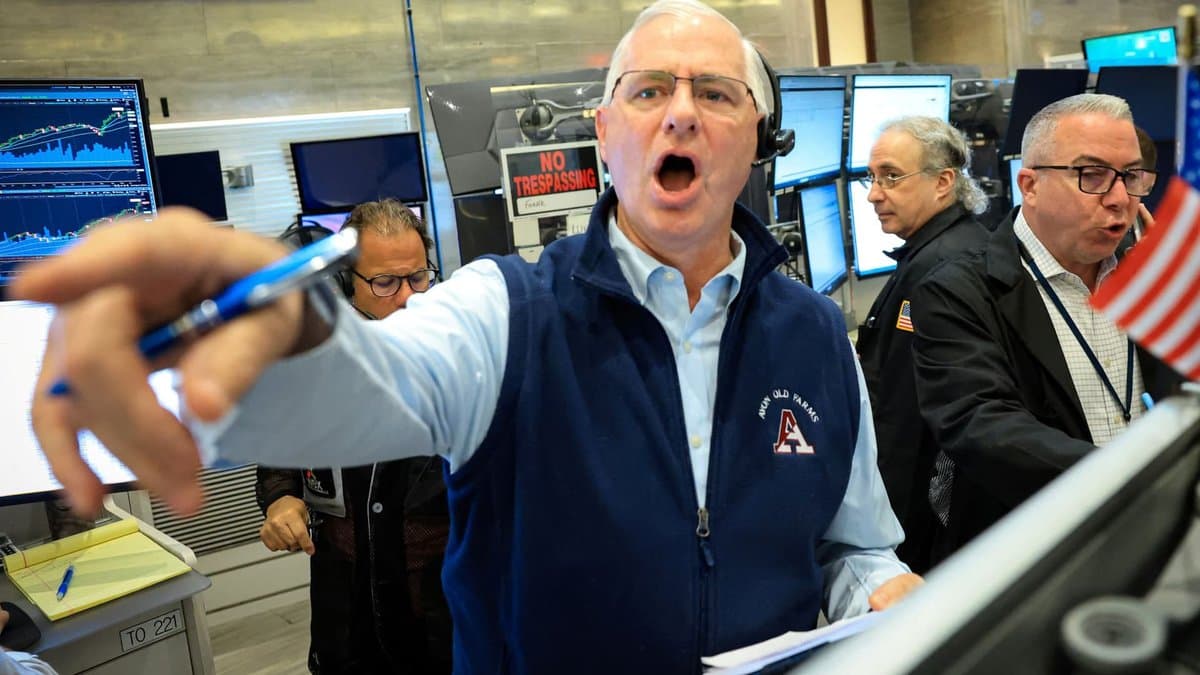
And the timing is sharp. Three days earlier, on July 6, Micron signed a long-term memory supply agreement with Ford. As cars turn into "data centers on wheels," automotive memory demand is climbing structurally, and Micron pre-wired a picture of filling that demand with U.S.-made wafers. The market reacted immediately — Micron's stock jumped about +5% after the announcement.
Here's the full story we're unpacking today: why Micron chose now to raise its bet this dramatically, how AI pushed the decision, what it changes for developers, investors, businesses, and ordinary consumers, and how rivals like Samsung and SK hynix might counter. The cast is one protagonist and the board around it — Micron, the only U.S.-headquartered integrated memory maker; the U.S. government's reshoring drive behind it; and the AI memory frenzy that set the whole thing off.
Meet the Protagonist — Who Micron Is, and Why This Is a Big Deal
Micron Technology is a memory-chip company headquartered in Boise, Idaho. It makes both DRAM (the memory that briefly holds working data) and NAND flash (the memory that stores data long-term), and that dual position is rarer than it sounds. The memory market is effectively an oligopoly split among three players — Samsung, SK hynix, and Micron — who together own most of the world's DRAM. And of those three, Micron is the only one headquartered in the U.S. that's trying to mass-produce advanced memory on American soil. The other two are Korean.
That "only one" status is giving Micron enormous political and strategic value right now. The U.S. has spent the last several years elevating chips to a national-security issue. Logic chips (the compute kind) have seen real reshoring as TSMC, Intel, and Samsung stood up fabs in Arizona, Ohio, and Texas — but memory production on U.S. soil stayed comparatively thin. Micron is the card that fills that gap. So when Micron says it'll put $250 billion into the U.S., it doesn't read as a plain corporate CAPEX announcement — it reads like a symbolic win for American industrial policy.
There's one product that decisively lifted Micron's recent fortunes: HBM (High Bandwidth Memory). HBM is specialty memory built by stacking DRAM dies vertically to create an extremely wide data pipe, and it sits right next to AI accelerators (GPUs) from companies like Nvidia, feeding them data fast enough that the GPU never starves. In AI training and inference, the bottleneck isn't just raw compute speed — it's how fast memory can deliver data. HBM holds that leash. Micron was a latecomer to HBM but climbed fast and is now selling its supply nearly sold-out.
Put simply, Micron is one of the cleanest "downstream beneficiaries" of the AI boom. However many GPUs ship, HBM ships alongside them. When Nvidia sells a chip, Micron sells the memory bolted to it. Because Micron judged this demand to be not a passing fad but a "structural need for more capacity," it placed a 10-year, mega-scale bet.
What Actually Happened — The Skeleton of the Announcement
Break the July 9 announcement into three chunks. First, the raised investment target — the U.S. commitment through 2035 grew to $250 billion+. Second, physical progress on the New York fab — the first concrete pour at Clay moved the project from grading dirt to putting up an actual building, and Micron did it a quarter-plus ahead of the original timeline. Third, a demand-side anchor — the Ford long-term supply deal days earlier reinforced the "build it and there are buyers" picture.
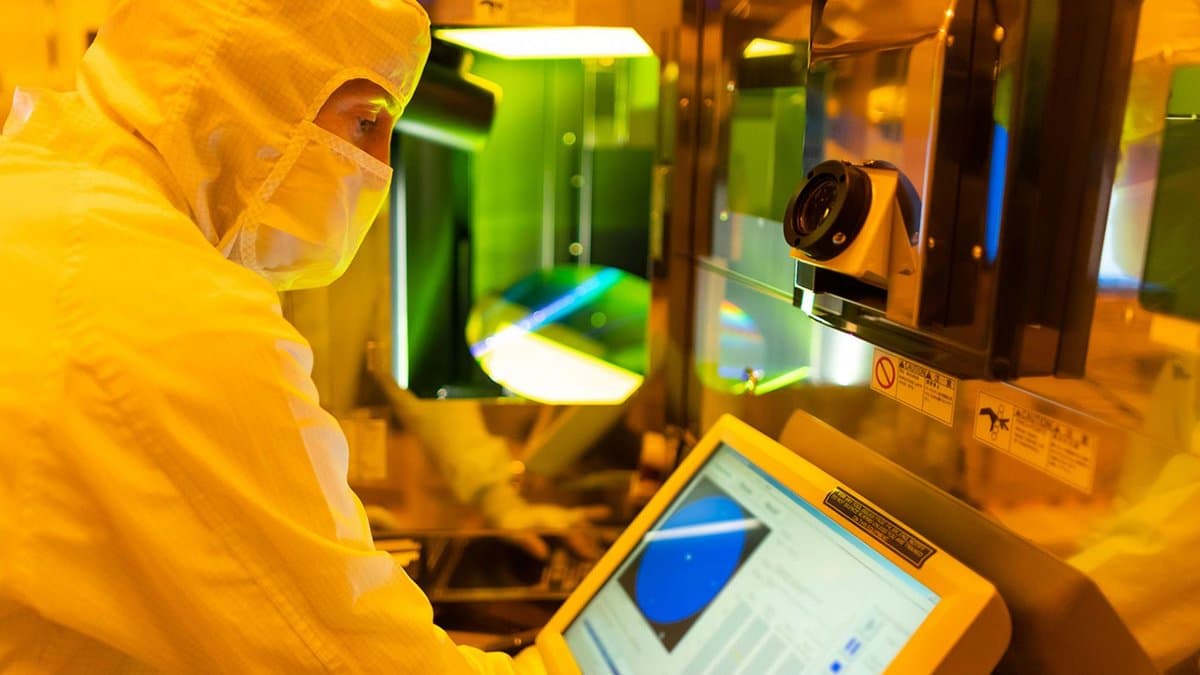
That phrase "first concrete pour" is quietly symbolic in the industry. Fab construction usually runs permitting → site prep → foundation concrete → structure → cleanroom → tool move-in → high-volume manufacturing (HVM), and a lot of projects stall in the early permitting and environmental-review stages. "We poured concrete" signals you've cleared that risky window, which is why the market likes it. Doing it ahead of schedule adds a "this company means it" message on top.
| Item | Detail |
|---|---|
| Announcement date | July 9, 2026 |
| U.S. investment target | $250 billion+ through 2035 (raised) |
| Scale | Largest ever in U.S. semiconductor manufacturing |
| Fab plan | Up to four advanced memory fabs in the U.S. |
| Clay, NY progress | First concrete poured — vertical construction begins |
| Schedule | A quarter-plus ahead of original plan |
| Jobs | ~50,000 in New York State (incl. ~9,000 direct Micron hires) |
| Demand anchor | Long-term memory supply deal with Ford (July 6) |
| Market reaction | Micron stock up ~+5% post-announcement |
| Backdrop | Surging AI-era HBM demand, U.S. chip reshoring / CHIPS Act |
One-line summary of the table: "A company that had been talking finally broke ground, broke it earlier than planned, and lined up a buyer in advance." Big semiconductor investment announcements are common — but having all three land in the same week is rare. That's why the market answered with +5%.
One more thing. Micron has been signaling this New York project as "the largest memory fab complex in U.S. history" for years. Today's news doesn't redraw that big picture — it's closer to an update that raised the total and sped up the clock. So read it less as a "new project announcement" and more as an "acceleration declaration for an existing mega-project."
Who Gains What — The Interests at the Table
Start with Micron. Its logic is clear. If the read that AI memory demand is "structural" is correct, then a company that's late to add capacity will fail to supply volume a few years out and lose share. Memory is a cyclical industry that has repeated the same history — "don't build when it's cheap, build when it's expensive, then all collapse together into oversupply." Micron's calculation this time is to build "pre-emptively, while demand is clearly visible, and with the U.S. government at its back." Pulling high-margin, sold-out product lines like HBM out of a U.S. fab lets it lower cost, currency, and geopolitical risk all at once.
For the U.S. government, this is a policy trophy. Chip reshoring has been a marquee industrial-policy line for years; logic chips delivered results, but memory stayed comparatively empty. Micron mass-producing advanced DRAM and HBM on U.S. soil completes the narrative that "America makes its memory at home, too." And with much of those 50,000 jobs landing in areas like upstate New York that struggled with manufacturing hollow-out, the political optics are great.
For the local economy, it's obvious. One fab drags in construction labor, then materials-gas-parts suppliers, then the housing, schools, and commerce that grow as engineers settle. An "anchor industry" arriving means a generational economic map gets redrawn. That's exactly what the Clay–Syracuse region is chasing.
There's also the demand-side partner, Ford. As cars become masses of software and electronics, the memory in a single vehicle keeps rising, and locking supply to a stable U.S.-based source frees Ford from geopolitical risk and tariff variables. So the July 6 deal is a win-win: Micron gets a "demand anchor," and Ford gets "long-term stable supply."
Past Parallels — Wins and Failures
Big chip-investment announcements are always flashy, but outcomes have ranged from triumph to disaster. Start with a win. TSMC's Arizona project hit early turbulence over labor, culture, and cost, with schedule slips and plenty of noise — but it eventually reached the stage of actually running an advanced foundry on U.S. soil. It partly broke the skepticism that "you can't run fabs in America." The core lesson: the real scorecard isn't the announcement, it's tool move-in and yield (the rate of successful mass production).
On the flip side, there's a painful case. Foxconn's Wisconsin project launched with loud promises of massive jobs and investment, but the actual result landed at a tiny fraction of the pledge. It's the textbook failure showing that "MOUs and groundbreaking ceremonies are easy; completion and hiring are hard." That's why industry veterans, when they see a chip-investment announcement, look past the headline dollar figure to "when do they pour concrete, when do tools move in, when does the first wafer come out." Micron putting "first concrete" front and center this time reads as a deliberate rebuttal to that learned skepticism.
Intel's Ohio project is another lesson. It was announced loudly but had its timeline adjusted repeatedly depending on market demand and financing. In other words, a mega-fab plan isn't a "fixed promise" — it's a "living plan that grows and shrinks with demand, funding, and policy." Micron's $250 billion target runs on a long "through 2035" horizon, so if the memory cycle rolls over midway, there's naturally room for the pace to be adjusted. Too early to say for sure.
Even so, one decisive point sets Micron's case apart from those failures — the demand is visible. Foxconn and Wisconsin leaned on the optimism that "demand will follow if we build." Micron is adding capacity while already selling HBM out and having secured anchor deals like Ford. That "demand first, supply second" ordering is what raises this bet's odds of success.
Rivals' Counter-Play — How Samsung and SK hynix Might Answer
In the memory big-three structure, Micron's move directly pressures the other two. First, SK hynix. It's regarded as the HBM leader, seen as furthest ahead in Nvidia-bound volume. SK hynix is also investing in advanced packaging and HBM-related capacity in Indiana, so if Micron pushes its U.S. mass-production card hard, the fight over "who catches U.S. customers from closer up" only intensifies. In the arena of U.S. government procurement, subsidies, and a security premium, Micron's "U.S.-headquartered" card carries quiet weight.
Samsung is building a large logic foundry in Taylor, Texas, and has world-class memory technology, but there's been talk that it struggled with qualification and ramp speed on the latest HBM generation. From Samsung's seat, Micron's U.S. drive looks like the "memory reshoring narrative" being handed to Micron — not welcome. Its response will likely split two ways: lead again on technology in the next HBM generation, or deepen U.S.-based production and customer proximity.
The interesting wrinkle here is that all three companies are shifting toward competing "inside the U.S." Where the map used to be geographically split between Korea and America, the picture now has three companies fighting over fabs, customers, and talent inside the American market. That means competition for talent (chip engineers are scarce everywhere), for materials and equipment suppliers, and above all for landing big-spender customers like Nvidia and AMD — all playing out on U.S. ground simultaneously.
For customers like Nvidia, this competition is welcome. Three suppliers racing to add capacity inside the U.S. means more HBM supply, more negotiating leverage, and diversified geopolitical risk. So Micron's announcement shouldn't be read as merely Micron-versus-rivals — it's one scene in a larger current pulling the entire AI-hardware supply chain into the U.S. Who ultimately wins that current is too early to say for sure — in the end, yield and timing decide it.
Finally, the wildcard is the cycle. Memory booms and busts roll like waves. Right now it's a super-boom thanks to AI, but if all three companies enter large-scale expansion at once, the familiar scenario — oversupply → price crash → collective losses a few years out — could replay. Since Micron is betting on "pre-emptive expansion," how it manages that cycle risk is another axis of success or failure.
So What Actually Changes
For developers and engineers — your code doesn't change today. But over the medium term, "more U.S.-made advanced memory and HBM supply" affects the cost structure of AI infrastructure. Memory is a non-trivial chunk of AI data-center cost, and as supply grows and geography diversifies, there's room for price and availability swings to ease over the long run. It's also a signal that hiring demand for chip engineers, equipment, and software is opening up big in the U.S.
For investors — this announcement is management's own conviction that "Micron sees the AI cycle as a 10-year structural shift, not a passing fad." The +5% reflected that. But $250 billion is enormous CAPEX that will weigh on free cash flow, debt, and depreciation for a long time, and if the memory cycle rolls over, this expansion could become a burden instead. So weigh the upside ("AI tailwind + government support") against the downside ("mega-CAPEX + cycle risk") together. The call is yours.
For businesses and industry leaders — the Ford deal is the tell. Beyond AI, memory demand is growing structurally across autos, industrial, and edge devices, and the move to lock supply chains to stable U.S.-based sources is now in earnest. If you're a hardware company exposed to tariffs and geopolitical risk, it's a signal to redesign "where you source critical components."
For ordinary consumers — the direct impact is slow, but the direction is clear. For AI services to keep getting cheaper and more common, the memory behind them has to be plentiful and affordable, and expansions like this lay that foundation. And local effects like 50,000 New York State jobs show that chips are no longer "somebody else's country's story" but tied to neighborhood jobs and commerce. Of course, completion takes years, so nothing changes tomorrow.
🥄 Three Things You're Probably Wondering
— So what does this mean for me? Directly it's slow, but the AI services, cloud, and even the chips inside your car ultimately ride on this memory supply chain. As supply grows and diversifies into the U.S., there's room for prices and stability to improve over the long run. Just note it takes years to complete, so you won't feel it right away.
— Why now, of all times? AI grew HBM demand structurally, and Micron judged it a 10-year shift rather than a passing fad. On top of that, the U.S. government's reshoring push and the CHIPS Act had its back. The calculation is "build pre-emptively while demand is clearly visible" — though if the cycle rolls over the story changes, so it's too early to say for sure.
— Is Micron actually ahead of its rivals? On the "U.S.-headquartered" card, definitely ahead — in areas with government procurement and a security premium, it beats SK hynix and Samsung. But on HBM technology itself, SK hynix is still seen as the leader, and yield and timing will ultimately decide it, so calling Micron "ahead" outright is too early.
Sources
- Micron Accelerates U.S. Investments, Pours First Concrete at New York Fab — GlobeNewswire (Micron)
- Micron stock rises on accelerated U.S. chipmaking plans — CNBC
- Investing in the U.S. — Micron
- CHIPS and Science Act overview — NIST/U.S. Commerce
- Final agreement to provide Micron up to $6.1B under the CHIPS Act — U.S. Department of Commerce
Numbers and criteria are as of announcement and may change. Investment calls are yours to make!