Over a Trillion Dollars Gone — While Sales Hit a Record High
Here's the deal: in a matter of days, more than $1 trillion in market cap evaporated from the semiconductor sector. Just the number sounds like a catastrophe, right? But here's the funny part — the industry data released that very same week said the exact opposite. Global semiconductor sales for May came in at $120.6 billion, an all-time record. That's up 9.2% month-over-month and a staggering 104.1% year-over-year. Sales more than doubled in a single year.
So what's happening in the market right now is not a case of "business is bad, so the stock is falling." Business is booming like never before, and yet investors suddenly started to doubt: "How long can this money party actually last?" That subtle gap is the heart of this selloff, and if you're holding anything AI-adjacent, it's the thing you need to understand over the next few months.
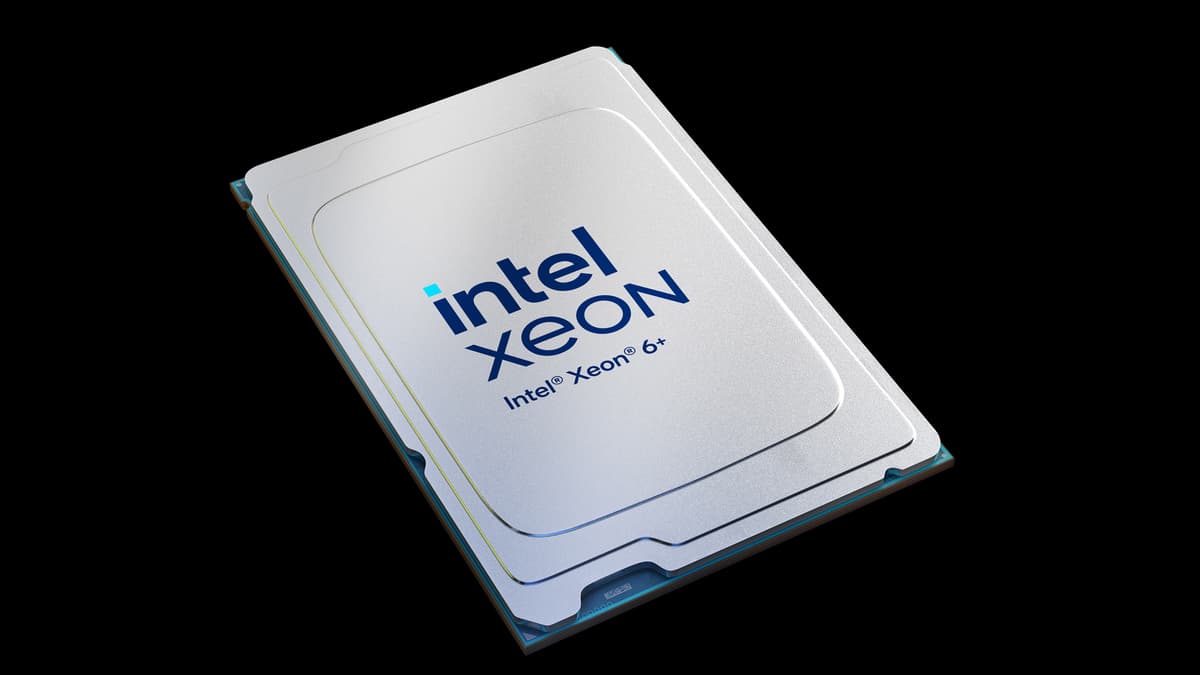
The trigger was Intel. Intel's stock fell 21% during this stretch — a fifth of its value gone in a day or two. The S&P 500, which had hit an all-time high on June 2, pulled back about 2% afterward, and the tech-heavy Nasdaq slid roughly 5%. At the index level that doesn't look dramatic, but zoom in on the names concentrated in the AI and chip theme and it hurt a lot more. The market's center of gravity had piled into a handful of mega-cap chip and AI stocks, so when those wobbled, the indexes wobbled with them.
What's genuinely interesting is how the analysts reacted. Instead of joining the panic, a lot of them diagnosed this as not a bubble bursting but a "mid-cycle reset." They largely kept their 12-month price targets on core names like Nvidia and Micron intact. The market was terrified while the people who cover these stocks were saying "this is a normal breather" — that temperature gap is both the fun and the difficulty of reading this event.
The Players — Intel, and the Giant Bet Called AI Capex
The company at the dead center of this story is Intel. Intel was once the undisputed king of the chip world. There was a time you could barely imagine a PC without an "Intel Inside" sticker. But over the past decade-plus, Intel has been pushed back on multiple fronts. It got crushed by the ARM camp in mobile, kept losing data-center CPU share to AMD, and — most damaging — never built a real presence in the AI accelerator market against the towering wall that is Nvidia. It's pouring enormous capital into a foundry (contract manufacturing) comeback, but when that investment turns into profit is still a question mark.
That's why Intel was the most fragile link in this selloff. It's not a company raking in cash at the front line of the AI boom — it's the one spending furiously to catch up. When investors ask "can AI capex actually be recouped?", the first to get hit is the company whose confidence in future earnings is thinnest. Intel's 21% plunge was that psychology compressed into a single event.
On the other side are the real winners of this cycle. Nvidia has ballooned its market cap by selling GPUs for AI training and inference in what's effectively a near-monopoly, and Micron's earnings exploded thanks to demand for the high-bandwidth memory (HBM) that AI servers can't live without. TSMC in foundry, ASML in equipment — these are all protagonists who rode this capex wave upward. The selloff hit these winners' share prices too, without exception, but they're also exactly the names where analysts held their price targets.
And the true protagonist running through all of this isn't a ticker at all — it's the giant bet known as AI capex itself. The money hyperscalers like Microsoft, Google, Amazon, and Meta are pouring into AI infrastructure is already beyond common sense in scale. Data centers, GPUs, power, cooling, networking gear — hundreds of billions of dollars a year flow into this ecosystem. The chipmakers' record sales are ultimately a mirror image of that spending. So "is capex sustainable?" is really the same question as "are chip sales sustainable?", and this selloff was the first moment the market got seriously scared of the answer.
What Actually Happened
Here's the recap. U.S. stocks, cruising after an all-time high on June 2, sharply changed direction in early July as Wall Street's doubts about the sustainability of AI capex grew. More than $1 trillion in market cap vanished from the semiconductor sector alone, with Intel's 21% plunge at the epicenter. Yet May's global chip sales, reported that same week, set an all-time record at $120.6 billion. On top of that, Micron announced a massive $250 billion investment plan. The data (real demand) and the sentiment (stock prices) pointed in opposite directions.
| Item | Figure | What it means |
|---|---|---|
| Chip-sector market cap wiped out | $1T+ | The scale of the plunge over a few days |
| Intel share price drop | -21% | Epicenter of the selloff, the weakest link |
| S&P 500 (vs. June 2 peak) | ~ -2% | A mild pullback at the index level |
| Nasdaq (vs. June 2 peak) | ~ -5% | A deeper drop, led by tech |
| May global chip sales | $120.6B | All-time record (+9.2% MoM) |
| Year-over-year sales growth | +104.1% | More than doubled in a year |
| Micron new investment announced | $250B | Same week, confidence in real demand |
Read that table and you can see at a glance why the market is confused. The top three rows (cap wiped out, Intel plunge, index pullback) speak the language of fear. The bottom three (record sales, doubled growth, mega-investment) speak the language of a boom. Both stories ran at the same time, in the same week.
The question Wall Street posed is essentially one thing: "How long can hyperscalers keep spending like maniacs, and can that spending actually come back as real revenue and profit?" The fear that AI infrastructure spending vastly exceeds the money being earned from AI services — the scenario where "if ROI doesn't show up, spending will slam the brakes at some point" — was the underlying psychology of this selloff.
The "mid-cycle reset" camp counters like this. The chip sales we're seeing right now reflect genuine orders and shipments, not inventory inflation. You can't manufacture 104% year-over-year growth with accounting tricks. And Micron dropping $250 billion in the same week is a signal that at least that company seriously believes in years of demand ahead. So this drop is a healthy correction of overheated valuations returning to normal — not the end of the cycle.
Who Benefits, and Why Everyone Is Moving This Way
Start with the sellers. For more than a year, chip and AI stocks went almost straight up. For investors sitting on big gains near an all-time high, once a plausible pretext like "capex sustainability" appears, the incentive to lock in profits gets strong. Especially with valuations stretched to historic highs, a single spark of doubt can easily be the trigger for large-scale profit-taking. That's why this selloff likely had a good dose of hedge-fund and institutional rebalancing mixed in.
Intel's stake is different. Intel is a challenger in this capex party, not a beneficiary. It's betting the company's fate on a foundry pivot and spending heavily, so the moment the market starts doubting "can AI investment be recouped," Intel's not-yet-proven investment story gets discounted first. The 21% plunge reads less like Intel-specific bad news and more like sector-wide fear concentrating on the weakest link.
The winners like Nvidia and Micron have yet another set of interests. Their earnings are exploding right now, so even when the stock drops they have a fundamentals card to play. Micron announcing a $250 billion investment in the middle of the selloff was exquisite timing — it proved the message "we believe in the demand" with money, not words. Announcements like that don't just defend a company's own stock; they prop up sentiment across the whole sector.
The analysts have their own stakes worth watching. They held their price targets not simply out of optimism but because they anchor to data — actual orders, shipments, and capex guidance. Of course, there's a long-standing critique that sell-side analysts carry a structural bullish bias. So "target held = safe to relax" is too fast a read; you have to look at which data they're leaning on.
Finally, the hyperscalers. They're the ones actually holding the key to this whole thing. If next quarter's capex guidance from Microsoft, Google, Amazon, or Meta bends even slightly, the "doubt the sustainability" camp wins; if it holds or grows, the "mid-cycle reset" camp wins. The fate of chip stocks ultimately rests on the spending decisions of these few companies.
Precedents — Lessons From Success and Failure
Seen this picture before? The comparison most often summoned is the 2000 dot-com bubble. Back then, around a genuine revolution called the internet, telecom and infrastructure companies overestimated future demand and laid fiber like crazy. The result was massive overcapacity, and a company like Cisco fell more than 80% from its peak. It's the textbook case of "the revolution was real, but the timing and valuation were wrong." That's the script AI skeptics love to cite right now.
But there's an opposite precedent too. Think back to the 2018-2019 semiconductor cycle. Fear that "the supercycle is over" and "memory demand is cracking" dominated the market and chip stocks fell hard. Yet in hindsight it wasn't the end of the cycle but a mid-cycle correction, and as cloud and mobile demand revived, chip stocks broke through to new highs. That's exactly the script the "mid-cycle reset" camp is leaning on.
The key is which variable separated the two cases. In dot-com, the "revenue actually using the infrastructure" fell way short of the "infrastructure that got built." Demand lived in the imagination. In the 2018 correction, demand merely went through a brief inventory adjustment — structurally it was alive. So the one thing to really watch now is this: is the actual revenue AI generates keeping pace with the infrastructure investment? May's record chip sales are evidence for the "keeping pace" side, but whether that flows all the way through to end demand (the money enterprises and consumers actually pay for AI) isn't fully proven yet. Too early to call.
One more thing to remember is Intel's individual narrative. In the early 2020s Intel declared a foundry comeback and sold a revival story, but repeatedly stumbled on execution. So the market already held thin trust in Intel's investment promises, and when the whole sector shook, out came the learned reflex of discounting Intel the most. Same bad news, but a company with a fat trust balance and one with a thin balance fall by different amounts — Intel just demonstrated that.
The Competitors' Counter-Play
How each camp responds in this stretch sketches out what comes next. Start with Micron. Announcing a $250 billion investment in the middle of the selloff is a textbook counter-play. When the market asks "is demand sustainable?", it answered "yes" with money instead of words. A mega-investment announcement like this goes beyond defending its own stock — it throws a signal of confidence in AI memory demand like HBM across the entire industry, which lands on competitors too.
Nvidia's counter-play ultimately comes down to earnings and roadmap. Nvidia has repeatedly proven the "this demand is real" narrative every quarter with numbers that beat expectations and with performance leaps in new architectures. In this selloff too, if Nvidia delivers strong numbers and guidance in its next report, it becomes the most powerful evidence for the "mid-cycle reset" camp. Conversely, if guidance wobbles even slightly here, it pours fuel on the bubble debate.
The response of upstream supply-chain players like TSMC and ASML matters too. They act as the industry's "capex thermometer." If indicators like TSMC's utilization and capex plans, or ASML's EUV order backlog, hold or grow, that's powerful evidence that customers (the chipmakers) still believe in future demand and keep spending. Conversely, any sign of order cancellations or investment delays at this upstream level would be an early warning of a genuine cycle top.
Intel's counter-play is the hardest. While the winners rebut with earnings, Intel has thin earnings to prove. The best Intel can do is show concrete progress in its foundry business in numbers — landing large external customers, improving yields, hitting its process roadmap. If that doesn't happen, the picture of Intel getting left behind even when the sector rebounds could repeat. This 21% plunge is close to a market ultimatum to Intel: "show us evidence, not words."
And don't forget the counter-play run by the hyperscalers themselves. If they actually raise AI capex in their next earnings reports, the logical foundation of the selloff collapses. Conversely, if they so much as hint at "we'll pace spending while watching ROI," the market will read it as a signal of a cycle top. In the end, the fate of chip stocks rests, in large part, not in their own hands but in their customers' wallets.
So What Actually Changes
For developers and engineers. Your code and infrastructure don't change right away. But if this selloff turns into a real capex pullback, it could hit cloud GPU pricing, availability, or new AI project budgets on a lag. If "mid-cycle reset" is the right read, today's fear is just noise and AI infrastructure keeps expanding. For now, stay prepared either way but this isn't a moment to overreact.
For investors. This is the main event. The market is pricing the odds between "the start of a bubble bursting" and "a healthy mid-cycle correction." The data that decides it is clear — next quarter's capex guidance from the hyperscalers, and whether chip sales keep setting all-time records. Until earnings season, confirming data beats betting on direction. Keep in mind valuations are still high. Investment calls are yours to make.
For companies (especially AI adopters). This event signals that market pressure to "prove ROI on AI investment" has gone mainstream. Going forward, both the hyperscalers and the enterprise customers paying them for AI infrastructure will scrutinize "does this money come back as real revenue?" much harder. Expect growing pressure to focus on recoupable use cases rather than vague AI adoption.
For everyday users. You'll barely feel it directly. But chips are the raw material of almost every electronic device in our lives — phones, PCs, cars, appliances. If the cycle really cracks, it could hit the pace of new-product launches or prices on a lag; if the boom continues, AI features land in your devices faster. What's happening now is a psychological battle in that raw-material market.
🥄 Three Things You're Probably Wondering
— So what does this mean for me? If you hold chip or AI stocks, whether this is the start of a bubble bursting or a healthy correction is a question with direct P&L stakes. Even if you don't, the price and speed of AI-infused services and devices ride on this cycle, so it's not entirely someone else's problem. That said, at the index level it's a ~5% Nasdaq pullback, so the world hasn't ended yet.
— Why did this blow up now? Not because business is bad — paradoxically, because it's too good. With valuations stretched to an all-time high in early June, the long-standing doubt of "how long can this capex last?" crossed a tipping point. The fact that May sales set a record arguably stoked "can it get any better than this?" peak worries too.
— So is it a bubble or not? Honestly, too early to call. If demand lived in the imagination like dot-com, it'd be a bubble — but right now there's actual revenue printing at 104% year-over-year growth. Whether that revenue keeps flowing through to end demand (money actually paid for AI) isn't fully proven yet. Next quarter's hyperscaler capex will be the biggest hint.
References
- Forbes — Intel Stock Down 21%: Inside The July 2026 Semiconductor Selloff
- CNN Business — AI chip stocks hit by market volatility
- Intel — Investor Relations & Newsroom
- Micron — Investor Relations & Press Releases
- SIA — Global Semiconductor Sales (monthly industry data)
Numbers and criteria are as of announcement and may change. Investment calls are yours to make!