The Door Cracked Open After Half a Year — But Only Halfway
Here's the deal: China finally opened the door. And the weird part is, it's opening a door that China itself had bolted shut. According to Bloomberg's July 8 report citing The Information, Chinese authorities told major AI firms — Alibaba, ByteDance, DeepSeek — that they'll be allowed to buy Nvidia's H200 processors. That's exactly seven months after President Trump told President Xi back in December that the US would let the H200 ship.
But the thing to notice is the door didn't swing wide open. It cracked open halfway — and cautiously, with plenty of glancing over the shoulder. Because the conditions pile up fast. Companies have to submit exactly how many chips they need and why, then get case-by-case government approval for each request. Total approved volume is expected to stay under 200,000 units — less than half of what Chinese firms had actually requested this year. And on top of that, the H200 can only be used for model "training." Anything that touches "inference" — the part that actually runs the service — has to run on domestic chips.
So this isn't "Nvidia's triumphant return." It's more like "just enough air to keep breathing." From China's side, its AI firms are starved of compute and can't train frontier models, so the immediate fire has to be put out. But Beijing can't afford to kill off its homegrown chip industry — Huawei and friends — so it drew an incredibly precise line. This is a story where semiconductors and geopolitics are tangled together, so let's unpack why it's happening now and who's smiling versus who's sweating.
The Players — One Chip, Four Countries Entangled
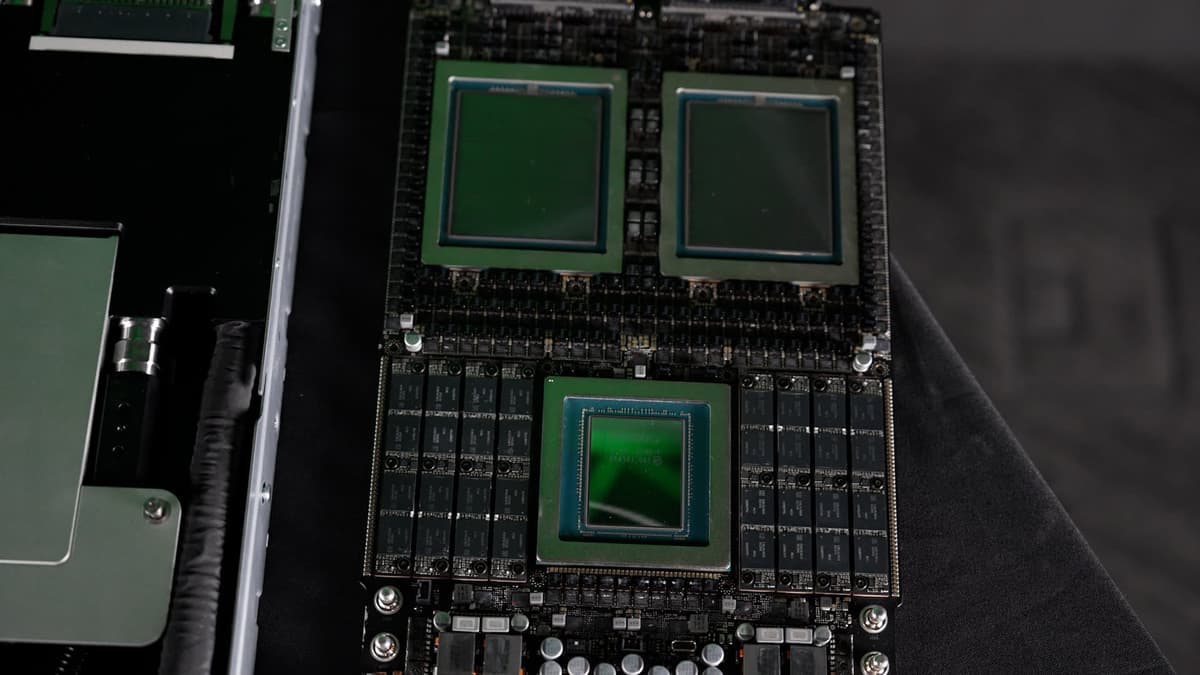
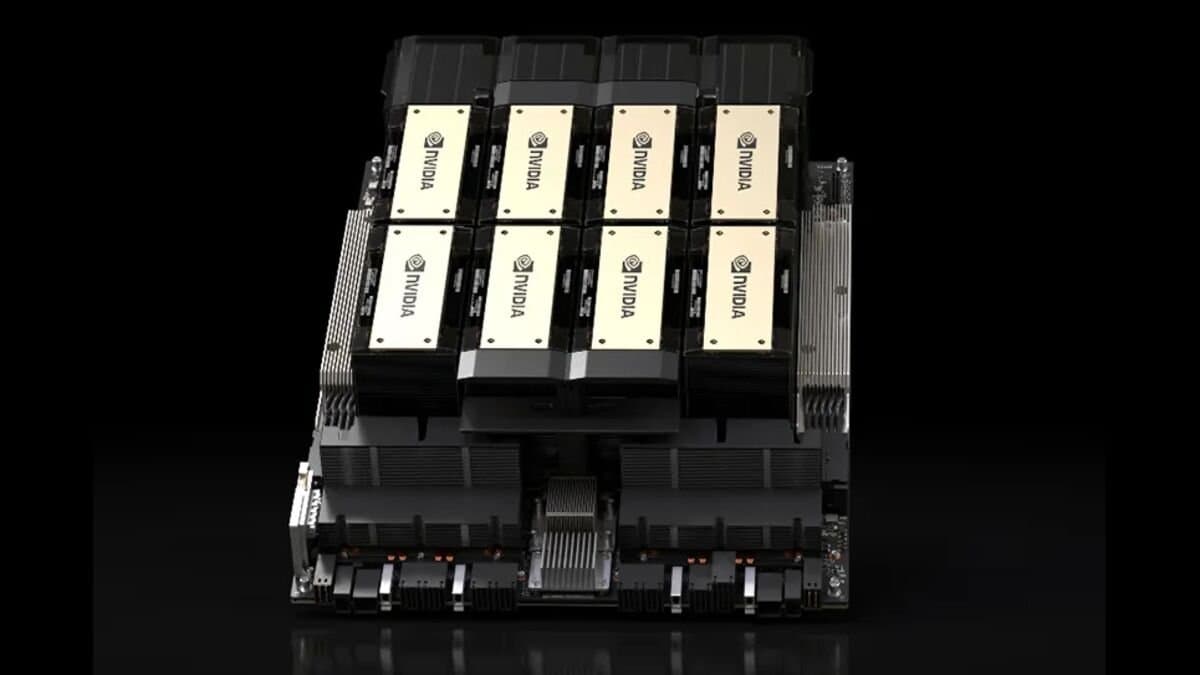
First, Nvidia. No introduction needed — the undisputed king of AI chips. At one point it controlled roughly 95% of China's high-end AI chip market, but as US export controls tightened, it lost that golden market almost entirely. China once accounted for about 13% of Nvidia's revenue. The H200 is the star of this story: it's far more powerful than the H20 that Nvidia dumbed down for the Chinese market, but it's not quite the top-shelf Blackwell or the next-gen Rubin. Think of it as a "mid-tier frontier" chip.
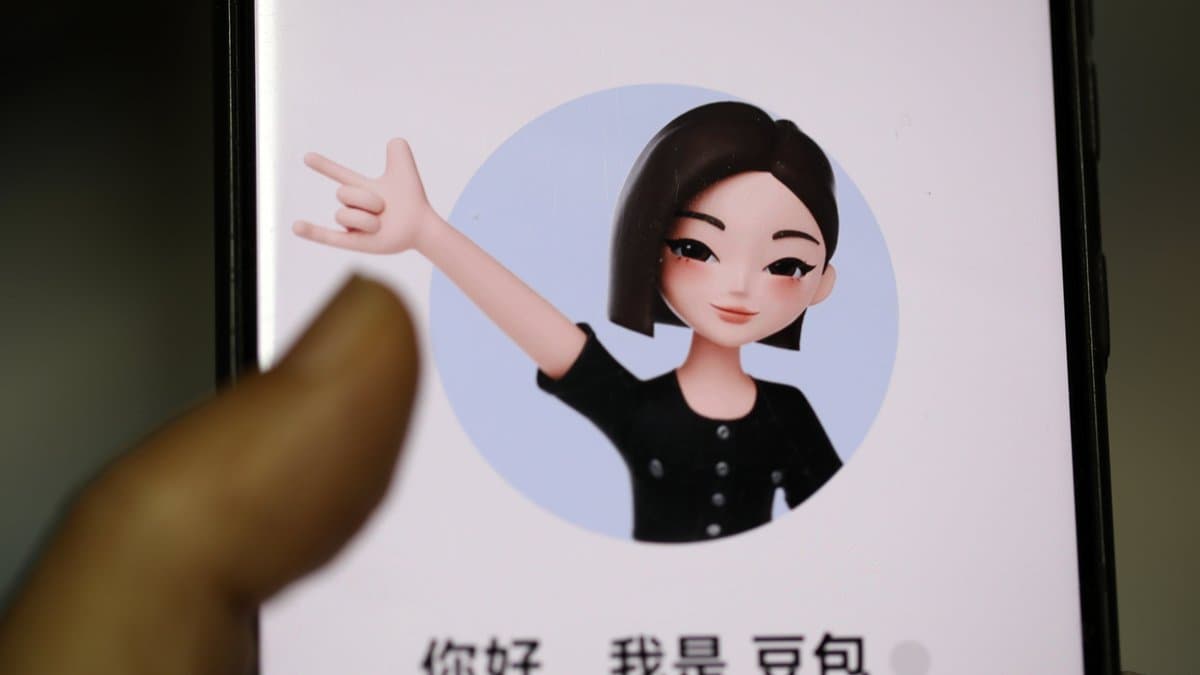
Next, China's AI trio — the ones actually buying. Alibaba is sweeping the open-weight model market with its Qwen series. ByteDance, TikTok's parent, pushes its Doubao models. DeepSeek is the startup that stunned the world last year with low-cost, high-efficiency models. All three share the same headache right now: a compute shortage. Training the next generation of models demands staggering amounts of compute, and domestic chips alone simply can't quench that thirst.
Third, the Chinese government — the real director of this drama. Its top priority is nurturing a domestic chip industry (especially Huawei's Ascend line) to route around US export controls. That's why, even after Trump said "you can buy the H200" back in December, Beijing itself withheld approval and left the volume frozen for more than half a year. In a strange irony, China blocked Nvidia's chips to protect its own companies.
Finally, the US government (the Trump administration). On December 8, Trump announced a deal: the H200 could be sold to approved customers in China, but 25% of the sales would go to the US government. Trump said Xi responded positively. The latest Blackwell and Rubin chips were left out of the deal — only the H200 got the green light. Then in May, the US Commerce Department granted export licenses to about 10 Chinese firms, letting each approved customer buy up to 75,000 H200 units.
What's Actually Happening — You Can Buy It, But Use It Like This
The heart of this move isn't the "permission" — it's the "conditions." The rules Beijing laid down show just how carefully calibrated this compromise really is.
First, case-by-case approval. You don't just buy as many as you want. Companies have to justify — for every request — how many chips they need and why an H200 rather than a domestic chip. Each one has to be individually cleared. Second, a volume cap. Total approved volume is expected to stay under 200,000 units — less than half of what Chinese firms requested this year. For context, the US already opened the door to 75,000 units per company back in May, so the bottleneck now sits on the Chinese side, not the American one.
Third, training only. The H200 can only be used to train AI models. Inference — pulling answers out of a model in live service — has to prioritize domestic chips, and authorities are specifically recommending Huawei chips for that job. Fourth, data restrictions. The H200 can only process public data; sensitive information like Chinese customer data is strictly off-limits. It's a double play — nurturing the domestic chip industry while also guarding data security.
| Item | Detail |
|---|---|
| Eligible firms | Alibaba, ByteDance, DeepSeek and other major AI firms |
| Approval method | Case-by-case (must justify quantity and use) |
| Total volume | Under 200,000 units (less than half of requested) |
| Use restriction | Training only; inference on domestic chips |
| Data restriction | Public data only; no sensitive info |
| US-side cap | Up to 75,000 units per firm (May licenses) |
| Backdrop | Severe AI compute shortage |
The table basically answers the question. China's message is: "Frontier model training is blocked and we're desperate, so use the H200 to put out the immediate fire — but fill everything else with domestic chips." Analyst Zhou Chao of Anbound put it plainly: "The core consideration behind this approach is most likely to secure a window of opportunity for domestic AI chips to grow." And Shi Shenchang, quoted by SCMP, noted that "domestic chips are unlikely to fill the country's computing-power gap in the near term." In the end, this is a "bridge to buy time until self-sufficiency" kind of move.
Who Gains What — Everyone Grabs a Little Something
Nvidia claws back at least part of a market it had lost. With a 200,000-unit ceiling it's nowhere near the 95%-share glory days, but a door that was fully shut cracking halfway open is clearly good news for revenue and the stock. It especially eases some of the market's worry that "China risk is gutting Nvidia's numbers." The catch: it's the H200, a generation behind the latest Blackwell and Rubin, so it's not the premium volume Nvidia really wants to sell.
China's AI firms secure the training compute they're thirsting for right now. Alibaba, ByteDance, and DeepSeek all desperately needed frontier-class chips to push their next-generation models, and domestic chips just weren't powerful enough. Punching through the training bottleneck with the H200 buys them the time to not fall behind in the global model race. Of course, getting less than half of what they asked for means the thirst won't be fully quenched.
The Chinese government catches two rabbits at once. It eases its firms' compute crisis while forcing inference onto domestic chips, funneling steady demand toward the homegrown ecosystem like Huawei's Ascend. Slapping on data restrictions gives it a security rationale, too. In effect, it seals dependence on American chips into the narrowest possible zone — training only.
The US government doesn't lose either. Trump's 25% revenue-share deal is still live, so the more H200s China buys, the more money flows into US coffers. And with the latest Blackwell and Rubin still blocked, Washington keeps the technology-gap lever firmly in hand. Everyone concedes a little, everyone grabs a little — a textbook picture of geopolitical compromise.
Past Parallels — Wins and Losses
This isn't the first time we've seen this picture. The prime example is the H20's history. Nvidia built the H20 as a China-specific, performance-throttled chip to comply with US export controls. At first Chinese firms bought it because "it's still an Nvidia chip," but over time Huawei's Ascend 910B/910C overtook the H20 in enterprise adoption. Regulation clipped the chip's performance, which narrowed the gap with domestic chips, and Nvidia ended up pushed out of that market. It's the classic case of regulation accelerating localization.
On the closer-to-success side, the US using license controls as a lever has actually worked pretty elegantly. Not a full ban, not full access, but "conditional permission" to steer the other side's behavior. Slipping the 25% revenue share into the deal this time is an extension of that logic. The US makes money selling chips while continuing to lock down the latest generation, keeping its negotiating power intact.
Conversely, China tripping over its own feet trying to protect its firms is baked into this story too. Trump already opened the door back in December, yet Beijing withheld approval for more than half a year in the name of protecting domestic chips. In the meantime, China's AI firms suffered from the compute shortage — and it was only the dawning fear of "we're actually going to fall behind in the frontier race" that finally pried the door open. It shows just how hard it is to balance protecting a domestic industry against staying globally competitive.
The lesson across all three cases is clear: chip controls are never "all or nothing" — they're always a matter of degree. And regulation may pressure your rival in the short term, but it stimulates localization in the long run. This H200 approval is just the latest version of that delicate tightrope walk.
The Competitor Counterplay — Huawei Might Be the Real Winner
The most fascinating counterplayer in this move is, paradoxically, Huawei. On the surface you'd think, "Nvidia chips coming back must hurt Huawei, right?" But dig in and it may be the opposite. Beijing is forcing inference onto domestic chips and specifically recommending Huawei chips for the job. In AI services, the massive, repeated compute happens on the inference side, not training. So Huawei drew up a picture where it "cedes training to Nvidia but locks up the much larger inference market wholesale."
Other US chipmakers like AMD and Intel are watching this board too. Trump's December deal mentioned AMD and Intel could also become eligible to export to China. But without Nvidia's brand power and software ecosystem (CUDA) in the Chinese market, it's an open question how far they can push into the crack the H200 opens.
You also can't leave out the self-developed chips from DeepSeek and other Chinese AI startups. DeepSeek is building its own inference-focused AI chip, aiming to reduce reliance even on Huawei. The entire Chinese ecosystem is racing toward self-sufficiency under the belief that "American chip or Huawei chip, it's still someone else's chip." This H200 approval is just a "temporary bridge" buying time until that self-sufficiency arrives — the endgame is firmly de-Nvidia.
In the end, the real battleground isn't "training" — it's "inference." While Nvidia's training-only H200 provides a brief breath of air, China is filling the much larger inference market with domestic chips and hardening its ecosystem. For Nvidia it's welcome news, but underneath sits the long-term anxiety of "are we going to be left with nothing but the training market?"
So What Actually Changes
For developers, with Chinese AI firms securing training compute, the next generation of open-weight models like Qwen, Doubao, and DeepSeek could arrive faster. Many of these models are popular among overseas developers too, so there's a ripple effect across the whole global open-source ecosystem. That said, China is separately weighing whether to restrict overseas access to its own models, so this part bears watching.
For investors, it's a short-term positive for Nvidia's stock. A fully-blocked Chinese market cracking even halfway open lifts revenue expectations. But the 200,000-unit cap and training-only limits mean it's not a "jackpot" — reading it as "the worst-case scenario got dodged" is the reasonable take. On the flip side, the Huawei-linked Chinese semiconductor value chain and the domestic-inference-chip theme could draw attention too. This isn't a picture where only one side smiles.
For enterprises, it's a reminder of just how much semiconductor geopolitics can swing earnings. The more a company depends on a single country's market — like Nvidia — the more it's exposed to the risk of 13% of revenue swinging on a single line of policy. If you're a company dealing in AI infrastructure, it's a case study in why diversifying your supply chain geopolitically matters.
For everyday users, there's almost nothing to feel right now. But if Chinese AI firms clear their compute bottleneck, stronger open-weight models will emerge, and that could feed into quality and price competition across AI services worldwide. It's a distant but very real connective thread — the US-China chip tug-of-war eventually flows all the way down to the performance of the chatbot you use.
🥄 Three Things You're Probably Wondering
— So what does this mean for me? Almost no direct impact. But if you hold Nvidia or semiconductor-related stocks or funds, whether its China revenue recovers matters for earnings, so it's worth a look. And if the AI model you love is built on Qwen or DeepSeek, these companies securing training compute could make the next version noticeably better.
— Why open the door now of all times? Because the compute shortage hit its limit. Trump already opened the door in December, but China held out for more than half a year to protect its domestic chips. In the meantime, its AI firms were starved of training compute and risked falling behind in the frontier race — so Beijing finally cracked the door halfway to "put out the immediate fire first."
— Does this mean Nvidia fully revives in China? Too early to say. With a 200,000-unit cap, training-only use, and inference funneled to Huawei's domestic chips, it's a long way from a "full revival." It's a welcome breath of air for Nvidia, but China's endgame is firmly self-sufficiency, so long term it could be left with just the training market.
Sources
- Bloomberg — China to Let AI Firms Buy Nvidia H200s, Information Says
- CNBC — Trump greenlights Nvidia H200 AI chip sales to China if U.S. gets 25% cut
- SCMP — Why China is finally letting AI firms buy the Nvidia H200
- TrendForce — China Reportedly to Allow NVIDIA H200 Imports, but Approvals May Fall Below 200K Chips
- BigGo Finance — China to Allow Limited Nvidia H200 Purchases, Easing AI Compute Crunch
Numbers and criteria are as of announcement and may change. Investment calls are yours to make!