A company cuts 4,800 people — and says "AI didn't do it"
Here's the deal: on July 6, 2026, Microsoft announced it's eliminating roughly 4,800 roles, about 2.1% of its global workforce. And the timing is almost too on-the-nose — that day was the first day of Microsoft's new fiscal year (FY2027). On day one of a fresh budget, Microsoft chose to clear the decks by cutting people first.
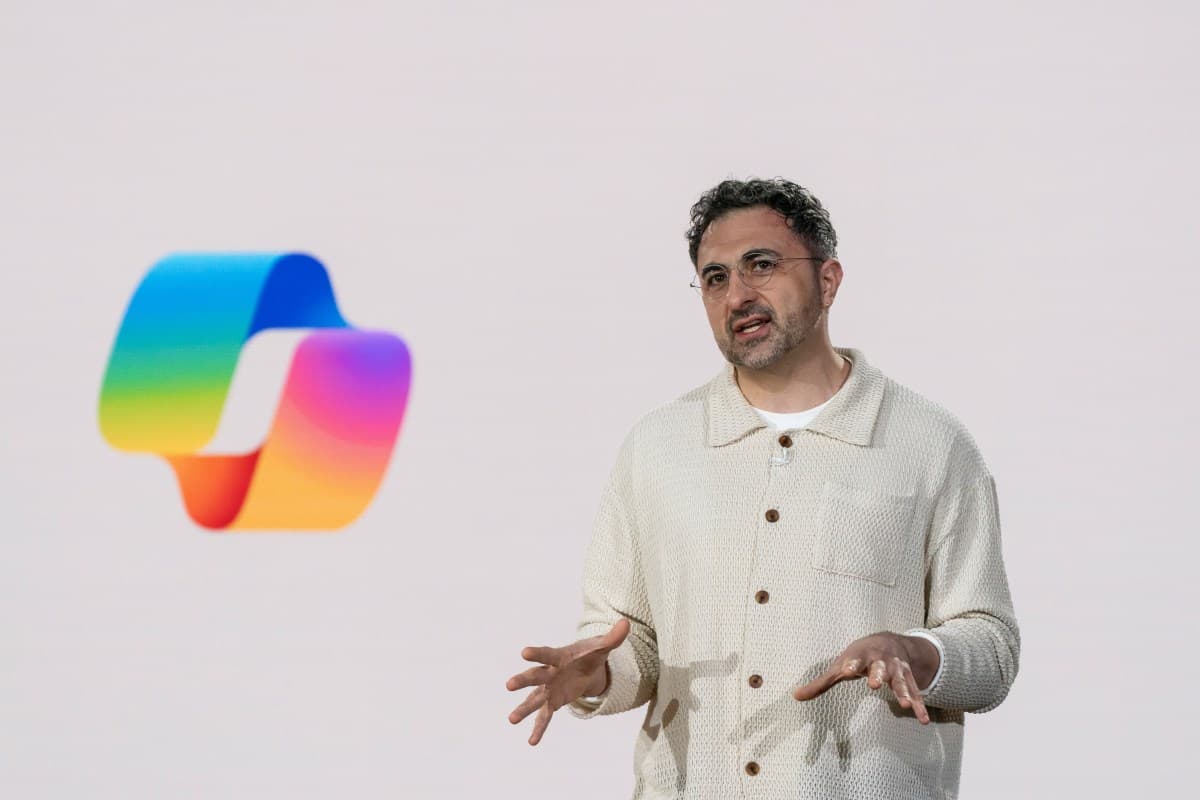
The unit that got hit hardest was Xbox. Of the 4,800 roles cut now, about 1,600 came from gaming, and Microsoft plans to push total gaming-division reductions to roughly 3,200 over the course of this fiscal year — about 20% of Xbox's entire workforce. Xbox CEO Asha Sharma called it "the most significant restructure in Xbox history."
But the genuinely interesting part is how Microsoft chose to explain all this. Amy Coleman, EVP and Chief People Officer, wrote flatly on the official blog that "the roles eliminated today are not being replaced by AI." And then, in nearly the same breath, she added: "AI is changing how work gets done. Some of the tasks we do every day can now be automated." The gap between those two sentences is the whole story. Let's climb into it.
Meet the players — Microsoft, Xbox, and two executives
Start with Microsoft. It needs no introduction, but to understand today's version of the company you need one number in your head: Microsoft is currently pouring an unprecedented amount of capital into AI infrastructure — data centers and chips. Its stake in OpenAI, its own Azure cloud, the Copilot lineup — the entire future narrative is bet on AI. The catch is that this bet burns staggering amounts of cash, and Wall Street keeps asking the same question: when does that money come back?
The second player is Xbox. The brand that once fought Sony's PlayStation in the console wars. Microsoft pushed gaming hard as a "growth engine," most dramatically with the $68.7 billion Activision Blizzard acquisition in 2023. Yet in Sharma's own words, Xbox now runs at "margins that are 3–10x lower than comparable platform and publishing businesses." Internally, the framing went even further: studios were reportedly losing 64 cents for every dollar invested. The growth engine had quietly become a leak.
The third players are the people. Asha Sharma is the Xbox CEO who performed this surgery. She pointed a finger squarely at organizational bloat — noting that in some parts of the business, work "passes through as many as 14 layers of management," and that platform teams are "40% larger than at the start of this generation, even as our player base and playtime have declined." And Amy Coleman is the company-wide HR chief who delivered the "it's not AI" message. Stack those two voices on top of each other and Microsoft's real picture snaps into focus.
One line from Coleman's blog post captures the entire spirit of the move: "Companies don't get to choose whether their industry changes; they only get to choose whether they change with it." Translated into plain English, that's pretty close to "we didn't have a choice."
The core — breaking it down by the numbers
To read this correctly, you have to separate "the number announced today" from "the plan for the full fiscal year." The figure 3,200 shows up in two different places, which is exactly why the coverage feels confusing.
Today's total (July 6) is 4,800 roles, or 2.1% of the workforce. Of those, about 1,600 sit in Xbox, and the remaining ~3,200 are spread across commercial sales and other divisions. But that's not the end of it. Microsoft plans to continue trimming Xbox through fiscal 2027, bringing total gaming-division cuts to roughly 3,200 — meaning today's 1,600 in gaming is just the opening act, and the company-wide cumulative total by year-end will run higher than 4,800.
| Category | Scale | Notes |
|---|---|---|
| Total cuts announced today | ~4,800 | 2.1% of global workforce |
| Of which, Xbox | ~1,600 | Effective immediately |
| Xbox division full-year cuts (planned) | ~3,200 | ~20% of Xbox workforce |
| Commercial sales + other divisions | ~3,200 | Non-Xbox share of today's total |
| Employees redeployed over past year | 4,000+ | Moved to new roles, not AI |
Gaming didn't just lose headcount — Microsoft is shedding whole studios. Double Fine and Compulsion Games are being spun off as independent studios, keeping their IP and getting runway funding to walk away with. Ninja Theory and Undead Labs are transitioning to new management, and Arkane Lyon (Marvel's Blade) is under strategic review. Meanwhile the money-makers — Mojang (Minecraft) and King (Candy Crush) — were reorganized to report directly to Sharma and kept at the core. In one sentence: hold the cash cows, cut loose whatever can't produce a margin.
The heart of the company's argument is Coleman's "not being replaced by AI." Yet in the same announcement, Microsoft noted it had redeployed more than 4,000 employees into new roles over the past year, and that 30% of eligible employees took a voluntary retirement package — cushions designed to soften the blow. But the backdrop is record capital spending on AI infrastructure and unrelenting Wall Street pressure to protect operating margins. Even if AI doesn't directly replace a single person, the math of funneling money into AI means cutting people somewhere else. That's the structure.
Who gains what
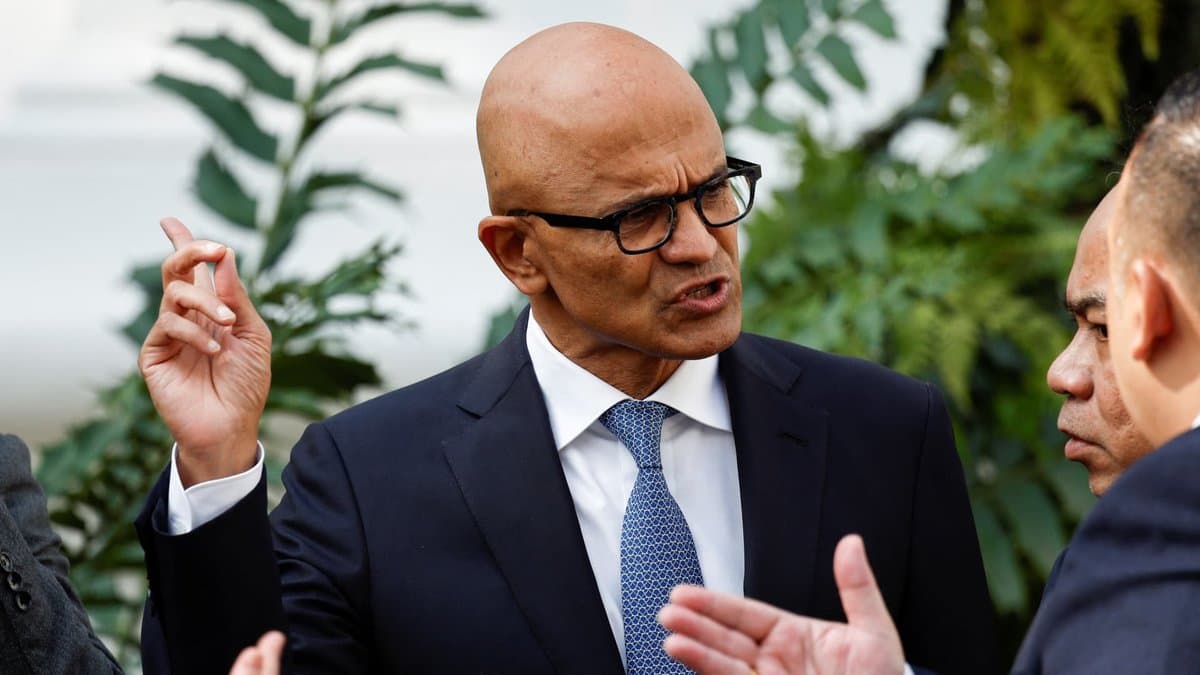
The clearest winner is Microsoft's income statement. When you're burning astronomical sums on AI data centers, shaving 2.1% off headcount buys breathing room on operating margin. Wall Street keeps hammering on "profitability relative to AI spend," and a layoff is the fastest available answer to that question. For Satya Nadella, it preserves the narrative: "we're all-in on AI and still controlling costs."
Xbox leadership — Asha Sharma in particular — also comes out ahead. A structural problem like 3–10x lower margins is hard to touch in peacetime, but under the banner of "the biggest restructure in Xbox history," you can attack the 14 management layers and the 40%-bloated platform teams all at once. And by pulling the profitable Mojang and King under her direct control, Sharma consolidated authority as well.
The surviving core studios and the AI org are relative winners too. As resources and attention get reallocated toward reliable cash cows like Minecraft and Candy Crush and toward the AI lineup, the people inside those teams end up sitting where the investment is heading. On the flip side, the spun-off Double Fine and Compulsion at least leave with their IP and runway funding — arguably not the worst outcome, even if independence guarantees nothing.
The biggest losers are, obviously, the 4,800 people let go and those in line for the additional cuts to come. And a subtler but real casualty is trust. The more Microsoft repeats "AI didn't do this," the more remaining employees quietly wonder, "so is AI's turn coming next?" That's a cost that never shows up on a spreadsheet.
Past parallels — the wins and the flops
This isn't Microsoft's first mass layoff. Right after Satya Nadella took over in 2014, the company cut around 18,000 jobs in the aftermath of the Nokia acquisition. That round was also justified as a strategic pivot — "mobile-first, cloud-first." Microsoft absorbed the pain and rebuilt itself entirely around Azure, and it worked. That's the textbook case of a strategic-transition layoff remembered as a success. Today's version looks like Microsoft trying to run the same playbook with "AI-first" swapped in.
But there are flops on the other side of the ledger. In gaming alone, there's a long list of publishers that acquired studios, failed to hit the margins, and then shuttered or sold them. Microsoft itself drew criticism in 2024 when it closed Bethesda-affiliated studios like Arkane Austin. When you spin off or sell a studio just a few years after buying it, the market asks the obvious question: why did you buy it in the first place? The shadow of that $68.7 billion Activision deal hangs over this entire Xbox overhaul.
The precedent for AI-branded layoffs is piling up fast, too. By some counts, roughly 154,000 tech workers were cut in the first half of 2026 alone. Salesforce, Amazon, Google and others have trimmed with similar logic. The problem is that the claim — "AI productivity means we need fewer people" — hasn't yet been proven out in clean financial results. Whether it crystallizes as a success story or gets remembered cynically as "cost-cutting dressed up as AI" is something the next few quarters will decide.
The lesson is clear. A strategic-transition layoff only gets romanticized as foresight when the transition actually delivers. Azure succeeded, so the 2014 cuts were vindicated — but if the AI payback stalls, these 4,800 could instead be logged as "handing employees the bill for an expensive bet." Too early to call.
The competitors' counter-play
Sony, Microsoft's biggest gaming rival, can only welcome this. While Xbox slims down by spinning off and selling studios, Sony gets room to keep its PlayStation exclusives intact and hold onto console loyalists. As Microsoft shifts its weight from "hardware" to "Game Pass and cloud," the traditional grammar of the console war favors Sony picking up the slack.
On the cloud-and-AI-infrastructure front, the story flips. Microsoft cutting labor costs to reinvest in AI is a direct answer to Amazon's AWS and Google Cloud. All three are torching capital in the fight for "infrastructure supremacy in the AI era," and all three are running the same playbook — freeing up ammunition through layoffs. So Microsoft's move loops back as pressure on rivals: now we have to do it too. It's a domino where layoffs beget layoffs.
On the AI model-and-product front, OpenAI, Anthropic and Google are the wildcards. Microsoft wants to lock up the enterprise market with Copilot and Azure OpenAI, but cutting commercial sales staff here is a double-edged sword. Growing AI revenue while thinning the very salesforce that sells AI products is either confidence — "AI can do the selling" — or haste. Either way, it leaves an opening for competitors to dig into enterprise customers through the gap.
Bottom line: this move signals a shift in where competition happens — from "price and headcount" to "capital and infrastructure." A fight once waged by number of employees is turning into a contest over who can burn money on AI data centers longer and bigger. In that game, cutting labor costs has become table-stakes ammunition.
So what actually changes
For developers. If you're a game developer especially, this won't feel like someone else's problem. A major publisher just openly enshrined the principle that "studios that can't hit a margin get spun off or sold." Conversely, for engineers on the AI and cloud infrastructure side, this is the direction resources are flowing. If you're steering your career, the realistic read is to look coldly at where the company is burning money versus where it's saving it.
For investors. If you hold Microsoft, the layoff reads short-term as a cost-cutting signal. But the real thing to watch isn't the cut itself — it's the speed of AI payback. Only when the money saved on labor and poured into AI comes back as Azure and Copilot revenue does this layoff get vindicated as foresight. Hunting for that signal in the next few quarters of results is the whole game.
For companies. If you're an executive elsewhere, watch Microsoft's phrasing itself. The framing — "AI didn't do the cutting; AI is just changing how work gets done" — is likely to become standard grammar. Tying layoffs directly to AI carries legal and reputational risk, so you insert a layer of buffer like this. Any company facing a reorg will be studying this message design.
For everyday users. Your Xbox games aren't disappearing and subscription prices aren't jumping today — Microsoft said no games were canceled. But over the long run, the gravity shift from console hardware toward Game Pass, cloud and AI will only get sharper. Copilot will burrow deeper into your Windows, Office and Xbox — and reorgs like this one are what sit underneath that.
🥄 Three Things You're Probably Wondering
— So what does this mean for me? Directly, almost nothing. Your Xbox games and subscription keep running. But if you work in tech or gaming, or you're job-hunting, the underlying pattern — "big companies cutting one division to funnel money into AI" — is a signal you'll keep bumping into.
— Did AI actually cause the cuts, or not? Microsoft officially says no, and the eliminated roles aren't being immediately backfilled by AI. But the backdrop is a structure where the company must protect costs while burning record capital on AI infrastructure. So "AI didn't cut directly, but AI spending pressured the layoffs" is the more accurate read. Calling it totally unrelated, or blaming AI outright, are both exaggerations.
— Is Microsoft ahead of its rivals here, or behind? Too early to call. Cutting to free up ammunition and reinvest in AI is the same playbook Amazon and Google run, so this alone doesn't put Microsoft ahead. The real verdict hinges on whether that money comes back as actual AI revenue and profit. Right now we've only confirmed the size of the bet.
Sources
- The latest in our company transformation — Official Microsoft Blog (2026-07-06)
- CNBC — Microsoft cuts 2.1% of employees as Xbox unit plans to spin studios
- GeekWire — Microsoft cuts 4,800 jobs, revamps sales and launches Xbox overhaul
- TechCrunch — Microsoft lays off nearly 5,000 employees across Xbox, commercial sales
- NBC News — Microsoft to cut 4,800 jobs, joining the wave of AI-driven tech layoffs
Numbers are as of announcement and may change.