Alibaba Just Put $439M Into a Chinese AI Video Startup, But What It's Really Buying Is Worlds, Not Clips
Here's the deal: on July 14, 2026, Beijing-based AI video startup AIsphere (in Chinese, 爱诗科技) said it had topped up its Series C to RMB 2.98 billion, roughly $439 million. The product this company builds is called PixVerse. It already has more than 150 million users across 177-plus countries. Impressive on its own, but the headline character of this round is the investor who came in late and led it: Alibaba.
This isn't a plain "raised more money" story. Look at the structure. The company ran a Series C, then bolted on a C+ extension round, and Alibaba led that extension. Piling in alongside were Lollapalooza Capital (the family office of Meituan co-founder Wang Huiwen), Ivy Capital, Grand Mount Capital, Eastern Bell Capital, Korea's Mirae Asset, ad group BlueFocus, and CloudAlpha, plus returning backers iGlobe Partners and OCBC's LionX Ventures, over a dozen firms in total. Once the round closed, PixVerse's valuation crossed $2 billion (about RMB 14 billion), per TechCrunch and Chinese outlets.
And here's the twist that makes this deal different from every other AI-video raise. PixVerse isn't spending this to get better at "making great video clips." It's declaring a pivot into real-time interactive world models, meaning AI that generates a game-like world you can actually step into and control, not just a pre-baked clip. From tapping out one video at a time to conjuring a living world that reacts to your input in real time. Once you understand why Alibaba led at exactly this moment, the whole deal reads differently.
Meet the Players: AIsphere, PixVerse, Wang Changhu, and Alibaba
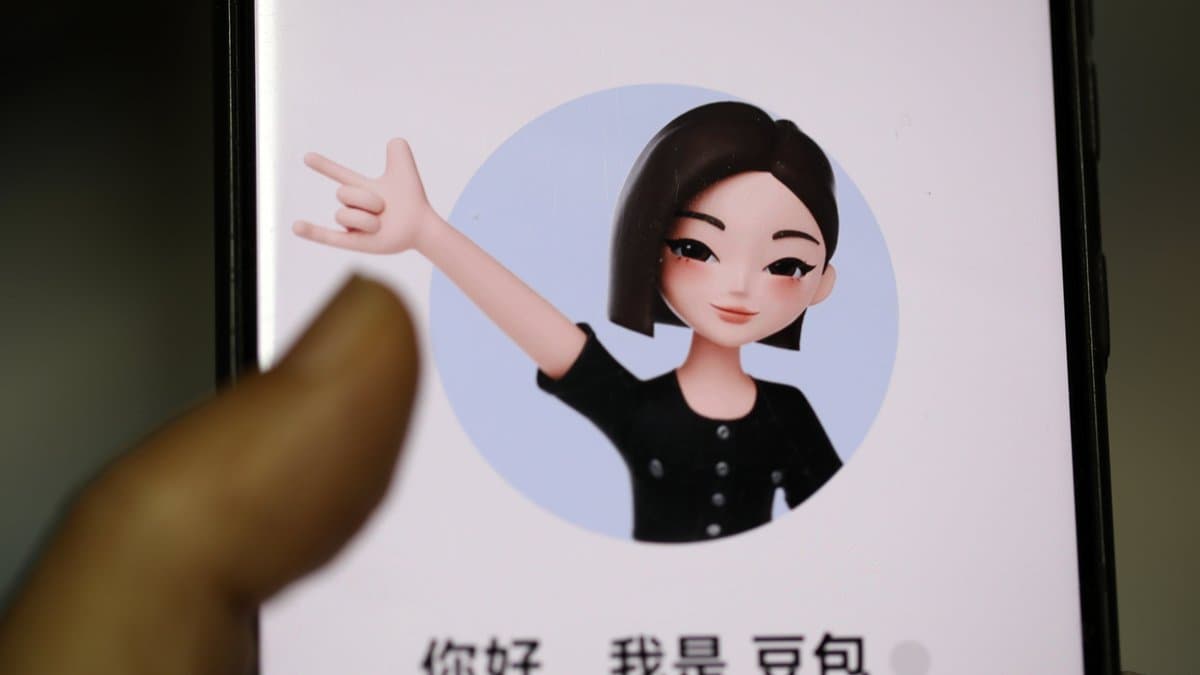
Start with AIsphere (爱诗科技). It was founded in March 2023. It isn't even three years old. In that window it has hit 150 million users, 177 countries, and what Chinese media call the largest single AI-video funding round in Asia. The company runs a two-headed product strategy: PixVerse for the global market and Paiwo AI (拍我AI) for China. One technical engine, two front doors. PixVerse absorbs creators worldwide; Paiwo AI monetizes inside China's regulatory walls.
The heart of this company is its founder, Wang Changhu (王长虎), and his résumé explains half of this deal. He came out of Microsoft Research Asia (MSRA), then joined ByteDance (TikTok's parent) in 2017 as director of its AI Lab. In other words, he actually ran the computer-vision and video-understanding stack behind TikTok and Douyin. AI video generation ultimately comes down to "how well can you understand video," and this is a person who did exactly that at the company sitting on the largest pile of video data on Earth. He left in March 2023 to start AIsphere, raised more than RMB 2.5 billion within six months, and picked up the nickname "the fiercest AI founder from the ByteDance mafia."
Don't skip co-founder and President Jaden Xie (谢旭璋). His background is capital, not code. Formerly an executive at Lighthouse Capital, he runs the company's global expansion and fundraising. Wang owns the technology; Xie owns the money and the globalization. That pairing produced the strategy of "seed with To C first, monetize with To B later" and an execution style Wang describes as "small steps, fast pace" (小步快跑).
The last player is the round's lead, Alibaba. Alibaba already has its own video and image generation models (the Wan / Tongyi Wanxiang family), so why lead a round for what could be a rival? The answer is cloud. Alibaba Cloud is China's largest cloud provider and the GPU-and-infrastructure supplier to Chinese AI startups. AI video and, especially, world models are compute monsters. The bigger PixVerse gets, the more Alibaba Cloud revenue it drives, and Alibaba also captures a slice of that growth through equity. On top of that, Alibaba has been spreading bets across China's AI startup scene, Moonshot, Zhipu, MiniMax, so backing the user-leader in the video and world-model category is a strategic asset in its own right.
What Actually Happened: $439M, and a Turn From "Video" to "Worlds"
Here's the skeleton of the deal. The original Series C was led by CDH Investments (鼎晖). Then Alibaba led the C+ extension on top of it, bringing the total Series C to RMB 2.98 billion (about $439 million). Importantly, the company did not officially disclose how much the extension raised or its exact latest valuation (confirmed by DealStreetAsia). TechCrunch and multiple Chinese outlets report the valuation crossed $2 billion, so treat that figure as reported rather than company-confirmed.
Where the money goes is the real news. AIsphere says it will spend on four things: (1) video generation foundation models, (2) the real-time world model, (3) global product growth, and (4) industry deployment. The world model is the emphasis. In early 2026 the company shipped PixVerse R1, which it billed as "the world's first general-purpose real-time world model supporting 1080P." A video model spits out a fixed clip; a world model generates the world in real time as you press a direction key. PixVerse is splitting its lineup accordingly: video models (V-series), pro/commercial (C-series), and world models (R-series).
Now for the sober part. PixVerse leads the field on scale, 150 million users across 177 countries, but its monthly active users have sat around 15 million for nine straight months, and its average revenue per user (ARPU) is estimated at roughly $2.50 (per Huxiu and 36Kr). That produced the widely repeated line that its revenue is roughly one-tenth of Kuaishou's Kling (可灵) AI. Kling reportedly booked over RMB 650 million in revenue in Q1 2026 alone. So PixVerse sits in an ironic spot: the AI-video player with the most users but the thinnest commercial density. For reference, its image-to-video pricing runs about $4.80 per minute.
| Item | Detail |
|---|---|
| Company (product) | AIsphere (爱诗科技) / products: PixVerse (global), Paiwo AI (China) |
| Announcement | July 14, 2026 |
| Total Series C | RMB 2.98B (~$439M) |
| C+ extension lead | Alibaba (original Series C led by CDH) |
| Key participants | Lollapalooza (Wang Huiwen family office), Ivy, Grand Mount, Eastern Bell, Mirae Asset, BlueFocus, CloudAlpha; returning iGlobe, LionX |
| Valuation | $2B+ (reported; not company-confirmed) |
| Users / countries | 150M+ / 177 |
| MAU / ARPU | ~15M / ~$2.50 (estimated) |
| Founders | Wang Changhu (CEO, ex-ByteDance AI Lab), Jaden Xie (President) |
| Use of funds | Video foundation models, real-time world model, global growth, industry deployment |
Who Gets What Out of This Deal
AIsphere's wins are clear. First, ammunition. World models eat far more compute than video, and $439 million buys several training cycles of the next model. Second, the Alibaba name. Alibaba leading means Alibaba Cloud's GPUs, infrastructure, and ecosystem access come attached. Third, relief from the monetization clock. With the glaring weakness that its revenue is a tenth of Kling's, a round this size buys "time to buy the next hand" even if the cash register stays quiet for a while.
Alibaba's payoff is double. On the surface it's an equity investment, but the deeper play is cloud lock-in. If PixVerse scales up its world model, that compute demand effectively flows into Alibaba Cloud. And because Alibaba is busy spreading bets across China's AI startups, tying the 150-million-user leader in video and world models to its camp is strategically valuable by itself. It's a two-legged stance, running its own model (Wan) and an external bet (PixVerse) at the same time.
Wang Huiwen's Lollapalooza Capital joining carries symbolic weight. Wang co-founded Meituan and once launched an AI startup, Lightyear (光年之外), before stepping back for health reasons. His family office betting on AI video and world models signals that China's first-generation tech titans see this as the next hand. Korea's Mirae Asset is worth watching too: Korean capital entering a large round for a Chinese AI video startup shows the category still pulls global money even amid geopolitical tension.
Zoom out across all the investors and the round is a bet on the narrative "AI video → interactive world models." Straight video generation is already crowded, Kling, ByteDance's Seedance, Runway, Luma, but real-time world models are unclaimed frontier with no decided winner. Backing the user-leader that already has 150 million people is these investors' way of buying a lottery ticket on that frontier with the best distribution attached.
Precedents: Where Success and Failure Split
The success reference is Kuaishou's Kling. Since arriving in 2024, Kling moved fast on paid conversion and became the model case for AI-video monetization, with reported Q1 2026 revenue north of RMB 650 million. The whole "lots of users, little money" critique aimed at PixVerse exists precisely because of this contrast. Kling took the path of "dig into the pro/commercial market first and extract payment," and it worked. PixVerse saying it will push its C-series (pro/commercial) with this money looks like a nod to that lesson.
A second success reference is Alibaba's own portfolio playbook. Alibaba has spread bets across Moonshot, Zhipu, MiniMax and others, and a good chunk of that has cycled back as cloud revenue. "If I can't build it, I sell infrastructure to whoever does" is essentially the China version of the Microsoft-OpenAI arrangement. The PixVerse deal follows exactly that grammar.
There's a clear shadow on the failure side, too. A lot of AI-video startups have collapsed in the cycle of "flashy demo and explosive early users → payment never attaches → cash melts under compute costs." PixVerse's ~$2.50 ARPU and nine months of flat MAU could be early signals of that risk. Lots of users also means lots of server bills, so if monetization doesn't follow, a big user base becomes poison rather than a trophy. If it can't attach payment the way Kling did, 150 million users is not a boast, it's an invoice.
The scariest failure scenario is that the world-model bet itself is simply too early. World models are the frontier that Google DeepMind (the Genie line), several game-engine camps, and the big foundation-model labs are all chasing. PixVerse touts "the world's first real-time 1080P world model," but nobody knows when this market actually opens into real revenue. Ship the tech first and have the market arrive three to five years later, and you can burn all your cash in the gap.
Competitor Counter-Plays: Now Everyone Wants to Build "Worlds"
The most direct rivals are fellow Chinese players Kuaishou's Kling and ByteDance's Seedance. Kling leads on monetization, and ByteDance is both Wang Changhu's alma mater and a Goliath sitting on the world's largest video dataset. PixVerse says "we understand video because we're ByteDance alumni," but if the ByteDance mothership turns Seedance to full power, PixVerse could get squeezed on both data and distribution (TikTok/Douyin). PixVerse's counter is to sprint ahead with world models and claim the category before others leave the video lane.
Globally, the rivals are Runway, Luma, and OpenAI's Sora line. They're strong on brand, creator community, and capital. PixVerse's counter-play is affordability and reach: it's already live in 177 countries and pulled in mass-market creators with per-minute pricing. While Western rivals eye premium and enterprise, PixVerse is grabbing volume in emerging and mass markets.
On the world-model frontier, Google DeepMind's Genie line and various game-engine camps are the genuinely scary opponents. DeepMind has overwhelming compute, talent, and data, and game-engine companies own real game pipelines and distribution. If PixVerse wants to sell "real-time interactive worlds" as games, it eventually collides with the gaming industry's distribution and monetization ecosystem. Its weapon there is a consumer touchpoint it can attach to 150 million existing users immediately, servicing interactive content to its own audience rather than only selling a B2B engine.
Alibaba leading the round is itself a counter-play that reshapes the map. With Tencent and ByteDance running their own camps, Alibaba has now folded an external front-runner (PixVerse) into its side on top of its own model (Wan). That tilts the balance of the video and world-model category slightly toward Alibaba in China's big-tech three-way fight. Which startup Tencent or ByteDance pulls into its camp next becomes the thing to watch.
So What Actually Changes
If you're a developer. The key is that PixVerse is fanning out V/C/R series across API, CLI, and agents. If the R-series (world model) genuinely opens up, you get a new building block, an "interactive scene generation API" beyond a "video clip generation API." For anyone building games, metaverse experiences, or interactive ads, that could open a new toolbox. It's roadmap-stage right now, though, so check the actual docs, latency, and pricing before you count on production use.
If you're an investor. The core debate here is scale versus profitability. 150 million users is dominant, but revenue is a tenth of Kling's, ARPU is about $2.50, and MAU has been flat for nine months. So this is a bet on a "conversion story," not a "growth stock." The valuation gets justified down one of two paths: PixVerse attaches payment the way Kling did, or it pries open the new world-model market first. The money from Alibaba, Wang Huiwen, and Mirae Asset is riding on one of those two scenarios.
If you're an enterprise. If you run marketing, advertising, or content, tools like PixVerse or Paiwo AI have probably already crept into your production pipeline. The fact that ad group BlueFocus came in as an investor signals real industrial demand to bolt this tech directly onto ad production. A "world-model-based interactive ad" format could arrive soon, so brand teams should track this trend starting now.
If you're a general user. Not much changes for you today. But the direction is unmistakable. Until now, AI video meant "type a prompt, get a few-second clip." What PixVerse is chasing is "press a direction key and the world unfolds in real time." It's a move from consuming like a YouTube video to consuming like a game, controlling as you go. How fast that reaches a real product is still too early to call.
🥄 Three Things You're Probably Wondering
— So what does this mean for me? Not much right this second. But if you make or consume video, game, or ad content, this is a signal that "AI-made worlds you can control" will get common within one to two years. Think of it as the moment the chips are being stacked on the table.
— 150 million users, so why can't it make money? Because plenty of users, but few of them pay. With ~15M MAU and ~$2.50 ARPU, revenue is thin relative to scale, which stands out next to rival Kling extracting payment well from the pro and commercial market. Whether this round fixes that weakness is the crux.
— World models, are they actually going to work? Honestly, too early to call. The tech demos are impressive and the "world's first real-time 1080P" title sounds great, but nobody knows when this opens into a revenue-generating market. Giants like Google DeepMind are chasing the same thing, so being first doesn't mean the game is won.
Sources
- Caixin Global — Alibaba Leads $439 Million Funding Round for AI Video Startup AIsphere
- PixVerse official blog — Closes Series C Extension, Bringing Total to USD 439 Million
- TechCrunch — Video-generation startup PixVerse raises $439M, valuation soars past $2B
- Businesswire — PixVerse Closes Series C Extension (official press release)
- DealStreetAsia — PixVerse's Series C reaches $439m as Alibaba joins extension round
- 36Kr — AIsphere raises RMB 2.98B, revenue is one-tenth of Kling
Numbers and criteria are as of announcement and may change. Investment calls are yours to make!