Everyone says Korea's AI law "kicks in" tomorrow. Read the fine print — it's a shopping voucher
On Tuesday, July 21, 2026, an amendment to Korea's AI Basic Act — formally, the Framework Act on the Development of Artificial Intelligence and Establishment of Trust — takes effect, along with its revised Enforcement Decree. The Cabinet (국무회의), chaired by President Lee Jae-myung, signed off on the decree on July 14, one of 21 items passed that day.
Here's the deal, and it's the part most of the coverage is getting wrong: this is not the day Korea's AI regulation switches on. The heavy obligations everyone worries about — watermarking generative AI output, risk management for high-impact AI in hiring and lending and healthcare, the frontier-model compute threshold, the domestic-representative requirement for foreign firms — all of those went live on January 22, 2026, with the original Act and its first Enforcement Decree. They have been law for six months.
What happens on July 21 is a different animal. The parent amendment cleared the National Assembly plenary on December 30, 2025 and was promulgated on January 20, 2026, with a six-month delay attached to the provisions that needed subordinate rulemaking. That six-month clock is the only reason July 21 is a date at all. And the content of that tranche is overwhelmingly promotion, not restriction: procurement preferences, subsidies, research institutes, venture funding, public data supply.
So if you've seen a piece framing tomorrow as the moment Korea's "core regulatory obligations activate," treat it with suspicion. That framing collapses two separate effective dates into one and produces a story about a crackdown where the actual document is closer to an industrial-policy stimulus. Let's walk through what's really in it, who wrote it, and who gets paid.
The players — a deputy prime minister, a trade association, and a testing lab
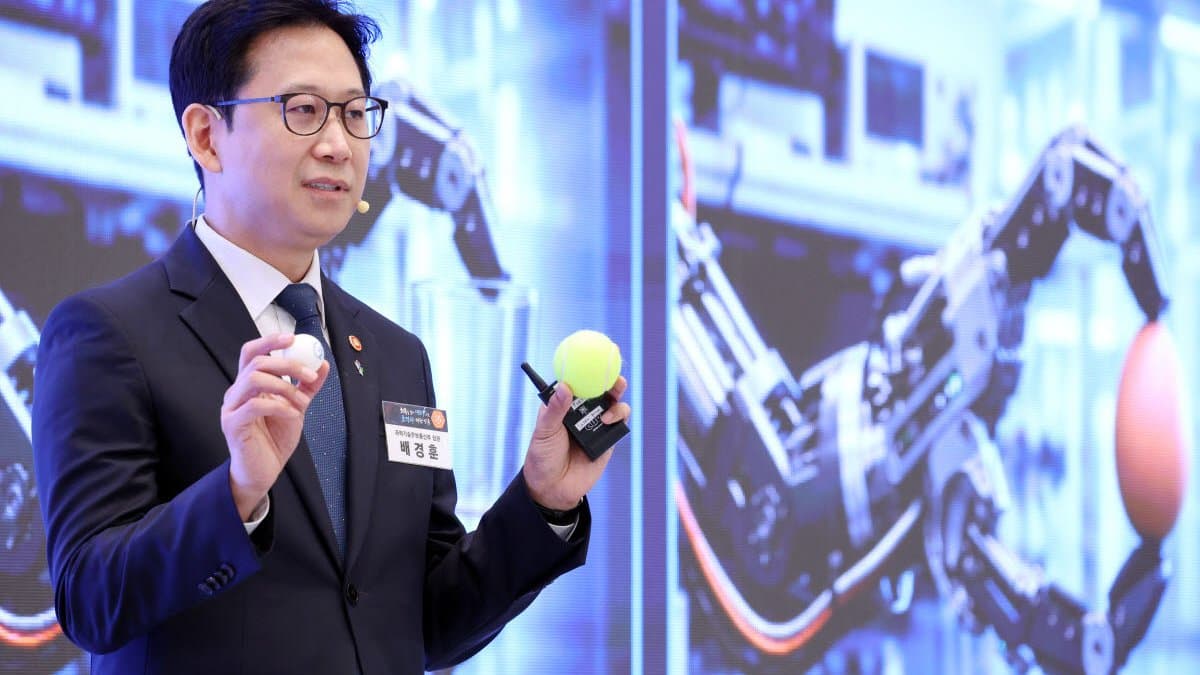
The protagonist is Bae Kyung-hoon (배경훈), Deputy Prime Minister and Minister of Science and ICT. Korea elevated the science minister to deputy-PM rank under the current administration precisely because AI became the government's headline economic agenda, and Bae has been the face of every piece of it. On the July 14 decree he said the government expects it will "accelerate AI adoption in the public sector and raise citizens' access to AI." Earlier, when the original decree was in draft, he framed it as "a critical institutional foundation for Korea to secure its position as one of the world's top three AI powerhouses." That top-three ambition is the through-line for everything MSIT has shipped this year.
Working under him is Kim Kyung-man (김경만), MSIT's AI Policy Director (인공지능정책관), who ran the legislative-notice process. When the draft went out for public comment on May 21, 2026 — the comment window ran to June 19 — Kim said the framework "will strengthen legal support for industry development and expanded utilization when the amended law takes effect in July." Note the vocabulary: support, utilization. Not compliance, not enforcement. The ministry has been signaling the character of this tranche for two months.
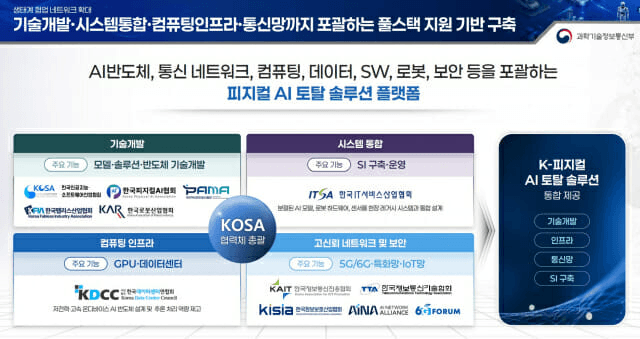
Two non-government bodies get real power out of this. KOSA — the Korea Association of AI and Software Industries (한국인공지능·소프트웨어산업협회) — becomes the intake point and the certificate issuer for a new AI product/service verification scheme, acting on MSIT's behalf. TTA, the Telecommunications Technology Association (한국정보통신기술협회), does the actual technical review. If you sell AI software into the Korean public sector, these two organizations just became gatekeepers to your addressable market. That's a meaningful transfer of practical authority to industry-adjacent institutions.
Then there's the awkward character in the story: Jo In-chul (조인철), a National Assembly member who on May 13, 2026 revealed that Anthropic was the only foreign AI company to have filed a Korean domestic representative (국내대리인) with MSIT. He named OpenAI and Google as non-filers. "The fact that only Anthropic has reported is a clear signal we must re-examine the system's effectiveness," he said, and he introduced amendments requiring change-notification, prioritizing Korean subsidiaries as the designated representative, and fines up to ₩30 million. Two hedges here: that snapshot is from mid-May, and whether OpenAI, Google or Meta have filed since then is not established by any source we have. Nor is it confirmed that Jo's bill has advanced past introduction — no passage has been reported.
Finally, the amendment gave the presidential National AI Strategy Committee (국가인공지능전략위원회) formal statutory footing as the national control tower. That's a structural detail that matters more over years than tomorrow: it means AI coordination stops being an executive-order arrangement that dies with an administration and becomes something with a legal home.
What's actually in the July 21 package — five things, and four of them are money
One: public procurement preference. This is the headline. The decree creates an AI 제품·서비스 확인 제도 — an AI product/service verification scheme. A vendor applies to KOSA, TTA runs the technical review, KOSA issues the certificate. Certified products then get concrete advantages in government buying: multi-supplier contract thresholds drop from 3 or more suppliers to 2 or more, software contracts can waive performance-track-record requirements, and evaluation is streamlined. That track-record waiver is quietly the biggest item on the list, because "show us three comparable prior deployments" is the exact clause that has locked startups out of public tenders forever.
There's a second, subtler piece bolted on: public officials get liability protection for damages arising from AI procurement absent gross negligence. Anyone who has sold into a government agency knows the real blocker isn't the budget line, it's the civil servant who reasonably concludes that buying unproven AI is career risk with no upside. This clause is a deliberate attempt to unlock that. Timing hedge: procurement effects are reported to begin around August 2026, but that specific month comes from a single outlet, so treat it as approximate rather than a fixed switch-on date.
Two: expanded "AI-vulnerable groups" (AI 취약계층) and subscription subsidies. The original categories were persons with disabilities, people aged 65 and over, basic livelihood recipients, and the near-poor (차상위계층). The amended decree adds career-interrupted women (경력보유여성), job seekers, employees of SMEs outside the Seoul capital region, and farmers and fishers. Central and local governments may subsidize these groups' AI product and service subscription fees — meaning the state can literally pay part of someone's ChatGPT-or-equivalent bill. Support also extends to university talent and STEM workers outside the capital region.
Three: AI research institutes (인공지능연구소). Universities and private companies can now establish them with ministerial approval, and the decree lays out the equipment, personnel and financial criteria required. Four: startup funding channeled through the venture investment mother fund (벤처투자모태펀드), coordinated with the SME ministry. Five: a legal basis for supplying public data as AI training data — the government can now hand over public datasets for model training with statutory cover, which removes a genuine and long-standing ambiguity.
| Item | Detail |
|---|---|
| Amendment passed National Assembly | December 30, 2025 |
| Promulgated | January 20, 2026 |
| Original Act + first decree in force | January 22, 2026 |
| Revised decree Cabinet-approved | July 14, 2026 (1 of 21 items) |
| Amendment + revised decree effective | July 21, 2026 |
| Legislative notice / public comment | May 21 – June 19, 2026 |
| Certification path | Apply to KOSA → TTA technical review → KOSA issues certificate |
| Procurement benefit | Multi-supplier threshold 3+ → 2+; track-record requirement waivable |
| Procurement effects begin | Around August 2026 (single-source reporting — hedged) |
| Vulnerable groups added | Career-interrupted women · job seekers · non-capital-region SME staff · farmers and fishers |
| Existing vulnerable groups | Disabled · 65+ · basic livelihood recipients · near-poor |
| Frontier threshold (in force since Jan) | 10^26 FLOPs cumulative training compute |
| Domestic-rep thresholds (since Jan) | ₩1T global revenue / ₩10B Korean AI revenue / 1M daily Korean users |
| Max 과태료 | ₩30 million (transparency failures; no domestic representative) |
| High-impact AI sanction | Corrective order (시정명령) only — no direct fine |
| Grace period | At least 1 year from January 22, 2026 — runs into 2027 |
Now the obligations everyone confuses with this package, all live since January 22. Article 31 requires generative AI services to give advance notice that they're generative-AI-based and to label outputs with a watermark or machine-readable marking; realistic deepfakes need a label a human can actually perceive. Sanction: corrective order or 과태료 up to ₩30 million. Articles 33–35 cover high-impact AI (고영향 AI) — hiring, loan and credit screening, healthcare, criminal investigation, and other uses materially affecting life, body or fundamental rights — requiring a risk management plan, an explainability plan, a user protection plan, human oversight, and five-year retention of the confirmation documentation. Sanction here is a corrective order only. No fine attaches directly.
Article 32 covers frontier models, triggered at 10^26 FLOPs of cumulative training compute, and it requires developers to build and submit risk identification, assessment and mitigation results to MSIT — submission, not mere record-keeping. Article 36 is the domestic representative rule for foreign firms without a Korean address that clear ₩1 trillion in global revenue, ₩10 billion in Korean AI-segment revenue, or 1 million daily Korean users, with 과태료 up to ₩30 million.
And the enforcement posture: MSIT committed to a 계도기간 — a guidance period — of at least one year from January 22, 2026, during which fact-finding investigations (사실조사) and fines are deferred except in extreme cases involving loss of life or human-rights harm. That runs into 2027. MSIT also operates an "AI Basic Act support desk" plus on-site consulting, and has said sector guidelines would expand around July — though the exact scope of those guidelines is described as planned, not published. Whether MSIT ends the guidance period in January 2027 or extends it is unannounced. The ministry has only ever said "at least one year." Nothing about enforcement posture changes on July 21.
What each side gets
Korean AI vendors get the clearest win, and it's not subtle. Naver, Kakao, LG AI Research, SK Telecom, Samsung and Upstage — plus every mid-sized SI firm and AI startup selling into government — now have a certification path that converts into procurement math. Dropping the multi-supplier threshold from three to two changes which tenders are even biddable. Waiving track-record requirements is worth more than any subsidy, because it's the difference between "we can compete" and "we're structurally ineligible." Expect a certification rush at KOSA and TTA from August.
MSIT gets to reframe its own story. Since January the ministry has been the agency that put a compliance burden on an industry it's simultaneously trying to grow to global top-three. This tranche lets it show up with a check instead of a rulebook. Politically that's the whole point — it neutralizes the "Korea over-regulates AI" critique by pairing every duty with a benefit.
Vulnerable and underserved groups get something genuinely novel. State subsidy of subscription fees for commercial AI services is not a common instrument anywhere in the world. Most governments fund AI education or public AI tools; paying a citizen's private-sector AI bill treats access to frontier models as closer to a utility than a luxury. Whether the budget behind it is meaningful is a separate question the decree doesn't answer.
Foreign AI companies get the worst of this, and it's structural rather than punitive. They're largely outside the procurement preference, they're inside the domestic-representative duty, and they're the visible targets when the political conversation turns to compliance. Anthropic is the odd one out in a good way — it filed, and as of mid-May it was the only one that had. That's a marketable fact in a market where the National Assembly is publicly naming non-filers.
Precedents — one soft landing that hardened, one law that died
The instructive success is Korea's own Personal Information Protection Act, enacted in 2011. It also launched with a guidance-first posture and a regulator with limited teeth, and the early consensus was that it was symbolic. Then it hardened. The Personal Information Protection Commission eventually levied penalties in the billions of won — roughly ₩6.7 billion against Facebook in 2020 — once guidelines had matured and case law existed. The pattern is worth internalizing: soft landing first, real enforcement later. Anyone reading Korea's AI guidance period as evidence the law is toothless is reading the first act and walking out.
The instructive failure is Korea's internet real-name verification system, introduced in 2007. It required identity verification to post on major sites, on the theory that anonymity drove harmful content. The Constitutional Court struck it down as unconstitutional in August 2012, finding it had failed to reduce harmful posts while imposing heavy compliance costs and chilling expression. That precedent hangs directly over the watermarking and labeling mandates in Article 31: Korea has already run one large-scale experiment in mandatory identification of online content, and it lost in court on effectiveness grounds.
Internationally, the EU AI Act is the obvious comparison — Korea is the second jurisdiction with a comprehensive AI statute, and its staged application is deliberately modeled on the EU's. But the EU story has an ending Korea should study: the late-2025 "digital omnibus" push to delay high-risk provisions showed that even a first-mover regime with far more institutional weight retreats under sustained industry pressure. If the EU can slip its timeline, so can Korea's guidance period.
How rivals and industry counter
Domestic incumbents counter by moving first. Certification is a queue, and queues reward whoever files earliest — expect the large players to have compliance teams at KOSA in August while smaller firms are still reading the criteria. There's a real risk that a scheme designed to open procurement to newcomers gets captured by whoever has the most paperwork capacity.
Foreign labs have two paths. The Anthropic path is compliance-as-differentiation: file, be seen filing, and let a National Assembly member's press conference do your marketing. The other path is to wait out political pressure and bet that ₩30 million is a rounding error — which it is, in absolute terms, but the reputational and political cost of being the named holdout in a market this publicly focused on AI is not.
Startups are pushing back on definitions rather than duties. Startup Alliance has publicly warned that ambiguous definitions of high-impact AI could place a disproportionate burden on early-stage companies — the point being that a firm with ten people can't afford to guess whether its hiring-adjacent product falls under Article 33, and the cost of guessing wrong is a corrective order plus remediation. How many companies have actually completed high-impact self-classification is, notably, not a number anyone has published.
The legislature counters MSIT's carrot-first approach with sticks. Jo In-chul's package — mandatory change-notification, Korean subsidiaries prioritized as representatives, ₩30 million fines — is the counter-move to a ministry that keeps choosing support over enforcement. Again: introduced, not confirmed passed.
So what actually changes on Tuesday
If you're a developer or a vendor: almost nothing changes about your compliance obligations tomorrow. Articles 31 through 36 have applied to you since January, and the guidance period still runs. What changes is commercial. If you sell AI into Korean public agencies, start the KOSA application now — the track-record waiver alone can flip your eligibility on tenders you've been locked out of. If you build high-impact AI, your five-year documentation retention clock started in January, not July, and pretending otherwise creates a gap you can't backfill.
If you're an investor: this decree quietly repriced the Korean public-sector AI market. A threshold change from three suppliers to two, plus a waivable track record, plus official liability protection, is three separate friction removals stacked on the same transaction. Watch which portfolio companies file for certification in August and which don't — it's a cheap signal of whether management is actually reading policy. Discount the headline framing though: no revenue moves on July 21, and the August procurement start date rests on a single report.
If you're a regular user in Korea: the concrete thing is the subsidy. If you're 65 or older, disabled, a basic livelihood or near-poor recipient, a career-interrupted woman, a job seeker, an SME employee outside the capital region, or a farmer or fisher, central or local government may now cover part of your AI subscription costs. The mechanics — which services, how much, through which agency — aren't spelled out in the decree itself, so watch for local government announcements rather than expecting a national portal on day one.
🥄 Three Things You're Probably Wondering
— So what does this mean for me? If you're in one of the expanded vulnerable-group categories, the government can now help pay your AI subscription — that's the one direct, personal effect. Everything else in this package is about who wins government contracts.
— Wait, so is Korea's AI law being enforced or not? Legally, yes, since January 22. Practically, MSIT promised at least a year of guidance-only treatment, deferring investigations and fines except in extreme cases involving loss of life or human-rights harm. Whether that ends in January 2027 or gets extended has not been announced.
— Why does everyone keep saying the watermark rule starts in July? Because a widely-circulated writeup conflated two effective dates. The transparency, high-impact and frontier duties started with the original Act in January. July 21 is when the December 2025 amendment — the procurement-and-subsidy one — comes online. Same law, different tranche.
Sources
- MSIT Announces Legislative Notice for the Enforcement Decree of the AI Basic Act — Ministry of Science and ICT (English)
- 인공지능 발전과 신뢰 기반 조성 등에 관한 기본법 (법률 제20676호) — 국가법령정보센터
- 공공조달 시 AI 우선 고려된다…'AI기본법 시행령' 국무회의 의결 — 이데일리 (2026-07-14)
- 65세 노인도, 경력보유여성도 AI 구독료 지원…'AI기본법 시행령' 개정안 의결 — 머니투데이 (2026-07-14)
- South Korea approves revised enforcement decree for Basic AI Act — MLex (2026-07-14)
- South Korea: Comprehensive AI Legal Framework Takes Effect — Library of Congress, Global Legal Monitor
- South Korea's AI Basic Act: Overview and Key Takeaways — Cooley
- 정부, AI기본법 시행령 개정안 입법예고 — 김경만 인공지능정책관 발언 — 인공지능신문 (2026-05-21)
- 엔트로픽만 대리인 지정…"해외 AI 기업 법적책임 강화해야" — ZDNet Korea (2026-05-13)
Numbers are as of announcement and may change.