9.65%. That's the sliver SoftBank was still holding — and now it's gone, handing Hyundai all of Boston Dynamics
Here's the deal: on July 16, Hyundai Motor Group announced through its official newsroom that SoftBank Group exercised a put option on its remaining Boston Dynamics stake. As a result, Hyundai Motor Group affiliates and Chairman Euisun Chung are buying that stake, turning the robotics company into a wholly owned subsidiary. The transaction runs about $325 million, which implies a valuation of roughly $3.3 billion for Boston Dynamics.
If "put option" sounds like jargon, think of it this way: it's the right to force someone to buy your shares at a preset price once certain conditions are met. When Hyundai took control of Boston Dynamics back in 2021, SoftBank kept a minority slice instead of cashing out fully — and it secured this safety net. The terms were spelled out: if Boston Dynamics wasn't taken public within four years (by June 2025) or five years (by June 2026) of the acquisition, SoftBank could sell its leftover stake to Hyundai at a predetermined price. There was no IPO, the clock ran out, and SoftBank pulled the trigger.
So this isn't an aggressive land-grab by a buyer suddenly desperate to own more. It's a clause that had been sitting in the contract for five years, firing exactly as designed — an ending that was, in a sense, written in advance. But the outcome still lands hard. Full ownership of the world's most famous robotics company now sits entirely inside the Hyundai camp. And it happens precisely when humanoid robots have become the industry's marquee bet. Hyundai just cleared out its partner's last shares and grabbed the wheel alone.
The players — Hyundai, Boston Dynamics, and a SoftBank heading for the exit
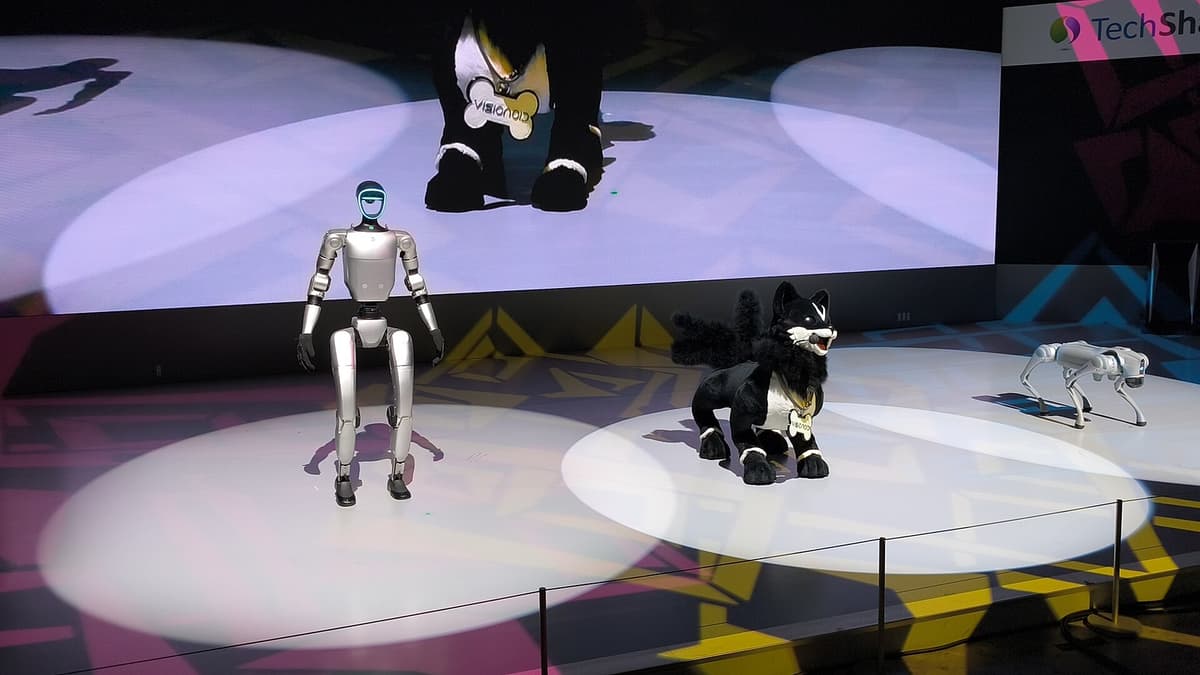
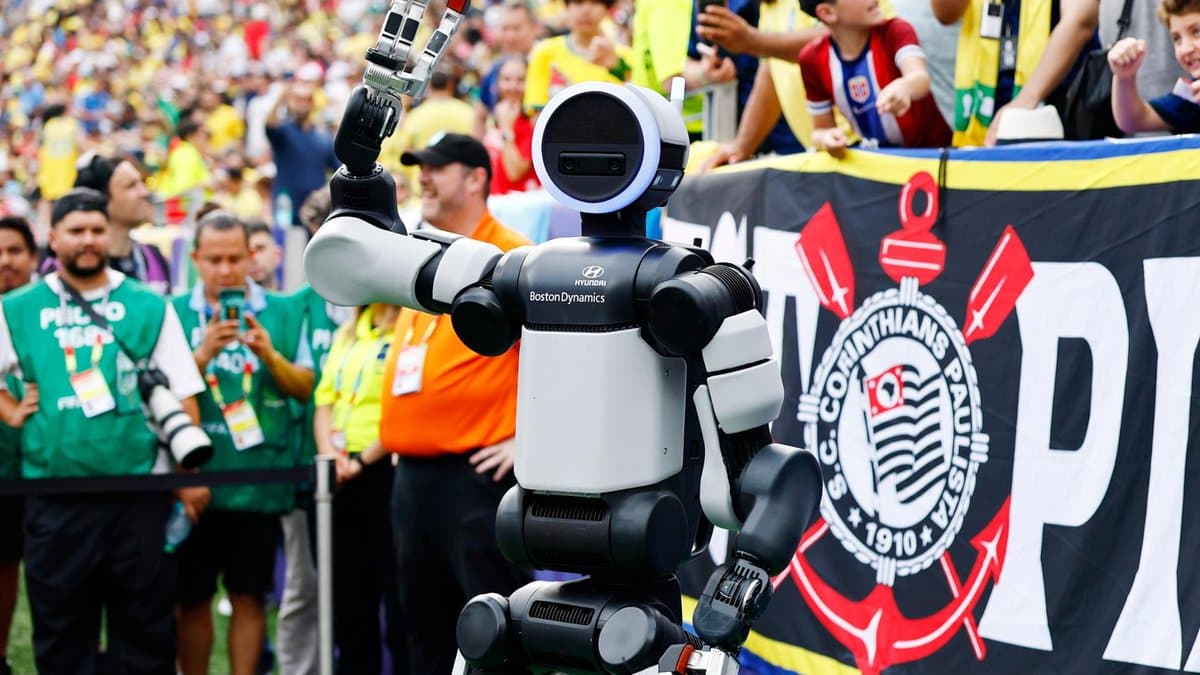
Boston Dynamics is a legend of robotics, spun out of MIT in 1992. It has dominated YouTube with Spot, the four-legged robot dog; Stretch, the warehouse box-mover; and Atlas, the humanoid that used to do backflips. Technically it's world-class. Commercially, its owners have kept changing hands: Google (2013), then SoftBank (2017), then Hyundai Motor Group (2021). It's the textbook case of a company whose technology is overwhelming but whose profits aren't.
Hyundai Motor Group entered the picture in June 2021, buying an 80% stake from SoftBank for roughly $880 million. The structure was telling: Hyundai Motor, Hyundai Mobis, and Hyundai Glovis combined for 60%, while Chairman Euisun Chung personally paid for 20% out of his own pocket. A chairman spending personal money on a robotics stake isn't a financial trade — it's a signal that this is a direction the group is betting its future on. Chung has openly framed Hyundai's future mobility as "50% automobiles, 30% urban air mobility, 20% robotics" ever since.
SoftBank is the Japanese investment holding giant run by Masayoshi Son. It bought Boston Dynamics from Google in 2017, sold most of it to Hyundai in 2021, and kept about 20%. So why dump the last piece now? Because SoftBank is pouring astronomical sums into AI data centers — the mega-scale AI infrastructure project it's pursuing with OpenAI, plus its Arm-anchored bet on AI chips. It needs cash. Boston Dynamics is still a loss-making business with a murky IPO timeline, and against that backdrop, using a put option that guarantees cash at a fixed price is simply the rational move. It's not that Son stopped believing in robots — it's that he needed ammunition for AI right now. Read it as reprioritizing the bet toward AI, not abandoning robotics.
What got bought, for how much, and how the cap table shifted
The story sharpens when you look at the equity structure. After the 2021 acquisition there were several capital increases and stake adjustments, so the cap table just before this deal looked like the table below. The heart of this transaction is that SoftBank's final 9.65% flows to the Hyundai camp.
| Item | Before this deal | After this deal (planned) |
|---|---|---|
| HMG Global (group holding vehicle) | 56.4% | Absorbed/redistributed within the group |
| Chairman Euisun Chung (personal) | 22.6% | Raised via additional purchase |
| Hyundai Glovis | 11.25% | Maintained/adjusted |
| SoftBank | 9.65% | 0% (fully cleared) |
| Hyundai camp total | ~90.3% | 100% |
| Transaction value | — | ~$325 million |
| Implied valuation | — | ~$3.3 billion |
| Announced / deadline | — | Announced July 16, 2026 / deadline lapsed July 20 |
One detail worth flagging: Chairman Chung is once again raising his personal stake. Local reporting notes that as the chairman's personal holding rises, a future Nasdaq listing would simultaneously boost his individual control and asset value — which makes this interesting from a group-succession and governance angle too. Once the company is 100% owned, Hyundai gets far more freedom to reshuffle the cap table on its own terms before any IPO.
The consistency of the price is also striking. The $3.3 billion valuation this deal implies is essentially the same as the valuation calculated when Hyundai bought 80% in 2021. In other words, Boston Dynamics' on-paper worth hasn't climbed much over five years. Part of that is because the put-option price was predetermined — but it also reflects a cold reality: the company still hasn't proven its value through revenue. The gap between flashy demo videos and the income statement remains wide.
What each side is really after — control for Hyundai, ammunition for SoftBank
For Hyundai, the core of this deal isn't money — it's control. $325 million is pocket change at Hyundai's scale, but owning 100% means a lot. First, total decision-making freedom. With the minority shareholder gone, Hyundai can drive Boston Dynamics' R&D direction, capital allocation, and integration with group affiliates entirely on its own judgment. Second, vertical integration of the Physical AI strategy. At CES 2026, Hyundai declared "Physical AI" a core pillar of its future — and to run data, manufacturing, and software as one body, it needs to own the robotics heart outright. Third, optimizing the IPO card. As a 100% subsidiary, Hyundai can restructure equity and then design a Nasdaq IPO on the group's preferred terms when markets are favorable.
For SoftBank, this is a clean exit. Masayoshi Son is staking the company's fate on AI infrastructure. The scale of capital going into the OpenAI mega-project and into chips and data centers is so large that recovering and redeploying any liquid asset is the strategy. The Boston Dynamics stake might be a jackpot "someday it lists" — but that someday was uncertain, whereas the put option delivers guaranteed cash at a fixed price. For Son, front-running the AI-brain infrastructure now is a far bigger bet than robotics hardware. Don't read it as folding the robot portfolio; read it as a cleanup that funnels the bet toward AI.
There's a shared win too: a clean break. An awkward cohabitation with a minority holder breeds conflicts of interest every time there's an IPO or a big investment decision. By splitting ownership cleanly to 100%/0%, both companies can now focus fully on their own futures — Hyundai on robots, SoftBank on AI infrastructure.
Déjà vu — the wins and losses of tech acquisitions, and SoftBank's shadow
The history of acquiring robotics and deep-tech companies splits sharply between success and failure. To judge this deal, look at a few precedents.
Closest to a success — Google/DeepMind (2014). After acquiring DeepMind in 2014, Google tolerated years of losses and gave the research team freedom, treating it as a long-term technology asset rather than a near-term profit center. That patience produced AlphaGo and, eventually, the roots of today's Gemini. The lesson is clear: unprofitable frontier-tech teams only bloom under a patient parent. Hyundai taking Boston Dynamics to 100% is also a declaration that it will push that patience to the end, without a minority shareholder pressing for short-term returns.
The shadow of failure — SoftBank's own robotics business. SoftBank once championed robot mass-adoption with its emotion-reading robot Pepper, but halted production and effectively shut it down for lack of viability. Boston Dynamics itself produced no clear commercial results during SoftBank's four years of ownership (2017–2021), and was ultimately handed to Hyundai. The lesson stings: no matter how dazzling the technology, turning robots into a money-making business is a completely different game. SoftBank walking away from robots twice is no coincidence.
A parallel track — Amazon/Kiva. Amazon acquired warehouse-robot maker Kiva in 2012 and deployed the tech at massive scale in its own warehouses. Rather than selling to others, it used the robots internally first to build economies of scale. Hyundai's playbook rhymes with this: put Boston Dynamics' robots into its own plants (the Metaplant) before external sales, accumulate data, raise reliability, then commercialize. The approach is "my factory is the best testbed."
Bottom line: across three owners, Boston Dynamics has always worn the tag "best-in-class tech, business-model question mark." Hyundai's full acquisition is a bid to peel that tag off — and, at the same time, a return to the exact spot where prior owners stumbled.
Rivals' counter-plays — Tesla, Figure, and China
Tesla's Optimus is the loudest rival. Elon Musk calls Optimus "Tesla's future itself" and is aiming for low-cost mass production. On specs, Optimus stands about 173 cm and weighs 57 kg — lighter and more energy-efficient than Atlas — but its payload is roughly 20 kg, less than half of Atlas's 50 kg. The decisive difference is deployment reality: as of 2026, Optimus is still in internal testing inside Tesla's own factories, while Atlas is one of the few humanoids that has actually started shipping to external commercial customers. Musk's answer is predictable — do to robots what he did to cars: gigafactory-style mass production that hammers the unit cost down, flooding the market with robots that are "a bit less capable but overwhelmingly cheaper."
Figure AI is the most threatening dark horse. The startup bets on premium, precision industrial robots, and has already deployed its earlier Figure 02 model at BMW's Spartanburg, South Carolina plant, running it in an actual, at-scale commercial production environment. In other words, on the title of "humanoid getting paid to work in a real factory," some argue Figure is ahead. That collides head-on with Hyundai's plan to put Atlas in its own Metaplant. Figure's counter is to lean into its reference edge: "we've already been validated in someone else's factory."
The China camp is climbing fast too. Led by Unitree, Chinese humanoid and quadruped robots crush Western rivals on price. The performance isn't top-tier yet, but the volume push — "a usable robot at half the price or less" — can't be ignored. The quadruped market Spot once dominated is already facing fierce pressure from cheap Chinese models. Hyundai and Boston Dynamics counter with a combination of "premium performance + a manufacturing giant's mass-production muscle," threading the needle between price and quality. Hyundai has set a target of building Atlas at a scale of 30,000 units a year — a bid to meet China's volume war with volume of its own, using mass-production know-how forged in automaking.
So what actually changes
For robotics and manufacturing workers, the inflection point where humanoids move from "demo video" to "actual factory labor" gets sharper. Hyundai has published a roadmap to deploy Atlas at its Metaplant America in Georgia starting in 2028, expanding to component-assembly processes by 2030. The new Atlas is fully electric, cutting part count by "almost an order of magnitude" to boost manufacturability and reliability, with 56 degrees of freedom, a 2.3-meter reach, and a 50 kg payload. The scenario of robots taking over repetitive, high-risk tasks humans used to do is now rolling forward with concrete years attached.
For investors, the real thing to watch is the prospect of a Nasdaq listing for Boston Dynamics. The dominant read is that with Hyundai owning 100% and Chairman Chung raising his personal stake, the group gets the freedom to design equity restructuring and value realization on its own terms at IPO. If the humanoid market opens up as much as bulls hope and Boston Dynamics lists, this $3.3 billion valuation could later look like a bargain. Flip side: if humanoid commercialization disappoints, the old tag of "yet another robot company that doesn't make money" could come roaring back. Timing of any listing and actual revenue growth will decide whether this bet pays off.
For everyday consumers, there's no immediate change to feel. We're not yet in the era where Atlas comes to your home or Optimus pushes a cart at the store. But the direction is unmistakable. Companies that used to make cars are now redefining themselves as makers of "moving intelligence" — Physical AI — and whoever wins that race will hold the standard for the robotics and mobility industry over the next decade. Hyundai grabbing 100% and clearing out its partner is an expression of intent: it won't hand the wheel to anyone else in this long race. Consider it a trailer for how the things we buy, the way we work, and how our cities run will gradually be reorganized on top of these robots.
🥄 Three Things You're Probably Wondering
— So what does this mean for me? Not much right now. Atlas isn't coming to your house. But if you hold Hyundai/Kia shares or work in manufacturing, it's different. This company sits at the center of robots supplementing and replacing factory labor, and if a Boston Dynamics IPO becomes real, it could directly move the group's valuation.
— If SoftBank sold, isn't that a signal it doesn't believe in the robot future? Too early to read it that way. SoftBank pulled out less because it distrusts robots and more because it needed cash for AI data centers right now. The put option is a way to guarantee cash at a fixed price, which fit Son's all-in AI strategy. It's a question of priorities, not a rejection of robotics' future.
— So is Hyundai's Atlas ahead of Tesla's Optimus? Depends on the axis. Atlas leads on actually shipping to external customers and on physical specs like the 50 kg payload. Optimus leads on the ambition of low-cost mass production, and Figure leads on real deployments inside someone else's factory. It's too early to call a winner — none of the three has proven autonomous, economically valuable work at scale.
References
- Hyundai Motor Group Official Newsroom — Statement on Boston Dynamics
- Bloomberg — Hyundai to Buy SoftBank's Boston Dynamics Stake in Robot Push
- Boston Dynamics Blog — Unveiling the New Atlas Robot
- Hyundai Motor Group Official Newsroom — AI Robotics Strategy at CES 2026
- The Korea Times — Chung to raise Boston Dynamics stake, fueling Nasdaq IPO prospect
- Boston Dynamics Official — Hyundai's 2021 acquisition completion (original deal)
Numbers and criteria are as of announcement and may change. Investment calls are yours to make!