Why Samsung Came Back to London After 14 Years
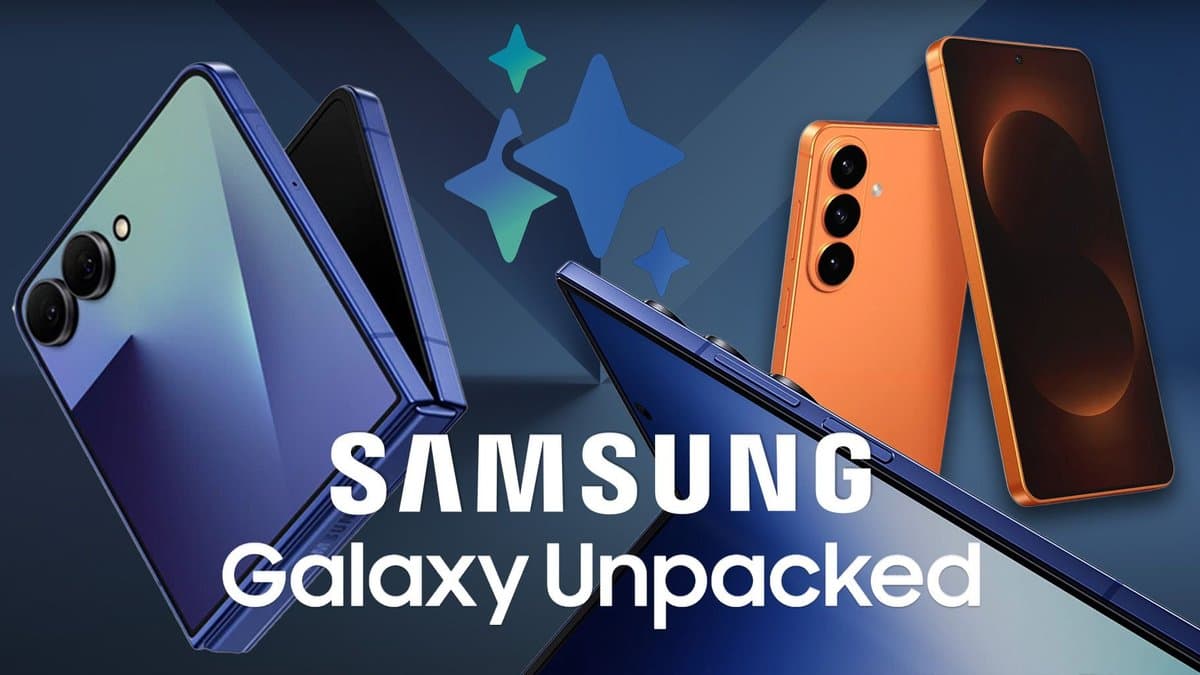
Tonight — 2 p.m. BST, 9 a.m. EDT — Samsung steps onto a London stage. It's the first time Galaxy Unpacked has landed in the UK in 14 years. The last one was May 2012, when Samsung launched the Galaxy S3 at Earls Court. Since then Unpacked has bounced between New York, San Francisco, Seoul, and Paris, so picking London again isn't a random venue choice. Samsung is a company that cares about staging symbolism whenever it wants to show off "a new shape."
That's literally the theme this year: "A New Shape Unfolds." The teaser invitation shows a tall, narrow ticket collapsing into a short, wide rectangle — no product name mentioned, just the message that the foldable's silhouette is changing. But here's the deal: tonight isn't only about folding phones. The genuinely new headline is that, for the first time in company history, a pair of AI glasses is sharing the stage.
So Samsung is chasing three things at once tonight. Rework the foldable form factor again, open a new wearable front with its first smart glasses, and tie all of it together with a Gemini-powered "AI agent" that spans phone, watch, and glasses. This isn't a spec-bump product launch — it's Samsung laying the board for its next five years against Apple and Meta. And since the event hasn't happened yet as of writing, treat most of the specs and prices below as leaks and expectations, not confirmed facts.
The Players — Samsung, Google, and a Pair of Glasses
The first player is obviously Samsung itself. Samsung opened the foldable era with the original Galaxy Fold in 2019, but the last few years have felt stuck. Foldables are still pricey, still heavy, still nowhere near mainstream. Meanwhile the smartphone market matured, and the "what's the next form factor?" question kept trailing Samsung around. It's answering in two directions: redesign the foldable into a "passport" shape, and step off the phone entirely into eyewear.
The second player is Google. The brain of these glasses is Google's Gemini running on the Android XR platform. Samsung builds great hardware, but for the intelligence of an assistant that juggles on-device and cloud, it leans heavily on Google. Gemini is already the default assistant on Galaxy phones, and the glasses are about pulling that same Gemini into your field of view. Samsung, Google, and Qualcomm have been pushing Android XR together for years — tonight is the day that effort finally ships as a consumer product.
The third player is the glasses themselves. They're called "Galaxy Glasses" or "Galaxy AI Glasses." The fun twist: this first model reportedly ships with no display at all. Instead of projecting an AR overlay onto the lens, it uses a camera to see the world, hands that visual context to Gemini, and answers you through speakers — an "audio + camera" device, not a "show you a screen" device. It's built to translate, navigate, and answer questions in real time, right in front of your face.
Rounding out the supporting cast: the Galaxy Z Fold 8, the Fold 8 Ultra, the Z Flip 8, and the Galaxy Watch 9. Some observers think this Flip could be the last of its line, which makes tonight quietly meaningful for foldable fans.
What's Actually Walking On Stage Tonight
The biggest shift is that the Fold line is splitting in two. Until now, Fold meant a tall, book-style device. This year the standard "Galaxy Z Fold 8" is expected to become a short, wide "passport" shape (roughly 4:3) — that's exactly what the "tall ticket turns squat" teaser was hinting at. The larger, traditional-ratio, big-screen model gets carved out as the "Galaxy Z Fold 8 Ultra." One line, split into two, so buyers can choose between pocketability and screen real estate.
The Fold 8 Ultra specs leaked aggressively. A 6.5-inch cover display (2,520×1,080) plus an 8-inch inner foldable display (2,504×2,256), both Dynamic AMOLED 2X at up to 120Hz. Brains are the Snapdragon 8 Elite Gen 5 "For Galaxy," with a 5,000mAh battery and 45W wired charging. It's 4.1mm thick unfolded and weighs 218g — thin and light — and the headline selling point is a redesigned hinge and thicker Ultra-Thin Glass that make the crease nearly invisible. Price is pegged around $2,099 for the 256GB base.
For the glasses, weight and runtime matter more than raw specs. Expect a Snapdragon AR1 processor, roughly 50g of weight, and a 245mAh battery that reportedly lasts 6–8 hours depending on how hard you push it. There's a 12MP camera and directional speakers, and Samsung is aiming for a slimmer look than Ray-Ban Meta. Price talk lands around $379–$449 (roughly €379–€499 in Europe), with an unveiling tonight but an actual full launch expected in the fall. Here's the shorthand:
| Item | Galaxy Z Fold 8 (standard) | Galaxy Z Fold 8 Ultra | Galaxy Glasses (first model) |
|---|---|---|---|
| Form factor | Passport (~4:3), short and wide | Traditional ratio, big screen | Wearable eyewear |
| Display | Foldable (expected) | 6.5" cover + 8" inner, 120Hz | None (no display) |
| Chipset | Snapdragon 8 Elite Gen 5 | Snapdragon 8 Elite Gen 5 | Snapdragon AR1 |
| AI | Galaxy AI + Gemini | Galaxy AI + Gemini | Android XR + Gemini |
| Battery | TBD | 5,000mAh, 45W | 245mAh, 6–8 hrs (expected) |
| Weight | TBD | 218g (4.1mm unfolded) | ~50g |
| Expected price | TBD | ~$2,099 (256GB) | $379–$449 |
| Availability | Pre-order after Unpacked (exp.) | Pre-order after Unpacked (exp.) | Full launch this fall (exp.) |
The line to watch in that table is "no display" on the glasses. Rival Meta's Ray-Ban Display put a screen in the lens and pushed weight and price up; Samsung is going the opposite way. The read is that Samsung wants to come in light and cheap, win on Gemini's voice-plus-vision alone, and push a display-equipped premium model out to 2027.
Who Gets What Out of This
What Samsung gets is a growth engine beyond the phone. Smartphones don't sell dramatically more units every year anymore, and foldables are stuck in a premium niche. Smart glasses, by contrast, are a market that's just opening — plenty of room to grow — and, crucially, they're a device that sits on your face all day, so they capture data and screen time wholesale. Just as Apple frets about what comes after the iPhone, Samsung benefits from laying down its own post-phone wearable ecosystem right now.
What Google gets is a body for Gemini. While OpenAI raced ahead with ChatGPT, Google's constant homework was figuring out where to put Gemini. Android phones are already covered, but the next stage of the assistant war is your eyes and ears. If the world's biggest Android maker bakes Gemini into its glasses as the default, Google gets an on-ramp to hundreds of millions of XR users without taking on hardware risk itself.
Qualcomm quietly wins too. The Snapdragon 8 Elite Gen 5 in the Fold and the Snapdragon AR1 in the glasses are both Qualcomm silicon. If smart glasses take off, a new demand curve appears for small, power-efficient XR chips — and Qualcomm holds that early standard.
What consumers get is choice. By splitting Fold into passport and Ultra, people who want a folding phone that vanishes into a pocket and people who want a tablet-class screen can finally buy different things. And the glasses offer a first taste of "Gemini on your face" at around $400 — far below Meta's $799 Display model. Whether that's actually useful in daily life, though, is too early to judge from a single launch event.
Wearables' Graveyard and Resurrection — From Google Glass to Ray-Ban Meta
Smart glasses have a much longer history of failure than success. Google Glass, launched in 2013, made a splash as a tech demo but flopped hard as a consumer product — killed by privacy backlash (people got mocked as "Glassholes"), an awkward design, and a $1,500 price. Google eventually pivoted it to enterprise and then quietly shelved it. Snap's Spectacles, North's Focals, and others followed and none cracked the market. The lesson was clear: if you want to put a computer on someone's face, it first has to look like glasses they'd actually wear.
Meta is the company that proved that lesson. Partnering with eyewear giant EssilorLuxottica (Ray-Ban's parent), Meta shipped "Ray-Ban Meta" starting in 2021, and it sold precisely because it looked like ordinary sunglasses first. Even with no screen — just a camera, speakers, and a voice assistant — Meta and EssilorLuxottica now hold more than 80% of the smart glasses market. Samsung leaving the display out of its first model is following that same winning formula: light, glasses-like, cheap.
The foldable precedent is worth remembering too. The first Galaxy Fold in 2019 had review units whose screens cracked one after another, delaying the launch in an embarrassing mess. But Samsung didn't quit — it improved the hinge and Ultra-Thin Glass year after year and turned foldables into a category that actually works. The Fold 8 Ultra's "nearly invisible crease" hinge is the product of six years of that grind. Having built a standard out of a broken first attempt, Samsung is likely to push the glasses the same stubborn way.
There's a failure lesson lurking, too. A display-free pair of glasses lives or dies on how naturally you can talk to it. Given how many past voice assistants got abandoned for being clunky, if Gemini can't translate and navigate smoothly in the real world, these glasses could end up in a drawer just like the rest.
Meta and Apple's Counter-Play
The most direct rival is Meta. It already shipped Ray-Ban Display at $799 back in September 2025 — a genuine AR-leaning product with a 600×600 full-color display in the right lens (90Hz, 20-degree field of view, up to 5,000 nits) and a wrist-worn "Neural Band" (sEMG) for gesture control. Then in June 2026, Meta announced a new entry-level model starting at $299, widening its price range at both ends. If Samsung comes in at around $400 with a display-free model, it's threading itself right between Meta's two lines.
Apple hasn't shown up yet, but it's the scariest constant. Apple is reportedly developing smart glasses targeting 2026–2027. As it usually does, Apple will likely skip opening the market and instead arrive late to polish a proven form factor and skim the premium. So Samsung's job is to cement "Android XR = Galaxy Glasses" in people's heads before Apple lands. Tonight's Unpacked is the starting line of that land-grab.
Google sits in a delicate spot too. It's Samsung's partner, but it can also push its own Android XR reference hardware with other makers. So Samsung gets to be "the best glasses for Gemini" without being Gemini's exclusive partner — the same ambiguity Samsung has always lived with in the Android phone ecosystem, replayed on your face.
The foldable counter-play is no joke either. Chinese makers like Huawei, Oppo, and Honor are already flooding the market with thinner, lighter foldables, some boasting hinge tech ahead of Samsung's. Samsung differentiating with a brand-new "passport" form factor reflects a judgment that spec racing alone won't shake off the Chinese chase.
So What Actually Changes
For developers, a new canvas opens up. Once Android XR reaches real consumers through a distribution channel as big as Samsung's, there's finally a reason to build XR and wearable apps. Devs who sat out the tiny headset market get a new surface: a device that lives on your face all day and where Gemini already knows the context. The catch is that a first model with no screen forces a mindset shift — you design for voice and context, not for a UI.
For everyday users, this isn't a "go buy it now" moment. Much of tonight's spec and price talk is leaked or expected, and the glasses don't fully launch until fall. But if you're weighing a Fold right now, it's worth knowing it splits into passport and Ultra: grab the standard model if pocketability matters, wait for the Ultra if screen and performance do. And for anyone who wants translation and navigation delivered straight from their face, a ~$400 pair is a fairly low barrier to entry.
For the fence-sitters, the real things to watch are price and battery. Smart glasses have always lived or died there. If $379–$449 gets confirmed, it's a head-on fight with Meta's entry model; and whether that 6–8 hour battery actually holds up in real use decides whether this becomes an "all-day" device. How Samsung nails those two numbers tonight will set the baseline for the whole smart glasses race to come.
For investors and industry watchers, the signal that matters is that Samsung has swapped the spec race for an AI-agent ecosystem frame. This isn't about selling one more phone — it's about binding phone, watch, and glasses together with Gemini into an "always-on personal AI." How smoothly that actually works will steer the direction of Samsung Mobile for years.
🥄 Three Things You're Probably Wondering
— So what does this mean for me? Not much right now. The glasses launch in the fall, so you can't buy them today, and the Fold 8 is premium-priced — steep for most people. But if you're on a Galaxy phone, just know that Gemini-based AI features are heading beyond the phone to your watch and glasses.
— Why is this happening right now? Meta has already grabbed 80%-plus of the smart glasses market with Ray-Ban, and Apple is eyeing a 2026–2027 entry. Samsung needs to claim the "Android XR glasses = Samsung" slot before Apple arrives, so the timing is now. A stalled phone market is the other reason.
— Is Samsung ahead of Meta and Apple? Too early to say. Meta is ahead — 80%-plus share and already selling a display model — while Apple has no product yet. Samsung's edge is a cheap, light, display-free model plus the Galaxy ecosystem, but whether that actually sells depends on final price, battery, and how good Gemini turns out to be.
References
- Samsung Galaxy Unpacked 2026 preview — Tom's Guide
- Galaxy Unpacked July 2026: A New Shape Unfolds, official invitation — Samsung Global Newsroom
- Galaxy Z Fold 8 Ultra last-minute rumors — Tom's Guide
- Galaxy Unpacked 2026 launch live — Android Central
- July 22 London Unpacked confirmed — gHacks
- Meta Ray-Ban Display and Ray-Ban Meta Gen 2 debut — GSMArena
- Samsung Galaxy Glasses price, release date, and specs — TechCabal
Figures are as of announcement and may change.