Musk Reignited the Scale War With a Single Tweet
Here's the deal: Elon Musk shook the board again. On July 18, he posted a short reply on X. "Our 2T model, which is better than our 1.5T in every way, will finish initial training next week. It might be able to exceed Kimi, but with speed and token efficiency close to our 1.5T (aka Grok 4.5)." That's it — two sentences. And those two sentences rattled the whole industry.
That "2T model" is the next-generation Grok, the one everyone is already calling Grok 4.6. Two trillion parameters. xAI's current flagship, Grok 4.5, sits at 1.5 trillion, so this is a 33% jump in a single generation. And Musk pinned it to a hard timeline: initial training finishes "next week." Why does that matter? Because dragging a frontier model through its initial training run takes an almost unimaginable amount of compute. Naming a concrete date — "next week" — signals that xAI's Colossus supercomputer is already spinning at the scale needed to pull it off.
The timing is no accident either. This tweet didn't come out of nowhere. Two days earlier, on July 16, China's Moonshot AI dropped Kimi K3, a 2.8-trillion-parameter open-weight model. It launched wearing the "largest open model in the world" crown, and it topped the Frontend Code Arena benchmark, edging out even Claude Fable 5. China punched through U.S. chip export controls to open-source something that big. Musk's line — "It might be able to exceed Kimi" — was, in effect, his answer to that gauntlet.
xAI, Musk, and the Muscle Called Colossus
xAI is the AI company Musk founded in 2023. Having co-founded OpenAI and then split from it, he came back to the front line of the frontier-model race. xAI's identity has been the same from day one: stack compute bigger and faster than anyone else. And that muscle is a supercomputer named Colossus.
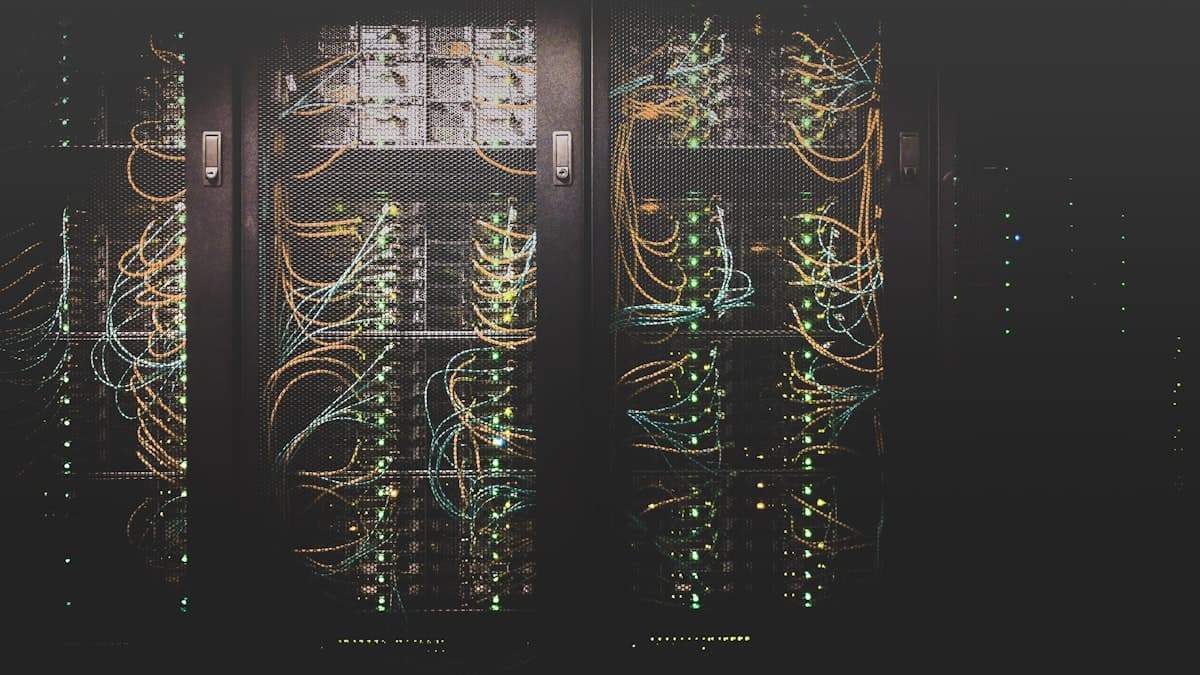
Colossus lives in Memphis, Tennessee. It started in 2024 when xAI converted a factory shell into a 100,000-GPU cluster of Nvidia H100s — in 122 days. The industry called it an insane pace. A data center at that scale usually takes years; xAI stood one up in about four months. Then it doubled to 200,000 GPUs in another 92 days.
By 2026 the scale is different again. As of January 2026, Colossus houses roughly 555,000 Nvidia GPUs — a mix of H100, H200, and the latest GB200/GB300 generations. Total power draw is around 2 gigawatts, and the investment is estimated near $18 billion. Musk bought a third Memphis building in late December to keep expanding, with a long-term target of one million GPUs. With compute like that on tap, "we'll finish training a 2-trillion-parameter model next week" stops sounding like pure bravado.
Musk himself has been saying he tweaks Grok almost daily now, continuously improving the Grok Build developer environment and the 1.5T foundation model as xAI races toward the 2-trillion milestone. For xAI, Grok 4.6 isn't just another product drop — it's a stage to prove that its compute is the strongest on the planet.
What Two Trillion Parameters Actually Means
Let's get the facts straight first. What's confirmed and shipped is Grok 4.5. It was announced in late June and rolled out publicly on July 8. It's built on a 1.5-trillion-parameter V9 foundation and, unusually, it was trained on real developer session data from the coding tool Cursor — the actual traces of how developers navigate, edit, and reason across a codebase over long sessions. Pricing is $2 per million input tokens and $6 per million output tokens, with a 500K-token context window.
Grok 4.6 — the 2-trillion model — is still in the "teaser" stage. Musk said the initial training run finishes "next week"; he did not say it shipped. Even after an initial training run wraps, post-training, evaluation, and deployment all follow. Judging by xAI's past release cadence, a public launch likely lands somewhere between late August and mid-September. So the accurate status right now isn't "a 2T model arrived" — it's "training is underway and about to finish."
Musk stressed two things. First, the 2T is better than the 1.5T "in every way." Second — and this is the interesting part — it keeps speed and token efficiency close to the 1.5T. That second claim matters. Scaling up parameters usually makes inference slower and more expensive. Musk is saying he'll grow the size without killing the efficiency. If that holds, it's close to a free upgrade from a developer's point of view.
| Metric | Grok 4.5 (shipped) | Grok 4.6 (teased, in training) | Kimi K3 (shipped) |
|---|---|---|---|
| Parameters | 1.5T (V9) | 2T | 2.8T (MoE, 16 of 896 experts active) |
| Status | Released July 8 | Initial training finishing "next week" | Released July 16, weights due July 27 |
| Context | 500K tokens | Undisclosed (likely 1.5T-class) | 1M tokens |
| Price (in/out per 1M) | $2 / $6 | Undisclosed | $3 / $15 |
| Training angle | Cursor developer session data | Undisclosed (Colossus-based) | Open weights, long-horizon agents |
| Openness | Closed (API) | Closed (assumed) | Open weights (on Hugging Face) |
The table reveals an interesting dynamic. Kimi K3 is the biggest by raw count at 2.8T, but it's a Mixture-of-Experts design that fires only 16 of 896 experts per token. Its total parameter count is huge, but only a slice is active at any moment. How Grok 4.6 uses its 2 trillion — dense or MoE — is something xAI hasn't disclosed. So a straight "2T vs 2.8T" comparison is a trap. Raw numbers alone can't settle who's ahead.
What Each Camp Gets Out of This
What xAI gains is obvious: narrative control. Just two days after Kimi K3 grabbed the "world's largest model" crown, Musk fired back with "ours is better and it's coming soon," yanking the story's center of gravity back to xAI. Regardless of actual performance, planting the impression that you hold the next card is half the battle in the frontier race. And by flexing Colossus's overwhelming compute yet again, xAI is signaling to investors and the talent market that this is where the front line is.
Developers get something real too. If Musk is right that the 2T beats the 1.5T while keeping efficiency similar, teams already on the Grok 4.5 workflow get a performance bump with little to no code rework. Grok 4.5 is already integrated into Cursor, and thanks to its token efficiency, benchmarks showed it burning far fewer tokens per task than Claude Opus 4.8. If 4.6 keeps that edge while getting smarter, it adds one more strong price-performance card for coding and agent work.
Nvidia is quietly smiling. 555,000 GPUs, and an expansion aimed at one million. A 2-trillion-parameter training run finishing next week means xAI keeps vacuuming up the latest GPUs after that, too. The hotter the frontier scale race gets, the more the pick-and-shovel seller cashes in. This whole dynamic — Musk, Moonshot, OpenAI, and Google all racing to build bigger — is the best-case scenario for Nvidia.
Precedents in the Scale War — Who Won Big and Who Got Burned
The classic win from scaling up parameters is OpenAI's GPT-3. When it landed in 2020 at 175 billion parameters, sheer size alone surfaced capabilities that hadn't existed before — so-called emergence. That success planted the scaling faith across the industry: make it bigger and it gets smarter. For years afterward, everyone piled into the parameter race.
But there's a counter-precedent too — evidence that raw size isn't the whole answer. DeepMind's Chinchilla work showed that, for a fixed compute budget, feeding a model more data beats blindly making it bigger. Many of those giant models were actually under-trained. After that, the industry backed off a bit from bragging about parameter counts. The rise of MoE architectures fits this context: keep total parameters large but activate only a slice per token, banking the efficiency. Kimi K3 firing just 16 of 896 experts is exactly that compromise.
Another lesson: the number isn't the performance. Plenty of past models led with big parameter counts only to lose on benchmarks to smaller ones. Data quality, training recipe, and post-training alignment matter as much as size. So even though Musk threw out the "2 trillion" number, the real verdict waits for the model to ship and run the benchmarks. Right now it's just a trailer.
How the Rivals Counter
The most direct rival is Moonshot AI's Kimi K3. 2.8 trillion parameters, a 1-million-token context window, and — crucially — open weights. It plans to release the full weights and technical report on July 27. That's the polar opposite of xAI's closed-API path. Kimi wants to absorb the developer ecosystem with "anyone can download and run our model," while xAI counters with "our API is the fastest and most efficient." They're clashing on two axes: scale and openness. On top of that, Kimi K3 scored 57 on the Artificial Analysis Intelligence Index — 4th out of 189 models, shoulder to shoulder with Claude Opus 4.8 and GPT-5.5. It's no pushover.
OpenAI and Google won't sit still either. OpenAI holds the frontier with its GPT-5 family, Google with the Gemini line. Their counter isn't just a bigger model — it's multimodality and agent integration. Rather than meeting the parameter race head-on, they compete on actual products and ecosystems. Google also has its own TPUs to lower compute costs, and OpenAI's weapon is the massive user base it already commands.
Anthropic plays a different note. The Claude line mostly stays out of the parameter-count contest. Instead it competes on safety, reliability, and real-world coding and agent capability. The news that Kimi K3 edged out Claude Fable 5 in the Frontend Code Arena was symbolic, but Anthropic's reply will likely lean into "trust in production beats a benchmark crown." In the end, two questions are rolling at once here: who's the biggest, and who's the most useful. Musk is pushing the former; Anthropic is pushing the latter.
So What Actually Changes
If you're a developer, the headline is more options. Grok 4.5 is already wired into Cursor with aggressive per-token pricing, and if 4.6 gets smarter while keeping efficiency, you get one more price-performance option for coding and agent work. But it isn't out yet, so there's no reason to rip up your workflow today. The sensible move is to validate on 4.5 and wait for the 4.6 benchmarks.
If you're an investor, read this as a signal in the compute cycle. Finishing a 2-trillion-parameter training run next week means xAI keeps pouring billions into the latest GPUs. Data centers, power, cooling, and the whole semiconductor value chain benefit from this cycle. On the flip side, remember that scaling parameters doesn't instantly translate to revenue. The cost of the scale race is certain; the payoff is still unproven.
If you're a general user, you won't feel much right away. When Grok 4.6 lands, you'll get somewhat smarter answers in the Grok app or on X — that's about it. But the real meaning of this race is elsewhere. Musk's xAI, China's Moonshot, OpenAI, Google, and Anthropic keep shipping bigger, more efficient models at a frantic pace, and the frontier gets overturned every few months. A model that was the best a year ago is midtier now. If this pace holds, the AI you use keeps getting better fast and cheaper fast. That's the real dividend of the scale war.
🥄 Three Things You're Probably Wondering
— So what does this mean for me? Not much right this second. Grok 4.6 is still training, with a launch estimated for late August to September. But if you use coding tools or AI agents, there's a good chance a cheaper, smarter option shows up within months. That's the moment to consider switching.
— At 2T it's smaller than Kimi's 2.8T — didn't Musk already lose? It looks that way on the number alone, but it's too early to call. Kimi is MoE, so only a slice of its 2.8T fires at once, and xAI hasn't said how Grok 4.6 uses its parameters. Data, training recipe, and efficiency matter as much as size, so the real ranking waits for benchmarks.
— Why is Musk announcing this now? Because it's a comeback swing, landing just two days after Kimi K3 took the "world's largest model" title. It's less about a shipped product and more about not ceding narrative control — a signal to the market and to talent that xAI holds the next card.
Sources
- Elon Musk's original post (X, 2026-07-18)
- Musk Teases Next-generation 2T Grok AI Model (Dataconomy)
- Moonshot releases 2.8-trillion-parameter Kimi K3 (Tom's Hardware)
- xAI Colossus Hits 2 GW: 555,000 GPUs, $18B (Introl)
- Colossus (data center) — Wikipedia
- Kimi K3, and the pelican benchmark (Simon Willison)
- Musk promises daily improvements as xAI races toward 2T (Cryptobriefing)
Figures are as of announcement and may change.