They Dropped $100 Billion on an Earnings Call
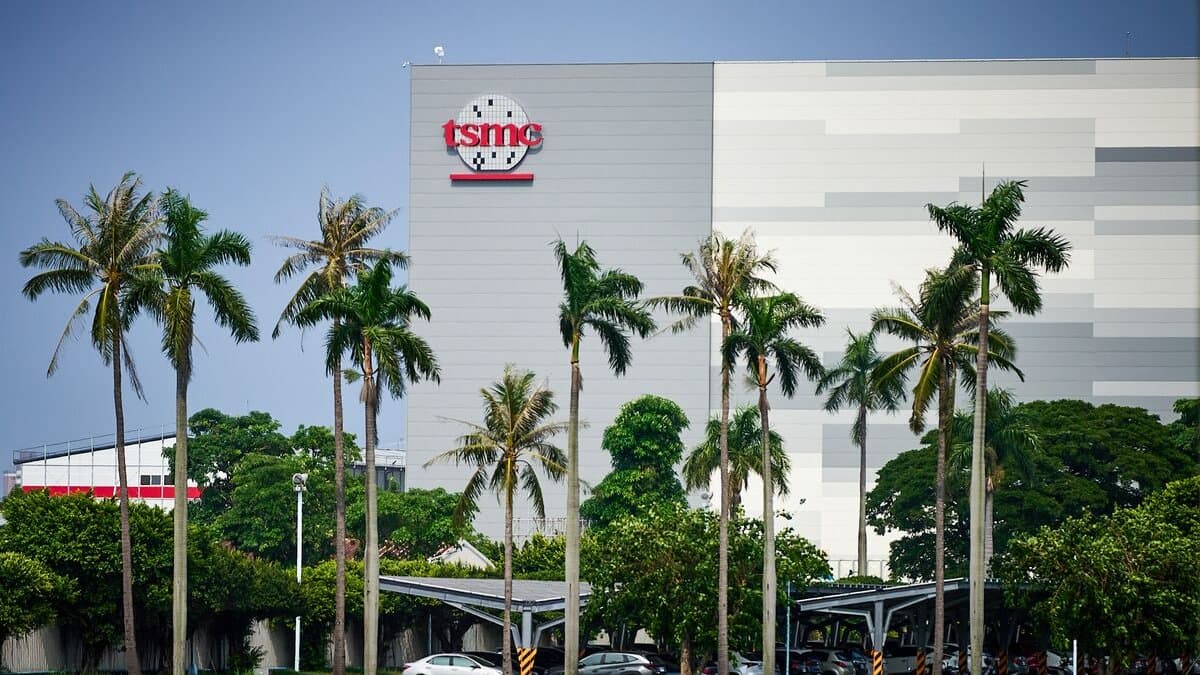
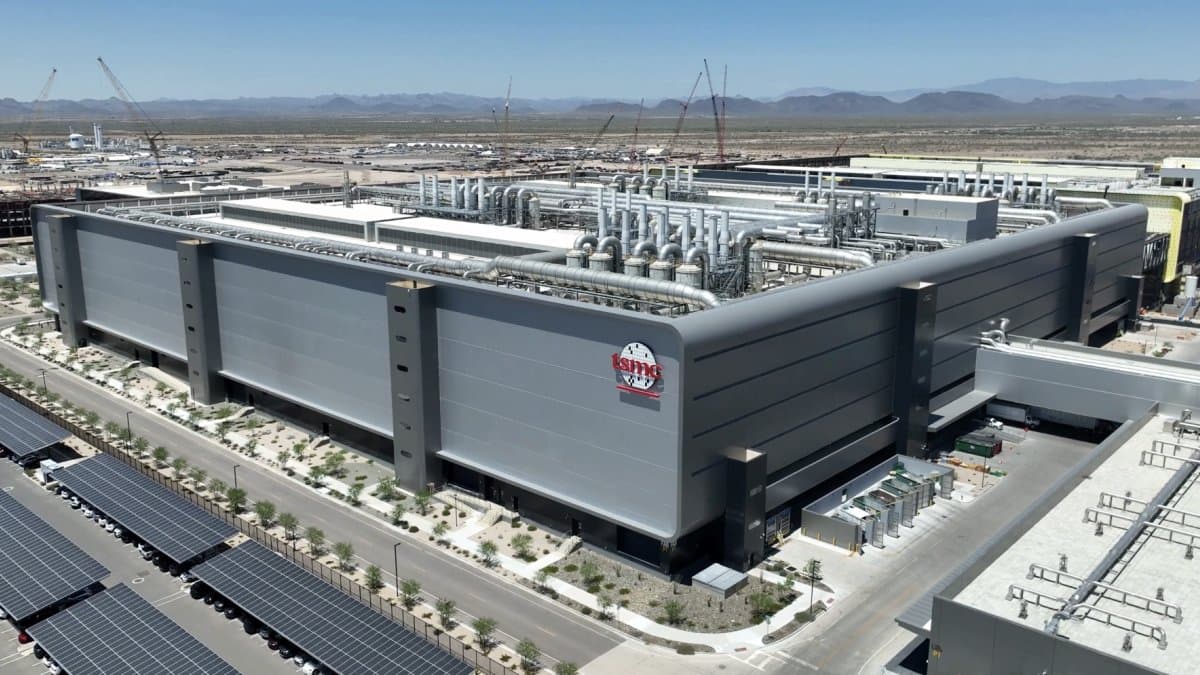
Here's the deal: on July 16, 2026, in the middle of a routine Q2 conference call, TSMC said it would put another $100 billion into Arizona. That pushes the company's total Arizona commitment to roughly $265 billion. The U.S. Department of Commerce put out its own release the same day calling it the largest foreign direct investment in American history. When the buildout is finished, the north Phoenix campus is supposed to hold ten front-end wafer fabs, two advanced packaging facilities, and one R&D center — twelve sites in total. The Arizona Commerce Authority and the City of Phoenix newsroom followed with their own statements, and the story arguably got bigger locally in the week after the announcement than on the day itself.
Where the number came out matters. This wasn't a White House event or a dedicated press conference. It landed on the call where TSMC was reporting the best quarter it has ever had. Q2 consolidated revenue was NT$1,270.38 billion, or about $40.2 billion — up 33.7% year over year and 12.0% quarter over quarter. Net income hit NT$706.56 billion, a 77.4% jump from a year earlier. EPS came in at NT$27.25, which works out to $4.31 per ADR. Gross margin 67.7%, operating margin 60.3%, net margin 55.6%. Those are not numbers a contract manufacturer is supposed to be able to print.
Chairman and CEO C.C. Wei's line in the Commerce release: the investment is meant to "support the strong multi-year demand from our major U.S. customers" and contribute further to the American semiconductor ecosystem. Corporate phrasing, sure, but the load-bearing word is multi-year. This isn't a reaction to one good quarter — it implies bookings stretching five years or more. On the same call, TSMC raised its 2026 full-year revenue growth guidance to "slightly above 40%" in dollar terms and lifted its capex budget to $60–64 billion, about $10 billion higher than the prior plan.
A week later, on July 23, local Arizona TV ran the story from a completely different angle. Citing an Arizona State University water policy researcher, the piece said the finished expansion could make TSMC the single largest water customer of the City of Phoenix. It took seven days for a $100 billion announcement to get translated into a utility-bill argument. That's the real texture of this project: the money comes from Taiwan, but the land, the power, the water, and the workers all have to come out of the Arizona desert.
Why TSMC Is Both the Bottleneck and the Referee
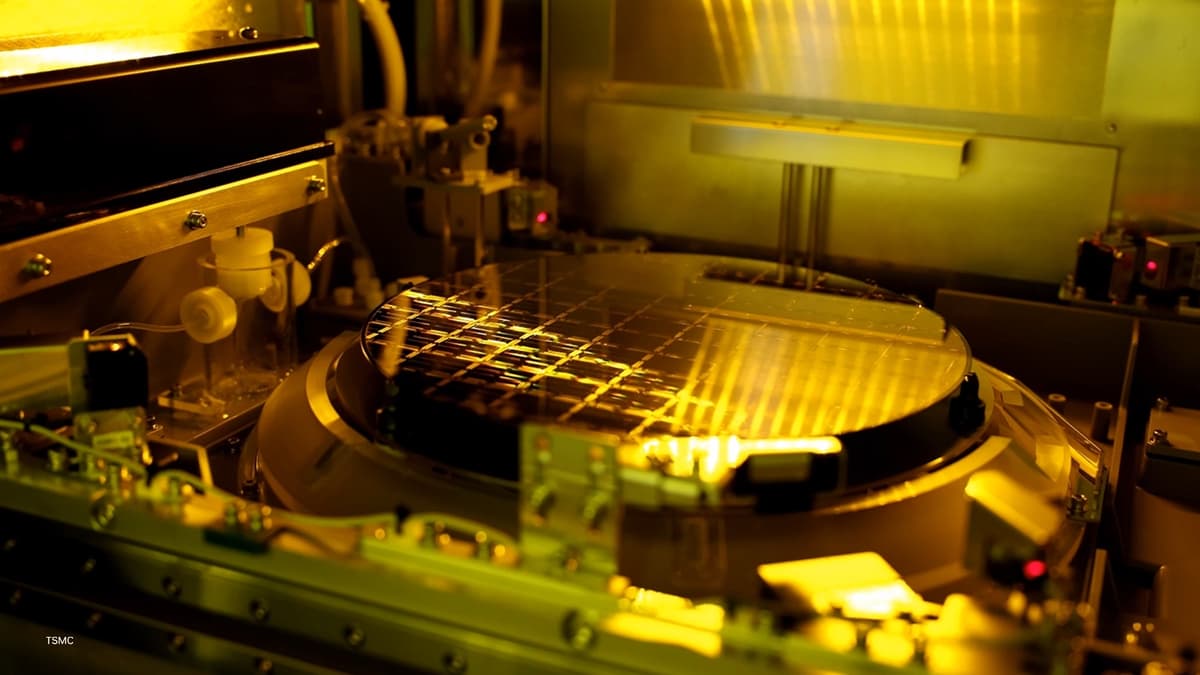
TSMC only does contract manufacturing. It doesn't sell chips under its own brand, so it never competes with its customers — which is exactly why Apple, Nvidia, AMD, Qualcomm, and Broadcom all hand their designs to the same company. In Q2, 3nm accounted for 30% of wafer revenue, 5nm 33%, and 7nm 11%. Add up everything at 7nm and below and you get 77% of revenue from leading-edge nodes. Nearly every expensive chip on earth passes through one company's lines.
Wei took over as chairman in mid-2024, completing the succession from founder Morris Chang, and he holds both the chairman and CEO titles. He's an engineer who came up through both R&D and sales, and he keeps quoting the founding rule that customers are not competitors. On this Arizona expansion he leaned on two things: U.S. customer demand, and the cost drag of overseas fabs. On the same call he was blunt about the second one — offshore production dilutes gross margin by 2–3 percentage points early on, widening to 3–4 points as the overseas share grows. So this isn't a spend TSMC is making because the math is beautiful. It's a spend where not doing it costs more.
The current state of the Arizona campus is worth knowing, because it changes how you read the headline. Fab 21 Phase 1 went into volume production on N4 in Q4 2024, with yields reported at roughly Taiwan-equivalent levels. The second fab topped out structurally in 2025; tool move-in starts in Q3 2026 with production targeted for 2027 — originally 2028, pulled in by close to a year because of AI customer demand. The third fab broke ground in April 2025 and is aimed at N2 and A16. TSMC currently employs more than 3,500 people in Arizona.
The company first landed in the U.S. in 2020, but the scale-up is a three-year phenomenon. December 2022: two fabs, $40 billion. March 2025: another $100 billion, taking the total to $165 billion. Now another $100 billion. That's a 6x increase in commitments in three and a half years. In the same window the American political map changed, and so did how nervous TSMC's customers feel about the Taiwan Strait.
Where the $100 Billion Actually Goes
The money splits across front-end and back-end. TSMC said it will build both sub-2nm wafer fabs and advanced packaging facilities. TrendForce reported — with the caveat that it can shift with market conditions — that the four new facilities may break down as three logic fabs plus one advanced packaging plant. Tom's Hardware summarized it as "at least four more 2nm-class fabs." The Commerce Department release just says four additional advanced manufacturing facilities for a total of twelve. So treat the split as directional, not locked.
The back-end half is at least as important as the front-end. What actually gates AI accelerator shipments right now isn't wafers — it's CoWoS (Chip on Wafer on Substrate) packaging capacity. That's the 2.5D process that mounts logic dies and HBM stacks onto a shared interposer. TSMC has roughly doubled CoWoS capacity every year since 2023, and 2026 allocation is still sold out. Estimates put Nvidia alone at something like 60% of the available volume. TSMC has been moving to outsource on the order of 240,000–270,000 units of 2026 capacity to OSATs like Amkor and SPIL, and Amkor is building a packaging and test plant near the TSMC campus in Arizona. Naming packaging facilities explicitly in this announcement is a signal that TSMC wants to unclog that bottleneck inside U.S. borders.
One more number to sit with: capacity share. Once all announced fabs are complete, roughly 30% of TSMC's 2nm-and-below capacity would sit in Arizona. The City of Phoenix release talks about roughly 80,000 jobs over the next five years and says Arizona would produce 20% of the world's most advanced semiconductors. Read those carefully — the jobs figure is a multiplier-based economic impact estimate of the kind municipalities use in promotional material, not direct headcount. Direct TSMC Arizona employment today is in the 3,500 range.
| Item | Before | After this announcement |
|---|---|---|
| Cumulative Arizona commitment | $165B | $265B |
| Front-end wafer fabs | 6 | 10 |
| Advanced packaging facilities | 2 | 2 (new allocation still under discussion) |
| R&D centers | 1 | 1 |
| Total facilities | 8–9 | 12 |
| Arizona share of sub-2nm capacity | — | ~30% |
| 2026 full-year capex | $50–54B range | $60–64B |
| Direct local employment | 3,500+ | ~80,000 jobs over 5 years (regional economic impact estimate) |
Construction schedule remains the biggest variable. Adding four facilities means running groundbreaking, permitting, power interconnection, and water sourcing in parallel, and TSMC has already learned how hard that is in Arizona specifically. The water issue is concrete, not rhetorical. Fab 21 alone consumes about 5,300 acre-feet per year — roughly 1.7 billion gallons, or the household water use of about 15,000 Phoenix homes. TSMC says it currently recycles 65% of its wastewater for scrubbers and cooling towers, and that a reclamation plant under construction should take that to 85%, with a long-term target above 90%.
What Each Side Gets Out of This
TSMC is buying tariff insulation and customer lock-in at the same time. The U.S. Section 232 action that took effect on January 15, 2026 puts a 25% tariff on certain advanced logic semiconductors — but companies building new domestic capacity get a duty-free import quota of up to 2.5x their planned capacity during the approved construction period, with preferential rates above that. In plain terms, the promise to build in America converts into the right to bring Taiwan-made chips in cheaply. Margin gets shaved 3–4 points, and in exchange TSMC buys down both tariff exposure and customer defection risk. The arithmetic works.
The U.S. government takes the biggest political win. Commerce Secretary Howard Lutnick framed it as presidential leadership pulling manufacturing investment back onshore and creating tens of thousands of American jobs. This is also a follow-on to the U.S.–Taiwan trade and investment agreement signed in January 2026, under which Taiwanese firms committed at least $250 billion in direct investment into U.S. semiconductor, energy, and AI production, and Taiwan's reciprocal tariff rate came down from 20% to 15% or below. This $100 billion gets counted as delivery against that pledge.
Arizona and Phoenix get the tax base and the jobs, and they get the infrastructure invoice with it. Local officials put out welcome statements within hours; the District 8 representative called it an investment putting Arizona at the front line of the AI and semiconductor revolution. On the other side of the ledger sit water and power. When the largest municipal water customer in a desert city becomes a chip plant, rate structures, reclaimed-water infrastructure, and housing supply become permanent political fights.
Customers like Nvidia, Apple, and AMD reduce supply risk. They're already pulling volume from TSMC Arizona, and the tariff structure keeps making U.S.-made wafers relatively more attractive. The catch is that American wafers cost more than Taiwanese ones, and how much of that delta lands in final chip pricing varies contract by contract. The fact that TSMC talks publicly about overseas margin dilution is itself a tell that price negotiations are live.
Taiwan itself is in an awkward spot. On the same occasion, TSMC said it would also build 13 advanced process and packaging facilities at home. That's deliberate balancing against domestic anxiety about the "silicon shield" wearing thin. R&D and first production of the most advanced nodes still start in Taiwan, with Arizona following behind. Whether that ordering holds is one of the things worth watching over the next few years.
What the Last Few Buildouts Taught Us
TSMC Arizona has already been through one failure-and-recovery cycle of its own. In July 2023 the company pushed Fab 21's production start from 2024 to 2025, citing a shortage of skilled workers. It flew in large numbers of Taiwanese technicians, and Arizona construction unions pushed back hard, raising safety concerns and arguing the labor shortage was a pretext for importing cheaper foreign workers. Fab 21 did enter volume production in Q4 2024 with yields close to Taiwan levels — but the whole episode laid bare exactly why American fabs cost more.
Intel is the counterexample. It announced sweeping expansions in Ohio and Arizona's Chandler campus, then adjusted the timelines repeatedly as external foundry customers failed to materialize. Its current stance is that it expects a first external commitment on 14A (its 1.4nm-class node) in the second half of 2026, with production targeted for 2028. Money builds fabs; customers fill them. That's the oldest lesson in semiconductor capex.
Samsung's Taylor fab teaches the same lesson from a different direction. The $44 billion Texas project stalled at one point specifically because it had no anchor customer, then picked up speed again when Samsung signed a deal to build Tesla's AI6 chips through 2033. Risk production is targeted for the second half of 2026 with full production in 2027. One anchor customer changed the fate of an entire project.
What's different about TSMC this time is the sequence. Customer volume is booked first; the capital follows. This announcement lands with CoWoS sold out through 2026 and 2nm reservations backed up, which inverts the risk profile compared to Intel and Samsung's build-then-hunt approach. The tradeoff: the whole logic rests on AI demand holding for multiple years. If that premise cracks, $265 billion becomes the world's most expensive idle equipment.
How the Competition Answers
Samsung Foundry's cards are speed and price. If Taylor reaches production in 2027, Samsung becomes effectively the only company offering a 2nm-class alternative on U.S. soil. The job is to parlay the Tesla volume into more anchor customers, and TSMC's higher American wafer cost hands Samsung real room in pricing talks. The old problem hasn't gone anywhere, though: confidence in leading-edge yield.
Intel Foundry's likeliest wedge is policy support plus packaging. While CoWoS stays jammed, there's been a steady stream of reporting on customers evaluating Intel's EMIB and Foveros as alternatives, along with claims that EMIB yields have improved substantially. Intel says it has design wins on 18A and 14A with multiple large design houses, but no binding external commitment has been made public. The fork in the road is what names get attached once PDK 1.0 ships in the second half of 2026.
Rapidus and Japan's broader push are variables too. Japan is pairing government money with its materials and equipment ecosystem to localize 2nm-class production, and TSMC itself runs a fab in Kumamoto. The harder the U.S. pushes with tariffs, the more Japan and Europe feel pressure to secure domestic capacity — and the more leading-edge capacity fragments by region. For TSMC, that fragmentation is itself a cost increase.
The quietest but most substantive counterplay comes from the customers. Nvidia, Google, Amazon, and Microsoft are all evaluating foundry diversification, and they've already spread packaging across multiple vendors. The more Arizona capacity TSMC builds, the more customers can play the "American wafer" card in negotiations — and the deeper their dependence on TSMC gets. That contradiction is going to be the central axis of chip supply contracts for the next several years.
So What Actually Changes
For developers and engineers, nothing shifts right now. But if U.S.-made 2nm wafers ramp through 2027–2028, GPU and accelerator lead times get more predictable than they are today. The flip side: packaging capacity unclogs later than wafer capacity, so cloud GPU allocation queues probably don't improve much in the near term. When you're planning infrastructure, don't build on the assumption that this resolves inside 2026.
For investors, two numbers pull against each other: that 67.7% gross margin and the 3–4 point overseas dilution. TSMC's position is that growth covers the dilution, and the "slightly above 40%" revenue growth guidance plus $64 billion of capex is the evidence it offers. That capex doesn't start flowing back through depreciation until after 2028, so whether AI demand holds through the gap is the real checkpoint. The tariff quota is a policy variable too, and policy changes with administrations and agreements.
For regular users, there's almost nothing to feel. How much American fab cost ends up in iPhone or GPU pricing is still unclear, and so far customers and TSMC have mostly split the difference. Arizona residents are the exception — for them the change arrives concretely, as water, power, and housing. The fact that a $100 billion announcement turned into a municipal water-rate debate in seven days is the proof.
For Korean industry, it cuts both ways. For Samsung Foundry, every block of U.S. capacity TSMC locks up raises the pressure on Taylor to differentiate. For materials, components, equipment, and HBM, it's opportunity. Ten fabs plus packaging in Arizona means a local supply chain gets rebuilt from scratch, and Korean equipment and materials firms with an existing U.S. footprint get a way in. HBM moves in lockstep with CoWoS capacity, so more packaging plants ties directly into SK hynix and Samsung memory volume forecasts. The problem is people. The skilled-labor shortage TSMC ran into in Arizona is the same bottleneck Korean firms hit when they build in America.
🥄 Three Things You're Probably Wondering
— So what does this mean for me? Not much directly. But if you rent cloud GPUs or pay for AI services, the price you pay is ultimately settled in this capacity race. More American leading-edge wafers around 2028 could loosen supply a bit — whether that turns into lower prices is way too early to call.
— Why is this happening right now? The January 2026 U.S.–Taiwan trade agreement and the 25% semiconductor tariff created a structure where a commitment to build in America converts straight into tariff relief. Stack CoWoS being sold out and 2nm booked solid on top of that, and the timing gives TSMC its best possible justification. Separating pure market logic from policy pressure here is basically impossible.
— Is TSMC clearly ahead of its rivals now? On capacity and on the order of operations, yes. Intel still has no public external commitment on 14A, and Samsung's Taylor production is a 2027 event. But fabs take three to five years from groundbreaking to output, and TSMC has already slipped a schedule in Arizona once — so hold the verdict until that $265 billion actually turns into wafers.
Sources
- Trump Administration Secures an Additional $100 Billion U.S. Semiconductor Manufacturing Investment for a Total of $265 Billion from TSMC — U.S. Department of Commerce (2026-07-16)
- TSMC Announces Additional $100 Billion Investment In Arizona — City of Phoenix Newsroom
- TSMC Reports Second Quarter EPS of NT$27.25 — TSMC press release (2026-07-16)
- TSMC Intends to Expand Its Investment in the United States to US$165 Billion to Power the Future of AI — TSMC press release (2025-03)
- TSMC Announces Updates for TSMC Arizona — TSMC press release
- Fact Sheet: Restoring American Semiconductor Manufacturing Leadership Through an Agreement on Trade & Investment with Taiwan — U.S. Department of Commerce (2026-01)
- Fact Sheet on U.S.-Taiwan Agreement on Reciprocal Trade — USTR (2026-02)
- TSMC commits another $100 billion to Arizona for at least four more 2nm fabs — Tom's Hardware (2026-07-16)
- TSMC announces additional $100bn investment in Arizona as chipmaker posts $40.2bn revenue for Q2 2026 — DataCenterDynamics (2026-07-16)
- TSMC Boosts Arizona Investment by US$100B, Plans 4 More Fabs for 2nm and Advanced Packaging — TrendForce (2026-07-16)
- TSMC Announces Additional $100 Billion Investment In Arizona — Arizona Commerce Authority (2026-07)
- TSMC Arizona expansion could make it Phoenix's largest water customer — AZFamily (2026-07-23)
Numbers and criteria are as of announcement and may change. Investment calls are yours to make!