The answer lives somewhere between 43% and $725 billion
On the night of July 29, Satya Nadella said something oddly defensive for a man who had just reported $90 billion in quarterly revenue and $40.6 billion in operating income. "We are advancing the frontier on the cost-to-outcome curve," he said, "ensuring every customer can turn tokens into business results." Read that again. It's a CEO explaining, on a blowout quarter, that the money going out the door produces money coming back in. That single sentence is the whole mood of Q2 2026 earnings season. Nobody is asking Big Tech whether it makes money anymore. They're asking whether it makes more money than it buries in concrete and silicon.
On the raw numbers, the answer looks pretty good. Azure and other cloud services grew 43% year over year, accelerating from 40% the prior quarter, and annual Azure revenue crossed $100 billion for the first time. Intelligent Cloud came in at $39.3 billion, up 32%. Google Cloud posted $24.8 billion, up 82%. AWS hit $42.2 billion, up 37% — its fastest growth in 18 quarters, per Andy Jassy. Three hyperscale clouds accelerating in the same quarter is not a thing that happens often. If you wanted evidence that AI is converting into actual invoices, this quarter handed it to you.
Here's the thing, though. The same earnings calls carried a second set of numbers. Alphabet raised 2026 capex guidance to $195–205 billion from $180–190 billion. Amazon lifted its plan from $200 billion to $220 billion. Meta narrowed its range upward to $130–145 billion from $125–145 billion. Add up just the incremental guidance from those three and you get roughly $37.5 billion added in a single earnings cycle. Goldman Sachs pegs the 2026 combined capex of Alphabet, Amazon, Microsoft and Meta at $725 billion — a 77% jump from last year's $410 billion — and models $5.3 trillion cumulatively from fiscal 2025 through 2030, revised up from $4.5 trillion before Q1 earnings. Azure at 43% is genuinely impressive right up until you park it next to that.
And standing directly between those two numbers are two Korean companies. Samsung Electronics posted record quarterly revenue of 171.5 trillion won and operating profit of 89.5 trillion won. SK hynix booked 79.3 trillion won in revenue, 60.5 trillion won in operating profit, and a 76% operating margin — a figure you basically never see in heavy manufacturing. You've probably already seen those headlines. What you may have missed is the part that actually matters for the next five years: the most important thing that changed this quarter wasn't the earnings, it was the shape of the contracts. So this piece answers three questions. Did Q2, viewed as one picture, prove that AI capex converts to revenue? Can the long-term agreements (LTAs) Samsung and SK hynix are signing genuinely pull memory out of its boom-bust cycle? And if this is a bubble, where does it crack first?
Six companies, two sides of the same ledger
Start with the spenders. Microsoft closed fiscal 2026 (ended June 30) with $331.8 billion in revenue and $155.2 billion in operating income, both up sharply. It put $35.8 billion into capex in the June quarter alone and $115.9 billion across the fiscal year. It opened 31 new data centers during the quarter and 88 across the year. Microsoft 365 Copilot passed 30 million paid seats, up from 20 million in April — a 50% jump in one quarter. What separates Microsoft from the other three is that it owns a subscription channel where you can more or less draw a line from the spending to a per-seat invoice. That's why its stock behaved differently.
Alphabet reported first, on July 22, and set the tone for everyone else. Revenue of $119.8 billion, up 24%. Google Services at $94.5 billion, up 15%. Google Cloud at $24.8 billion, up 82% — the fastest growth of any hyperscale cloud this quarter. The stock fell anyway, because the capex guidance raise landed harder than the beat. Amazon followed on July 30 with AWS up 37% and a disclosure that mattered more than the growth rate: $496 billion in contracted backlog not yet live. Jassy said that even at $220 billion of capex, Amazon will not have enough capacity to serve 2026 demand, and expects the same in 2027. Then he named the reason for the $20 billion increase: rising memory prices. That's the hinge of this whole story, so hold onto it.
Meta had the ugliest quarter of the four. Revenue rose 28% to $60.8 billion, but operating income fell to $18.8 billion from $20.4 billion, and operating margin collapsed from 43% to 31%. Net income dropped 14% to $15.8 billion. The number that really rattled people was free cash flow: $784 million, against $31.9 billion of operating cash flow and $31.1 billion of quarterly capex. A year ago Meta was a company with so much spare cash it bought back stock for sport. Now it converts essentially every dollar of operating cash into data centers. Total costs rose 55% to $42 billion, including $2.4 billion in legal charges and $1.2 billion in severance from a May headcount reduction.
Now the receivers. Samsung's Device Solutions division did 127.5 trillion won in revenue and 89.2 trillion won in operating profit — which is to say, essentially all of the company's profit came from chips. Meanwhile the Device eXperience division, which sells the Galaxy S26, lost 800 billion won because component costs ate the margin. Samsung's memory business is now profitable enough to make Samsung's phone business unprofitable. That's a genuinely surreal internal transfer-pricing situation. SK hynix grew revenue 257% and operating profit 557% year over year, and cleared 100 trillion won of first-half revenue for the first time ever. Micron completes the supply-side trio: its fiscal Q3 revenue of $41.46 billion exceeded its entire prior fiscal year's $37.38 billion.
Line all six up and the structure jumps out. The top four grind their cash flow into buildings and racks. The bottom three sell the single most binding input in those racks. And the bottom three earn better margins than the top four. SK hynix's 76% operating margin beats Microsoft's roughly 45% and most pure software companies. In the history of semiconductors, that inversion is rare and it never lasts forever — but understanding why it might last longer this time is the real story.
What the Q2 ledger actually says when you flatten it
First conclusion: AI revenue is real, and it still hasn't caught capex. Add up the AI-attributable infrastructure revenue across the three big clouds and it doesn't cover the same quarter's combined capital spending. Microsoft is close to parity — $39.3 billion of Intelligent Cloud revenue against $35.8 billion of capex — but "close to parity between one segment's revenue and total company capex" is not the same as a return. Meta is the extreme case: $60.8 billion of mostly advertising revenue funding $31.1 billion of quarterly capex with almost no AI product revenue line to point at. That difference in risk profile, not the growth rates, explains why the market bought Microsoft and sold Alphabet and Meta in the same week.
Second conclusion: the link between AI capex and Korean semiconductor earnings is now explicit and on the record. When Jassy raised Amazon's capex by $20 billion and attributed it to memory prices, he converted a loose correlation into a line item. It used to be "data center buildout probably helps memory demand." Now hyperscaler budget models carry memory unit cost as its own variable, and that variable moved enough to shift a $200 billion plan by 10%. That is a statement about where pricing power sits, delivered by the buyer, on a public call. HBM capacity has been diverted toward AI data center use because the margins are better there, and contract prices followed.
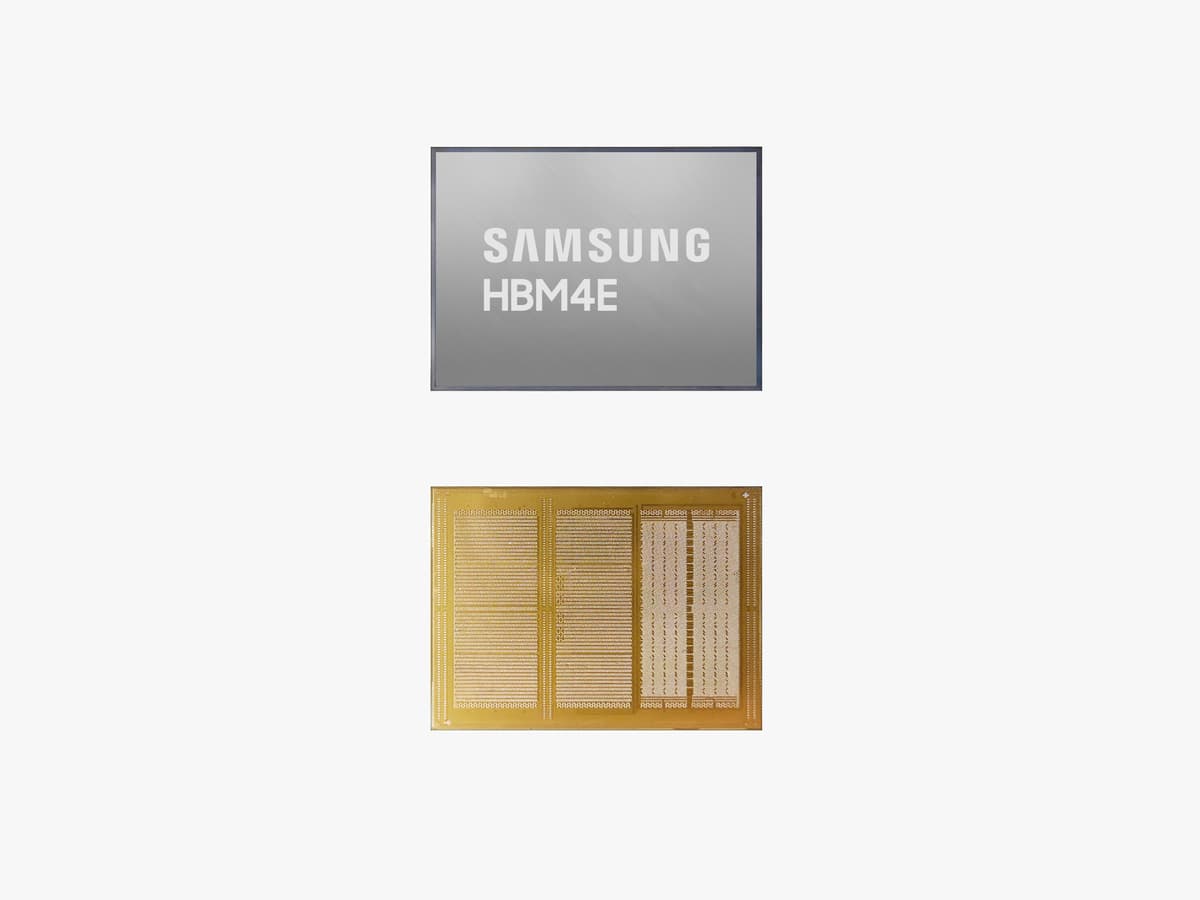
Third, and this is the part worth your attention. On its Q2 call, Samsung said it plans to have 60–70% of total memory capacity committed under long-term agreements. It has already closed contracts with five of the largest global data center operators and says negotiations with five more AI-linked major customers are near completion. The contracts run five years as a base with a rolling annual renegotiation that extends the term by a year at a time, and Samsung said it built substantial prepayment conditions into them to make them binding — roughly a quarter of the contracts carry prepayments already received. SK hynix said it has wrapped LTA negotiations with about ten key customers, also on five-year terms, with varied pricing structures designed to absorb price volatility. Micron has 16 strategic customer agreements representing roughly $100 billion of minimum contracted revenue, mostly running calendar 2026 through 2030, covering about 20% of its DRAM volume and a third of its NAND volume.
If you know memory, you know how strange that is. This industry ran on spot pricing and quarterly negotiation for forty years. Three-month contracts were the norm. Customers deferred orders when prices rose and binged when they fell, manufacturers rode the whipsaw, and every boom's profits got handed back in the following bust. That's precisely why memory stocks always carried depressed multiples — the market's baseline assumption was that this quarter's earnings are a loan against the next downturn. What's happening now attacks that assumption directly. And the detail that matters most is who asked first: the customers did. If you're committing $220 billion to a build plan, buying your most binding input on a 90-day cycle is insane, and the hyperscalers finally said so out loud.
| Item | Detail | Verification |
|---|---|---|
| Microsoft Azure growth | +43% YoY; annual Azure revenue crossed $100B for the first time | Microsoft FY26 Q4 release (Jul 29) |
| Microsoft cloud segments | Intelligent Cloud $39.3B (+32%); Microsoft Cloud $59.3B (+27%) | Same release |
| Microsoft capex | $35.8B in Q4; $115.9B for fiscal 2026 | Same release |
| Google Cloud | $24.8B, +82% (total revenue $119.8B, +24%) | Alphabet Q2 2026 release (Jul 22) |
| AWS | $42.2B, +37% — fastest in 18 quarters; backlog $496B | Amazon Q2 2026 release (Jul 30) |
| Meta profitability | Operating margin 31% (vs 43%); free cash flow $784M | Meta Q2 2026 release (Jul 29) |
| Incremental 2026 capex | Alphabet +$15B, Amazon +$20B, Meta +$2.5B ≈ $37.5B added | Sum of guidance revisions |
| Goldman Sachs estimate | $725B combined 2026 capex (+77% YoY); $5.3T cumulative FY2025–2030 | Goldman Sachs research, as reported |
| Samsung Q2 | Revenue 171.5T won, operating profit 89.5T won (record); DS division 89.2T won | Samsung Q2 2026 results |
| SK hynix Q2 | Revenue 79.3T won, operating profit 60.5T won, 76% operating margin | SK hynix Newsroom Q2 results |
| LTA coverage | Samsung targeting 60–70% of capacity (5-yr rolling, prepaid); SK hynix ~10 customers closed; Micron 16 deals ≈ $100B | Company earnings calls and IR materials |
Flatten all of that and the picture is: spending is up, revenue is up, spending is up faster — but a meaningful share of the spending points at contracted demand. AWS's $496 billion backlog, Micron's $100 billion of minimum contracted revenue, Samsung's 60–70% pre-committed capacity. That's not "build it and hope they come." It's closer to "build it because the orders are already signed." Backlog isn't cash and contracts can be renegotiated, so don't oversell it. But it's structurally different from a fiber company in 1999 trenching conduit against a demand curve drawn on a napkin.
Who gets paid, and who eats it
The clearest winners are the three memory makers, and not simply because prices went up. They win because they've contracted a floor under the way down. The reported structure is roughly 60–70% of volume locked at fixed prices across a five-year term, with the remainder floating with the market, plus minimum-price clauses so a downturn can't take the whole book with it. If that holds, the earnings volatility that defined memory for four decades gets structurally compressed. The single biggest reason memory equities traded at low multiples starts to evaporate — which is why the current re-rating debate around Samsung and SK hynix is really about contract architecture, not about one record quarter.
The hyperscalers aren't purely victims here either. Yes, Amazon eating $20 billion of memory inflation hurts. But the flip side is that it secured supply. If Samsung has already signed the five largest data center operators, everyone who didn't sign is fighting over the remaining 30–40% of spot volume in the tightest memory market in living memory. In a shortage, failing to get volume is far worse than paying up for it. Finishing a data center and then not being able to populate the servers is a real operational scenario in 2026. So the big buyers paid, locked it in, and in doing so made themselves harder to dislodge. Scale bought certainty, and certainty is now the scarce good.
Three groups eat the cost. First, smaller cloud providers and startups. When 60–70% of capacity is pre-committed, the residual spot pool gets thinner, pricier and more volatile. Large customers get stable contract pricing while small ones absorb the entire swing. Second, every industry that buys memory but has nothing to do with AI — PCs, phones, appliances, automotive electronics. Samsung's own DX division losing 800 billion won while the Galaxy S26 sold well is the cleanest possible illustration. If an internal buyer with a sister division making the parts can't hold margin, external OEMs are in worse shape, and that pressure reaches consumers as device price increases or quietly downgraded memory configurations over the next several quarters.
Third — and this one surprised people — Meta's shareholders. Revenue grew 28% and the stock still sold off, because the connective tissue between spend and return is thinner there than anywhere else. Microsoft can point to Copilot seats and Azure consumption. Amazon can point to a $496 billion backlog. Alphabet can point to 82% cloud growth. Meta can point to "AI is accelerating our core business," which is probably true and is not an invoice. That $784 million free cash flow number turned an abstract worry into an arithmetic fact. Same category of investment, wildly different market reaction, and the variable was verifiability.
There's one ambiguous party: the compute-chip vendors, Nvidia foremost. As memory captures more of the bill of materials for an AI server, GPUs capture relatively less of a fixed customer budget. Amazon's extra $20 billion went to memory, which means other line items absorbed pressure somewhere. Right now the total pie is expanding fast enough that nobody has to fight about it. The moment the pie stops growing, this becomes zero-sum, and the party holding five-year prepaid contracts is in a better negotiating chair than the party selling into an annual budget cycle.
We've seen versions of this movie — the fiber build and the DRAM chicken game
Start with the failure everybody cites. In the late 1990s, telecoms laid fiber on the assumption that internet traffic doubled every 90 days. Estimates put as much as $2 trillion into 80–90 million miles of fiber between 1995 and 2000. By 2001, roughly 95% of it was dark. Between 1999 and 2004, less than 5% of the cable laid was ever lit. Global Crossing and WorldCom collapsed; hundreds of thousands of people lost jobs. But here's the ending people skip: the demand curve those builders drew for 2001 did arrive — around 2008. The infrastructure thesis was right and the timing and capital structure were catastrophically wrong. That's the sharpest version of the bear case on AI data centers, and honestly it's a good one.
Memory has its own graveyard. The 2007–2008 DRAM chicken game wiped out Qimonda and eventually pushed Elpida into Micron's arms after Taiwanese and Japanese producers expanded on forecasts alone and watched prices crater. "This time is different" was said then too. What makes that episode relevant now is the mechanism of failure: those fabs didn't die because demand vanished, they died because the capacity had no contracted home. Unsold capacity in a falling price environment converts into debt almost instantly. Contracted capacity does not.
Now the successes. The first is commercial aviation. Boeing and Airbus expand production against multi-year order backlogs backed by deposits and cancellation penalties, which is exactly why backlog functions as a real demand indicator in that industry rather than a marketing number. The prepayment conditions and rolling renewals the memory makers are now writing borrow heavily from that playbook. The second is foundry. TSMC spent the 2010s converting customer relationships into multi-year capacity reservations with prepayments, and in doing so turned the least cyclical company in semiconductors out of what had been a cyclical business. Foundry escaped the cycle by changing its contracts, not its technology. That is precisely the move Samsung and SK hynix are attempting.
The caveat is real, though. Aircraft and leading-edge foundry wafers are customer-specific — break the contract and there's no easy alternative buyer, so the contract holds. Memory is closer to a commodity, which historically made commitments soft. HBM is increasingly customized to customer specifications, which strengthens the analogy; commodity DRAM and NAND are a harder case. The industry argument is that breaking a contract now means losing favorable terms in the next shortage, so multi-year deals should prove durable even through a downturn. That's a plausible theory of enforcement. It is also completely untested. The real exam is the first quarter in which memory prices actually fall.
What the other side is preparing
The most organized counter-move comes from the hyperscalers' own silicon teams. Amazon has Trainium, Google has TPU, Microsoft has Maia. Jassy noting that Amazon's AI and Chips businesses each cleared $25 billion run rates was a declaration that custom silicon has graduated from side project to line of business. More custom accelerators means margin pressure on Nvidia — but, and this is the interesting part, it doesn't reduce memory demand at all. Every accelerator architecture needs HBM. If anything, more custom silicon means more customers negotiating directly with memory vendors, which accelerates LTA adoption. Structurally, the memory trio sits in the one seat that wins regardless of which accelerator wins.
The second counter-play is accounting. The GPU useful-life fight that Michael Burry pushed into the mainstream is not settled. The bear argument: hyperscalers depreciate Nvidia-based hardware over five or six years while the real economic life is closer to two or three, understating depreciation and overstating profits by something like $176 billion industry-wide across 2026–2028. Nvidia counters that observed utilization and failure data support four-to-six-year lives, and auditors have so far sided with the companies. The telling detail is that in 2025 Amazon shortened the useful life on a subset of servers while Meta extended its estimate. Two sophisticated operators looking at similar assets and reaching opposite conclusions is a sign the answer genuinely isn't known — and how it resolves changes the credibility of the profit figures everyone just celebrated.
Third, supply is fighting back, but slowly. The excess profits the memory trio is enjoying exist because of shortage, and shortages end with capacity. Samsung told analysts that a new fab takes more than three and a half years from construction to wafer output, and that it does not expect significant supply growth before 2028 — indeed it expects next year's shortage to be worse than this year's, with tightness persisting into 2028. Micron has said its new fabs won't deliver meaningful output before fiscal 2028. SK hynix is pulling in M15X, preparing Yongin Fab 1 for early 2027, and lining up P&T7 advanced packaging and M17 for NAND, all while repeatedly using the phrase "capex discipline." So the counterattack is already funded; it just lands around 2028. And when a lot of capacity lands at once, that's how the next cycle gets seeded — which is also, conveniently, exactly when the LTAs face their first serious stress test.
Fourth, China. CXMT and YMTC continue adding commodity DRAM and NAND capacity and are working toward HBM. Competing at HBM4 class in the near term is a stretch, but if Chinese commodity volume grows, it pressures the back yard of a strategy that funnels Korean capacity into high-value AI parts. Export control policy is a huge swing factor here and verifiable public data is thin, so it's too early to be confident either way.
Finally, the buyers keep a card. These LTAs were signed in a market that overwhelmingly favors suppliers. When the cycle turns, customers will push to renegotiate — and the rolling annual structure is, by design, an annual renegotiation. A five-year contract does not mean five years of frozen pricing. Anyone reading the LTA story as pure supplier victory is reading only half the document.
So what actually changes for you
If you're a developer, the first thing you'll feel is availability. Amazon publicly said $220 billion of capex still won't cover 2026 demand, and AWS is carrying $496 billion of contracted work not yet live. The same dynamic that's locking up memory capacity — big customers committing early to guarantee supply — repeats one layer up at the cloud level. Expect on-demand access to the newest accelerators to stay difficult. Practically: evaluate reserved capacity, capacity blocks and committed-use discounts sooner than you'd like, and put real engineering time into inference cost reduction — quantization, batching, KV-cache reuse. Memory contract prices eventually show up in instance pricing, and they're going the wrong way.
If you're an investor, this quarter taught one lesson cleanly: the market has stopped grading AI spending and started grading the traceability of the return. Microsoft rose while Alphabet and Meta fell, even though Google Cloud's 82% growth beat Azure's 43% outright. The difference was how concretely each company could show the path from dollars out to dollars in. For the memory names, the analytical axis is different. Don't anchor on this quarter's margin, which is a shortage artifact. Watch LTA coverage ratio, the fixed-price share of volume, and the size of prepayments. Those three variables determine how much of the profit survives the next downturn — which is the entire re-rating thesis. The honest caveat: most LTA terms are confidential, so outside verification is limited and you're partly trusting management disclosure.
If you're just a person who buys things, there are two paths to your wallet. Hardware is the direct one — memory contract prices flow into laptops, phones, GPUs and consoles with a lag, and Samsung's own phone division running a loss on component costs proves manufacturers can't absorb all of it. The second path is AI service pricing. Token costs have fallen relentlessly for three years on the back of better models and better inference, but when the underlying infrastructure cost curve turns up, that decline slows. Shrinking free tiers and more granular paid plans are already visible, and this is the reason behind them.
If you're running an enterprise or an institution, it's time to redo procurement math. Server and storage quotes signed before memory cost pass-through and after it can differ meaningfully, so timing matters more than it has in a decade. If you operate infrastructure, revisit refresh cycles: the GPU useful-life debate looks like an accounting argument but it's really an operational question — how many years do you actually plan to run this hardware, and does your TCO model still work if the answer is three instead of six? And zooming all the way out: Korea is standing in the best seat in the global AI supply chain right now. The uncomfortable footnote is how concentrated that position is. Two companies, two product families, HBM and server DRAM. Samsung earning essentially all of its operating profit from one division is both the flex and the warning label.
🥄 Three Things You're Probably Wondering
— So what does this mean for me? Mostly it reaches you on a delay. The likeliest touchpoint over the next few quarters is device pricing — laptops and phones getting more expensive, or shipping with less memory for the same money. If you use AI products, expect free tiers to tighten and paid tiers to get more segmented.
— Is this a bubble or not? Both sides have real evidence. Contracted demand is genuinely there — $496 billion of AWS backlog, $100 billion of Micron minimum contracted revenue. So is the fragility: Meta's $784 million of free cash flow and an unresolved fight over GPU depreciation. A quantitative paper published in June concluded AI is best read as a real technological revolution carrying localized bubble dynamics, and right now that's probably the most honest framing available.
— Does the LTA shift mean memory stocks stop being cyclical? Too early to call. The contract structure did change, and the fixed-price share and prepayments are real. But every one of these deals was signed during a shortage, and none of them has survived a single quarter of falling prices yet. The verdict comes from the first downturn's earnings, not this one's.
Sources
- Microsoft FY26 Q4 Earnings Release (July 29, 2026)
- SK hynix Q2 2026 Business Results
- Samsung Electronics Q2 2026 Results (Semiconductor Newsroom)
- Alphabet Announces Second Quarter 2026 Results (PDF)
- Amazon.com Announces Second Quarter 2026 Results (PDF)
- Meta Reports Second Quarter 2026 Results
- Micron Fiscal Q3 2026 Earnings Call Prepared Remarks (PDF)
- Amazon Form 8-K, July 30, 2026 (SEC EDGAR)
- Boom, Bubble, or Buildout? A Multi-Method Evaluation of Whether AI Is in an Ongoing Financial Bubble (arXiv 2606.01575)
Numbers and criteria are as of announcement and may change. Investment calls are yours to make!