Something that hasn't been manufactured yet is entirely sold out
Here's the deal: DRAM and HBM that Samsung, SK hynix, and Micron will produce during 2027 has already been booked in full. As of August 2026, every chip coming out of those fabs eighteen months from now has an owner.
To feel what that means, look at the buyer side. Companies trying to procure memory right now are receiving 60 to 70% of the volume they request. Ask for 100 units, get 60 to 70. The rest has to come from somewhere else, or the product spec drops, or the launch slips.
The source of demand isn't ambiguous. HBM and AI server applications take close to 70% of total DRAM demand — a figure from ADATA chairman Chen Li-bai. Every PC, laptop, smartphone, console, and car in the world splits the remaining 30%.
NAND flash is on a similar track. It's less strained than DRAM, but capacity is expected to be fully booked by the end of August 2026 — which is to say, right about now.
So while this reads like a semiconductor industry story, it's also a consumer story. If you plan to buy a laptop or phone in 2027, the negotiation that sets its price has already concluded.
How this situation got built
Memory has always cycled between glut and shortage. What makes this episode structurally different is that three separate causes stacked on top of each other.
First, HBM consumes wafers disproportionately. It's built by stacking DRAM dies vertically, so it eats far more wafer area than conventional DRAM of equivalent capacity — and more still as stack heights increase. Yield losses in the stacking process push actual consumption above the theoretical figure. TrendForce estimated AI-related demand would consume 20% of global DRAM wafer capacity in 2026, and the trajectory rises into 2027.
Second, capacity expansion has a long fuse. Memory fabs take two to three years to build, and equipment lead times are long. All three makers cut capex hard during the 2022–2023 downturn. That was a defensible decision at the time; it's arriving as consequence now. Even a decision to expand today produces output no earlier than 2028.
Third, the character of demand changed. Historically, memory demand tracked PC and smartphone shipments — a consumer cycle with predictable seasonality. AI datacenter demand traces a different curve entirely. Hyperscalers contract multiple years at once, and whoever signs first gets the allocation. In that structure, spare volume never materializes.
Those three together produce the current picture. TrendForce noted back in June that tight DRAM supply was already handing pricing power to suppliers, and projected 2027 HBM contract prices rising by multiples.
| Item | Status |
|---|---|
| 2027 DRAM/HBM capacity | Fully booked at Samsung, SK hynix, Micron |
| Buyer allocation rate | 60–70% of requested volume |
| AI/HBM share of DRAM demand | ~70% |
| NAND flash | Expected fully booked by end of August 2026 |
| 2027 consumer DRAM supply | Significantly reduced vs 2026 |
| 2027 HBM contract prices | Projected to rise by multiples (TrendForce) |
The first side effect is already visible — even Nvidia downgraded a spec
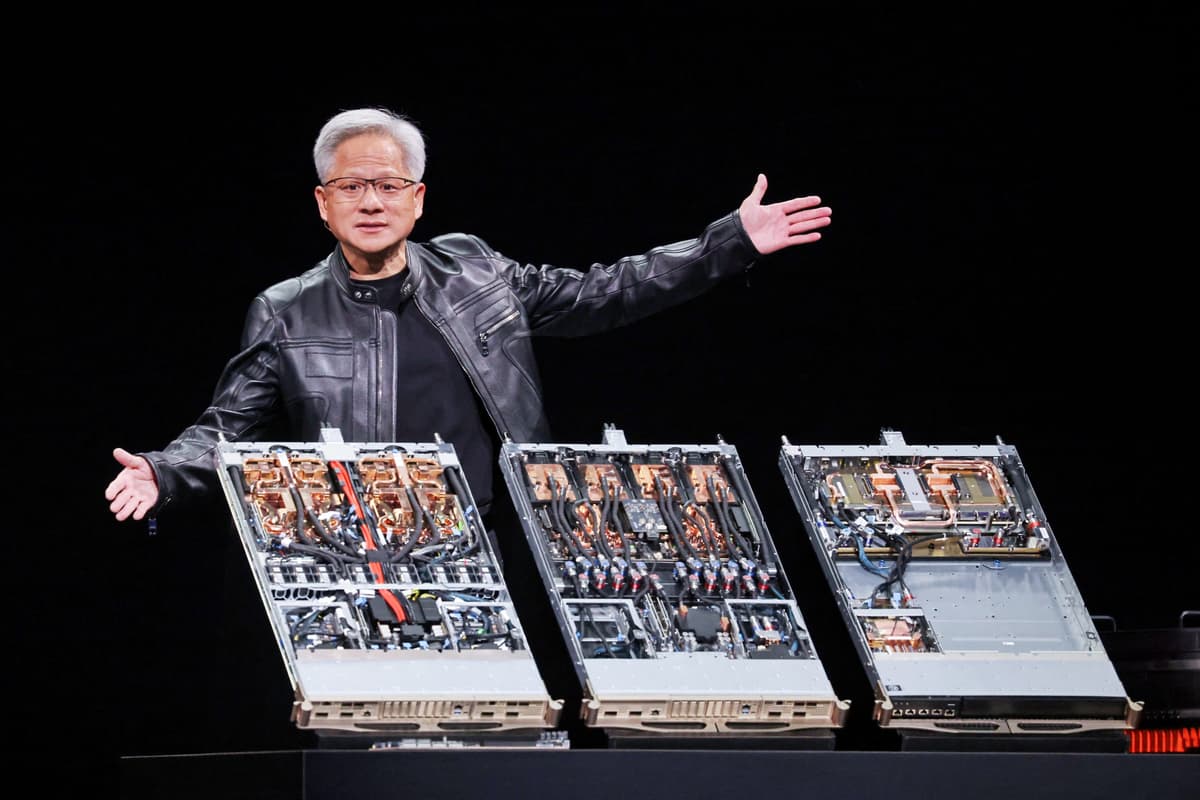
There's a concrete case of shortage changing a product. TrendForce reported on August 4 that Nvidia lowered the HBM configuration on Rubin Ultra, its next-generation part, citing DRAM tightness expected to persist through 2027.
That's a symbolically loaded event. Nvidia is currently the single most powerful buyer in the semiconductor industry. If even Nvidia can't secure the HBM it wants and adjusts the spec instead, the constraint is real rather than rhetorical.
The side effect showed up in equity markets too. SK hynix fell sharply across two consecutive sessions after the news. Which seems backwards — HBM shortage should be good for a supplier — until you notice that a customer cutting HBM content per unit cuts unit volume sold. Higher prices against lower volumes is an open question, not an automatic win.
That's the subtlety in this whole episode. Shortage doesn't reduce to "good for sellers." Push prices high enough and customers redesign around you, find substitutes, or defer purchases. For the three memory makers, the task is finding the price point that captures the cycle without triggering that response.
Who gains and who pays
The three memory makers get the clearest benefit. Volumes are locked, utilization worries vanish, and pricing power sits with the seller. Much of 2027 revenue is already contracted, which makes forecasting unusually reliable. There's a cost, too: locking contracts now forfeits upside if prices climb further, and creates delivery obligations if the cycle turns.
Hyperscalers split into those who secured supply and those who didn't. Whoever signed long-term contracts early has stable volume; latecomers pay premiums or scale down. AI infrastructure competition may be decided by procurement capability rather than model quality.
PC and smartphone makers are in the worst position. Memory is a large share of bill-of-materials cost, and their negotiating leverage is weaker than AI datacenter buyers'. There are only three responses: absorb the cost and compress margin, raise prices, or cut memory content. The third is already visible in some product lines.
Consumers absorb it last. It shows up as smaller base memory configurations, higher prices for the same spec, or budget models quietly disappearing. Timing starts with products launching after 2027.
Chinese memory makers get an opening. CXMT and its peers trail the big three technically, but they can compete in lower-spec consumer DRAM. As the big three redirect capacity toward AI, space opens up beneath them. That's a variable that could reshape competition several years out.
How previous shortages ended
Memory shortages have always ended. The question is how.
The most recent big one was the 2017–2018 supercycle, when smartphone and server demand overlapped, DRAM prices spiked, and Samsung posted record earnings. That cycle also came with "this time it's structural demand." What followed was a brutal 2019 correction — prices roughly halved from peak and all three makers saw earnings collapse. The mechanism was simple: everyone expanded at the top, and the new capacity landed at once.
2021's pandemic episode rhymed. Remote work lifted PC shipments, memory got scarce, and 2022–2023 brought enormous losses. What made that cycle especially painful was the customer behavior pattern: burned by shortage, buyers over-ordered, built inventory, then stopped ordering entirely when demand softened.
There's a counter-case where shortage persisted. The automotive chip shortage of 2020–2022 ran nearly three years — not because demand spiked, but because supply structure was rigid. The nodes involved were mature, nobody wanted to expand them, and there was no incentive to.
Which pattern does this resemble? The tell is the expansion cycle. All three makers are raising capex, and that output lands around 2028. So tightness through 2027 looks likely, and the question is what happens after. Overlay AI demand growth on that: where the two curves intersect determines the next cycle's direction.
How other players respond
Nvidia has already moved, and the Rubin Ultra HBM downgrade is the evidence. Beyond that, the lever is supplier diversification — raising Micron's share in the HBM4 generation, or accelerating Samsung's qualification. In a three-supplier market, the only thing a buyer can do is keep those three competing.
Hyperscalers get stronger incentive to push custom silicon. Google's TPU, Amazon's Trainium, and Microsoft's Maia let them design memory requirements around their own workloads, which creates room to need less of it.
Competition among the three shifts in character. When everything is sold, share matters less than margin. What decides outcomes is who ships the higher-value product and who reaches higher stack counts in volume first. Fall behind there and you sell out while losing on profitability.
Alternative architectures get more attention. Processing-in-memory, high-bandwidth flash, and other approaches to reducing HBM dependency have picked up activity. None are commercially ready, but prolonged constraint reliably increases investment in alternatives.
Equipment and materials suppliers benefit. Expansion decisions become tool orders. Backlogs at ASML and the materials suppliers will reflect this.
So what actually changes
If you're buying a PC or phone, this is timing input. Products launching after 2027 are likely to carry higher memory costs. If you're weighing whether to stretch your current device or replace it within 2026, this belongs in the calculation — though finished-goods pricing depends on many things besides memory.
If you procure servers or infrastructure, your planning method has to change. Buying when you need it no longer works; without long-term contracts signed in advance, you don't get allocation at all. And with 60 to 70% fill rates, requested volumes need headroom built in.
If you invest in semiconductors, the indicators are clear. First, capex execution pace at the three makers — faster expansion raises oversupply risk after 2028. Second, contract price realization: does TrendForce's multiples-higher projection actually materialize? Third, consumer DRAM pricing, because if it rises enough to suppress device demand, that feeds back into memory demand.
If you build AI products, this matters indirectly but genuinely. Memory constraint is GPU constraint, and GPU constraint sets the pace at which inference costs fall. The steady API price declines of recent years require hardware supply to keep up, and the bottleneck is currently memory.
If you're a general reader, this is where the AI boom meets the physical world. Model and product news sounds like software, but underneath sit wafers and fabs and two-to-three-year construction timelines. Right now that constraint is as sharp as it's been.
🥄 Three Things You're Probably Wondering
— So laptops get more expensive next year? That's the direction, but it's not certain. Memory is one input, manufacturers can absorb some of it in margin, and they can respond by cutting memory content instead. What does look likely is that the era of steadily getting more RAM at the same price pauses for a while.
— Why did this blow up now? It didn't, really. The capex cuts of 2022–2023 are arriving as consequence, and HBM consuming more wafer than expected compounded it. Fabs take two to three years, so responding today produces output in 2028 at the earliest.
— Does this mean the memory makers just print money now? Through 2027 they have unusually good visibility, since volumes are contracted. After that is a different question. If the expansion decided today arrives just as AI demand growth decelerates, you get the classic correction. And the counter-reaction is already visible — Nvidia cutting HBM content is exactly what customers do when prices climb.
Sources
- Weekly news roundup: ASML, DRAM, HBM, infrastructure, packaging (DigiTimes, 2026-08-10) — the source for full 2027 booking, the 60–70% allocation rate, and NAND selling out by end of August.
- Tight DRAM Supply Gives Suppliers Greater Pricing Power in HBM (TrendForce, 2026-06-02) — the underlying analysis behind the multiples-higher 2027 HBM contract price projection.
- DRAM Supply to Remain Tight in 2027, Prompting NVIDIA to Lower HBM Configurations for Rubin Ultra (TrendForce, 2026-08-04) — the case where shortage visibly changed an Nvidia product spec.
- AI Reportedly to Consume 20% of Global DRAM Wafer Capacity in 2026 (TrendForce) — quantitative grounding on how much wafer HBM and GDDR7 actually consume.
- Memory capacity for all of 2027 has reportedly been booked and sold (TweakTown) — the ADATA chairman's remarks and the outlook for reduced consumer DRAM supply.
Numbers and criteria are as of announcement and may change. Investment calls are yours to make!