The Company That Got Famous on ChatGPT Doesn't Make Its Money There Anymore
On August 14, OpenAI CFO Sarah Friar gave investors one sentence worth reading twice: "We entered the year at 60-40, but enterprise has accelerated much faster than expected and those lines have now crossed."
In that 60-40, the first number was consumer. ChatGPT individual subscriptions were the majority of the company's revenue. As of August, the relationship has inverted. Annualized recurring revenue stands at $40 billion.
Here's the deal: you need one more date to feel the weight of this. OpenAI closed a $122 billion round on March 31, 2026. The picture it showed investors then was enterprise at just over 40% of revenue, "on track to reach parity with consumer by the end of 2026." It cleared that milestone two quarters early, and it isn't parity — it's a crossover.
There's another number that shows the slope. In July alone, ARR grew 20% month over month, and the count of business customers grew 32% in the same month. ARR was roughly $20 billion at the start of the year, so it has doubled in about eight months.
What this is not is a story about ChatGPT faltering. The crossover happened because enterprise grew faster, not because consumer shrank. ChatGPT is still a service with over a billion weekly active users, and that scale hasn't moved. It has simply stepped out of the seat where the company's P&L gets decided.
The Person and the Products Behind the Shift
Sarah Friar was CFO at Square (now Block), then CEO of Nextdoor, and joined OpenAI in 2024. There's a through-line: she has repeatedly been the person who financially reorganizes a company that started out consumer. She was at Square while its center of gravity moved from consumer card readers to merchant financial services. What's happening at OpenAI rhymes with that structurally.
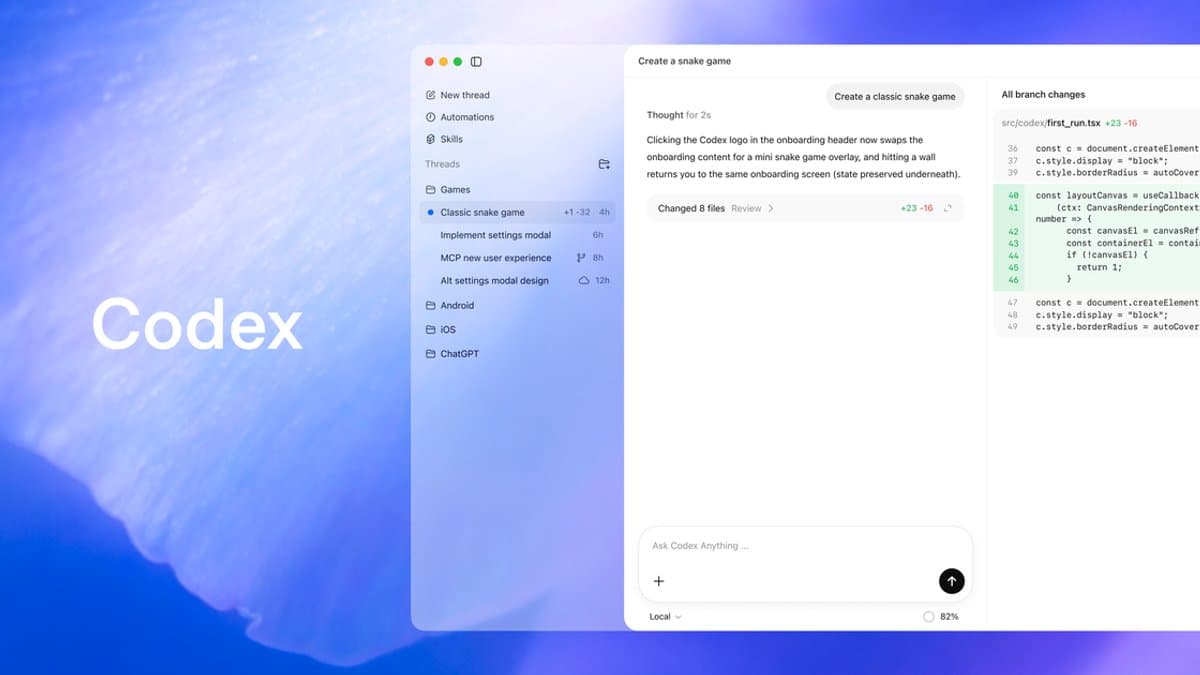
On the product side, two things built this crossover: Codex and ChatGPT Enterprise. Codex is a coding agent, and it sells by the engineering org rather than by the individual. One developer paying $20 a month and a 500-person engineering organization signing a contract are not the same revenue unit.
The ChatGPT Enterprise diffusion path is the more interesting one. Reporting points to fast uptake in legal, sales, and recruiting. Those three functions share a shape: document-heavy work where output-quality variance converts directly into cost. Contract drafts, sales proposals, job postings and candidate screening. All of it is the kind of work that's slow when a human does it and unskippable when they don't — and the time saved is accountable. When it's accountable, it gets a budget line.
The enterprise buying logic also looks different than it did a year ago. Most 2025 enterprise AI adoption was pilots: one department, a modest experimental budget, a writeup at the end. The 2026 contracts have moved to org-wide deployment and seat-based renewal, which is when revenue starts booking as recurring. That's the point at which the letters "ARR" start meaning something.
The Numbers, Laid Out
| Item | Figure | Timing / note |
|---|---|---|
| Annualized recurring revenue | $40B | August 2026 |
| ARR at start of year | ~$20B | Doubled in 8 months |
| July ARR growth | +20% month over month | Monthly |
| July business customer growth | +32% month over month | Monthly |
| Revenue mix entering 2026 | Consumer 60 : Enterprise 40 | Friar |
| Current mix | Enterprise is the majority | Exact split undisclosed |
| March round size | $122B | Closed 2026-03-31 |
| Plan at that round | Parity by year-end | Beaten by two quarters |
| Growth drivers | Codex, ChatGPT Enterprise | Legal, sales, recruiting |
The row to read most carefully is $40 billion. That's an annualized run rate, not money earned over a year. It extrapolates a point-in-time revenue pace across twelve months, and the faster a company grows, the more it overshoots actual fiscal-year revenue. Which is exactly why you can't line it up against Anthropic's "$11.5 billion in Q2" from the same week. One is recognized revenue; the other is an extrapolation.
Second, that 20% in July. Sustained, 20% monthly compounds to more than 8x a year, and no company sustains that. Read it as a snapshot of one month, not a trend line. The 32% growth in customer count is different in kind, though — headcount of accounts is harder to massage than revenue, and it's direct evidence that new contracts are actually being signed.
Third: the mix flipped, but the actual split was not disclosed. Whether it's 51-49 or 60-40 changes the weight of this story substantially, and that number doesn't exist publicly.
What Each Side Gets
OpenAI gets revenue quality. Individual subscriptions cancel easily, respond to macro conditions and fashion, and face constant leakage to free tiers. Enterprise contracts lock to annual terms and, once embedded in internal workflows, carry real switching costs. A dollar of enterprise revenue is valued higher than a dollar of consumer revenue for that reason — and for a company that raised $122 billion, defending a valuation is an operational task, not a philosophical one.
Investors get predictability. Beating a March plan by two quarters implies management guidance was conservative, which implies the next guidance may be conservative too. The inverse reading is also available: if this pace is already the peak, disappointment starts next quarter. Two more quarters of data will settle which.
Enterprise customers get leverage. When your segment becomes the majority of a supplier's revenue, your requests move up the roadmap. Audit logs, data governance, on-prem and region isolation — none of these are things individual users ask for, and they've been sitting toward the back of the queue. A revenue-mix change reorders that queue.
ChatGPT consumers sit somewhere ambiguous. The service isn't going anywhere. But its priority in resource allocation can slip, and OpenAI's recent expansion of ChatGPT ad experiments into more countries reads consistently with that. If consumer can't be the growth axis on subscriptions alone, other monetization gets evaluated.
Competitors get coordinates. Anthropic weighted enterprise from day one; OpenAI has now moved to the same ground. The two are in the same ring, and differentiation is shifting from raw model quality toward contract terms and depth of integration.
What Happened to Other Companies That Made This Turn
Consumer-to-enterprise pivots have happened repeatedly in software history, with split results.
The successful ones share two traits. First, they kept the consumer product while layering enterprise on top — and they kept it for acquisition, not revenue. Someone trying a tool at home and dragging it into work is the cheapest lead source enterprise sales has. ChatGPT's billion users are no longer the majority of revenue, but they're the top of the enterprise funnel.
Second, they absorbed enterprise requirements on time. SSO, audit logs, retention policy, regional data residency. The list is boring and it decides deals. Companies that built it late watched revenue stall.
The failure pattern repeats too. The most common one is organizational. Running enterprise sales with consumer-company culture tends to break: enterprise cycles run 6 to 18 months and collide with a habit of shipping fast and changing things. OpenAI being a company that changes products often and swaps models often is a genuine risk here. Enterprise buyers hate silent model changes.
The second failure pattern is pricing. As enterprise revenue grows, per-deal discounting grows with it, effective unit prices fall, and margins deteriorate even while the growth rate looks fine. OpenAI disclosed no income figures. Nobody knows what sits next to that $40 billion on the profit line.
Now It's a Head-to-Head With Anthropic
The same week, Anthropic showed investors $11.5 billion in quarterly revenue and positive adjusted operating income. OpenAI said $40 billion ARR and said nothing about income. That asymmetry is the center of the current competition.
Anthropic concentrated resources on coding and enterprise APIs from the start and effectively forfeited the consumer brand race. OpenAI started consumer and expanded into enterprise, and it still carries both. The cost structures differ. A consumer service keeps eating inference cost for free users, and that cost doesn't convert to revenue. Part of why Anthropic got to say the profitable word first is structural, not tactical.
The counterplay is already visible. OpenAI is diversifying consumer monetization with advertising, and it's working the inference-cost side with cheaper, faster models in parallel. Absorbing free-tier traffic on a cheap model reduces the drag consumer puts on the P&L. That's a financial response executed as a technical one.
Google is the other variable. Gemini crossed a billion monthly active users and comes with Workspace — an enterprise distribution channel that is already installed. The company OpenAI has to beat in enterprise isn't only Anthropic; it's also the one already inside everyone's email and documents.
The Microsoft relationship is doubly awkward in this framing. Copilot runs on OpenAI technology and also competes with ChatGPT Enterprise for the same enterprise seats. Being partner, channel, and competitor at once gets more sensitive the further OpenAI's mix tilts toward enterprise.
So What Actually Changes
For developers, there's now a structural reason for continued Codex investment. If the growth axis of the company is a coding agent, that product gets feature velocity and first access to new models. The corollary is that experimental consumer ChatGPT features may slip.
For enterprise IT, this is a negotiating window. The moment a supplier declares your segment its growth engine is the moment to push requirements into the contract. Data residency, pinned model versions, audit log retention — ask for them in writing now. Pinned model versions in particular is the single most practically important clause when contracting with a vendor that swaps models as often as OpenAI does.
For paying ChatGPT subscribers, nothing changes today. The trend worth watching is consumer monetization expanding beyond subscriptions.
For investors, the checklist is clear: the actual mix percentage, average contract value and renewal rates on enterprise, and above all income. ARR measures growth, not health.
For SaaS and AI teams generally, there's a sequencing lesson. Using a consumer product to accumulate users and converting those users into enterprise leads demonstrably works at this scale. But it only works if the enterprise requirements list already exists. Building it after the contract arrives is too late.
🥄 Three Things You're Probably Wondering
— Does this mean ChatGPT is struggling? No. The crossover came from enterprise growing faster, not consumer shrinking. ChatGPT is still a service in the billion-weekly-user range. It just stopped being the protagonist of the company's growth story.
— So $40B means OpenAI is bigger than Anthropic? Different units, so that comparison doesn't hold. OpenAI's $40B is an annualized run rate; Anthropic's $11.5B is revenue actually recognized in one quarter. On top of that, OpenAI disclosed no profit figure while Anthropic disclosed positive adjusted operating income. Scale and profitability are separate questions.
— Should we be adopting this now? The contract terms matter more than the adoption decision right now. A supplier in growth mode tends to be flexible in negotiation, and pinned model versions plus data-handling clauses are far easier to secure today than later. Starting with a departmental pilot is still the sensible on-ramp.
References
- OpenAI CFO Friar tells investors that enterprise business now bigger than consumer by revenue (CNBC, 2026-08-14) — The primary source: the August 14 investor remarks, the enterprise-consumer crossover, and Friar's "we entered the year at 60-40… those lines have now crossed."
- OpenAI Tells Investors Enterprise Revenue Has Overtaken Its ChatGPT Consumer Business (Unite.AI) — Source for the original plan presented at the March 31 close of the $122B round: enterprise at just over 40%, parity targeted for year-end.
- OpenAI CFO tells shareholders enterprise revenue has overtaken ChatGPT (The Next Web) — Source for the legal/sales/recruiting adoption pattern and for Codex and ChatGPT Enterprise as the named growth drivers.
- OpenAI Enterprise Revenue Tops Consumer for First Time: $40 Billion ARR Two Quarters Early (Tech Times, 2026-08-15) — Source for July's 20% month-over-month ARR growth, the 32% growth in business customers, and the ~$20B ARR at the start of the year.
- OpenAI CFO projects enterprise revenues could match consumer business (Crypto Briefing) — The same disclosure set against the company's earlier forecasts.
- Anthropic revenue jumps to over $11.5 billion in Q2 (CNBC, 2026-08-15) — The same-week rival figure: $11.5B in quarterly revenue plus positive adjusted operating income, and the basis for the units mismatch against OpenAI's ARR.
Numbers and criteria are as of announcement and may change. Investment calls are yours to make!