The Chip Company Just Took Responsibility for the Land and the Electricity
Here's the deal: on August 17, Nvidia announced a $1.5 billion equity investment into SB Energy, SoftBank's US infrastructure arm. On its own, that's a modest check for a company of Nvidia's size. But buried in the same announcement is a much larger number. Nvidia is guaranteeing up to $105 billion in credit to finance construction of the PORTS-Pike Technology Campus in Pike County, Ohio.
That's a strange thing for a chip company to do. Nvidia's business is designing silicon and selling it. In this deal it is backstopping the loans on the building its silicon will sit inside, and it has its name on a power generation project that will feed that building. When a supplier finances its own customer, the industry calls it vendor financing. Vendor financing just crossed into eleven figures.
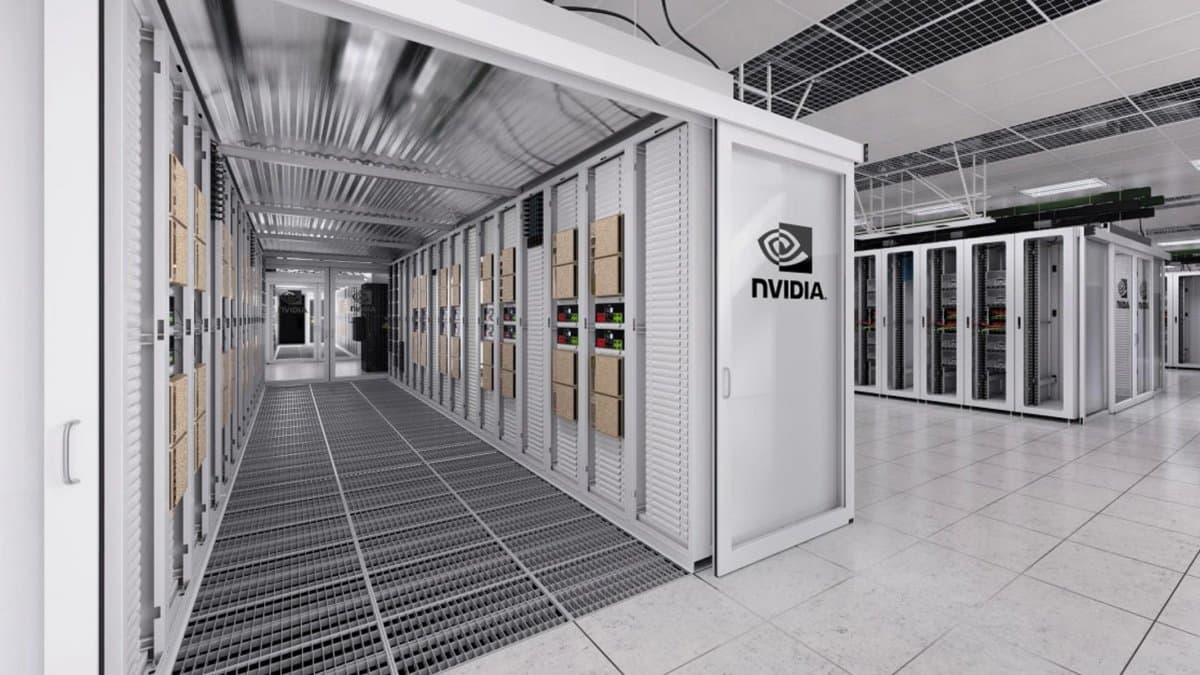
The end tenant is OpenAI. SB Energy builds, owns and operates the campus; OpenAI signs a 20-year lease. Nvidia becomes the sole supplier of compute infrastructure on site — land, power and shell capacity locked up in advance, and only Nvidia's chips go into it. Initial capacity is 4.25 gigawatts, with an option to bring another 3.75GW online for a total of 8GW. Target for first operations is 2028.
Where Each Party Actually Stands
Nvidia holds something close to a monopoly in AI accelerators right now. Its constraint isn't demand — it's somewhere to put the chips. You can fabricate all the GPUs you want, but if there's no data center shell and no interconnection to the grid, they don't generate revenue. That's why Nvidia has spent the past year putting capital directly into neoclouds. In January it invested $2 billion into a debt-laden CoreWeave to help it add 5GW of capacity. This deal is the same pattern, one order of magnitude up.
SB Energy is a US energy and infrastructure developer that SoftBank holds a stake in. It grew up building utility-scale solar and storage, and the AI boom handed it a scarce asset: sites with power already secured. In data center development, concrete isn't the bottleneck. Grid interconnection and generation capacity are. A shovel-ready site with power behind it is worth more than the land under it.
SoftBank's position is the awkward one. In November 2025 SoftBank sold its entire Nvidia position — $5.8 billion worth — to free up capital for other AI bets, OpenAI chief among them. Nine months later, Nvidia is putting equity into a SoftBank affiliate. SoftBank exited the stock and came back through the partnership door.
OpenAI is the party not writing the check. It's a tenant on a 20-year lease. That structure gives it access to up to 8GW without carrying the capex on its own balance sheet — a meaningful difference when you're already committing to compute deals across several vendors. The cost is a two-decade obligation that's very hard to unwind.
The Numbers, Line by Line
| Item | Scale |
|---|---|
| Nvidia equity into SB Energy | $1.5B |
| Nvidia credit guarantee ceiling | up to $105B |
| Initial campus IT capacity | 4.25GW |
| Maximum with option exercised | 8GW (+3.75GW) |
| Companion gas plant | 9.2GW, ~$33B |
| OpenAI lease term | 20 years |
| Community benefits fund | $80M initial |
| Target first operations | 2028 |
The $105 billion figure is a ceiling for the fully built campus. It funds the initial 4.25GW first; the remaining 3.75GW depends on whether the option gets exercised. The critical detail is that this is a guarantee, not cash out the door. Banks lend the money; Nvidia absorbs the downside if the loans go bad. Accounting-wise that's not an outflow, but it sits on the books as a contingent liability.
The power side is heavier than it looks. A new 9.2GW natural gas plant carries a roughly $33 billion price tag. Gas plant construction costs in the US have jumped 66% in two years, and turbine order books are backed up for years. What created that backlog? AI data centers. The industry is bidding up its own input costs.
For scale: a large nuclear reactor is roughly 1GW. The initial phase alone is four reactors' worth of load, and the full build is eight. That's why a whole new power plant is part of the package — you cannot pull this off an existing grid, so you build generation alongside.
The site isn't ordinary land either. It's the Department of Energy's former Portsmouth uranium enrichment complex, which enriched uranium for US Navy submarines and the nuclear arsenal during the Cold War. Sites like this come with heavy transmission infrastructure already in place, which collapses interconnection timelines from years to months. DOE has been actively opening idle federal land for exactly this purpose.
What Each Side Gets
Nvidia buys demand certainty. A contract that says only Nvidia compute goes into an 8GW campus locks in years of shipments and forecloses competitors from the site entirely. AMD, Google TPUs, AWS Trainium — none of them are in the conversation for PORTS-Pike. The $1.5B in equity and the $105B guarantee are the price of that exclusivity.
SB Energy buys cheap money. When a multi-trillion-dollar balance sheet stands behind your construction debt, your cost of capital changes completely. Data center development is a business where financing cost determines returns. With Nvidia's guarantee attached, SB Energy can run a far larger project on far cheaper debt than it could alone.
OpenAI buys capacity without capex. Building 8GW on its own balance sheet isn't realistic at any reasonable financing cost. Leasing turns it into an operating expense line. The trade is that a 20-year lease survives every architecture change that might happen in between.
Ohio and Pike County get jobs and a fund. The announcement leads with tens of thousands of Ohio jobs, an initial $80 million community benefits fund, and — pointedly — a commitment that the project pays for its own power infrastructure. That last clause is the politically important one. Ratepayer backlash against data centers raising local electricity bills is now a live issue across the US.
When Vendors Financed Their Customers Before
This isn't a new structure. Telecom equipment makers ran the same play in the late 1990s. Lucent and Nortel sold switching gear to newly formed carriers and lent those carriers the money to buy it. Revenue exploded. Then the 2001 telecom bust took the customers down, the receivables turned into write-offs, and Lucent never recovered. The revenue had been real on paper and imaginary in cash.
There's a success case too. When Amazon was scaling AWS in the early 2010s, long-term supply arrangements with equipment vendors were part of how it grew, and that turned out fine — because cloud demand actually compounded for two decades. The difference between the two outcomes was never the structure. It was whether the demand was real or manufactured by the financing itself.
So the question to hold onto is whether OpenAI can generate enough cash to cover twenty years of rent. Recent data points aren't discouraging: reports in mid-August put OpenAI's enterprise revenue above its consumer business, and Anthropic cleared $11.5 billion in Q2. But those are today's numbers against a contract that runs to 2046.
This deal also adds the largest single entry yet to a concern that's been building for months: as Nvidia repeatedly supplies capital and guarantees to CoreWeave, SB Energy and others, a growing share of Nvidia's demand is being underwritten by Nvidia.
One element has no historical precedent, though: the power plant. Lucent financed equipment purchases; it did not build generation. Selling compute now means selling electricity, and electricity takes five years to build. Financing risk, construction risk and permitting risk are now stacked on top of each other. Any one of them slipping pushes 2028 out.
There's a related trap in the option structure. Transmission and generation for a campus this size get engineered to the maximum build, not the initial phase. If the 3.75GW option is never exercised, roughly half of the electrical infrastructure sits idle — and who eats that cost is the most consequential clause in the contract. It isn't in the press release. That's what the SEC exhibit is for.
How Competitors Respond
Google plays a different game entirely. It designs TPUs in-house and builds its own data centers, so vendor financing never enters the picture. The trade-off is that selling that capacity to outside customers is slower, which is why it pursues anchor tenants like Anthropic instead.
AMD can't match this financially. Mirroring a $105 billion guarantee is not something its balance sheet supports. Its available cards are price, openness, and slotting into data centers that already exist. In a fight over locking up entire greenfield campuses, it starts behind.
Microsoft and Amazon own both custom silicon and their own facilities. This announcement is a threat and an opening at the same time: a threat because 8GW of new capacity is now spoken for, an opening because the deeper Nvidia entangles itself with one customer, the more incentive everyone else has to fund alternatives.
Utilities and turbine makers are the quiet winners. GE Vernova, Siemens Energy and Mitsubishi Power already have multi-year backlogs. Adding a 9.2GW project lengthens the queue and raises prices for whoever comes next.
China is worth a glance for contrast. Power and land are allocated administratively there, so vendor financing structures are unnecessary — but access to high-end accelerators is restricted. The US solves its bottleneck with capital; China solves a different bottleneck with policy.
So What Actually Changes
For developers, nothing this quarter. First operations are targeted for 2028. But the direction matters: as more compute gets locked into dedicated campuses under long-term contracts, cheap spot GPU capacity thins out and reserved, contracted capacity becomes the norm.
For AI startups, the signal is blunt. While frontier labs secure capacity in gigawatt blocks, companies that can't sign those contracts end up renting whatever's left. Competing on raw infrastructure gets harder every quarter; differentiating on domain, data or distribution is the realistic path.
For investors, there's a new line item to watch. Reading Nvidia's revenue without also reading its contingent liabilities, guarantee ceilings and related-party investments now gives you an incomplete picture. The actual terms are in the SEC exhibit, and it's worth reading the original rather than the summary.
For Ohio residents, the electricity bill question is concrete. Analysts have warned that competitive data center power demand could push regional natural gas prices up as much as threefold. The press release's promise that the project funds its own power infrastructure is written directly at that concern.
For everyday users, the effect arrives late and indirectly. When ChatGPT gets faster, longer-context and cheaper over the next few years, campuses like this are the reason. Real estate and power contracts are quietly setting the performance curve more than model announcements are.
🥄 Three Things You're Probably Wondering
— Is Nvidia actually spending $105 billion? No. That's a credit guarantee, not cash. Lenders provide the capital and Nvidia absorbs the loss if things go wrong. It still shows up as a contingent liability, and it can convert into a real loss if the project falters. The confirmed cash commitment is the $1.5 billion equity stake.
— Will OpenAI still need this capacity in twenty years? Too early to call. Current trends say yes, but a big jump in model efficiency could reduce the power required, while a shift where inference demand dwarfs training could push it higher. What's certain is that a 20-year lease doesn't let you change your mind halfway.
— Is it safe to build on a former uranium enrichment site? Remediation at Portsmouth has been underway for a long time, and DOE has an active policy of opening idle federal sites for this kind of development. The practical appeal is the existing transmission infrastructure. For the actual cleanup status and residual restrictions, the DOE fact sheet is the source to read rather than any secondhand summary.
References
- NVIDIA Guarantees SB Energy's PORTS-Pike Technology Campus in Ohio to Exclusively Host NVIDIA AI Compute (NVIDIA Newsroom, 2026-08-17) — Source for the $1.5B equity stake, the $105B guarantee, 4.25GW initial capacity plus a 3.75GW option, the 20-year OpenAI lease, and the $80M community fund.
- NVIDIA Secures AI Compute at PORTS-Pike Technology Campus (SB Energy) — The developer's own release, covering the build-own-operate structure and the Pike County site conditions.
- Securing the Infrastructure of Intelligence (NVIDIA Blog) — Nvidia's own framing of why it is underwriting infrastructure financing at all.
- NVIDIA SEC filing exhibit (CIK 0001045810) — Where the guarantee's actual terms and accounting treatment live.
- Fact Sheet: Department of Energy Ensuring Affordable Energy Access in Ohio While Powering the Future (U.S. DOE) — Confirms DOE ownership of the site and the federal land policy behind it.
- Nvidia investing $1.5B in SoftBank data center developer behind OpenAI project (TechCrunch, 2026-08-17) — Source for the 9.2GW / $33B gas plant, the 66% rise in gas plant construction costs, and SoftBank's $5.8B Nvidia stake sale.
- Nvidia eyes investing $3 billion in SoftBank's SB Energy, Information says (CNBC, 2026-08-15) — Shows the $3B figure floated during negotiations versus the $1.5B that was announced.
- OpenAI joins data center venture at former nuclear enrichment site in Pike County (WOSU, 2026-08-17) — Local coverage of the site's history and community reaction.
Numbers and criteria are as of announcement and may change. Investment calls are yours to make!