Cerebras Cracked the U.S. Tech IPO Market Open — First Time Since Uber 2019
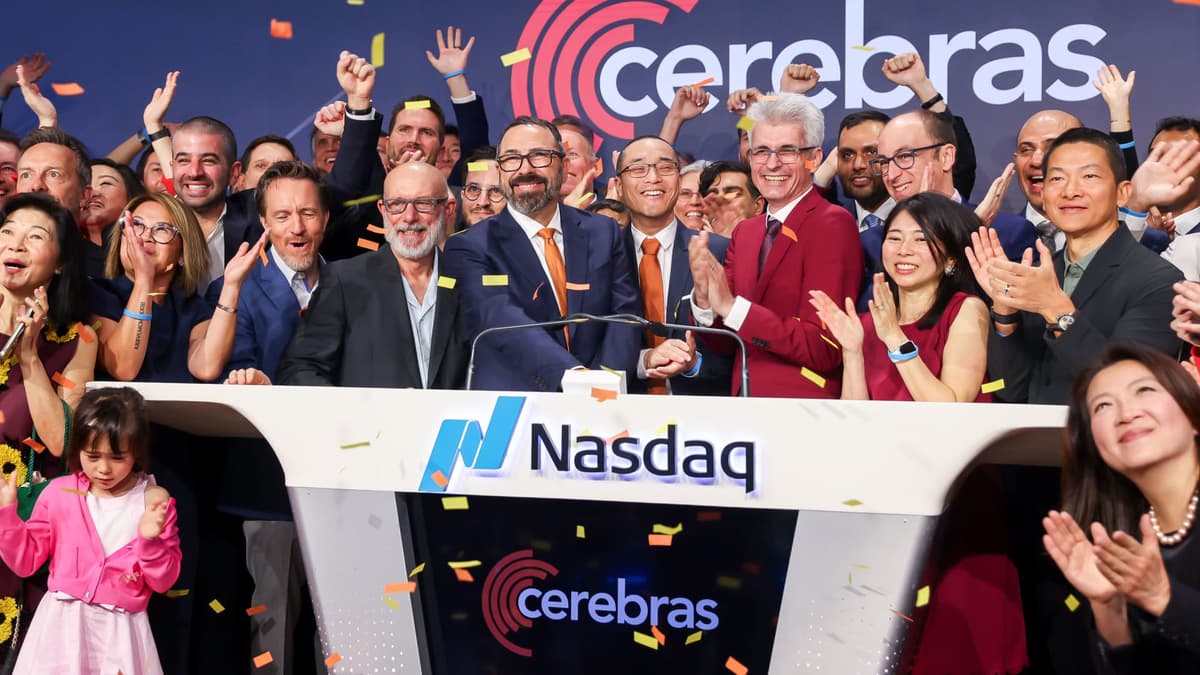
On May 14, Cerebras Systems (CBRS) debuted on the Nasdaq. The company sold 30M shares at $185, raising $5.55B — the largest U.S. tech IPO since Uber's 2019 listing. Day-one close: up 68% at $311.07, market cap ~$95B. CEO Andrew Feldman and two co-founders are now billionaires overnight. The message to the market is clear: AI-chip IPOs are alive again.
The real story is the combination of revenue, margin, and a profit pivot. FY revenue grew 76% to $510M, and the company swung to a net profit of $88M from a $481.6M loss the prior year. An AI-chip company posting (1) double-digit-growth revenue, (2) profit, and (3) a $95B IPO simultaneously hasn't happened since Nvidia. Cerebras just proved that "AI chips exist outside of Nvidia and they have revenue."
There's a serious risk attached. 86% of revenue depends on UAE-affiliated entities — specifically G42 (the Abu Dhabi government–backed AI company that took Microsoft's $1.5B investment in 2024) and its subsidiaries. Three risks bundled: (1) geographic revenue concentration, (2) U.S.-government concerns about UAE-China re-routing, and (3) single-customer dependence. Disclosed in the S-1, but the market short-term ignored it — the "revenue is revenue" mood prevailed.
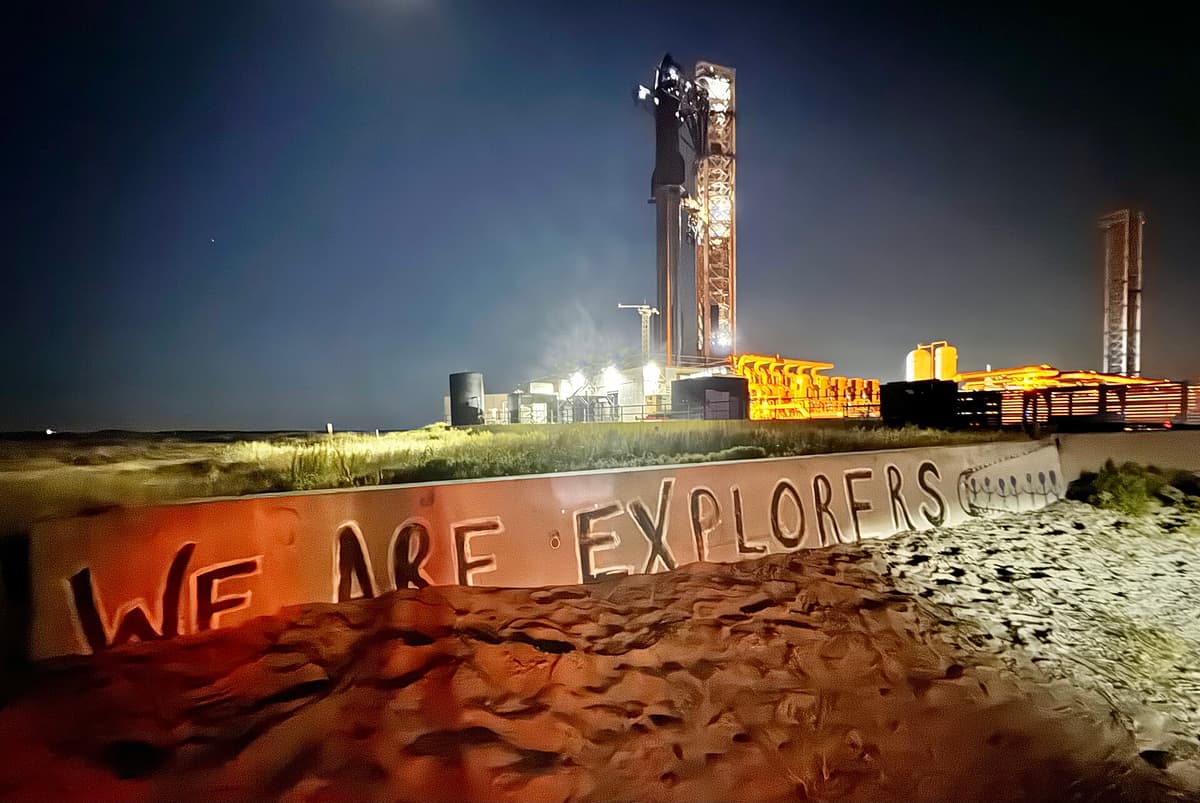
The strategic significance is bigger. A successful Cerebras IPO is the starting gun for the IPO queue: SpaceX, Anthropic, Databricks. SpaceX has had "Starship IPO" chatter since late 2025, and Cerebras's day-one 68% pop strengthens SpaceX's confidence. Anthropic, with its $950B funding round in talks, is on the 2027-2028 IPO clock — and Cerebras becomes the valuation comp.
The Players — Cerebras, Andrew Feldman, G42/UAE, and Nvidia
Cerebras Systems. Founded 2016, Sunnyvale, CA. The "Wafer-scale Engine" (WSE) thesis: instead of cutting one silicon wafer into many chips like everyone else, make the entire wafer into one chip. WSE-3 (shipped 2024) has roughly 2.6 trillion transistors, 900,000 cores, and 56× the die area of an Nvidia H100. Built for inference — single-die memory + cores + interconnect means LLM inference latency far below GPU.
Andrew Feldman (Cerebras CEO). Founded SeaMicro (2007), sold to AMD for $334M in 2012. Co-founded Cerebras in 2016. The IPO puts his stake at ~$1.5B — instant billionaire. Co-founders Gary Lauterbach and Sean Lie also crossed the line. About 600 employees as of Q1 2026.
G42 (UAE). Abu Dhabi government–backed AI/cloud company. Took $1.5B from Microsoft in 2024, becoming the central node of U.S.-UAE AI alignment. CEO Peng Xiao (Chinese-American). G42's "Condor Galaxy" AI supercomputer series runs on Cerebras WSE-3 — that's ~86% of Cerebras's revenue. Part of UAE's policy of AI infrastructure sovereignty.
Nvidia. ~$3T+ market cap as of May 2026 (number moves). Holds 80%+ of the data-center AI chip market. Cerebras's IPO is symbolically "an alternative to Nvidia exists," but the revenue math is humbling: Nvidia data-center revenue is $130B+ vs. Cerebras's $510M. Cerebras is 0.4% of Nvidia's revenue and 1/32 of its market cap.
Microsoft, OpenAI, Anthropic, Google, Meta. Not Cerebras customers (they're on Nvidia + their own ASICs), but actively exploring Nvidia-diversification. Microsoft is a G42 investor, so it's indirectly linked to Cerebras. OpenAI is building its Stargate ASIC project but may add Cerebras as an option.
SoftBank. Invested $250M in Cerebras in 2021; sold part at IPO for an immediate return. Combined with the OpenAI mega-investment, SoftBank now has broad exposure across AI infrastructure.
The Numbers — IPO, WSE-3 Tech, and UAE Concentration
The IPO numbers. Priced at $185 (above the $165-175 guidance range). 30M shares (mix of existing + new). $5.55B raised. Day-one open at $250 (+35%), intraday high $320, close $311.07 (+68%). Market cap ~$95B. First-day volume ~85M shares — more than 30% of shares outstanding traded on day one. Volatility was extreme, but the stock settled in a $280-310 range through the rest of the first week.
WSE-3 vs. Nvidia H100/H200. Roughly (1) 56× die area (Nvidia 814mm² vs. WSE-3 46,225mm²), (2) 50× transistors (80B vs. 2.6T), (3) 1,000× cores (14,592 CUDA vs. 900,000 SLU), (4) 1,000× on-chip memory (50MB vs. 44GB). Latency advantage for inference — Llama 3.1 70B inference clocks ~20× faster than GPU (per Cerebras data). Training is still Nvidia's domain.
Revenue structure. 2025 FY (calendar year) revenue $510M, up 76% YoY. 86% from UAE-affiliated entities (mostly G42). The remaining 14%: U.S. national labs (NERSC and others), pharma (parts of GSK and Pfizer), and Cerebras Inference cloud revenue. Gross margin 45% (up from 28%). Operating profit positive but single digits.
UAE concentration risk — disclosed in S-1. Cerebras explicitly notes "dependence on a major customer represents 80%+ of our revenue." U.S. Treasury and BIS have monitored UAE AI chip imports since 2024 over China-rerouting concerns. The G42 contract includes a "no Chinese resale" clause, but additional U.S. government scrutiny — or new export controls — is the key risk through the next 6-12 months.
Feldman's post-IPO message. On CNBC May 14: "We've proven AI chip market diversification. The existence of alternatives to Nvidia is good for the market." And: "We are actively diversifying away from UAE concentration — U.S., European, and Asian customer expansion in progress." Target mix over the next 12-24 months: UAE 50% / U.S. 30% / Europe + Asia 20%.
| Metric | Cerebras (2025 FY) | Nvidia (2026 FY est.) | Comparison |
|---|---|---|---|
| Revenue | $510M | $130B+ | Nvidia 255× |
| Revenue growth | 76% | ~50% | Cerebras faster |
| Gross margin | 45% | 70%+ | Nvidia higher |
| Market cap | $95B | $3T+ | Nvidia 32× |
| Employees | ~600 | ~30,000 | Nvidia 50× |
| Revenue/employee | $850K | $4.3M | Nvidia 5× |
| Customer mix | G42 (UAE) | Many hyperscalers | Nvidia better diversified |
What Each Side Gets
Cerebras's wins. First, capital. $5.55B new cash + 3 new billionaires + a step-up in employee option value. Years of cumulative R&D losses are starting to be recouped. Second, market validation. Proves AI chips outside Nvidia have revenue. Provides a valuation comp for SpaceX and Anthropic IPOs. Third, diversification capital. New cash funds U.S./EU/Asia direct sales build-out — the path to lower UAE dependence over 12-24 months.
G42/UAE's wins. Big. G42's dependence on Cerebras getting disclosed strengthens "UAE = AI infrastructure sovereign" branding. Boosts AI exposure for Abu Dhabi sovereign funds (ADIA, MGX). UAE government's Falcon model and G42's Jais models get a stable compute base.
Nvidia — losses and gains. Losses — the "Nvidia monopoly" narrative now has a comparable-sized challenger. But Cerebras at 0.4% of Nvidia revenue makes the actual impact minimal. Gains — where Nvidia can't sell H100/H200 to G42 (U.S. export restrictions tightening), Cerebras fills the gap. UAE market protection is, in a roundabout way, a Nvidia gain too.
AI labs (OpenAI, Anthropic, Google, Meta). New diversification option. WSE-3's inference latency edge eases lab inference-cost pressure. OpenAI may add Cerebras alongside Stargate. Anthropic is already on AWS Trainium2 + Google TPU, so direct Cerebras adoption is less likely.
SoftBank and VC investors. SoftBank's $250M Cerebras stake is now worth ~$5B — roughly 20×. AI infrastructure "alternatives to Nvidia" exposure is validated and realized. Sets the valuation bar for next-up AI chip IPOs (Groq, SambaNova, Tenstorrent, Lightmatter).
U.S. government (BIS, Treasury). Mixed. "AI chip diversification" supports U.S. technology leadership. But 86% UAE concentration raises China-rerouting concerns. Expect additional reviews and possibly tighter export licensing over the next 6-12 months.
Competing chip companies (Groq, SambaNova, Tenstorrent, Lightmatter). Two effects. (a) Successful Cerebras IPO opens the market for follow-on IPOs. (b) Cerebras now holds the inference-chip revenue lead, raising the competitive bar. Groq (LPU-based inference accelerator) and Cerebras compete head-on — expect a Groq IPO discussion in 6-12 months.
Korean semiconductors (SK Hynix, Samsung). HBM demand uplift. WSE-3 has its own on-chip memory, but training clusters still use HBM. Cerebras infrastructure expansion = HBM tailwind. SK Hynix is already on a roll after the May 12 record-high coverage at Kiwoom's KRW 1.9M target.
Historical Parallels — Wins and Losses
Win: Nvidia IPO (1999). Listed on Nasdaq January 1999 at $19, closed first day at $12 (the dot-com froth era). Survived the dot-com crash and went on to dominate GPU for 26 years. $3T+ market cap today. Cerebras's day-one 68% pop is stronger than Nvidia 1999 — reflecting today's heightened "AI chip diversification" expectations. The reminder: Nvidia took 26 years; Cerebras is a long game too.
Win: AMD IPO (1972) → AI chip ascendance (2023-). AMD sat behind Nvidia for 50 years, then broke into AI with MI300X in 2023. Now $400B+ market cap. Cerebras is structurally accelerating AMD's "challenge Nvidia" pattern.
Partial loss: GlobalFoundries IPO (2021). Listed October 2021 just before AI chips took off. Initial market cap $25B; sits around $20B in 2024. Failure causes: (a) behind the AI trend (fab-tech gap vs. TSMC/Samsung), (b) departures of Apple, Qualcomm customers, (c) UAE concentration (Mubadala as major shareholder). Cerebras has a similar UAE concentration risk to watch.
Loss: SoftBank Vision Fund I AI chip bets (2017-2020). Wave Computing, Cambricon (China), and others. Most failed commercially or got caught in U.S.-China tensions. SoftBank's Cerebras was a timing reversal of that pattern — a well-timed bet on the AI-infrastructure-diversification trend, not luck.
Competitor Counter-Plays
Nvidia. Counter options: (a) accelerate inference-focused B300 / NIM lineup, (b) inference-cloud SKU or price cuts, (c) direct UAE-customer sales beyond G42, (d) NIM (Nvidia Inference Microservices) inference-economy push. Watch GTC 2026 (fall).
Groq. LPU inference accelerator competes head-on with Cerebras. IPO discussion in 6-12 months. Counter options: (a) accelerate IPO timing, (b) claim #1 in open-source-inference (Llama/Mixtral), (c) deeper AWS/Azure/GCP integrations. SambaNova has parallel counter-moves.
SambaNova. Wafer-scale-like approach; ~$150M revenue estimate for 2026. IPO possible but later than Cerebras. Counter: (a) lock in Middle Eastern customers like Saudi Aramco and HUMAIN, (b) push its own Samba-1 model lineup, (c) underprice Cerebras.
Chinese AI chips (Huawei Ascend, Cambricon, Biren). No U.S. market access. Strengthening domestic Nvidia-replacement positions. Cerebras's IPO success will be cited as pressure for "China can do AI chip IPOs too." Huawei accelerates integrated cloud + Ascend offerings.
Intel/AMD. Intel Gaudi and AMD MI300X strengthen inference SKUs. Structurally, GPU-package vs. wafer-scale is a tough head-to-head — direct counter is hard.
Custom ASICs (OpenAI, Anthropic, Google, Meta, Microsoft in-house). Labs accelerate their own ASICs (OpenAI Stargate, Google TPU v6, Meta MTIA v3, Microsoft Athena) to reduce external dependence and cut compute cost 30-50%.
So What Actually Changes — by Persona
AI labs (OpenAI, Anthropic, Google). Cerebras IPO validates Nvidia-alternatives. Short-term adoption is hard (CUDA lock-in), but expect "Nvidia 80% + Trainium/TPU 15% + Cerebras 5%" multi-vendor mixes within 6-12 months. Inference cost pressure eases.
Investors (AI infrastructure exposure). CBRS now buyable. High volatility after day-one 68% jump — favor 12-24 month holds over short trades. Also gives indirect exposure via SoftBank, Sequoia, and AI-chip funds.
Korean semiconductor employees (SK Hynix, Samsung). Direct win. Cerebras market acceleration = HBM demand uplift. Direct link to SK Hynix's record-high (May 12) and Samsung's HBM4 qualification at Nvidia/AMD.
AI infrastructure founders. Cerebras IPO success = AI chip startup IPOs are viable. Groq, SambaNova, Tenstorrent, Lightmatter likely follow. Korean/Japanese/European AI chip startups (Rebellions, Sapeon, etc.) face valuation-step-up pressure.
Korean AI chips (Rebellions, Sapeon, DeepX). Rebellions completed the KRW 600B government growth fund payment on May 11 and is moving to mass production of its next-gen NPU "Rebel 100." Cerebras IPO success gives Rebellions a 2027 IPO valuation comp. Accelerates global customer outreach to Saudi HUMAIN and others.
U.S. policymakers. 86% UAE concentration = policy agenda. Short-term — additional export licensing reviews. Long-term — domestic AI chip revenue diversification policy (CHIPS Act follow-ons). Cerebras becomes a CHIPS Act success story.
Retail investors. AI chip IPO season is opening. Caveats: short-term volatility + UAE risk + revenue concentration = enter cautiously. ETF exposure (SOXX, SMH) is safer than direct CBRS positions.
References
- CNBC — Cerebras CBRS stock trade Nasdaq IPO (2026-05-14)
- Motley Fool — Cerebras Systems Stock Soars 68% in Blockbuster IPO
- CNBC — Cerebras IPO mints two billionaires
- TechTimes — Cerebras Raises $5.55B But 86% UAE Revenue Dependence
- Cerebras WSE-3 whitepaper
- G42 (UAE) — Condor Galaxy AI supercomputer
- spoonai 2026-05-12: SK Hynix record high — HBM4 demand