OpenAI Just Moved Codex From "Tool in Your Editor" to "Agent That Works Anywhere"
Here's the deal: on May 14-15, OpenAI's "Codex for (almost) everything" event rolled out four things at once. (1) iOS and Android apps shipping into ChatGPT Free, Plus, Pro, Business, and Go — including the free tier. (2) General agentic capabilities: computer control, image generation, user-preference memory, and persistent/repeated task delegation. (3) Over 90 plugins out of the gate — Atlassian Rovo, CircleCI, CodeRabbit, GitLab Issues, Microsoft Suite, and more. (4) GPT-5.2-Codex, OpenAI's most advanced agentic coding model so far.
The word choice tells you the strategy. "For (almost) everything." OpenAI is repositioning Codex from "developer tool" to "the user's agent." Once Codex lives on your phone, it stops being "the coding assistant inside your IDE" and starts being "the agent operating your computer alongside you." If ChatGPT is the conversation tool, Codex is becoming the work-execution tool.
The timing is deliberate. Same week, OpenAI launched the $4B Deployment Company (May 11) to accelerate enterprise penetration, then turned around and accelerated developer and consumer penetration with the May 14-15 Codex blast. Both tracks moving at once. Meanwhile, Anthropic stacked PwC, Gates Foundation, and the $950B funding-talks story in its own column. Week-of-May-14 reads like the opening volley of the lab wars in earnest.
The biggest shockwaves hit Cursor and Claude Code. Cursor (Anysphere) sits at roughly $3B ARR and a $20B+ valuation as the IDE coding-agent #1. Claude Code, shipped by Anthropic in 2024, holds 30%+ of the CLI segment. Codex's expansion plus likely price compression is a direct threat — OpenAI is bundling Codex inside ChatGPT Plus at $20/month, an aggressive price card.
The Players — Codex, GPT-5.2-Codex, and the IDE Coding-Agent Market
OpenAI Codex (2026 lineup). Originally the coding model OpenAI shipped in 2021 as the GitHub Copilot backend. Relaunched as a standalone SKU in late 2025. April 2026 added computer use and memory. May added mobile, plugins, and a new model. User base: 3M+ weekly developers.
GPT-5.2-Codex. Announced May 14. OpenAI calls it "the most advanced agentic coding model" they've shipped. Base is GPT-5.5 (Q1 2026) fine-tuned for coding and agent behavior. Differentiators: (a) multi-file codebase analysis, (b) autonomous PR drafting and review, (c) direct operation over SSH remote devboxes, (d) in-app browser, (e) memory + plan mechanisms for persistent tasks. Benchmarks are not yet public, but internal evals reportedly hit SWE-Bench at 85%+.
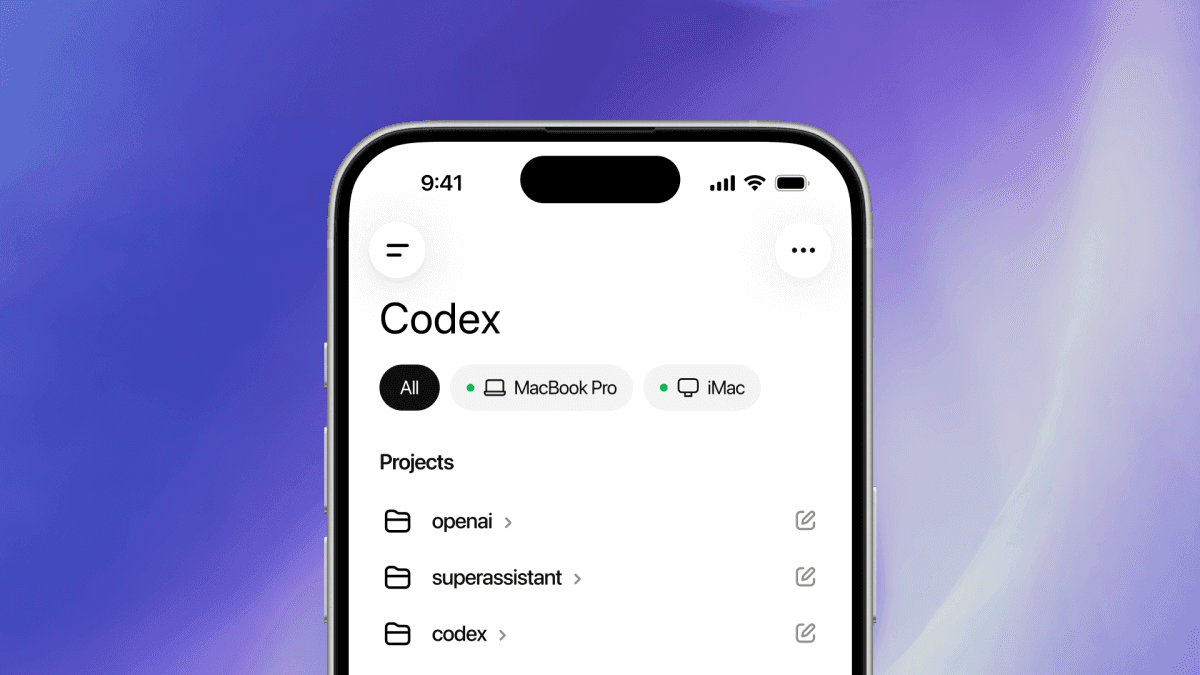
Codex mobile app (iOS, Android). Integrated inside the ChatGPT app as a Codex mode. Available on Free, Plus, Pro, Business, and Go. Even the free tier gets capped daily usage. Mobile capabilities: (a) GitHub PR review with diff rendering, (b) code Q&A and debugging, (c) SSH connection to a backend devbox, (d) in-app browser for documentation. Mobile UI optimized for keyboard shortcuts + voice + small displays.
The 90+ plugins. At launch: Atlassian Rovo, CircleCI, CodeRabbit, GitLab Issues, Microsoft Suite (Word, Excel, PowerPoint), Linear, Notion, Figma, Slack, Discord, Stripe, Vercel, Netlify, Cloudflare, AWS Console, Azure CLI, Google Cloud, Snowflake, Databricks, and more. MCP (Model Context Protocol) servers can be added separately. Expect 200+ plugins within 6-12 months.
The competitive set. Cursor (Anysphere) — dominant in IDEs. Claude Code (Anthropic) — strong CLI + agentic stack. Replit Agent — cloud IDE. Aider — open-source CLI. Sourcegraph Cody — enterprise. JetBrains AI Assistant — IDE-native. GitHub Copilot Workspace — Microsoft side. Codex's mobile + plugin expansion is a direct threat to all of them.
Sam Altman (OpenAI CEO). Posted on X May 15: "Codex from anywhere — your phone, your laptop, your devbox, soon your fridge maybe." Joke, but the message is clear — pushing for Codex ubiquity. Altman himself runs multiple companies (Worldcoin, Helion, Retro, DeployCo) and is the persona Codex is built for.
What Codex Just Got — Four Axes of Expansion
Axis 1: Mobile. The biggest change. Until now Codex lived in IDEs (VS Code, Cursor, JetBrains) and CLIs. Now it works on your phone. Use cases: (a) PR review on the commute, (b) code questions in meetings, (c) immediate debugging when a backend alert fires, (d) emergency hot-fixes on vacation. This is the transition to "always-on" coding. Whether you think that's a good or bad thing — there is clearly senior-engineer, CTO, and DevOps demand for a mobile coding agent.
Axis 2: General agentic capabilities. Codex now (a) operates the user's computer directly (mouse, keyboard), (b) generates images (screenshots, architecture diagrams), (c) remembers user preferences (code style, libraries, test patterns), (d) executes persistent/repeated tasks autonomously (e.g., "deploy staging at 9am every morning, run smoke tests, post results to Slack"). This is no longer "coding assistant" — it's "junior engineer–level autonomous behavior." OpenAI is officially calling this shift "agentic coding."
Axis 3: Developer tooling. (a) PR review — diff analysis, auto-detection of security issues, test suggestions. (b) Multi-file and multi-terminal views — work across files and terminals at once. (c) SSH remote devbox — OpenAI-hosted devboxes or your own EC2/GCE instance. (d) In-app browser — reach Stack Overflow, MDN, official docs from inside Codex. Works on mobile + desktop.
Axis 4: 90+ plugins. OpenAI now ships direct integrations with the SaaS core — Atlassian Rovo, Microsoft Suite, and others. This is Codex extending from "coding tool" to "work agent." Sample workflow: (a) pick up a ticket from Linear → (b) Codex makes the code changes → (c) CircleCI builds → (d) CodeRabbit auto-reviews → (e) GitLab Issues gets a result comment → (f) Slack notification. The user kicks the whole thing off with one natural-language line.
| Area | What shipped May 14-15 | Direct impact |
|---|---|---|
| Mobile | iOS, Android, all tiers including Free | Threat to Cursor, JetBrains AI |
| Model | GPT-5.2-Codex, most advanced agentic coding model | Threat to Claude Code, Aider |
| Agentic | Computer control, images, memory, persistent tasks | Browser-based agent competition |
| Plugins | Atlassian Rovo, MS Suite, GitLab, 90+ total | Direct SaaS API integration |
| Pricing | Bundled into ChatGPT Plus $20/mo | Standalone IDE-tool pricing pressure |
Pricing strategy. OpenAI is bundling Codex into ChatGPT Plus ($20/mo), Pro ($200/mo), Business ($25/seat/mo), and Go ($10/mo) — no separate Codex price. Compare with Cursor Pro ($20/mo), Claude Code (separate API costs), GitHub Copilot ($10/mo). OpenAI is playing the "one ChatGPT subscription solves everything" card. Caveat: GPT-5.2-Codex model calls themselves are usage-capped inside ChatGPT subscriptions.
What Each Side Gets
OpenAI's wins. First, simultaneous penetration of developers and consumers. With Cursor leading IDEs, Claude Code leading CLIs, and GitHub Copilot widely deployed, OpenAI differentiates with "mobile + 90 plugins + free tier." Second, GPT-5.2-Codex benchmark halo. Top performance on SWE-Bench, HumanEval, etc., builds the "OpenAI is the #1 coding model" perception. Third, synergy with DeployCo. The May 11 launch of DeployCo provides the people + integration muscle to roll Codex into the enterprise. The May 11 + May 14-15 double punch was clearly designed together.
Cursor (Anysphere) — losses and counter-moves. Losses — Codex mobile + free tier could redirect new-developer onboarding to OpenAI. The $3B ARR growth curve could decelerate after May 14-15. Counter-moves: (a) Cursor's IDE-native UX is hard to replicate on mobile, (b) multi-LLM support (OpenAI + Anthropic + own models) plays the no-lock-in card, (c) Cursor Pro price cuts or free-tier expansion are plausible. Watch June for the response round.
Anthropic Claude Code — losses and counter-moves. Losses — Claude Code is strong in CLI, but Codex now covers CLI + mobile + IDE simultaneously. Counter-moves: (a) push agentic depth further with Claude Opus 4.7 + agent loops, (b) ship Anthropic's own mobile app, (c) bundle Claude Code with Cowork as a "coding + workflow" SKU. Anthropic took the week on revenue and PR (PwC, Gates, $950B funding), but ceded ground in the developer market.
Microsoft GitHub Copilot — awkward position. Microsoft is OpenAI's largest investor and Copilot already runs on OpenAI models. Codex expansion → Copilot's backend improves too. But Codex as a standalone SKU inside the ChatGPT app starts cannibalizing Copilot. Expect Microsoft Build 2026 (May 19) to clarify the Copilot vs. Codex positioning.
SaaS partners (Atlassian, CircleCI, GitLab). Big wins. Codex integration joins them to the "enterprise AI workflow standard." Atlassian's Rovo, shipped in 2024, accelerates with Codex hooks. CircleCI and GitLab being on the launch-day list of 90 is a meaningful revenue signal.
Developers (junior and mid-level). Big wins. ChatGPT Plus at $20/month subscribers now get mobile + IDE + CLI + plugin integration thrown in. For brand-new developers, OpenAI becomes the default coding-agent choice. The flip side: usage caps on GPT-5.2-Codex calls and dependence on OpenAI are the concerns senior engineers will raise.
Senior engineers, CTOs, DevOps. Moderate wins. Mobile coding agents speed up on-call response. Trade-offs: (a) trust in autonomous behavior, (b) security risk of SSH connections to production, (c) the multi-LLM hedging strategy vs. deepening OpenAI dependence.
Historical Parallels — Wins and Losses
Win: GitHub Copilot (2021-). Microsoft's 2021 coding assistant launch. Four years in: 15M+ users, $500M+ in revenue. Proved that "coding AI sticks in the workflow." OpenAI Codex's May 14-15 expansion is structurally a "Copilot expansion pack" — but Copilot is IDE-centric while Codex covers mobile, plugins, and autonomous behavior on top.
Win: Cursor (Anysphere) (2023-). Launched 2023, hit $3B ARR. The "IDE-native AI" thesis carried it to the developer-market #1 spot. Codex's May 14-15 expansion is the direct threat, but Cursor's market share and IDE UX moat won't vanish overnight.
Partial loss: Microsoft Bing Chat / Copilot integration (2023-2024). Bing Chat on GPT-4 launched, but couldn't differentiate vs. Google Bard/Gemini. "Copilot in Word/Excel/Teams" was visible but limited in revenue impact. Significant adoption pushes, modest commercial outcomes. Codex's May expansion avoids the same trap only if "measurable workflow value" is established.
Loss: Amazon CodeWhisperer (2022-2024). AWS's coding assistant launched with AWS-integration advantages but lost users to GitHub Copilot and Cursor. Rebranded to Q CodeWhisperer in 2024. Failure causes: (a) low adoption outside AWS users, (b) UX behind GitHub Copilot, (c) AWS Bedrock revenue prioritized over its own. Codex has ChatGPT's 800M users as its on-ramp — that's the key differentiator.
Partial loss: Replit Ghostwriter (2022-2023). Replit's in-cloud-IDE coding AI. Smaller user base, but a "browser-based coding + AI" differentiator. Evolved into Replit Agent. Codex's in-app browser is the natural comparison target.
Competitor Counter-Plays
Cursor (Anysphere). Counter options: (a) Cursor mobile apps (iOS, Android), (b) multi-LLM with model-choice freedom emphasized, (c) deeper IDE-native UX (code-dial, refactoring tools, code-lens integration), (d) price cuts or free-tier expansion, (e) Anysphere funding round to maintain momentum. Likely response in June-July.
Anthropic Claude Code. Counter options: (a) "Claude Code Pro" SKU on Claude Opus 4.7, (b) Cowork integration for a coding + workflow bundle, (c) leveraging PwC alliance for enterprise differentiation, (d) own IDE or stronger VS Code extension. Anthropic already accelerated SMB penetration with the May 13 "Claude for Small Business" launch.
Google DeepMind. Google I/O 2026 (May 19) may bring a Gemini Code SKU. Differentiate via Android Studio, Google Workspace, and Firebase integration — "the coding agent inside Google's ecosystem." Push Gemini Ultra Pro on coding benchmarks.
xAI Grok Code (working name). Possibility of a Musk-led coding agent for Tesla/SpaceX codebase automation. Direct Twitter/X + GitHub integration as the differentiator. Nothing public as of May 2026.
Chinese labs (DeepSeek, Moonshot, Qwen). Continuing to strengthen their own coding models (DeepSeek-Coder, Qwen-Coder). Chinese government protectionism essentially blocks Codex from China. Domestic coding-agent ecosystem matures separately.
Open source (Aider, CrewAI, Continue). Codex expansion has two effects: (a) more API spend on the better base model (GPT-5.2-Codex), (b) pressure on open-source projects to differentiate (self-hosted, on-prem). Llama 4-, Mistral-, and DeepSeek-based open-source agents accelerate.
So What Actually Changes — by Persona
Junior developers. Big win. ChatGPT Plus at $20/mo bundles mobile + IDE + CLI + 90 plugins. OpenAI becomes the default "which coding agent should I use" answer. Recommendation: (a) take the ChatGPT Plus subscription, (b) use Codex on mobile + IDE, (c) keep Cursor or Claude Code in the multi-tool mix.
Senior developers and CTOs. Moderate win. Mobile coding agents speed up on-call response. But watch autonomous-behavior trust and SSH-to-production security. Recommendation: (a) start with PR review and reviews, (b) restrict autonomous actions to staging, (c) require human approval for production SSH.
DevOps and SRE. Big win. The 90+ plugins include CircleCI, GitLab, AWS Console, Azure CLI. "Codex receives an alert, debugs, opens a PR, builds, deploys" becomes plausible. Recommendation: (a) test autonomy in staging, (b) human-in-the-loop for production, (c) audit SSH devbox security separately.
Enterprise IT and CIOs. Moderate win. The plugin coverage of your SaaS stack (Atlassian, Linear, Notion, Slack) can lift productivity. But: (a) data exfiltration risk, (b) vendor lock-in, (c) compare to ROI of your existing IDE/CLI tools. Recommendation: (a) trial ChatGPT Business ($25/seat) first, (b) verify your must-have integrations are in the 90, (c) review SOC2 / ISO 27001 posture.
Startup founders. Big win. Codex's agentic capabilities accelerate the "five-person, $1B-revenue company" thesis (Dario Amodei, April). Recommendation: (a) leverage Codex Pro ($200/mo) tiers aggressively, (b) target 80% workflow automation in-house, (c) compare hire vs. automate ROI carefully.
Investors and VCs. Valuation pressure on Cursor/Anysphere. Simultaneous OpenAI momentum strengthening. The "OpenAI vs. Cursor vs. Claude Code" tri-pole structure consolidates in coding agents. Direct exposure: OpenAI rounds, Anysphere follow-ons, Anthropic follow-ons.
Non-developers. Limited direct impact. But Codex's 90+ plugins + computer-control imply the "work agent" expansion. Within 6-12 months, ChatGPT autonomously composing emails, organizing data, and managing schedules becomes plausible.
References
- OpenAI — Codex for (almost) everything (2026-05-14)
- OpenAI — Introducing GPT-5.2-Codex (2026-05-14)
- TechCrunch — OpenAI says Codex is coming to your phone
- The Verge — OpenAI's coding agent goes mobile
- Sam Altman X post 2026-05-15 — 'Codex from anywhere'
- Cursor (Anysphere) — IDE coding agent
- Anthropic Claude Code
- spoonai 2026-05-17: Anthropic $950B funding talks (today)