Korea Just Put Its Entire Semiconductor Tax Windfall on the Line for 'AI Sovereignty'
Here's the deal: on July 2, 2026, word came out of Korea's government ministries that carried real weight. The Ministry of Science and ICT (MSIT) is pushing a plan to pull roughly 5 trillion won — about $3.6 billion — of surplus tax revenue generated by the semiconductor boom, use it to secure around 10,000 of Nvidia's newest GPU modules, the "Vera Rubin," within this year, and then build a world-class "sovereign AI" model on top of them. The core of it is that the ministry doesn't want to wait for next year's regular budget cycle — it's trying to push this through with a supplementary budget this year, and reports say it's already discussing funding options with the presidential office and fiscal authorities.
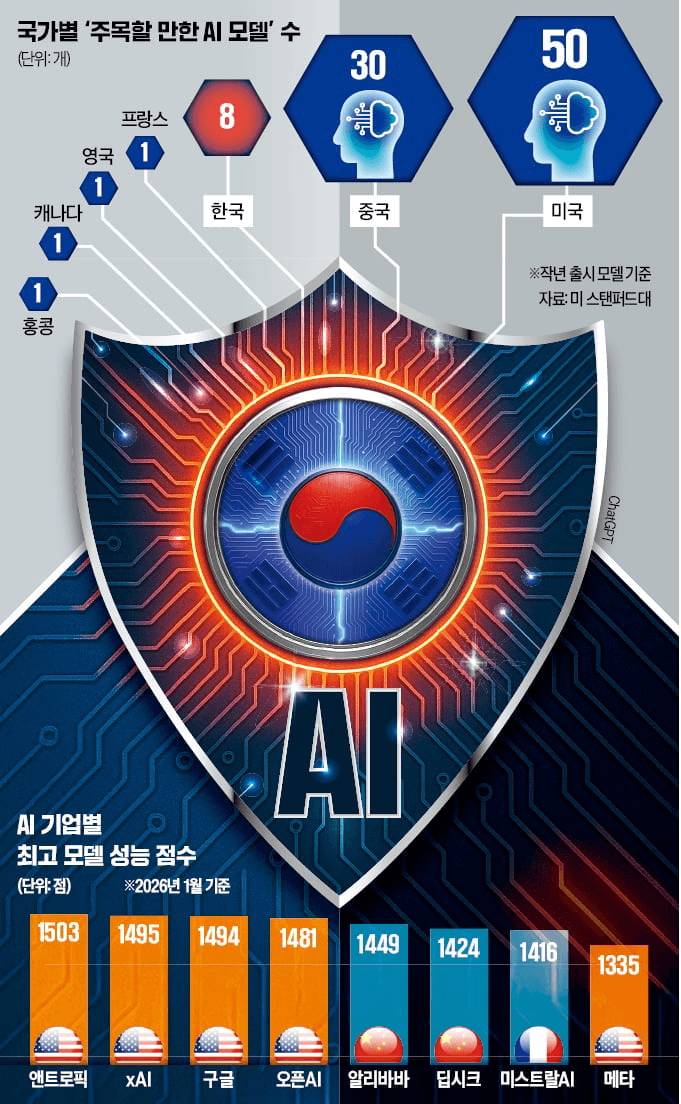
Look at the numbers alone and this reads like "just another big AI investment announcement." But it's a different animal. Korea's national AI programs have historically spread their money across many teams, a little to each. This time, the explicit strategy is: no more spreading it around. The plan is to hand all 10,000 GPUs to a single elite team, so it can go head-to-head with a frontier model in the class of Anthropic's "Mythos." That old bureaucratic phrase — "selection and concentration" — is back, and this time it's arriving with 5 trillion won of live ammunition behind it.
And to understand why this is landing right now, you have to look at something that happened a few weeks earlier. On June 9, Anthropic released its newest model, "Fable5." Just three days later, on June 12, the U.S. government blocked foreign access to it on national security grounds. Korea watched a cutting-edge model it had been happily using get cut off overnight simply because it was "foreign." That was the direct trigger for this sovereign AI plan. The gut realization that "if you're living on someone else's model, the plug can get pulled anytime" is what hardened into a 5-trillion-won decision.
The Players
The main actor out front is the Ministry of Science and ICT, or MSIT — the ministry that oversees Korea's AI, telecom, and R&D policy. It has repeatedly proclaimed ambitions to make Korea an "AI powerhouse," but in practice the country never really escaped heavy dependence on U.S. Big Tech's closed models and clouds. This plan is the ministry's swing at shaking that structure head-on. The fact that it reached for the supplementary-budget card — arguing it "can't wait for next year's regular budget" — signals a judgment that this is a race against the clock. In frontier-model competition, falling even half a year behind can open a gap that's nearly impossible to close.
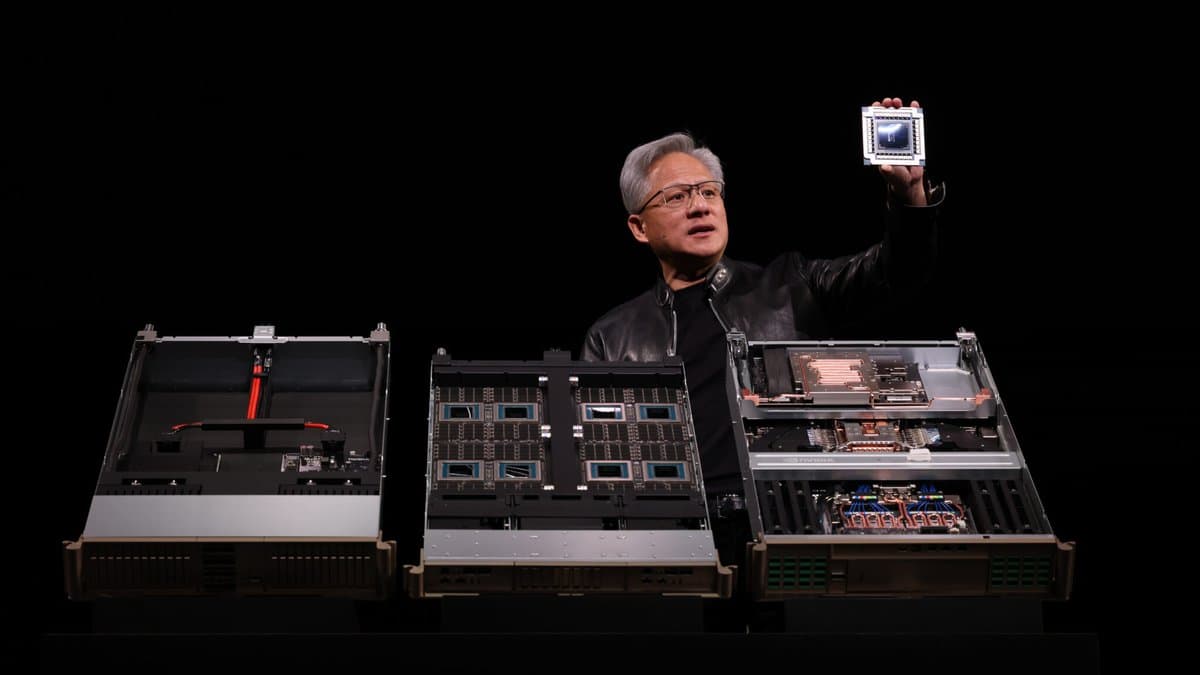
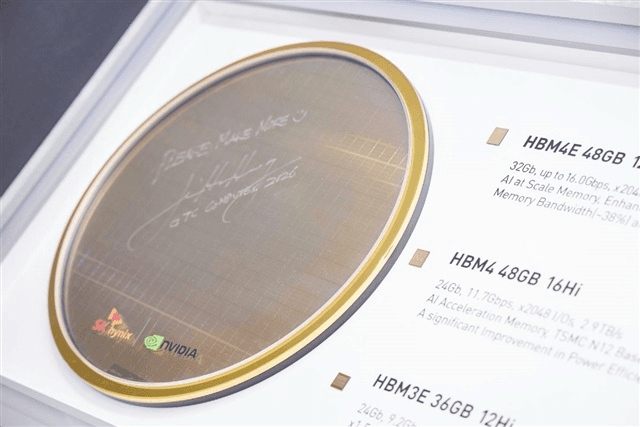
The second player is Nvidia, and its newest weapon, "Vera Rubin." Vera Rubin is the AI superchip platform Nvidia is rolling out as the successor to Blackwell — the name pairs "Vera," the CPU side, with "Rubin," the GPU side. Nvidia is marketing it as the platform that "opens the agentic AI frontier." In other words, it's hardware built not just to spit out text, but to run the next generation of AI that plans on its own, uses tools, and works through multi-step tasks. A national government funneling 10,000 of these newest chips to a single team is a conspicuously large move even by the standards of the global GPU scramble.
The third player, sitting in the background, is Anthropic. It's both the maker of Fable5 — the thing that triggered this whole episode — and the benchmark, since Korea's target is a "Mythos-class" frontier model. There's an irony here: the company Korea is benchmarking against is simultaneously the company that taught it the lesson that "depending on someone else's model is dangerous." The June 12 access block wasn't something Anthropic did voluntarily — it was a U.S. government national-security action — but from Korea's side, the outcome was identical. It felt, firsthand, that a single external factor can sever critical infrastructure.
Finally, there's Korea's domestic AI camp, which will be the real beneficiary and executor of this project. The names that keep surfacing in sovereign AI discussions are companies like LG AI Research, Naver Cloud, SK Telecom, Upstage, and NC AI. If the government actually executes the "one team, all in" strategy, the burning question becomes: which of them becomes that "one team," or do they band together into a consortium? Whoever ends up holding the 5 trillion won and the 10,000 GPUs could reshape the entire domestic AI landscape.
What Actually Happened
The skeleton of the plan is surprisingly simple. First, the funding source is the "semiconductor surplus tax revenue" — the logic being to reinvest taxes collected beyond expectations, thanks to a strong chip market, into future industries. Second, that money buys roughly 10,000 Nvidia Vera Rubin GPUs plus top-tier AI talent. Third, rather than scattering those resources across many teams, everything gets concentrated in one elite team to build an Anthropic Mythos-class sovereign frontier model. Fourth, all of this gets pulled forward via a supplementary budget this year rather than next year's regular budget. Those four pieces interlock.
The "selection and concentration" piece is what really defines this plan's character. MSIT is understood to have concluded that its old approach of spreading support across many teams simply can't produce a frontier-class model. The math is that only by handing 10,000 GPUs to a single team do you reach the scale needed to contend with the top-tier models coming out of the U.S. and China. Politically, this is a heavy call. Funneling 5 trillion won in taxpayer money to one specific team means accepting backlash from the also-rans and fairness disputes over "why them?" That the government reached for this card anyway is evidence of how urgent and symbolic it considers securing a frontier model to be.
The funding mechanism is worth watching too. The government judged that going through next year's regular budget process would take far too long to reach actual deployment, so it's opted to push a supplementary budget this year. It's worth being clear that a supplementary budget has to clear the National Assembly — a political process — so this is "in progress," not "confirmed." Coordination with the presidential office, the finance ministry, and other fiscal authorities is ongoing, and it has to compete with other demands on where and how much of the surplus revenue should be spent. So the precise framing is not "5 trillion won locked in" but "a plan targeting a 5-trillion-won scale is at the discussion stage."
Here's a table summarizing the key numbers and structure of the plan.
| Item | Detail |
|---|---|
| Reported | July 2, 2026 |
| Lead ministry | Ministry of Science and ICT (MSIT) |
| Scale | ~5 trillion won (~$3.6 billion) |
| Funding source | Semiconductor-boom surplus tax revenue |
| Hardware target | ~10,000 Nvidia Vera Rubin GPUs (within this year) |
| Core strategy | All-in on a single elite "one team" |
| Goal | Anthropic Mythos-class sovereign frontier model |
| Route | Supplementary budget this year, not next year's regular budget |
| Direct trigger | Jun 9 Fable5 launch → Jun 12 U.S. foreign-access block |
The two words that jump out of this table are "within this year" and "one team." Securing the hardware within the year signals a race against time; concentrating resources in one team signals that this is closer to a national-team tryout than distributed R&D. Put those two conditions together and the project's character is clear: this isn't a "slowly broaden the base" policy, it's a "hit the summit in a short window" project.
What Each Side Gains
The government's play is clear: securing "AI sovereignty." June's Fable5 access block delivered a painful lesson — no matter how good a model is, it can be cut off by one policy decision from a foreign company or a foreign government. Depending solely on foreign closed models in sensitive domains like defense, public administration, or finance means entrusting a soft spot of national security to someone else. Owning an independent frontier model means holding that soft spot yourself, and that's a plenty powerful justification for the government to stake 5 trillion won on.
For Nvidia, this is about as close to money for nothing as it gets. The sovereign AI wave is the market Nvidia has cultivated most deliberately over the past few years. Every time a national government decides "we need our own AI," that decision ultimately resolves into a bulk order of Nvidia GPUs. Korea saying it wants 10,000 Vera Rubin chips is functionally one more large government customer locked in. On top of that, when one country hoovers up this many of the newest chips, neighboring countries feel the pressure of "we can't fall behind either." The sovereign AI race itself is a repeat-order machine for Nvidia.
For domestic AI companies, this plan is both a chance to flip the board and a brutal survival contest. Getting picked as "the team" means holding 5 trillion won and 10,000 GPUs — a scale of resources that was previously unimaginable in Korea. It's a ticket to step straight into the ring of global frontier competition. Conversely, not making that team could mean watching national resources pour into a rival. So this announcement throws two signals at the domestic AI camp at once: "let's cooperate" and "the competition has begun."
For taxpayers and ordinary citizens, the calculus is more complicated. The rationale of reinvesting chip-boom taxes into future industries is persuasive. But 5 trillion won is a large sum with no shortage of alternative uses — welfare, regional economies, other R&D. Whether concentrating it on "one specific team's AI model" is truly the best allocation is a legitimate question, and it will absolutely come up during the Assembly's supplementary-budget review. The government has taken on the homework of convincing the public why this project is more urgent and more nationally important than any other spending.
Precedents: Wins and Failures
There are clear cases where a nation concentrated resources on a specific advanced technology and won. Go back far enough and semiconductors themselves are the example — Korea poured national capacity into memory chips in the 1980s and 90s, and that bet led to today's Samsung Electronics and SK Hynix and the country's status as a chip powerhouse. Ironically, given that this sovereign AI plan is funded by surplus revenue from exactly that chip boom, the narrative of "reinvesting chip earnings into the next generation's core technology" is not historically unfamiliar. This is a country with lived experience of concentrated investment paying off.
Look abroad and the move to pour state capital into sovereign AI is already global. Gulf oil states are aggressively channeling petrodollars into AI infrastructure and models, and Europe and Japan are showing their own drives to own models tuned to their languages, data, and regulatory environments. The shared logic is identical to Korea's: "language, data, and security can't be outsourced." On that count, Korea's decision looks like a rational move to ride a worldwide tide.
But the shadow of failure is very real too. Buying 10,000 GPUs and actually producing a world-class model with them are entirely different problems. Hardware you can buy with money; a frontier model requires top-tier research talent, vast high-quality data, and years of accumulated know-how. Plenty of large national IT projects in various countries have ended up "best-in-class equipment, ambiguous results." There's a genuine risk that 5 trillion won worth of GPUs ends up not as a world-best model but as an expensive, power-hungry white elephant.
The "all-in on one team" structure in particular has a built-in weakness: win big if it works, no fallback if it doesn't. Spreading resources gives you lower odds per bet but several attempts running in parallel; going all-in on one team means the moment that team stumbles, the entire national bet collapses. So the success of this strategy ultimately hinges on "whom you entrust it to, and under what governance." Talent acquisition and project operational design matter far more as variables than the hardware-purchase plan does.
Rivals' Counterplay
The most direct reaction will come from U.S. Big Tech. Companies like OpenAI, Anthropic, and Google have absorbed national markets on the logic of "just use our model via API — why build your own?" But when a country like Korea pulls out 5 trillion won saying "we can't trust yours, so we'll build our own," a crack opens in that absorption strategy. The response will likely run down two tracks: one, more aggressively pitching "sovereign deployment" (running in a country's own closed network) options to governments; two, expanding local data centers and partnerships to reassure them that "we effectively run inside your country too."
Nvidia's competitors — AMD, and the Big Tech firms building their own AI chips — won't miss this either. Korea's bulk Vera Rubin purchase means Nvidia's dominance in the sovereign AI market gets further entrenched. So the challenger-chip camp has growing incentive to court government and enterprise customers with arguments like "our chips are better on price-performance" or "we're more efficient for specific workloads." The bigger sovereign AI budgets get, the hotter the chip competition chasing those budgets will run.
Neighboring countries' reactions matter too. When Korea plays the aggressive card of funneling 10,000 GPUs to one team, similarly positioned countries feel two pressures at once. One is the anxiety that "we need to hurry too." The other is supply anxiety: "the latest GPU volume is finite, and if someone else sweeps it up first, there's less for us." Newest chips genuinely have fixed production volumes, so one country's bulk order can push back another country's procurement timeline. That's exactly why sovereign AI competition spills over into a GPU-securing race.
Domestically, the counterplay from companies expected not to make "the team" is worth watching. They might raise fairness questions about the government's resource allocation, try to stay in the game by joining a consortium, or pivot entirely toward specialized vertical models (medical, legal, manufacturing) outside the government project altogether. The more national resources concentrate on one side, the more the rest of the field has to find survival not in "scale" but in "niches."
So What Changes
For developers, the biggest change — if this plan becomes real — is a new option: a domestically built frontier model. If a high-performance model tuned to the Korean language, domestic data, and domestic regulation emerges, services that have depended solely on foreign closed APIs would finally have an alternative. That said, there's a sober caveat. 10,000 GPUs don't automatically guarantee a world-best model, and it'll take a considerable while before a genuinely usable domestic frontier model lands in developers' hands as an API. Nothing changes tomorrow morning.
For investors, this announcement could be a starting gun for the entire domestic AI value chain. A 5-trillion-won national budget moving in a specific direction inevitably draws attention to the companies along that path: data-center and infrastructure operators that handle the GPUs, the model developers floated as "the team" candidates, and the firms supplying components, power, and cooling to that ecosystem. But you have to coldly factor in that this is still a "plan" that has to clear supplementary-budget review, and that there are many variables between winning a government project and translating it into actual earnings.
For everyday citizens, the most visceral question is "should my 5 trillion won in taxes really go here?" The pro argument is "reinvesting chip earnings into the next growth engine is an investment in the future." The con argument is "isn't funneling taxpayer money to one unproven team just a gamble?" Both hold water. Ultimately, to win the public over, this project has to offer convincing answers to three questions — why now, why this scale, why one team — plus a transparent execution plan.
Bottom line: this news is the moment Korea nailed its national resolve to "not depend on anyone else for AI" to a number — 5 trillion won. The direction itself aligns with a global tide and the justification is strong. But between buying hardware and actually succeeding at a model lies a wide river of talent, data, and governance, and the political gate of a supplementary budget is still ahead. So right now it's certain that "Korea bet big" — but it's far too early to say "Korea won."
🥄 Three Things You're Probably Wondering
— So what does this mean for me? No change you'll feel today. But if it works, you get a high-performance domestic AI optimized for the Korean language and domestic regulation — and that eventually affects the quality and price of the services you use, plus where your sensitive data gets stored. Since it's funded by taxes, everyone effectively holds a stake too.
— Will 5 trillion won really produce a world-best model? GPUs you can buy with money, but a best-in-class model needs talent, data, and know-how. Hardware alone guarantees nothing, so "can buy" and "can build" are entirely different things. Too early to call.
— Why did this come out right now? The direct trigger was June's episode where Anthropic's Fable5 got foreign access blocked by a U.S. government action within three days. Feeling firsthand that "someone else's model can be cut off anytime," and with the semiconductor surplus tax happening to sit right there as ammunition, the government decided to make its move now.
References
- Hankyung — Korea to Build 'Sovereign AI' With 5 Trillion Won in Surplus Tax
- Hankyung — Fears of Becoming an 'AI-Dependent Nation' Raise the Sovereign AI Stakes
- Bloomingbit — South Korea to Deploy $3.6 Billion Semiconductor Tax Windfall for Sovereign AI
- NVIDIA Newsroom — Vera Rubin Opens Agentic AI Frontier
Figures are as of announcement and may change.