Record Profit, and the Stock Tanked 7% the Same Day
Here's the deal: on July 7, Samsung Electronics dropped its preliminary Q2 numbers, and the headline figure is genuinely stunning. Operating profit came in around 89.4 trillion Korean won — roughly $58 billion. Compared with 4.68 trillion won in the same quarter a year ago, that's a 19-fold jump, or more than 1,800% in percentage terms. It cleared consensus with room to spare, and this single quarter's operating profit is larger than Samsung's combined operating profit across all of 2023 through 2025. "Record-breaking" barely does it justice.
And then the weird part happened. On the very day it delivered that blowout, Samsung's stock fell nearly 7%. Intraday it was down as much as 10% before closing 6.9% lower. Great earnings, plunging stock — the first time you see it, your brain short-circuits a little. This isn't how it's supposed to work.
The kicker is that Samsung didn't fall alone. The same session, SK Hynix dropped more than 9%. In the US, Micron cratered over 10%, SanDisk fell more than 10%, Intel lost 9%, AMD shed 8%, and Applied Materials sank close to 10%. The Philadelphia Semiconductor complex and the iShares Semiconductor ETF each slid roughly 5% to 6%. The entire chip sector got hit at once, in a single day, on what should have been unambiguously good news.
So this story isn't really "Samsung made a ton of money." It's "Samsung made a ton of money and the market still got scared — why?" It's the first serious question the market has posed about whether the AI boom is actually sustainable, or whether too much optimism is already baked into these stocks. Let's take it apart piece by piece.
Meet the Players Who Got Shaken
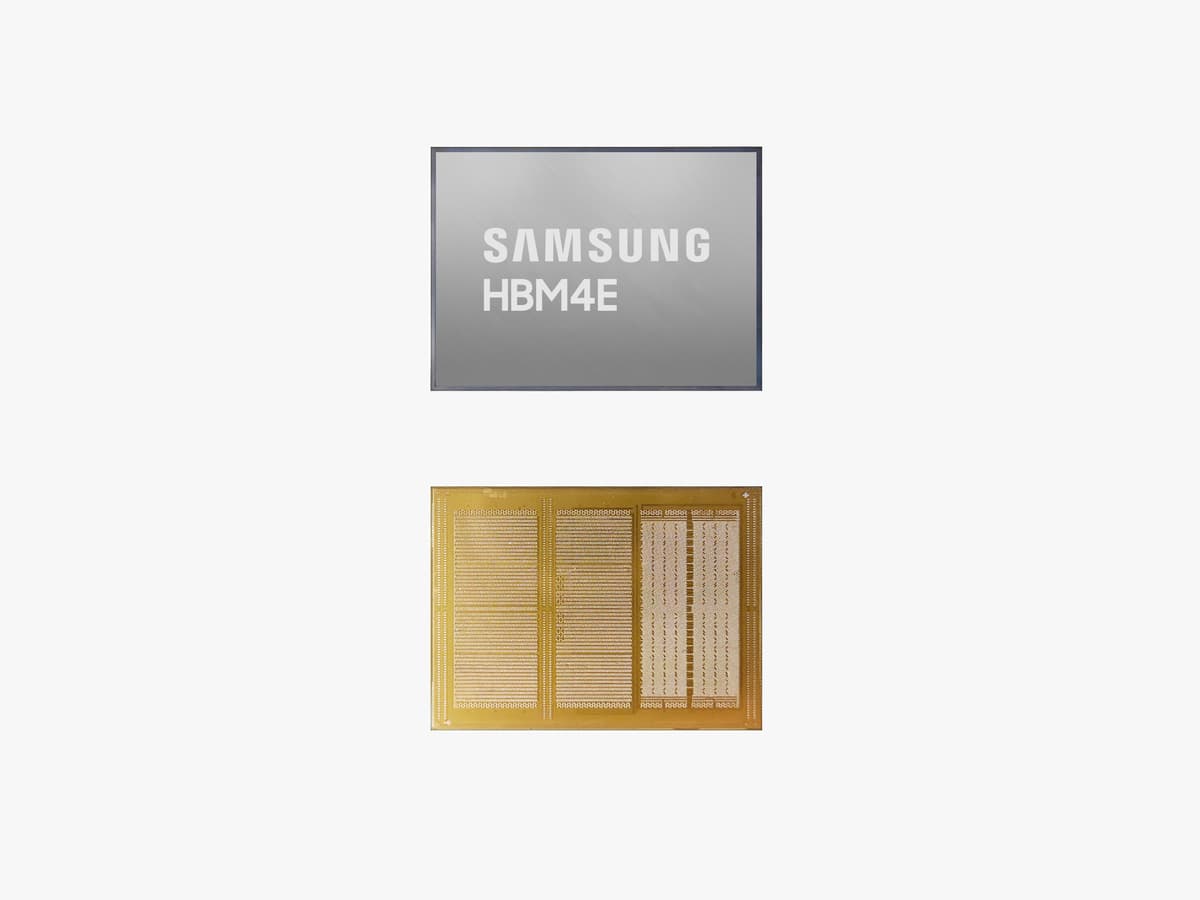
Samsung needs no introduction, but it's worth pinning down who actually drove this quarter. The profit surge didn't come from smartphones or appliances — it came from the semiconductor arm, the Device Solutions (DS) division. Specifically, memory chips headed into AI data centers: high-bandwidth memory (HBM), server DRAM, and high-performance NAND storage all sold explosively. Meanwhile the mobile division, which builds Samsung's phones, actually faced margin pressure from higher chip costs. Ironically, even inside Samsung, its own booming memory business is pushing up the bill of materials for its own phones.
SK Hynix is nearly as central to this story as Samsung itself. It's a key HBM supplier feeding Nvidia's AI accelerators, and it happened to be right on the doorstep of a US Nasdaq listing. Dropping more than 9% just as you're about to debut on American markets is brutal timing. The fact that Korea's two memory giants together anchor so much of the world's AI memory supply is exactly what this sell-off, in a backhanded way, put on display.
The American supporting cast matters too. Micron is the flagship US memory maker, and its stock had climbed 260% year to date heading into this session. That's an enormous amount of expectation loaded into one name, which means even a small mood swing can shake it hard. Intel, AMD, Applied Materials, Lam Research and Marvell aren't memory companies, but once you're in the same "semiconductor" boat, you don't get to dodge the sympathy selling.
And there was one more variable that made the day heavier. Reports landed the same day that China's AI startup DeepSeek — along with the broader Chinese open-source camp like Zhipu AI — is developing its own custom AI chips. The narrative that you can run a viable AI ecosystem cheaply, without cutting-edge and expensive US silicon, reared its head again. That poked at the underlying fear that today's demand for pricey memory and pricey GPUs might not last forever. Earnings and a threatening headline collided on the exact same day.
What Actually Happened — By the Numbers
Let's restate the core. Samsung reported sales of roughly 171 trillion won and operating profit of about 89.4 trillion won. That operating profit is up 19-fold year over year and marks the third consecutive quarter of record operating profit. Numbers like that basically confirm the AI memory supercycle is real. Since the overwhelming majority of the profit came from chips, you can't credibly argue that AI demand isn't translating into hard results — it is.
But the market latched onto two things. First, while operating profit beat expectations, revenue came in a touch below the Street's bar — a revenue miss. Even with fat profits, that reads as a signal that the pace of top-line growth didn't fully meet hopes. Second, an awful lot of good news was already priced in. Micron's 260% year-to-date run is the proof: when a stock is stretched like that, even an excellent print gets digested as "old news" and hands traders an excuse to take profits.
| Item | Detail |
|---|---|
| Samsung Q2 operating profit | ~89.4T won (~$58B), up 19x / 1,800%+ YoY |
| Samsung Q2 revenue | ~171T won (slightly below consensus) |
| Milestone | 3rd straight record quarter; exceeds 2023–2025 combined |
| Samsung stock | Closed -6.9% (down as much as -10% intraday) |
| SK Hynix | -9%+ (just ahead of Nasdaq listing) |
| Micron | -10%+ (was +260% YTD) |
| Intel / AMD | -9% / -8% |
| Applied Materials, Lam Research, Marvell | -6% to -10% |
| Chip ETFs (SOXX / iShares) | -5% to -6% |
| Overlapping headline | DeepSeek / Chinese camp custom AI-chip reports same day |
Read the table and the shape becomes clear. Samsung's fundamentals actually improved, but the market wouldn't bet that these great results can keep repeating. The crucial nuance: there's no clear evidence that demand itself has rolled over. No hard data showed hyperscalers cutting AI infrastructure spending — instead, the worry that they might cut "someday" met stretched valuations and pulled the trigger. That's exactly why many analysts are calling this a "valuation check" rather than a "fundamental break."
Who Wins and Who Loses
Start with Samsung itself. The stock had one bad day, but the earnings proved the company's DNA has fundamentally shifted. A firm that was once written off as having fallen behind SK Hynix in the HBM race has now firmly established itself as one of the biggest beneficiaries of the AI memory cycle. Regardless of the short-term price swing, this quarter is Samsung's calling card that says, "we're at the center of the AI supercycle too."
SK Hynix is in a trickier spot. Its earnings story runs in the same direction as Samsung's — memory boom, all good — but the whole sector wobbled right as it approached its Nasdaq listing, throwing cold water on the debut mood. If post-listing data reconfirms that AI demand remains strong, there's plenty of room to rebound. But debuting on a day like this is a rough hand to be dealt.
Investors split into two camps. For anyone who rode chip stocks to big gains over the past few months, this drop became a convenient reason to bank profits and step aside. For those who felt priced out because everything had run so far, it posed the classic question: is this the pullback I've been waiting to buy? The same event reads as a sell signal to one crowd and a buying opportunity to another — the textbook signature of a valuation correction, not a collapse.
Meanwhile, for the end buyers of AI silicon like Nvidia and the hyperscalers, this drop carries a subtler message. When memory prices climb too high, so do their data-center build costs. There's already chatter that companies like Apple and Microsoft have started passing soaring memory costs through to consumer prices. In other words, the memory makers' bonanza shows up on the other side of the ledger as somebody else's rising cost of goods. That tension sits underneath this whole correction.
Past Parallels — the Wins and the Wipeouts
This "good earnings, bad stock" pattern is nothing new. The most frequently summoned comparison is the early-2000s dot-com bubble. Back then, even companies with strong results routinely dropped after reporting, because the growth expectations were already fully priced in. Expectations had outrun reality, and closing that gap brought a painful correction. The reason people keep floating the "isn't this an AI bubble" question is precisely this learned scar tissue.
But there are successful parallels too. During the 2016–2018 memory supercycle, fears that "this must be the top" triggered multiple sharp corrections along the way — yet as actual memory demand kept showing up, the stocks corrected and then punched through to new highs again and again. A correction isn't automatically a collapse. As long as the demand fundamental is alive, a valuation reset can actually cool overheating and lay the foundation for the next leg up.
Another useful case is Nvidia's late-2018 plunge. Crypto-mining demand rolled over, GPU inventory piled up, and the stock roughly halved amid an earnings shock. But then a whole new source of demand — data centers and AI — emerged, and Nvidia came back as an entirely different company. The lesson: when one leg of demand weakens but another leg is alive, the cycle continues. The fear the DeepSeek-chip headline just stoked ultimately boils down to the same question — if one leg of AI demand (expensive top-end silicon) shakes, is total demand still standing?
So held up against history, this event allows two scenarios. One is the dot-com case, where expectations outran results and led to a deep correction. The other is the memory-supercycle case, where things cool briefly and then re-rate higher as demand is reconfirmed. It's too early to declare which one we're in. But the fact that Samsung's actual results weren't bad — they were spectacular — makes it hard to fully rule out the more optimistic path.
How the Competition Counters
SK Hynix's counter-play is straightforward. Use the capital and US-market access from the Nasdaq listing to invest even more aggressively in HBM capacity and next-generation memory. Its HBM leadership battle with Samsung doesn't stop because of one down day. If anything, the two companies will keep racing over who can crank out high-performance memory faster and in greater volume — and this quarter showed just how big the pot on that table is.
Micron can lean on US chip-independence policy (the CHIPS Act and its successors) to justify expanding domestic production. Its stock, up 260% year to date, took a hard hit, but Micron holds a geopolitical card: "we're American-made memory." The stronger the push to secure AI data-center supply chains inside US borders, the more Micron's strategic value holds up regardless of a single session's price action.
Companies like Intel, AMD, and Applied Materials will be chewing on a different question after this drop: "we're not even memory companies — why did we get hit?" Their counter-play is to prove their story is decoupled from the memory cycle. Intel points to a foundry recovery, AMD to AI GPUs and data-center CPUs, Applied to equipment demand — each has to convince the market that "not every chip name is in the same boat."
And the most intriguing counter-play comes from the Chinese camp. DeepSeek and Zhipu AI pushing a "low-cost AI stack" built on homegrown chips and open-source models is a direct challenge to the ecosystem centered on cutting-edge US silicon and premium memory. Whether it becomes a real threat is still unknown, but it's already moving market sentiment — it's the very epicenter of the fear that demand for expensive memory might not last forever. The competitive map, then, has three layers: the Korean memory duo's HBM duel, the US camp's geopolitics-and-policy cards, and China's low-cost counterattack. This one-day plunge laid bare just how many wires are crossing on this board.
So What Actually Changes
For everyday consumers, there's no immediate, tangible shift. But one thing to watch is memory pricing. If memory keeps getting more expensive, the cost of smartphones, laptops, and even cloud service fees can creep upward. There's already talk that some big tech firms have begun passing memory-cost inflation on to consumers. So even if the "AI boom" feels like someone else's story, it can quietly nudge the price of the electronics in your cart.
For industry folks — especially anyone in chips or IT — this is another reminder that earnings and stock prices march to different drums. A company making money and its stock going up are two different things, and the market always looks forward, not backward. How long the AI capex cycle runs, and when hyperscaler spending slows, will be the biggest thing to watch in this business. Hiring, capacity plans, and project budgets can all swing on how that cycle read plays out.
For anyone focused on investing or policy, this drop makes the phrase "valuation risk" feel heavy in your hands. Even a great print can sell off when a lot is already priced in, and the whole sector can move as one psychological body. That lesson applies not just to chips but to the entire cohort of richly valued AI-adjacent names. Whether this is the start of a correction or a healthy breather will be answered by the next round of hyperscaler capex guidance and actual memory-shipment data.
From a policy lens, this event showed how sensitive the geopolitics of the AI supply chain has become. Korea (Samsung, SK Hynix), the US (Micron, Nvidia), and China (DeepSeek, Zhipu) each move on their own axis, and news from any one of them can shake global chip stocks within a single day. In the AI era, semiconductors are less a simple component and more a national strategic asset — and their stock prices have become correspondingly twitchy about political and policy headlines.
🥄 Three Things You're Probably Wondering
— So what does this mean for me? Not much for your wallet today. But if memory prices keep climbing, the next phone or laptop you buy could creep up in price, and if you hold chip stocks, you'd better brace for this kind of "great earnings, still plunges" volatility. It quietly touches both what you spend and what you own.
— Is this really the AI bubble popping? Too early to call. Samsung's actual results were record-setting, and there's still no clear evidence demand has rolled over. Many analysts read this as "checking a stock that ran too far," not "the bubble bursting." The real direction won't be clear until hyperscalers' next investment guidance lands.
— Did Samsung just pull ahead of SK Hynix? On this quarter alone, yes — Samsung has firmly established itself as a clear winner of the AI memory cycle. But the fight for HBM leadership with SK Hynix is still very much on, and you'd want to see how SK Hynix trades after its Nasdaq listing before crowning anyone. For now it's closer to "both are crushing it, and the market just got spooked."
Sources
- Chip stocks sell off after Samsung earnings fall short of high AI bar — CNBC
- Samsung posts 1,800% jump in profit, but AI spending concerns spook investors — CNBC
- Samsung Electronics Announces Earnings Guidance for Second Quarter 2026 — Samsung Global Newsroom
- Intel and Applied Materials Dive 10%, AMD Craters 8% as Samsung Earnings Trigger Chip Selloff — 24/7 Wall St.
- Tech Weakness Resumes After Samsung Misses Lofty AI Expectations — Bloomberg
Numbers and criteria are as of announcement and may change. Investment calls are yours to make!